📋 Table of Contents
According to research by Wyzowl, 87% of video marketers say video has a direct, positive impact on sales, yet many Bay Area teams struggle to translate their vision into a high-performing SF media agency brief. The gap between a creative concept and a measurable business outcome usually disappears in the pre-production phase.
For a Series B SaaS founder or a mid-market marketing director in San Jose, time is the most expensive resource. You don’t need a four-hour discovery session; you need a video production brief that acts as a tactical roadmap. This guide provides a framework to move from objective to execution in 20 minutes, ensuring your production partner delivers assets that actually convert.
1. The Objective: Defining ROI Over Aesthetics
The biggest mistake in creative project management is prioritizing how a video looks over what it is supposed to do for the bottom line.
- Identify the Primary KPI: Is this for brand awareness (reach), lead generation (conversion), or customer education (retention)?
- Platform-Specific Goals: A hero film for a website header requires a different technical approach than a 15-second vertical ad for LinkedIn.
- The ‘First 3 Seconds’ Strategy: In the current SF tech landscape, if you don’t hook the viewer immediately, the rest of the production value is irrelevant.
In our experience with mid-market clients, those who define a single ‘North Star’ metric for their video content see significantly lower revision rates. Instead of asking for a “cool video,” ask for a “product demo that reduces support tickets by 15%.” This clarity allows your agency to make better technical decisions during the video production workflow.

2. The Audience: Mapping the Bay Area Persona
A generic brief leads to generic creative, which is the fastest way to disappear in a crowded digital feed.
When briefing an SF media agency, you must define the cultural nuances of your target demographic. For example, a typical Bay Area Series B SaaS company we’ve worked with needs to speak to two audiences simultaneously: the technical end-user and the executive decision-maker. These groups have vastly different visual vocabularies.
- The Tech-Worker Persona: High-speed, data-rich, minimal fluff.
- The Executive Persona: High-level ROI, stability, and scalability.
- The Neighborhood Aesthetic: Does your brand align with the grit of SOMA, the polished glass of Mission Bay, or the residential warmth of Palo Alto?
The real kicker? Most brands try to be everything to everyone and end up being nothing to anyone. We recommend a “Modular Creative” approach: briefing for 10-15 specific assets derived from one shoot rather than one-off video shoots that live and die in a single campaign. This is where our internal AI content engine can help select clients distribute high-velocity content across multiple channels without doubling the production budget.
3. The Technical Specs: Beyond Resolution
A professional SF media agency needs more than just “4K” to move into production; they need a delivery roadmap.
| Asset Type | Ideal Length | Key Metric |
|---|---|---|
| Brand Film | 90-120 Seconds | Completion Rate |
| Social Ad (Paid) | 15-30 Seconds | Hook Rate / CTR |
| Product Demo | 2-3 Minutes | Feature Adoption |
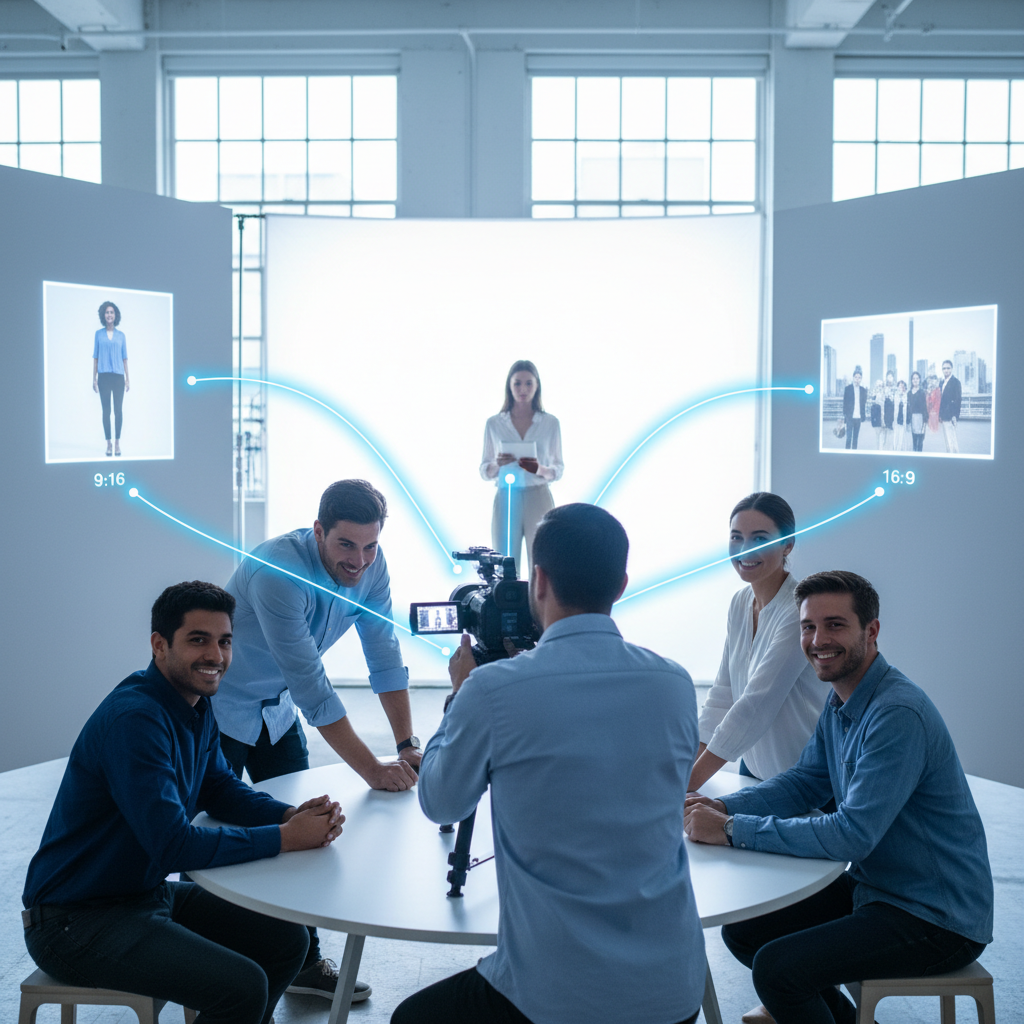
Transitioning from a freelance videographer to a full-stack agency means you are buying a system, not just a person with a camera. Ensure your brief includes aspect ratios (9:16 for Reels, 16:9 for YouTube, 4:5 for LinkedIn) and specific call-to-action (CTA) overlays. If you’re managing a medical practice, ensure your brief accounts for HIPAA compliance in patient testimonials—a nuance often missed by generalists.
Need a partner who handles the technical heavy lifting? Schedule a free consultation with our production team to map out your next campaign.
4. The Logistics: Budgeting for the Bay Area
Transparency regarding budget ranges is the only way to prevent 20 hours of re-shoots and wasted creative energy.
Typical Bay Area pricing for corporate video production ranges from $2,500 to $15,000 per project, while premium brand films can reach $8,000 to $50,000 per finished minute. If your brief doesn’t align with these industry-reported ranges, you’ll likely end up with a one-off video shoot that lacks the polish required for an enterprise-level brand.
- Location Fees: Are we filming at your SF headquarters or our San Leandro studio?
- Talent: Do we need professional actors or are we using your internal team?
- Turnaround: Does the project require a 48-hour edit or a standard 3-week post-production cycle?
Here’s an honest, contrarian insight: The most expensive video is a cheap one that fails to convert. Cutting corners on lighting or audio to save 10% on the budget often results in a 100% loss of ad spend effectiveness because the audience subconsciously associates low production value with low product reliability.
5. The Creative Testing Roadmap
In 2024, a video production brief should be a living document that accounts for performance-driven creative testing.
What most people miss is that the best-performing creative is often found, not just made. By briefing for “A/B hooks”—filming three different opening sentences for the same ad—you allow your SF media agency to optimize your Google Ads or Meta campaigns based on real-time data. This is the difference between a creative project and a growth system.
- Hook Variation: Test a problem-first hook vs. a benefit-first hook.
- CTA Variation: Test “Learn More” vs. “Get a Demo.”
- Visual Pacing: Test a fast-cut “UGC-style” edit vs. a cinematic, slow-paced version.
For Series A-C founders, this data-rich approach is vital for investor decks and product launches. It proves you aren’t just spending capital; you’re investing in a scalable acquisition engine.
6. Streamlining Communication with Automation
The ‘No-Meeting’ brief is becoming the standard for agile San Francisco teams who need to move fast without sacrificing quality.
Instead of a 60-minute Zoom call, try using a screen recording tool like Loom to walk through your brand guidelines and visual references. This allows the SF media agency to re-watch the context and share it with the entire production crew, from directors to editors, ensuring nothing is lost in translation. Combining this with a centralized marketing automation platform ensures that once the video is delivered, it is automatically integrated into your lead nurture sequences.
Key Takeaways for Your Monday Morning:
- Define one measurable KPI before looking at visual references.
- Request a modular delivery list (50 assets instead of 1 hero film).
- Include a specific “hook testing” plan in your creative strategy.
Ready to execute? Our team at iStudios Media combines premium production with performance marketing to ensure your content delivers a measurable ROI. Click here to book your free strategy consultation and let’s build your production roadmap together.
Frequently Asked Questions
How much does a typical corporate video cost in the Bay Area?
Industry-reported ranges for corporate video production in the San Francisco Bay Area typically fall between $2,500 and $15,000 per project. Premium commercials or high-end brand films often range from $8,000 to $50,000 per finished minute, depending on the complexity of the crew, talent, and post-production requirements.
What should be included in a video production brief for a social media agency?
A performance-driven brief should include the primary KPI, target platform specs (like 9:16 for TikTok), a description of the ‘First 3 Seconds’ hook strategy, and a list of required deliverables. It should also outline the brand voice and any specific cultural nuances for the Bay Area market.
Why should I hire an SF media agency instead of a freelance videographer?
While a freelance videographer is great for one-off shoots, an SF media agency provides a structured, scalable growth partnership. Agencies offer integrated services like SEO, paid media management, and marketing automation, ensuring your video content is actually seen by your target audience and generates ROI.
How long does the pre-production process usually take?
With a clear 20-minute brief, the initial alignment can happen almost instantly. However, the full pre-production phase—including scripting, storyboarding, and location scouting—typically takes 1 to 2 weeks for mid-market projects to ensure a seamless shoot day without costly scope creep.