📋 Table of Contents
- The Modular Keynote Framework: Design for Extraction
- The Technical Stack for Content Atomization
- Transforming Technical Demos into High-Intent Ad Units
- Bridging Event Ops and Performance Marketing
- Beyond the Highlight Reel: Creative Automation at Scale
- The 24-Hour Turnaround: Launching Ads While Trending
- FAQs
According to research by Wyzowl, 91% of businesses use video as a marketing tool in 2024, yet most enterprise event footage never makes it past a single ‘thank you’ email. For Bay Area marketing directors, the gap between a high-production SF keynote and launching multi-channel ad creative is often weeks of manual editing—a delay that kills the momentum of the event.
Most companies treat a 45-minute presentation as a single asset, but in a performance-driven environment, that keynote is actually a library of 20+ high-intent hooks waiting to be extracted. Instead of hiring a freelance videographer for a one-off video shoot that ends at the export window, scaling brands need a systematic pipeline that bridges the gap between event operations and performance marketing.
The Modular Keynote Framework: Design for Extraction
The most efficient way to generate multi-channel ad creative is to stop filming long-form content and start filming ‘modular’ content that happens to be long.
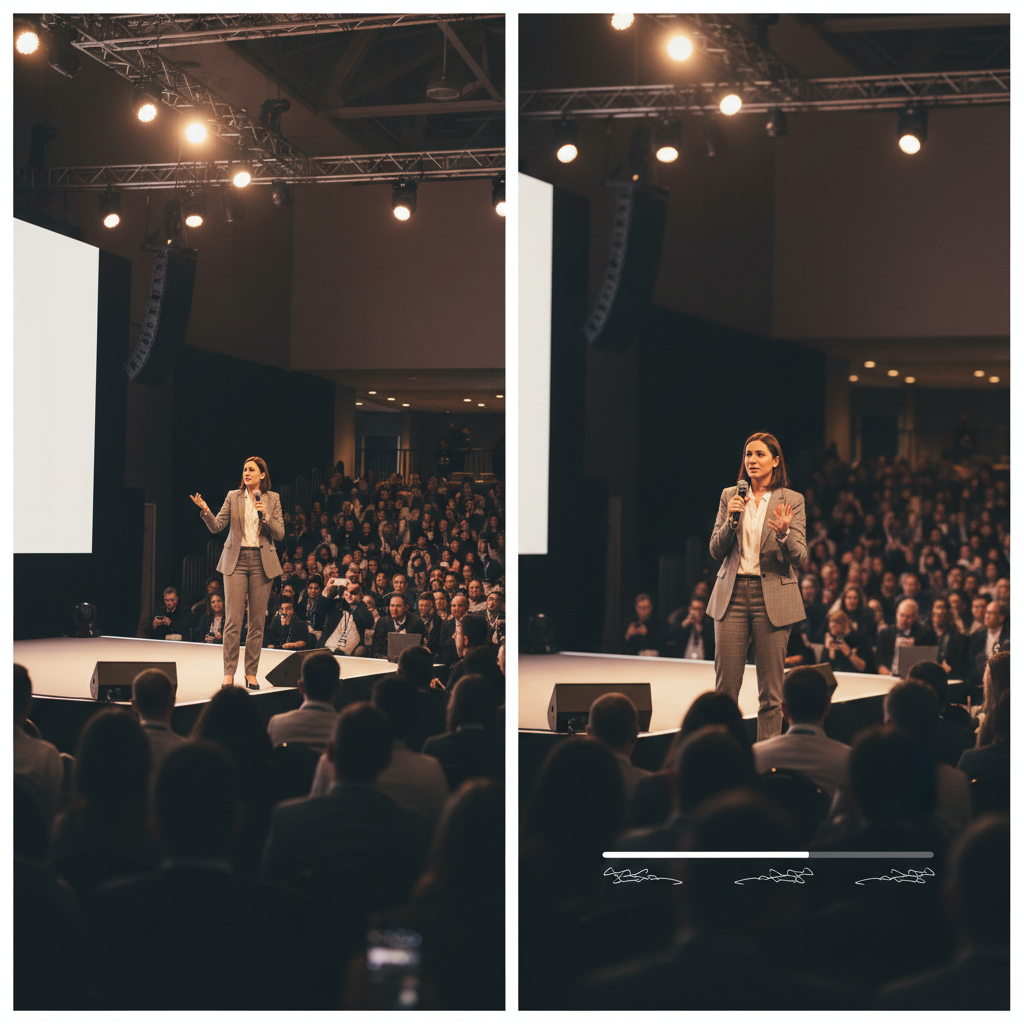
In our work with Series B SaaS founders, we find that the biggest bottleneck isn’t the editing—it’s the lack of clear ‘ins’ and ‘outs’ in the original speech. If a speaker rambles for 10 minutes before hitting a punchline, that clip is dead on arrival for LinkedIn. By structuring keynotes into 3-5 minute ‘chapters’ with clear problem-solution statements, you create natural breakpoints for your post-production team.
- The Hook-First Opener: Ensure every sub-topic starts with a provocative stat or pain point.
- Visual Cueing: Use high-contrast slides that work as standalone thumbnails.
- The ‘Silent’ Test: Design your stage presence knowing 80% of social viewers will watch on mute.
What most people miss: The goal isn’t just a highlight reel; it’s a library of ‘pain-point’ specific ad units that address different stages of the funnel. If you need help structuring your next capture, explore our video production services to see how we build for scale.
The Technical Stack for Content Atomization
Speed-to-market is the only competitive advantage when an event like Dreamforce or SaaStr is trending, which is why a manual workflow is no longer viable.
To achieve a 24-hour turnaround, we recommend an integrated stack that combines AI-driven transcription with creative automation tools. Tools like Descript allow for text-based video editing, while platforms like Munch or OpusClip can identify high-engagement segments automatically. However, these AI tools are only the starting point; they require a human eye to ensure brand alignment and technical accuracy.
A typical Bay Area mid-market client workflow looks like this:
- Ingestion: Upload 4K raw footage to a centralized cloud server (Frame.io or Dropbox).
- Transcription: Run the audio through an AI engine to identify keywords linked to high-intent search terms.
- Atomization: Extract 60-second vertical snippets for multi-channel ad creative.
- Styling: Apply brand-specific templates via Adobe After Effects or Canva for Teams.
- Distribution: Push to a marketing automation platform for scheduled social and ad deployment.
For high-velocity blogging and SEO support, we often utilize Ingest.blog (https://ingest.blog), our internal AI content engine, to transform these video transcripts into long-form, search-optimized articles that match the video’s messaging.
Transforming Technical Demos into High-Intent Ad Units
Generic ‘vibe’ videos from conferences are a waste of ad spend; technical buyers want to see the product in action.
The real kicker? In B2B marketing, a 30-second clip of a founder solving a specific technical hurdle on stage often carries more authority than a polished $50k commercial. This is ‘Zero-Click’ content at its best—providing value directly in the feed to lower your Customer Acquisition Cost (CAC). By adding professional overlays and ‘How-To’ captions, you turn a stage demo into a high-converting middle-of-funnel ad.
| Asset Type | Ideal Channel | Core Objective |
|---|---|---|
| Problem/Solution Snippet | LinkedIn Ads | Lead Generation |
| Quick Tip / Hack | YouTube Shorts | Brand Awareness |
| Full Keynote Chapter | SEO Blog Post | Authority / Thought Leadership |
Need a partner to execute this without hand-holding? Schedule a free consultation to discuss your event content strategy.
Bridging Event Ops and Performance Marketing
The biggest friction point in large organizations is the silo between the team running the event and the team running the Google Ads.
Event teams often prioritize the ‘live experience,’ while performance teams prioritize ‘data-driven creative.’ To bridge this, include your performance lead in the pre-production meeting for your conference video repurposing. If they know they need three specific ‘hooks’ to test against a LinkedIn audience, the production crew can ensure those moments are captured with multiple angles and clean audio.
- Pre-Event: Define the 5 key questions your audience is asking.
- During Event: Use a multi-camera setup to capture both the speaker and the audience’s reaction.
- Post-Event: Deploy snippets as ‘Social Proof’ ads to retarget event attendees.
According to HubSpot’s State of Marketing Report, video is the top media format for the fourth consecutive year, but only when it is relevant and timely. Don’t let your best insights die on a hard drive.
Beyond the Highlight Reel: Creative Automation at Scale
The ‘After-Movie’ is a relic of the past; modern multi-channel ad creative requires dynamic, personalized assets.
Here’s the thing: Most agencies will sell you a single highlight reel and call it a day. But a single video doesn’t allow for A/B testing. By using a modular workflow, you can create five different versions of the same insight—testing different headlines, captions, and CTA buttons. This programmatic approach to creative is how top-tier Bay Area firms maintain low CPMs in a crowded market.
In our experience with mid-market clients, moving from a one-off video shoot model to a recurring content pipeline increases ad engagement by up to 40% because the creative stays fresh and relevant to current market trends. You can learn more about our integrated approach to paid advertising and creative on our strategy page.
The 24-Hour Turnaround: Launching Ads While Trending
If you wait two weeks to post your keynote highlights, the industry conversation has already moved on.
The real power of multi-channel ad creative lies in its ability to capitalize on the ‘halo effect’ of a major conference. When your target audience is still searching for event hashtags on LinkedIn and X, your ads should be hitting their feeds. This requires a production partner that operates with the speed of a newsroom and the precision of a performance agency.
Ready to transform your live events into a year-long lead generation engine? Connect with us today for a strategic audit of your content pipeline.
Frequently Asked Questions
How much does it cost to repurpose a keynote into ads?
Industry-reported ranges for professional multi-channel ad creative production typically fall between $2,500 and $15,000 per project. This varies based on the volume of snippets required, the complexity of the motion graphics, and whether the project includes distribution management through a CRM or ad platform.
Can I use AI to do all the video repurposing?
While AI tools like Descript and Munch are excellent for initial clipping and transcription, they often lack the nuance required for high-stakes B2B branding. A professional touch is necessary to ensure audio quality is broadcast-grade and that the visual styling aligns with your corporate identity for a polished finish.
What is the ideal length for a LinkedIn ad snippet?
For B2B multi-channel ad creative, the sweet spot is typically 30 to 90 seconds. The first 5 seconds must contain the ‘hook’ to stop the scroll, while the remaining time should deliver a single, clear insight followed by a strong call to action, such as downloading a whitepaper or booking a demo.
How do I ensure the audio quality is good enough for ads?
High-quality audio is more important than 4K video for social ads. We recommend using secondary lavalier mics on speakers and capturing a ‘room’ track for atmosphere. In post-production, professional noise reduction and EQ are applied to ensure the speaker’s voice is crisp, even on mobile speakers.