📋 Table of Contents
According to a recent report by Wyzowl, 88% of marketers say video provides a positive ROI, yet many Bay Area marketing directors still find themselves burned by a production audit that looks great on paper but fails in execution. The reality is that a polished demo reel is no longer a guarantee of technical reliability or enterprise-grade security in a world where AI-washing is becoming the new industry standard.
For a CMO or a Series B startup founder, the risk isn’t just the lost deposit; it’s the opportunity cost of a missed product launch or a botched event livestream. Relying on a freelance videographer for a high-stakes corporate film often leads to fragmented communication and a lack of scalable systems. To mitigate this risk, sophisticated teams are moving away from portfolio-based hiring toward a rigorous production audit framework that treats creative services like a technical procurement process.
At iStudios Media, we’ve seen how a “Procurement Insurance Policy”—a structured vetting of a partner’s technical stack—can save hundreds of hours in post-production. Here is the 4-stage framework you should use to vet any video production partner before the first dollar leaves your account.
Stage 1: Technical Due Diligence and Infrastructure Review
The first rule of technical vetting is that if a partner cannot explain their data redundancy plan, they don’t have one.
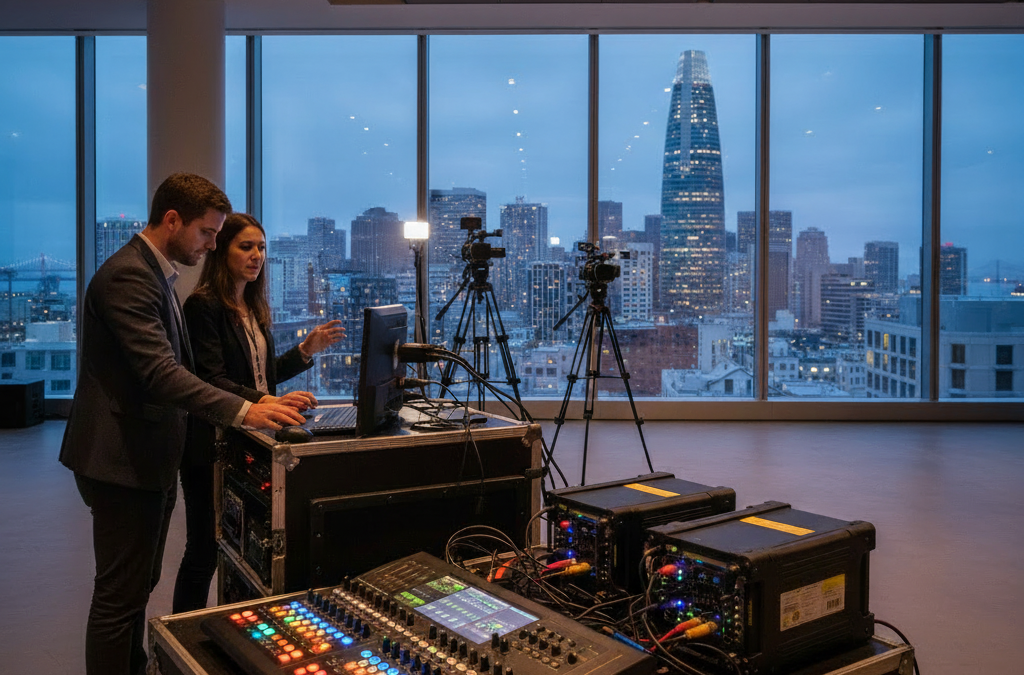
- Data Redundancy: Does the agency use RAID-configured local storage and off-site cloud backups?
- Hardware Standards: Are they shooting on Netflix-approved camera systems, or are they pushing prosumer gear past its limits?
- Security Protocols: How do they handle sensitive pre-launch intellectual property (IP) for your enterprise video production needs?
In our experience with mid-market clients, the biggest failures happen not during the shoot, but in the weeks following when a single corrupted drive can derail a $50,000 campaign. A professional production audit must look past the creative vision and into the server room. Unlike a one-off video shoot with a generalist, an integrated partner should provide a clear workflow for asset management and version control.

Stage 2: Operational Scalability Audit of the Creative Workflow
Scalability is the difference between a partner who can handle one vlog and one who can manage a global multi-city campaign without breaking.
The real kicker? Most agencies are “talent-heavy but process-light,” meaning their quality fluctuates based on which freelancer they hire that week. During your production partner vetting, ask to see their project management dashboard. If they can’t show you a live pipeline with milestones, dependencies, and clear accountability, you are the one who will end up managing them.
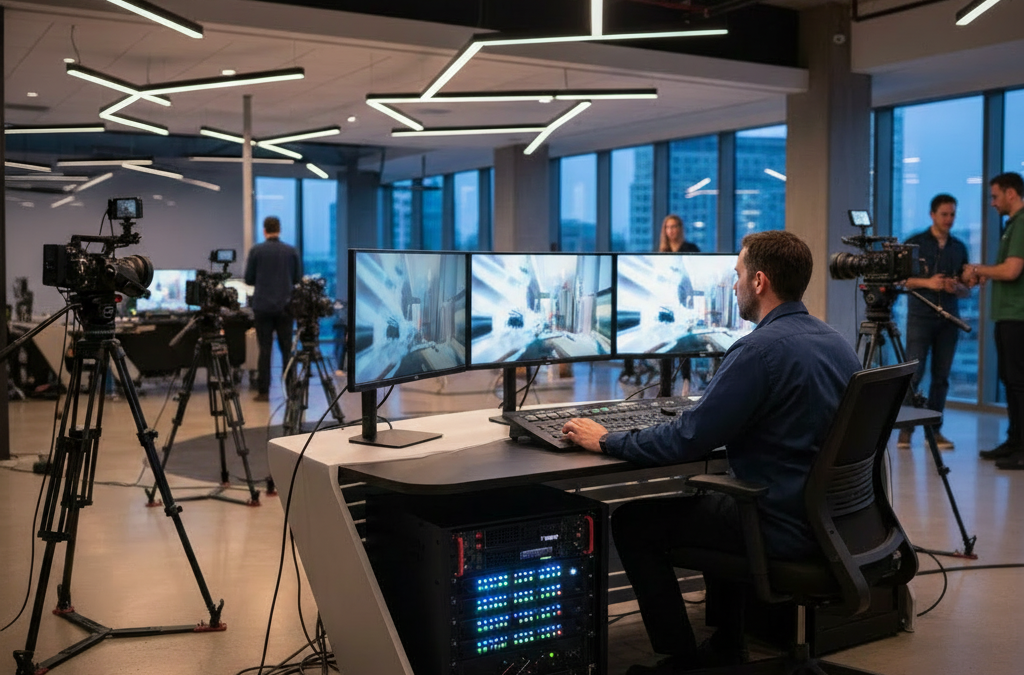
- Resource Allocation: How do they scale their crew for a multi-camera livestreaming project versus a simple studio session?
- Bottleneck Identification: Who is the dedicated point of contact for technical troubleshooting during post-production?
- AI Integration: Are they using AI for efficiency (like transcriptions and rough cuts) or as a crutch for lack of skill?
If you are scaling content velocity, you might even ask if they use tools like Ingest.blog—our internal AI content engine—to bridge the gap between video assets and SEO-optimized written content.
Stage 3: The Live Environment Test (The PoC Stage)
The most effective way to spot ‘AI-washing’ or an inflated portfolio is to require a small-scale, paid Technical Competency Assessment before signing a long-term retainer.
Instead of a traditional deposit for a massive project, suggest a “Trial Sprint.” For a typical Bay Area medical practice or tech firm, this might look like a single studio photography session or a 30-second product teaser. The goal isn’t just the final asset; it’s auditing the communication speed, the technical setup, and the ability to hit a 48-hour turnaround. According to Forbes, vendor risk management is becoming a top priority for CMOs who need to justify high-ticket spends to their CFOs.
| Audit Category | Red Flag | Green Flag |
|---|---|---|
| Communication | Vague timelines and “trust us” | SLA-backed delivery dates |
| Technical Stack | Consumer-grade cloud (Google Drive only) | Enterprise DAM (Digital Asset Management) |
| Backup Systems | Single-point failure (one drive) | 3-2-1 Backup Strategy (3 copies, 2 media, 1 offsite) |
Need help auditing your current vendor? Schedule a free technical consultation with our production leads to see how we handle enterprise-grade workflows.
Stage 4: Post-Production and Delivery Validation
A production audit isn’t complete until you’ve verified how the final files reach your marketing automation platform.
What most people miss is the “delivery friction” that occurs when files are too large for internal servers or formatted incorrectly for paid advertising channels like LinkedIn or Meta. A high-quality video agency selection process should confirm that the partner understands aspect ratios, bitrates, and accessibility requirements (like SRT files for captions) as a standard deliverable, not an upcharge.
- Asset Portability: Do you own the raw files, or are they held hostage?
- Integration: Can they push content directly to your CRM or social publishing tool?
- Archival Policy: How long do they store your project files after the final invoice?
Why Bay Area Marketers are Abandoning the Generalist
The death of the generalist is here because specialized enterprise video production requires more than just a nice camera; it requires a systems-thinking approach. In our work with Series B SaaS founders, we’ve found that they value a partner who understands the speed of a product launch and the technical requirements of an investor deck more than a creative who wants to “find the story” for three months.
By conducting a production audit, you move from being a “client” to being a “partner.” You aren’t just buying a video; you are hiring a technical extension of your marketing team. This level of technical due diligence is what separates a $2,500 freelance videographer mistake from a $50,000 brand film investment that actually converts.
Actionable Takeaway for This Week
Before you sign your next production contract, ask the vendor for a 15-minute “screen share” of their project management system and their server backup logs. If they hesitate or claim it’s “proprietary,” you’ve likely found a gap in their operational scalability audit. A transparent partner will be proud to show you the engine under the hood.
Ready to upgrade your brand’s visual presence with a partner that values technical precision? Contact iStudios Media today for a free consultation on your next project.
Frequently Asked Questions
How much should a professional production audit cost?
While some agencies offer a preliminary production audit as part of their discovery process, a deep-dive technical assessment for enterprise projects typically ranges from $1,500 to $5,000. However, most Bay Area firms find this cost is easily offset by avoiding the 10-20% project overruns common with unvetted partners.
What is the biggest red flag during the technical vetting process?
The biggest red flag is a lack of “version control” and data redundancy protocols. If a video agency selection candidate cannot explain how they protect your data from hardware failure or how they track revisions across multiple editors, they are not ready for enterprise video production workloads.
How do I spot ‘AI-washing’ in a production partner’s portfolio?
Ask for a “Behind the Scenes” (BTS) breakdown or raw project files from a specific case study. Partners who rely too heavily on AI-generated visuals without disclosing them often struggle to explain the technical execution of the lighting, sound design, or practical cinematography involved in the shoot.
Why is a 3-2-1 backup strategy important for my brand films?
A 3-2-1 strategy ensures that your high-value assets—which can cost between $8,000 and $50,000 per finished minute—are never lost. It involves having 3 copies of your data, on 2 different media types, with 1 copy stored off-site. This is a non-negotiable standard for any production audit.