📋 Table of Contents
- The Modular Framework: Moving Beyond the One-Off Video Shoot
- Content Scaling via the ‘Lean Video Stack’
- In-House vs Agency Production: The Hybrid ROI Model
- Repurposing: Turning One Asset Into a Month of Coverage
- Subject Matter Experts: Your Secret Creative Weapon
- Automating the Distribution Bottleneck
- FAQs
According to Wyzowl’s 2024 State of Video Marketing report, 88% of marketers say video is a vital part of their strategy, yet most Bay Area marketing directors are struggling with the ‘content treadmill’—the exhausting cycle of producing high-quality assets without exploding their payroll. To win in this climate, a robust B2B video strategy must prioritize systemized efficiency over brute-force hiring.
The reality is that most companies treat video as a series of one-off projects rather than a continuous product. Here’s the thing: if you are still hiring a freelance videographer for every individual case study or product launch, you aren’t building a marketing engine; you’re managing a series of expensive fire drills. To scale without adding headcount, you need a shift toward Content Operations (ContentOps) and modular production.

The Modular Framework: Moving Beyond the One-Off Video Shoot
The secret to high-output video production isn’t a larger team; it’s a smarter filming schedule that treats one day of production as four months of content.
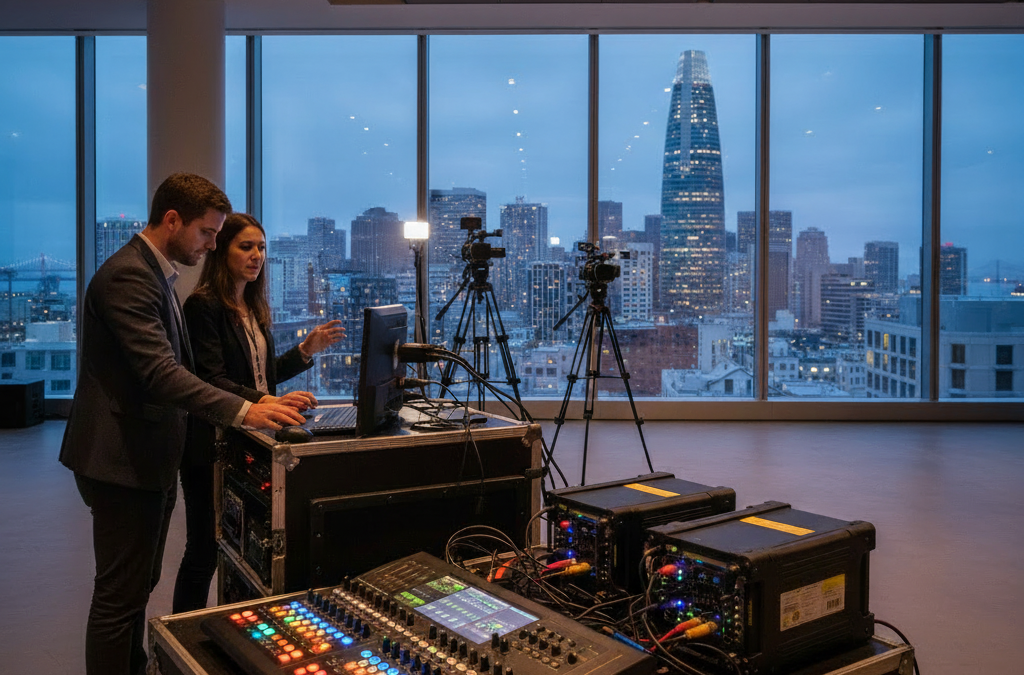
Most Series B SaaS founders we work with initially think they need to film every time a new feature drops. Instead, we implement ‘Modular Filming Days.’ We batch executive interviews, product demos, and culture snapshots into a single, high-intensity 10-hour window. This approach eliminates the setup overhead and travel costs associated with a standard one-off video shoot.
- Batching Subjects: Film 4-5 Subject Matter Experts (SMEs) in one afternoon.
- Template Lighting: Set a ‘look’ that works for multiple content types (interviews, vlogs, and ads).
- Asset Stacking: Capture B-roll of the office and team interactions between primary interviews.
- Script Efficiency: Use ‘Mad Libs’ style scripts for product updates to keep editing fast and consistent.
What most people miss is that the cost of video isn’t just the day rate; it’s the context switching. By consolidating production, you free up your internal team to focus on high-level B2B video strategy rather than logistics. Ready to see how this fits your budget? Schedule a free consultation to audit your current workflow.
Content Scaling via the ‘Lean Video Stack’
You can now replace a five-person production agency with a single demand gen manager and the right set of AI-powered tools.
In our experience with mid-market clients, the bottleneck is rarely the filming—it’s the post-production and distribution. We recommend a ‘Zero-Hire Tech Stack’ that includes tools like Riverside for remote recording, Descript for text-based editing, and Munch for automated social clipping. This allows a single person to turn one 45-minute executive podcast into 20+ LinkedIn-native clips in under an hour.
| Tool Category | Recommended Platform | Internal Impact |
|---|---|---|
| Remote Capture | Riverside.fm / Zencastr | Eliminates travel for SME interviews. |
| Post-Production | Descript / Adobe Premiere | Speeds up rough cuts by 300%. |
| AI Distribution | OpusClip / Munch | Automates short-form social content. |
| CRM Automation | Our Marketing Automation Platform | Nurtures leads generated by video. |
For companies looking to push their SEO further, we often integrate Ingest.blog, our internal AI content engine, to transform video transcripts into high-ranking blog posts instantly. This ensures your video investment pays off in organic search traffic, not just social views.
In-House vs Agency Production: The Hybrid ROI Model
The most successful Bay Area companies don’t choose between an agency and an in-house team; they use a hybrid model to maximize ROI.
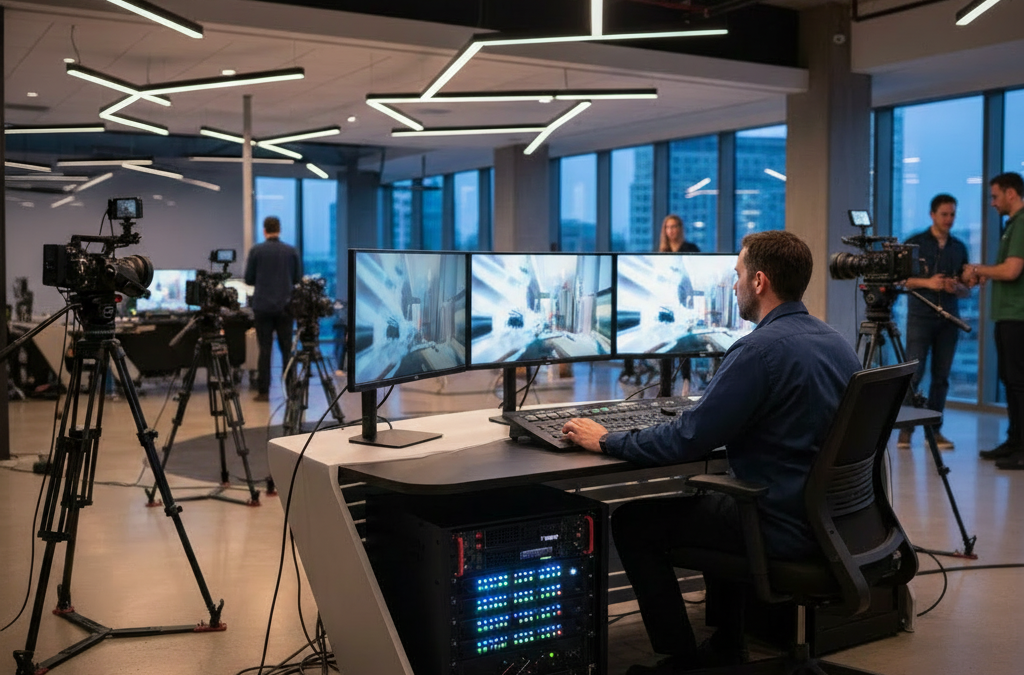
Trying to build a full in-house studio is a capital-intensive trap. Between equipment depreciation and the high salaries of talented editors, the overhead often outpaces the output. Conversely, relying solely on a generic marketing agency for every small task is too slow. The winning B2B video strategy involves using a professional partner for high-stakes ‘Hero’ content (brand films, commercials) while training your team to handle ‘Hub’ content (weekly vlogs, LinkedIn updates) using templated workflows.
- Hero Content: High-production brand films ($8,000–$50,000 range). Outsource to pros.
- Hub Content: Recurring series or podcasts. Use a partner for the setup and ‘heavy lift’ editing.
- Hygiene Content: Quick social replies and documentation. Keep this 100% in-house and ‘lo-fi’.
The real kicker? Authenticity often beats high production value in 2024. A raw, insightful video from your CEO on a smartphone can outperform a $20k polished commercial if the message resonates with your target audience’s pain points. This is why we focus on integrated video production that balances polish with performance.
Repurposing: Turning One Asset Into a Month of Coverage
If you film a video and only post it once, you are leaving 80% of your ROI on the table.
A typical Bay Area mid-market services client might record a single 30-minute webinar. Through a disciplined Video Content Repurposing workflow, that one session becomes: a featured YouTube video, four LinkedIn ‘snackable’ clips, a detailed blog post, three email newsletter spotlights, and ten quote graphics for Instagram. This is how you maintain a 12-month calendar without hiring more people.
But wait—repurposing isn’t just about cutting things shorter. It’s about ‘platform-native’ optimization. A clip for TikTok needs different captions and pacing than a clip for a Series C investor deck. By using HubSpot’s latest marketing data, we know that native video on LinkedIn sees 5x more engagement than external links. Your workflow must account for these nuances.
Need help building this workflow? Contact our team for a custom content blueprint.
Subject Matter Experts: Your Secret Creative Weapon
Your best creators aren’t your creative directors; they are the engineers, product managers, and founders who live the problem every day.
One honest, contrarian insight we share with our clients: stop trying to make your SMEs act. When you put a non-actor in front of a teleprompter, they lose their authority. Instead, use an interview-style format. Have a producer ask them hard questions off-camera. This captures genuine passion and expertise, which is the cornerstone of effective content scaling in B2B.
- The 15-Minute Rule: Ask SMEs for 15 minutes of their time once a month.
- The ‘Why’ Focus: Don’t ask what the product does; ask why the current industry standard is broken.
- Asynchronous Input: Use Loom to have SMEs record quick thoughts that your editors can later polish.
Automating the Distribution Bottleneck
Scaling production is useless if your distribution is manual and fragmented.
Modern Content Operations require a centralized system to track every asset from ‘Filmed’ to ‘Published.’ We utilize advanced CRM and marketing automation to ensure that once a video is ready, it is automatically pushed to the right lead nurture sequences and social queues. This removes the ‘invisible work’ that usually kills a small team’s productivity.
According to research from Forbes, companies that automate their content distribution see a significant increase in lead velocity. By removing the manual upload process, your marketing director can spend more time on B2B video strategy and less time on password management for YouTube.
FAQs: Scaling B2B Video
What is the typical Bay Area pricing for corporate video production?
Industry-reported ranges for corporate video production in the San Francisco Bay Area typically fall between $2,500 and $15,000 per project. Premium brand films or commercials can range from $8,000 to $50,000 per finished minute, depending on the complexity of the crew, locations, and post-production requirements.
How do I choose between an in-house vs agency production model?
The choice depends on your volume and quality needs. In-house is best for high-volume, low-stakes content like daily social updates. An agency or production partner is more cost-effective for high-stakes ‘Hero’ content, providing access to $100k+ in gear and specialized talent without the overhead of full-time salaries.
Can AI really replace a video editor?
AI cannot replace the strategic eye of a lead editor, but it can automate 80% of the ‘grunt work.’ Tools can now handle captioning, color correction, and finding ‘viral’ moments in long-form footage. This allows your human editors to focus on storytelling and brand alignment, effectively doubling their output.
How many videos should a B2B company produce monthly?
Quality beats quantity, but consistency is key for SEO and social algorithms. A sustainable B2B video strategy for a growth-stage company usually involves one ‘Hero’ piece per quarter, two ‘Hub’ pieces (like podcast episodes) per month, and 8-10 ‘Hygiene’ clips for social media distribution.
Actionable Takeaway: Start Your Modular Calendar This Week
Don’t wait for your next big launch to start filming. This week, identify three Subject Matter Experts in your company and book a single 90-minute block on their calendars for next month. Prepare five ‘Why’ questions for each. By batching these interviews, you’ll create enough raw material to fuel your social channels for the next 60 days. If you want a partner to handle the filming, editing, and automation of this entire process, reach out for a free consultation. Let’s build a video engine that grows with you, not against you.