📋 Table of Contents
In the high-stakes world of Sand Hill Road, the ‘Big Idea’ is officially dead. As of 2024, 82% of Bay Area venture capitalists have shifted their mandate from brand-building to capital efficiency, meaning they no longer care if your performance ads look like a Super Bowl commercial—they only care if they convert.
The era of the $50,000 hero video is being replaced by the era of the $500 micro-iteration. At iStudios Media, we’ve seen this play out across 500+ A/B tests: high-fidelity, ‘polished’ content often gets ignored, while raw, high-intent creative drives the lowest CAC. If you are still hiring a traditional Creative Director to lead your paid social efforts, you aren’t investing in growth; you’re funding an ego project.
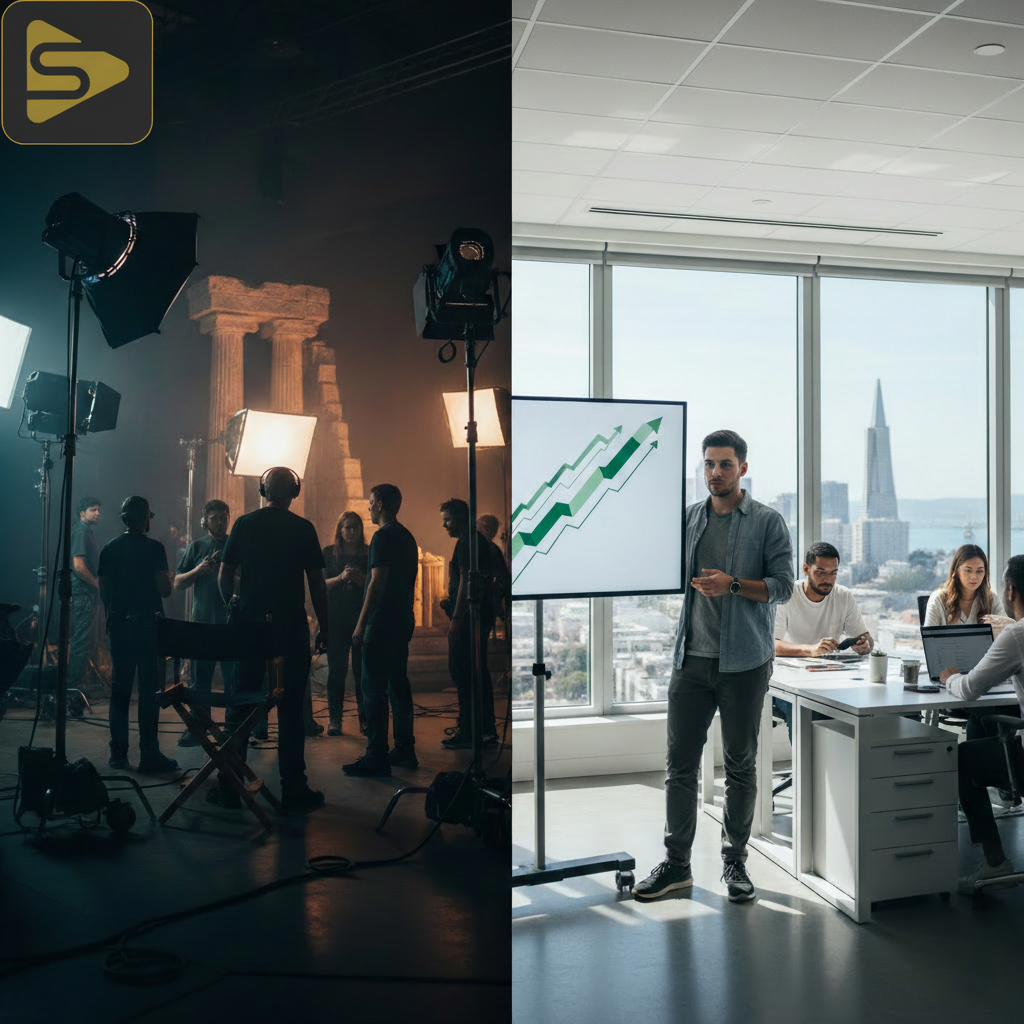
The Death of the Creative Director in the Efficiency Era
Traditional Creative Directors are trained to protect ‘brand soul,’ but in the world of performance ads, the only soul that matters is the one that clicks ‘Add to Cart.’
- Aesthetics are subjective: What a designer thinks is beautiful, the algorithm often finds irrelevant.
- Data is binary: Your ‘thumb-stop ratio’ doesn’t care about your color palette.
- Speed is a feature: A traditional agency takes six weeks to deliver one asset; a performance-driven production partner delivers 20 variations in six days.
Consider a Series B fintech startup in Palo Alto we recently audited. They spent $85,000 on a brand film that looked like a Christopher Nolan production. It garnered 2,000 likes but zero attributable revenue. We took $5,000 of their remaining budget, shot 15 ‘ugly’ lo-fi versions on an iPhone, and saw a 4.2x ROAS within 72 hours. The difference? We prioritized the hook over the highlights.
Why ‘Ugly’ Ads Outperform High-Production Assets
The ‘Ugly Ad’ phenomenon isn’t about being messy; it’s about being native to the platform. According to HubSpot’s latest consumer trends, users are 7x more likely to engage with content that feels organic to their feed rather than a polished commercial. This is why an SF ad creative agency that focuses on Creative Strategy will always beat a traditional production house.
The Feedback Loop: Integrating Media Buying and Production
The biggest bottleneck in modern marketing is the wall between the person buying the ads and the person making them. Most companies operate in silos: the media buyer sees a high CPA, complains to the CMO, who then asks the creative team for ‘better’ ads, who then spend three weeks making more of the same pretty garbage.
What most people miss is that your creative is your targeting. In 2024, Meta and TikTok’s algorithms are so advanced that they find your audience based on who interacts with your creative. If your creative is vague and ‘artistic,’ your targeting becomes vague and expensive. We operate as a full-service marketing agency that treats production as a scientific experiment.
| Metric | Traditional Creative | Performance Creative |
|---|---|---|
| Primary Goal | Brand Awareness | Conversion / ROAS |
| Feedback Loop | Quarterly Reviews | Daily Data Syncs |
| Production Cost | High ($$$$) | Iterative ($) |
| Success Metric | Awards / Sentiment | Thumb-stop / Hold Rate |
Need to see how your current assets stack up against performance benchmarks? Schedule a creative audit with our team today and stop guessing what works.
Creative Alpha: Moving from Campaigns to Testing Labs
The real kicker is that ‘Creative Alpha’—the performance gap generated by superior creative—is now the only lever left for media buyers to pull. With the loss of third-party cookies and privacy updates from Apple, you can no longer ‘hack’ the algorithm with technical settings. You have to win with the content.

The ‘Retention Creative’ Pivot
One of our clients, a medical practice group in San Jose, realized that their high-gloss patient testimonials were boring viewers. By switching to a ‘Retention Creative’ model—using performance data to identify exactly where viewers dropped off in the first 3 seconds—we re-edited their footage to lead with the ‘pain point’ immediately. The result was a 63% increase in lead volume without increasing their Google Ads spend by a single dollar.
- Hook Rate: Aim for 30%+ of people stopping their scroll.
- Hold Rate: Monitor how many people stay past the 15-second mark.
- Iteration: If the hook fails, the rest of the video doesn’t matter. Change the first 3 seconds and go again.
Why Your Creative Director’s Portfolio is a Liability
Here is a contrarian insight: A Creative Director with a portfolio full of awards is likely the worst person to lead your performance marketing. Awards are given for cleverness and visual flair, but Forbes reports that the most effective ads in the current high-interest rate economy are those that address direct consumer objections with surgical precision.
A portfolio of ‘beautiful’ work often signals a resistance to Iterative Testing. If a designer spends 40 hours on a single frame, they will fight you when the data says that frame needs to be deleted. You need a ROI-focused video production partner who views every asset as a disposable hypothesis.
The Scientific Creativity Framework
We don’t ‘brainstorm’ at iStudios Media; we engineer. Our process involves training our editors to read Meta Ads Manager so they can see exactly which frames are causing viewers to bounce. This is Direct Response 2.0.
- Analyze: Identify the winning hooks from the previous week’s spend.
- Hypothesize: Determine why a specific visual cue outperformed the others.
- Produce: Create 5 variations of that winning cue.
- Scale: Move the winners into high-budget ‘evergreen’ campaigns.
What most Bay Area founders fail to realize is that you don’t need a bigger budget; you need a faster testing cadence. If you’re tired of hearing ‘trust the process’ from agencies that can’t show you a spreadsheet, it’s time for a change.
Ready to turn your production into a performance engine? Contact iStudios Media for a consultation and let’s build your testing lab.
Frequently Asked Questions
Does this mean we should stop making high-quality brand videos?
Absolutely not. High-quality brand video is essential for investor decks and landing page credibility. However, for performance ads on platforms like Meta and TikTok, ‘high-quality’ is defined by engagement and conversion, not cinematic lighting. Use your brand video for the ‘Who we are’ and performance creative for the ‘Why you need this now.’
How many ad variations should we be testing weekly?
For a scaling startup in the SF Bay Area, we recommend testing at least 3-5 new hooks per week. This doesn’t mean filming 5 new videos; it means iterating on the first 3-5 seconds of your top-performing assets to find ‘Creative Alpha’ and prevent ad fatigue.
What is the most important metric for performance ads?
While ROAS is the ultimate goal, the ‘Thumb-stop ratio’ (3-second video plays divided by impressions) is the most critical leading indicator. If you can’t get people to stop scrolling, your offer, your landing page, and your product don’t even get a chance to be seen.
Why is iStudios Media different from a freelance production crew?
We are a full-stack media and performance marketing agency. Freelancers deliver a file and walk away. We deliver a system that includes CRM automation, media buying, and iterative editing. We don’t just make content; we manage the ROI of every frame we produce.