📋 Table of Contents
According to a 2024 report by Wyzowl, 91% of businesses use video as a marketing tool, yet most tech leaders still treat a recording session like a trip to the dentist. For the San Francisco founder, on-camera delivery isn’t just about looking good; it’s a strategic system that directly impacts your Series A valuation and hiring velocity.
The shift toward founder-led growth on platforms like LinkedIn means your ability to project vision is now a core part of your technical stack. Here’s the thing: most founders fail on camera because they try to ‘act’ rather than communicate. Whether you’re working with a video production team or filming a VSL in your South of Market office, the goal is resonance, not perfection.
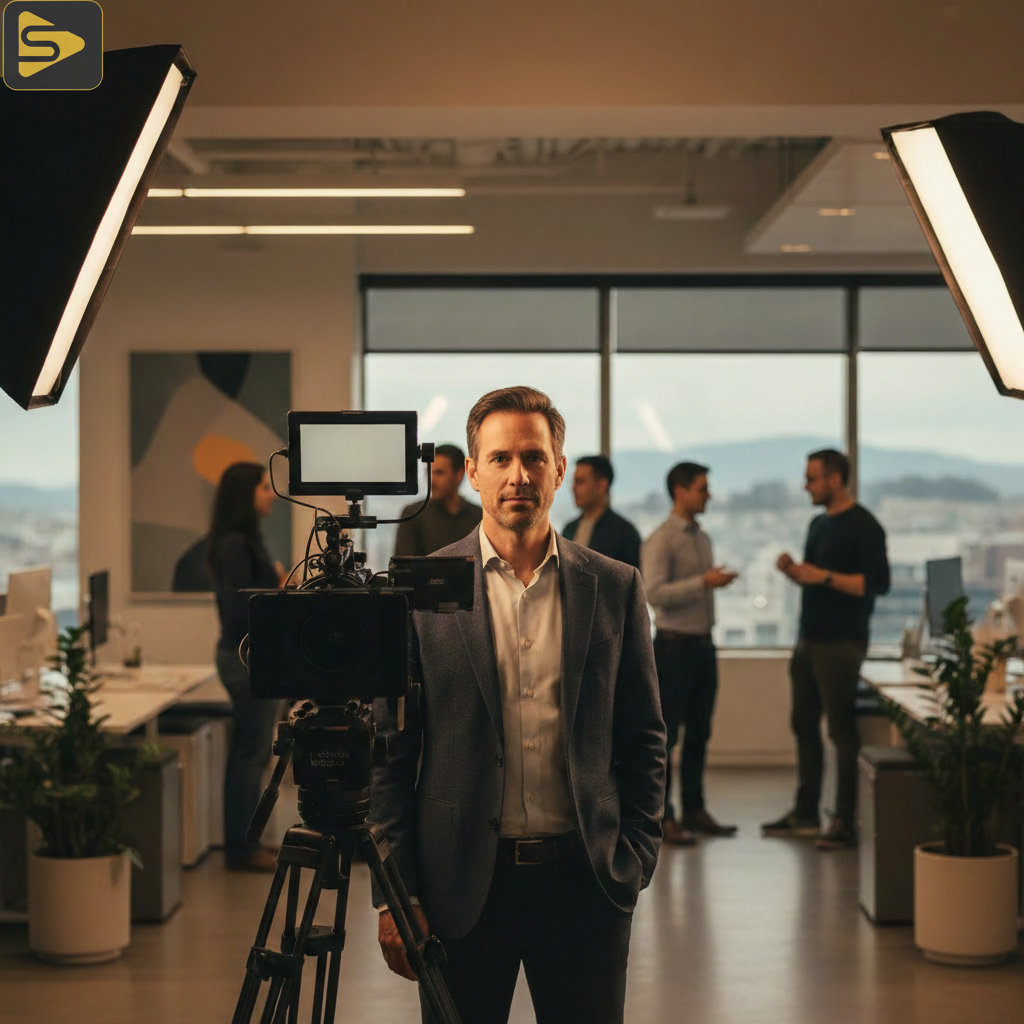
1. The Technical-to-Tactical Bridge for Founder-Led Growth
Your engineer brain is likely your biggest hurdle to natural on-camera delivery because it prioritizes data over narrative flow.
- The Narrative Shift: Move from explaining ‘how’ your product works to ‘why’ the problem it solves matters to the user’s identity.
- Systematized Presence: Treat your delivery like a software deployment—it requires a pre-flight checklist and a dedicated environment.
- The Anti-Keynote Style: Avoid the over-rehearsed ‘Steve Jobs’ persona; modern audiences trust the raw, authentic founder who speaks with clarity rather than polish.
In our experience with Series B SaaS founders, the most effective videos are those where the leader treats the lens as a single, trusted advisor. Instead of a one-off video shoot that feels like a chore, view each session as a chance to build your ‘Personal Monopoly’ in your niche.
2. Mastering the Teleprompter Without Losing Your Soul
A teleprompter is a tool for efficiency, but if used incorrectly, it creates the ‘robot effect’ that kills trust instantly.
- Write for the Ear, Not the Eye: Use contractions (don’t, can’t, we’re) and short, punchy sentences that mirror natural speech patterns.
- The 80/20 Rule: Memorize your hook and your call-to-action; use the prompter only for the middle ‘meat’ to maintain maximum eye contact during critical moments.
- Speed Modulation: Don’t chase the text. Let the operator (or the AI-assisted software) follow your natural cadence and pauses.
What most people miss is that corporate video performance is won in the script editing phase. If a sentence feels like a mouthful when reading it aloud, it will definitely look stiff on camera. If you are scaling content quickly, tools like Ingest.blog, our internal AI content engine, can help refine your messaging for better distribution before you even hit record.
3. The Neurobiology of Executive Presence and Trust
Micro-expressions and posture communicate more to a VC or a potential hire than your actual slide deck ever will.
The real kicker? High-production polish can actually decrease credibility if it masks the founder’s personality. According to research cited by Harvard Business Review, eye contact and genuine facial variability are the primary drivers of perceived competence.
- The Power Lean: Lean slightly toward the camera to signal engagement and accessibility.
- Hand Gestures: Keep your hands visible; they are ‘trust indicators’ in human psychology.
- The Loom-to-LinkedIn Pipeline: Practice by turning your internal Loom updates into public-facing thought leadership to desensitize yourself to the camera.
Need to level up your team’s image? Schedule a free consultation to discuss our SF executive media coaching packages.
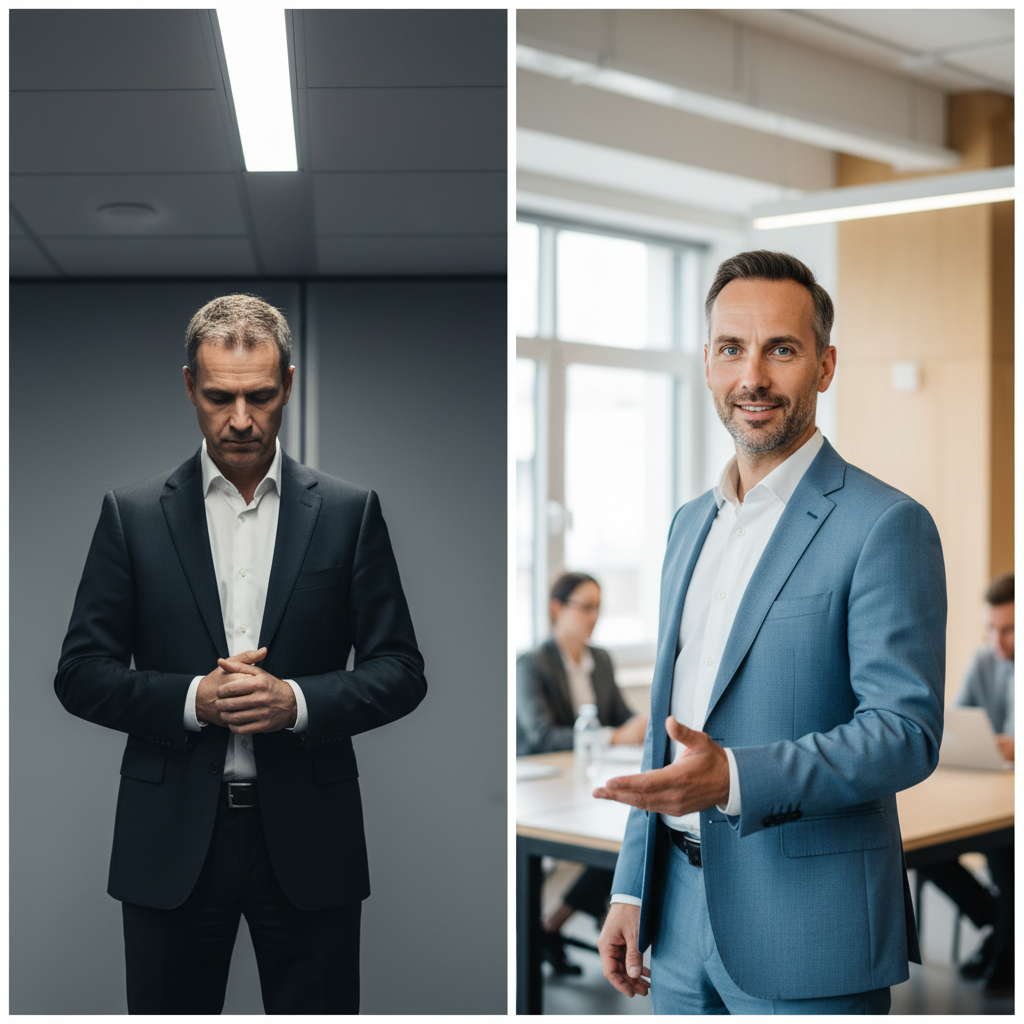
4. Optimizing Your Environment for Series A/B Pitching
A freelance videographer might focus on the lights, but a strategic partner focuses on the ROI of the frame.
| Element | The ‘Stiff’ Approach | The ‘Strategic’ Approach |
|---|---|---|
| Background | Generic white wall | Depth with subtle brand cues |
| Lighting | Flat overhead office lights | Three-point lighting for dimension |
| Audio | Laptop microphone | Lavalier or shotgun mic (XLR) |
| Wardrobe | Uncomfortable formal wear | Clean, ‘elevated everyday’ brand-aligned attire |
For a typical Bay Area mid-market client, we often suggest a mix of studio sessions at our San Leandro facility and on-site shoots to capture the authentic energy of their headquarters. This variety prevents your brand from feeling like a ‘one-off’ production and more like a consistent media presence.
5. From Technical Demo to Emotional Narrative
Training the ‘Engineer Brain’ for emotional resonance is the hardest part of on-camera training for founders.
But wait—don’t confuse ’emotional’ with ‘theatrical.’ In the SF tech ecosystem, emotional resonance comes from solving a high-stakes pain point. Your on-camera delivery should reflect the urgency of that solution.
- Identify the Villain: Every product video needs a clear antagonist (inefficiency, data silos, etc.).
- The ‘Aha’ Moment: Use your eyes to signal the breakthrough when you mention your solution.
- Call to Action: Don’t just list a URL; tell the viewer exactly what their first 15 minutes of using your product will feel like.
6. Scaling Your Content Without Scaling Your Headcount
The biggest risk to a founder’s schedule is the ‘production bottleneck.’ You cannot spend 10 hours a week on video production.
The solution is a ‘batch-and-automate’ workflow. By using a marketing automation platform, you can distribute your high-impact video assets across LinkedIn, Google Ads, and email sequences with minimal manual effort. This is where a full-stack partner beats a freelance videographer; we don’t just give you a file; we help you build a pipeline.
Ready to transform your video strategy? Book your free strategy session with iStudios Media today.
Frequently Asked Questions
How do I stop looking at the teleprompter and start looking at the lens?
The secret is increasing the distance between you and the prompter. When the text is further away, your eye movement is less detectable. Additionally, practice ‘soft focus’ where you absorb the words while maintaining the intent of speaking to a person, not reading a screen.
Is professional media coaching worth it for Series A founders?
Yes. In the current VC climate, a founder’s ability to project authority and vision on camera is a direct multiplier of valuation. Effective on-camera delivery can reduce the time spent in the fundraising cycle and improve talent acquisition by making the brand feel more ‘human’ and established.
What is the typical cost for corporate video production in the Bay Area?
Industry-reported ranges for professional corporate video production typically fall between $2,500 and $15,000 per project. Premium brand films or commercials can range from $8,000 to $50,000 per finished minute, depending on the crew size, location, and post-production requirements.
How can I make my technical product demos more engaging?
Focus on the ‘outcome’ rather than the ‘feature.’ Use a picture-in-picture format where your face remains visible; this maintains the human connection while you walk through technical details. Keep demos under 90 seconds for maximum retention on social platforms like LinkedIn.
What equipment do I need for a high-quality home office setup?
For a professional look that supports executive presence, invest in a 4K mirrorless camera (like a Sony A7 series), a dedicated USB audio interface with a Shure SM7B or similar microphone, and at least two soft-box lights to eliminate harsh shadows on your face.