📋 Table of Contents
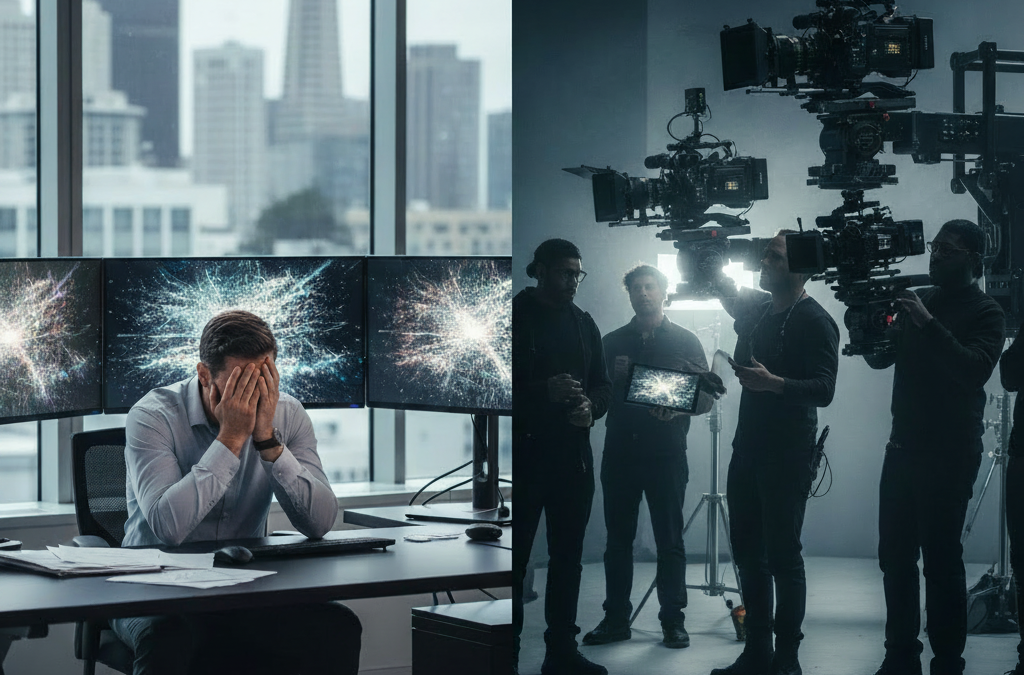
According to LinkedIn’s internal data, video posts generate 20x more shares than any other content type on the platform. Yet, most marketing directors are stuck in a cycle of reactive filming, relying on a freelance videographer for one-off projects that fail to build long-term momentum.
The secret to scaling authority without burning out your executive team isn’t filming more often; it’s building high-volume content engines that turn a single day of production into a quarter’s worth of strategic assets. At iStudios Media, we’ve seen Series B SaaS founders and medical practice owners struggle with the ‘hamster wheel’ of social media—the real kicker is that the bottleneck isn’t the ideas, it’s the lack of a repeatable system.
The Strategic Shift to High-Volume Content Engines
Successful B2B video marketing requires shifting your mindset from ‘making a video’ to ‘building a library’ of searchable, reusable authority assets.
- Efficiency: Reducing setup time from 12 times a year to 4 times a year.
- Consistency: Ensuring your brand stays top-of-mind even during busy product launches.
- Cost-Effectiveness: Lowering the per-asset cost by maximizing crew time.
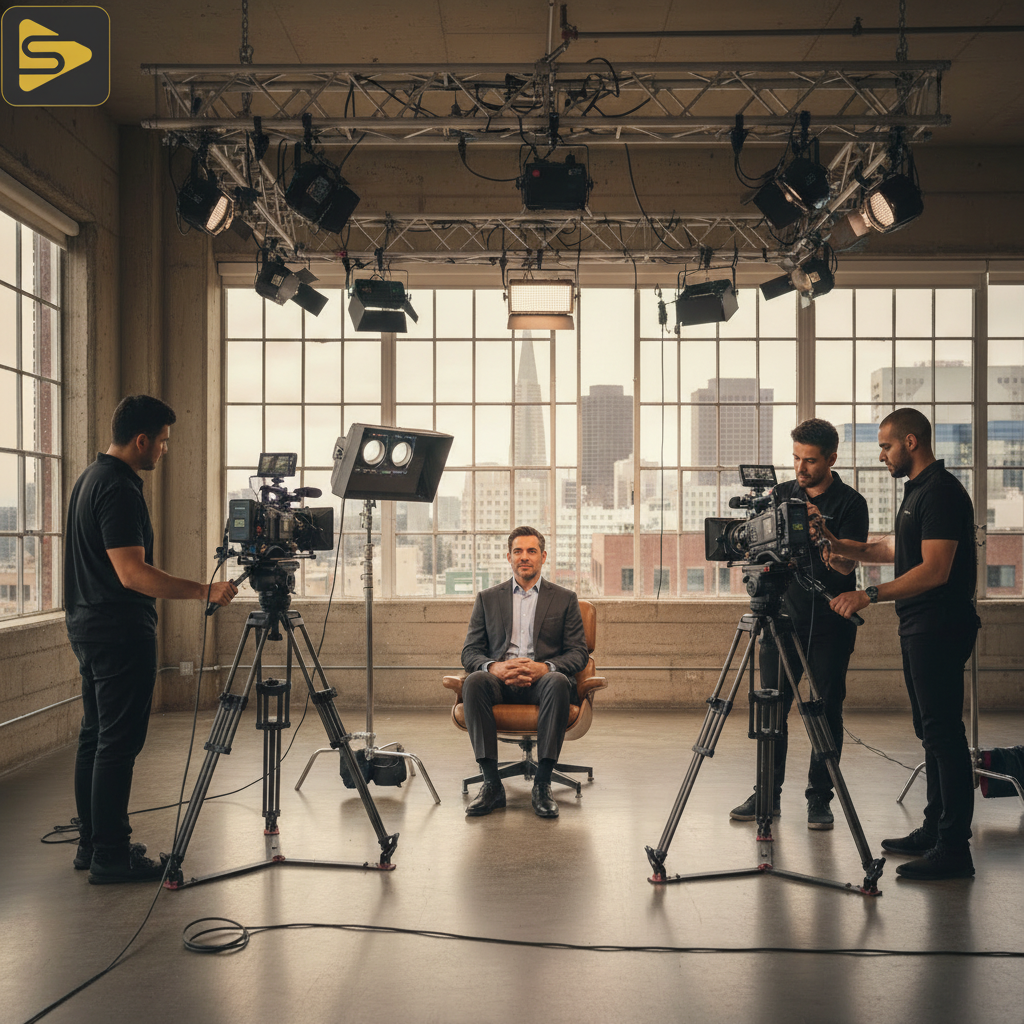
When you move away from the one-off video shoot model, you stop paying for setup and start paying for output. For a typical Bay Area mid-market client, this transition often results in a 400% increase in published content without increasing their production budget. By treating your shoot as a high-volume content engine, you ensure that every hour spent under the lights produces at least five finished clips.
Defining Your 90-Day Content Matrix
Before the cameras roll, you need a blueprint that maps your business goals to specific video themes. We recommend a 90-day matrix categorized into four primary pillars:
- The Educational Deep Dive: Solving one specific pain point for your ICP.
- The Contrarian Take: Challenging an industry norm to spark engagement.
- The Culture/Behind-the-Scenes: Humanizing the brand for recruitment and trust.
- The Product/Service Insight: Explaining the ‘how’ behind your unique value proposition.
By mapping these out, you avoid the ‘blank page’ syndrome on shoot day. If you’re struggling to generate enough topics to feed your content strategy, consider using our internal AI content engine, Ingest.blog, to analyze trending industry topics and generate high-intent hooks that resonate with your target audience.
The Hero-to-Micro Workflow: Extracting 20+ Assets
The most effective way to fuel high-volume content engines is to record long-form ‘Hero’ content that is designed to be sliced into ‘Micro’ snippets from the start.
Instead of recording 20 separate short videos, record 5 high-quality, 10-minute interviews or presentations. Each of these 10-minute segments can be parsed into 4-5 standalone clips for LinkedIn, Instagram, and X. This ensures a cohesive narrative while meeting the platform-specific demand for short-form video. It’s a strategy used by top-tier CEOs to build personal brands without spending 40 hours a week on social media.
- Step 1: Record a 10-minute ‘Masterclass’ on a core service.
- Step 2: Extract 3 ‘Quick Tips’ (under 60 seconds).
- Step 3: Pull 2 ‘Controversial Quotes’ for high-engagement posts.
- Step 4: Transcribe the audio for a long-form blog post.
The real insight? Most people try to record ‘Reels’ or ‘TikToks’ individually. That’s a mistake. Record for depth, then edit for breadth. This is how LinkedIn video production becomes a scalable asset rather than a chore.
| Asset Type | Typical Bay Area Pricing | Output per Shoot Day |
|---|---|---|
| Corporate Brand Film | $8,000–$50,000 | 1 Hero Film |
| Batch Video Production | $5,000–$15,000 | 15-25 Micro-Clips |
| Podcast Batching | $300–$1,500/ep | 4-6 Episodes |
Need help mapping out your first batch shoot? Schedule a free consultation with our production leads to build your custom content manifest.
Energy Management: Maintaining Executive Presence on Camera
Maintaining high-on-camera charisma for a 6-hour shoot is an operational challenge that most agencies ignore.
Here’s the thing: your energy at 9:00 AM will not be your energy at 3:00 PM. We use an ‘Energy Management’ framework to ensure the last video is as compelling as the first. This involves scheduling high-intensity, ‘controversial’ topics immediately after lunch and keeping the ‘educational/technical’ scripts for the morning when the brain is sharpest.

The Production Manifest Checklist
To keep the high-volume content engines running smoothly, your shoot day must be choreographed. In our experience with Series B SaaS teams, the absence of a manifest leads to ‘decision fatigue’ by noon. Your manifest should include:
- Outfit Changes: 3-4 distinct looks to vary the visual timeline.
- The Hook Library: A list of 10-15 different intros to test against the same content.
- Lighting Presets: Pre-configured setups for ‘Studio’ vs. ‘Candid’ looks.
- Teleprompter Scripts: Using LLMs to refine rough notes into natural speech patterns.
But wait—don’t over-rehearse. The ‘unpolished professional’ is a trending angle for a reason. According to HubSpot’s video research, authenticity often outperforms high-gloss production in B2B environments. It’s about executive presence on camera, not perfection.
The Short-Form Video SEO Strategy
Producing the content is only half the battle; ensuring it’s discoverable is where the social media video ROI truly lives.
LinkedIn is increasingly functioning like a search engine. This means your video captions, headlines, and metadata must be optimized for the ‘Suggested for You’ feed. When we manage paid advertising or organic social for clients, we treat every video description like a mini-blog post. Use keywords naturally, include a clear CTA, and use 3-5 relevant hashtags.
What most people miss is the ‘Zero-Edit’ batching method. For some content, like quick industry updates, you can record directly into a high-quality mobile setup with a ring light and upload with minimal trimming. This allows your high-volume content engines to stay agile between major studio sessions.
Managing the Bottleneck: AI Post-Production
The real reason most content engines fail isn’t the filming—it’s the editing. Filming 20 videos creates a massive backlog for a traditional editor.
To solve this, we leverage AI-assisted repurposing tools like Descript or Munch to handle the initial ‘rough cuts’ and transcription. This allows our creative leads to focus on the high-value elements: color grading, sound design, and strategic captioning. For a medical practice owner or a startup founder, this means the turnaround time for a 3-month batch can be as little as 10 business days.
Ready to stop the one-off cycle? Contact iStudios Media to discuss our full-day production packages in our San Leandro studio or on-site at your Bay Area office.
Key Takeaways for Scaling Content
- Stop filming one-offs; start batching quarterly.
- Use the ‘Hero-to-Micro’ workflow to 5x your output.
- Manage executive energy by tiering script intensity.
- Optimize captions for LinkedIn SEO to increase reach.
Frequently Asked Questions
How many videos can I realistically record in one day?
With a structured high-volume content engine approach, an executive can typically record 4-6 ‘Hero’ segments which translate into 20-30 micro-clips. This requires a professional teleprompter setup and a clear production manifest to minimize downtime between takes and outfit changes.
What is the typical cost for a batch video shoot in the Bay Area?
Industry-reported ranges for a professional full-day studio shoot with a crew, lighting, and post-production for 20+ assets typically fall between $5,000 and $15,000. This is significantly more cost-effective than hiring a freelance videographer for multiple separate sessions throughout the quarter.
Do I need a script for every LinkedIn video?
While full scripts can sometimes feel robotic, we recommend ‘bulleted scripts’ or teleprompter outlines. This ensures you hit your key SEO keywords and value points without losing the natural, authentic tone that builds trust with a B2B audience on social media.
How do I ensure the content doesn’t feel repetitive?
The key is visual and thematic variety. We use 3-4 outfit changes, vary the camera angles (wide vs. tight), and rotate through different content pillars (educational, contrarian, culture). This prevents your feed from looking like a single day’s work while maintaining a consistent brand voice.