📋 Table of Contents
According to a 2024 study by the Journal of Medical Internet Research, high-quality visual content on healthcare websites can increase patient trust scores by up to 35% compared to stock-heavy alternatives. In the competitive San Francisco market, your medical practice photography is the first digital handshake a patient receives before they ever step foot in your clinic.
Key Takeaways for SF Medical Leaders
- CRI Matters: Color Rendering Index (CRI) scores above 90 are non-negotiable for accurate skin tone and clinical detail.
- HIPAA First: Lighting setups must prioritize patient privacy and data security above all aesthetic choices.
- Tech-Forward: Matching the visual polish of VC-backed health startups is essential for local practice retention.
- Operational Flow: Professional shoots must be non-disruptive to patient care cycles.
1. The CRI Gap: Why Your Current Office Lights Are Killing Your Brand
Most San Francisco medical offices rely on legacy fluorescent or low-cost LED panels that cast a green or yellow hue, making even the most modern clinic look dated. The real kicker? These lights often have a low Color Rendering Index (CRI), which distorts skin tones—a critical failure for dermatology, plastics, or any patient-centric practice.
When we conduct a clinical environment lighting audit, we measure the existing light against a benchmark of 90+ CRI. High-CRI lighting ensures that the “after” photos in your portfolio look vibrant and healthy rather than sickly or artificial. This accuracy reduces patient anxiety by presenting a clean, honest representation of your results.
- The Problem: Cheap LEDs create “color spikes” that digital sensors can’t resolve.
- The Solution: Supplementing ambient light with high-CRI strobe or continuous video lighting.
- The ROI: Better patient acquisition imagery that converts high-intent searchers into scheduled appointments.
2. Managing the ‘Natural Light’ Illusion in Urban SF Architecture
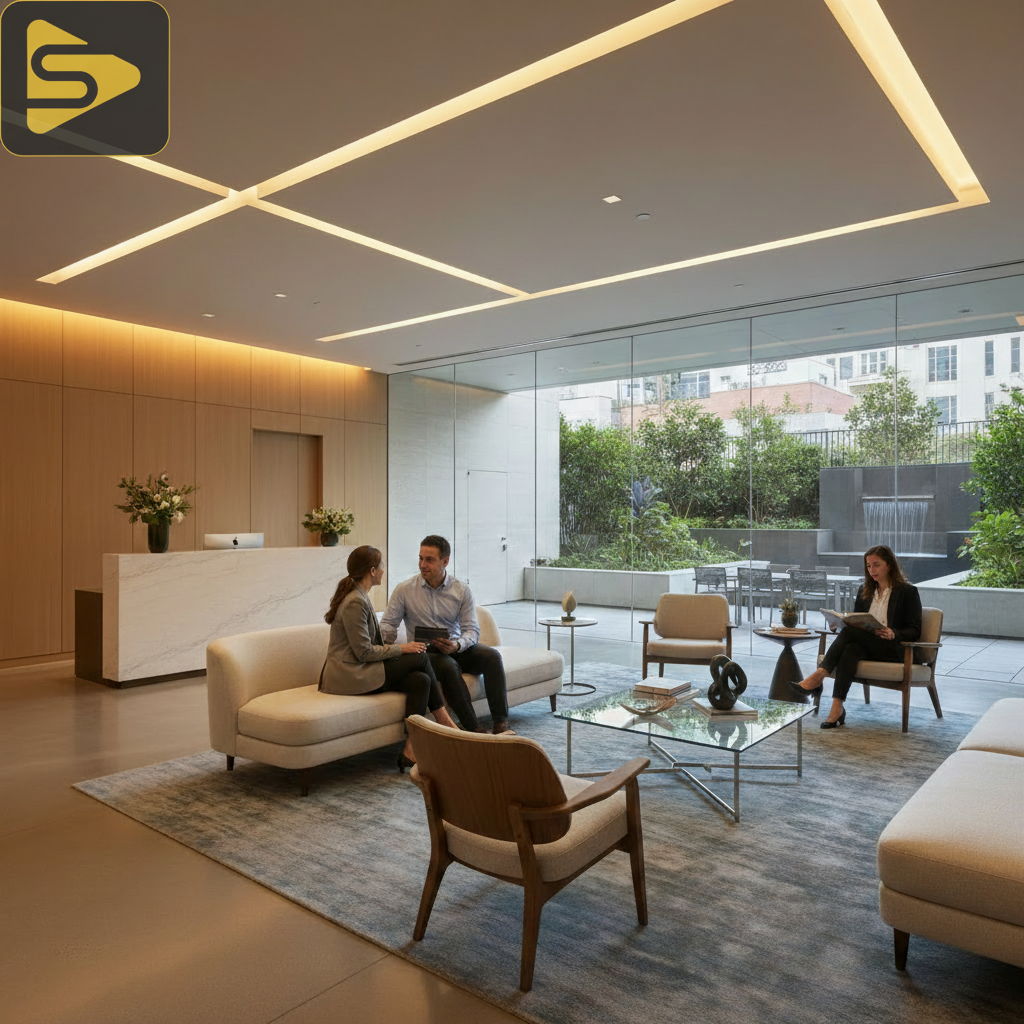
San Francisco’s historic medical plazas often feature deep floor plates with limited window access, creating a harsh contrast between bright exteriors and dim corridors. Professional medical practice photography requires balancing these extremes to create a “warm hospitality” feel that mimics a boutique wellness startup.
In our experience with mid-market clients, we often find that the best way to handle these spaces is to “wrap” natural light further into the room using large-scale modifiers. This prevents the clinical areas from feeling like a basement while maintaining the professional sterility required for medical credibility. If you are struggling with inconsistent lighting, you might need more than a one-off video shoot; you need a strategic partner who understands the local architecture.
Need a professional eye to evaluate your space? Schedule a free lighting consultation with our production team today.
3. HIPAA-Compliant Lighting Workflows and Patient Privacy
Lighting a medical space isn’t just about beauty; it’s about security and compliance. What most people miss is that high-powered photography lights can inadvertently reflect sensitive patient information on screens or glass partitions into the camera lens.
A technical audit ensures that light placement avoids “hot spots” on monitors or chart racks. We use a specific flagging technique to keep light focused on the provider-patient interaction while leaving background data in soft, unreadable shadows. This allows for compelling patient-centric visual storytelling without risking a HIPAA violation.
| Lighting Goal | Clinical Benefit | Marketing Outcome |
|---|---|---|
| Soft Key Light | Reduces patient intimidation | Higher conversion on Google Ads | High-CRI Fill | Accurate skin tone representation | Builds trust in clinical results |
| Flagged Backgrounds | Maintains HIPAA compliance | Mitigates legal and privacy risks |
4. From Sterile to Sophisticated: The Cinematic Lighting Shift
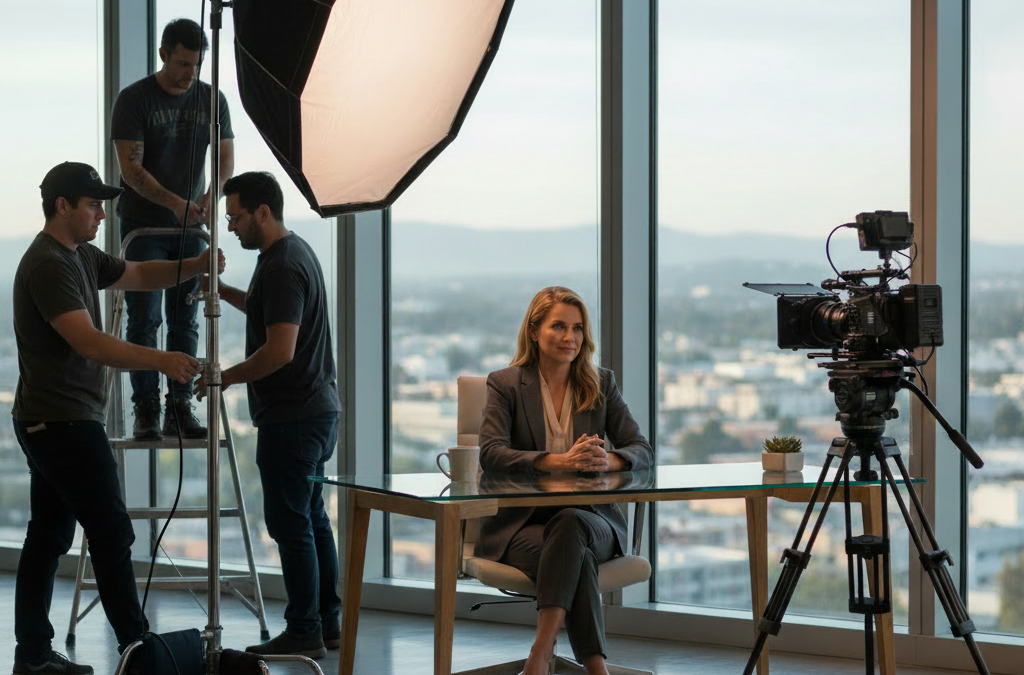
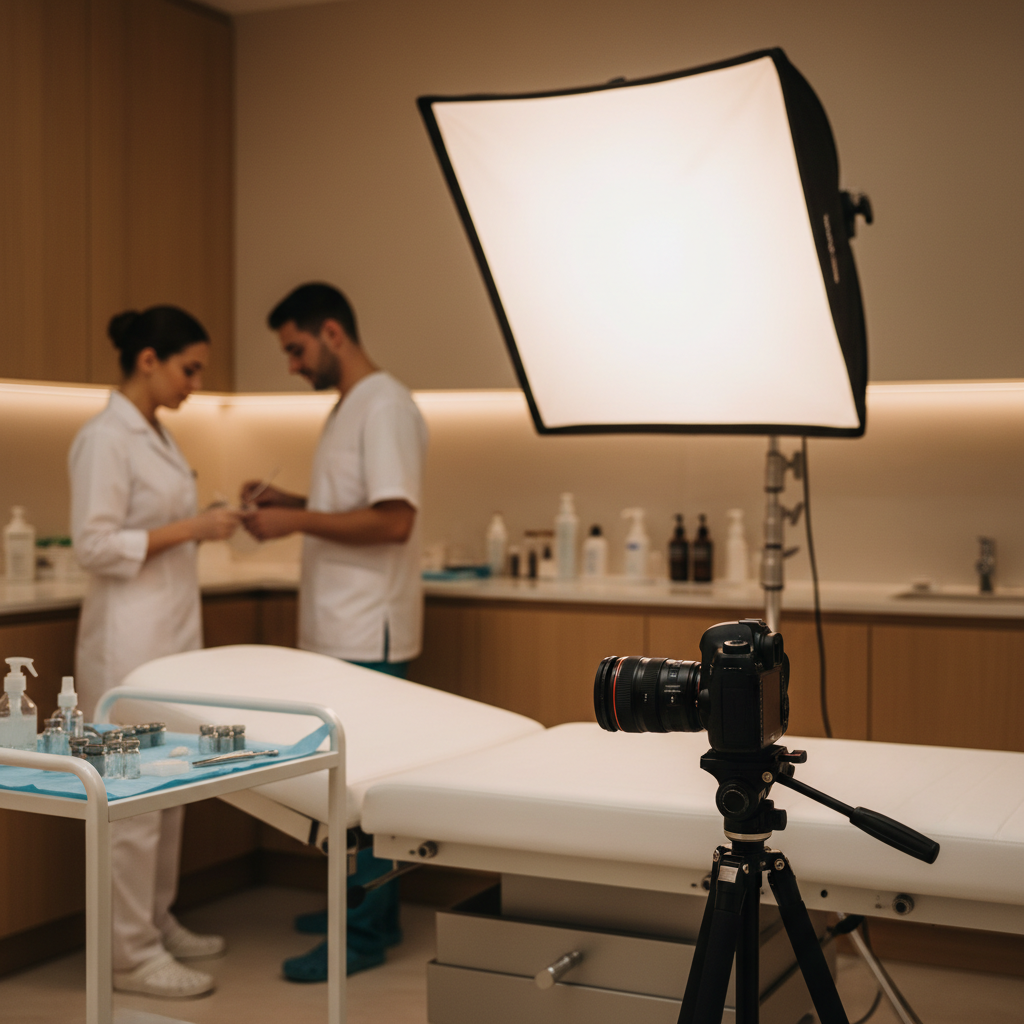
The modern patient in the Bay Area is used to the high-end aesthetics of companies like One Medical or Forward. To compete, local practices must move away from flat, overhead lighting and toward cinematic, three-point lighting setups that add depth and dimension to the space.
Here’s the thing: you don’t need a freelance videographer who just shows up with a camera; you need a production partner who understands how to use lighting to define your brand authority. By adding a subtle “rim light” to your staff headshots or using “warm-to-cool” color temperature shifts in your lobby photography, you signal a level of sophistication that justifies premium pricing.
For practices looking to scale their content across multiple channels, we often use Ingest.blog, our internal AI content engine that we also offer to select clients, to ensure that these high-end visuals are distributed effectively across SEO-optimized blog posts and social updates.
5. Mobile-First Lighting for Social Media and Reels
As of 2024, most patients will first encounter your practice on a mobile device through Instagram or TikTok. A lighting audit must include a plan for “social-ready” zones within your office where staff can quickly capture high-quality video without a full production crew.
What we recommend to many of our Series B SaaS founders and medical practice owners is the creation of a “Content Corner.” This involves permanent, high-CRI lighting fixtures that are color-balanced to the rest of the office. This ensures consistency between your professional medical practice brand photography and your daily organic social updates.
- Consistency: Your professional site and your Instagram should look like they belong to the same brand.
- Efficiency: Reduces the time staff spends “fixing” lighting for quick updates.
- Authority: High-quality lighting on social media separates experts from amateurs.
For more insights on how to integrate video into your growth strategy, check out our video production resources.
The Contrarian Insight: Why ‘Perfect’ Lighting Can Sometimes Backfire
Here is an honest, contrarian view: sometimes, making a medical office look *too* much like a movie set can actually decrease trust. Patients are looking for authenticity. If the lighting is so stylized that it masks the clinical reality, it can create a disconnect when the patient arrives for their appointment. The goal of a technical audit is enhanced reality—not fiction. We aim to show your practice on its best day, not to create a fantasy that doesn’t exist.
Ready to elevate your practice’s visual authority? Contact iStudios Media for a professional audit of your San Francisco medical space.
Frequently Asked Questions
How long does a typical medical practice photography shoot take?
A standard session for a mid-sized San Francisco practice usually takes 4 to 8 hours. This allows for lighting setup, staff headshots, and clinical environment captures without disrupting the flow of patient care. We often recommend scheduling during a “half-day” or administrative block to minimize impact on revenue-generating hours.
What is the typical cost for professional medical photography in the Bay Area?
Industry-reported ranges for professional medical practice photography in the Bay Area typically fall between $2,500 and $15,000 per project. This varies based on the number of providers, the size of the facility, and whether specialized lighting for surgical or clinical procedures is required.
Can we use our own staff for the photography?
While using your own staff is great for authenticity, we highly recommend professional lighting and direction. A one-off video shoot or photo session is an investment in your long-term healthcare marketing SF strategy. Professional production ensures that your team looks approachable, expert, and well-lit, which is difficult to achieve with consumer-grade equipment.
How do you handle lighting in sterile environments like operating rooms?
In sterile environments, we use compact, battery-powered LED lighting that can be thoroughly sanitized and positioned away from the sterile field. We work closely with your clinical director to ensure that our equipment never interferes with medical protocols or safety standards while still capturing high-quality patient acquisition imagery.