📋 Table of Contents
According to a 2024 survey by Bizzabo, 82% of event organizers believe that high-quality video content is the most critical factor for attendee engagement in a hybrid world. For a Series B founder or an enterprise CMO in San Francisco, a tech keynote production isn’t just a presentation; it’s a high-stakes brand film performed live where a single Wi-Fi drop or a flickering LED wall can derail a $50M product launch.
Key Takeaways for Marketing Leaders
Hiring a specialized keynote production agency ensures that your high-stakes presentation has the technical support and cinematic design needed to impress a professional audience.
- Redundancy is King: Always have a ‘Black Box’ backup for live AI demos.
- Content Atomization: Treat rehearsals as a production set for social media clips.
- The 48-Hour Lock: Freeze all assets two days before doors open to ensure technical stability.
In the Bay Area, the bar for production is set by Apple and Google. Moving beyond a freelance videographer or a one-off video shoot requires a systematic approach to technical rehearsals and speaker readiness. This checklist ensures your next summit at Moscone or a private venue in Palo Alto runs with the precision of a live broadcast.
Stage 1: The Narrative Architecture and Visual Identity
Successful keynotes are built on a foundation of visual consistency that aligns with the broader event video strategy. Before a single slide is designed, you must establish the ‘Psychology of the Stage’—ensuring that the neuro-marketing elements of your slide design don’t compete with the speaker’s physical presence.
What most people miss is the ‘Apple-fication’ of modern B2B SaaS keynotes. It’s no longer enough to have bullet points; you need cinematic motion graphics and high-fidelity keynote visual assets that look as good on a 4K livestream as they do on a 60-foot LED wall.
- Aspect Ratio Alignment: Confirm if the stage uses a standard 16:9 or a custom ultra-wide LED resolution.
- Color Grading: Ensure slide backgrounds are optimized for camera sensors to avoid moiré patterns.
- Font Legibility: Test font sizes for the ‘back of the room’ experience and mobile viewers.
Stage 2: Technical Rehearsal and The ‘Zero-Fail’ Demo
The Technical rehearsal (or Tech Run) is where the vision meets the reality of hardware. For GenAI startups, the biggest fear is a live demo failure. We recommend a ‘Zero-Fail’ strategy: a three-tiered approach to live software showcases.
The real kicker? Most founders want to ‘wing it’ with live code. We advise a ‘Stage-Ready’ backup: a high-resolution screen recording of the demo that can be triggered instantly if the live environment lags. This isn’t ‘faking it’; it’s professional San Francisco conference production standards.
| Demo Tier | Risk Level | Requirement |
|---|---|---|
| Live Local Environment | High | Hardwired Ethernet + Dedicated Server |
| Cloud-Based Demo | Medium | Redundant 5G Failover + Private VLAN |
| Pre-Recorded ‘Sim-Live’ | Low | 4K ProRes Export on Primary Switcher |
Need a partner who understands the technical nuances of a Bay Area launch? Schedule a free consultation with our production team to map out your technical requirements.
Stage 3: Speaker Readiness and Executive Presence Coaching
Even the most brilliant CTO can crumble under the heat of a 10,000-watt lighting rig. Executive presence coaching should focus on ‘Beyond the Teleprompter’ training—teaching speakers how to recover from technical glitches without breaking character.
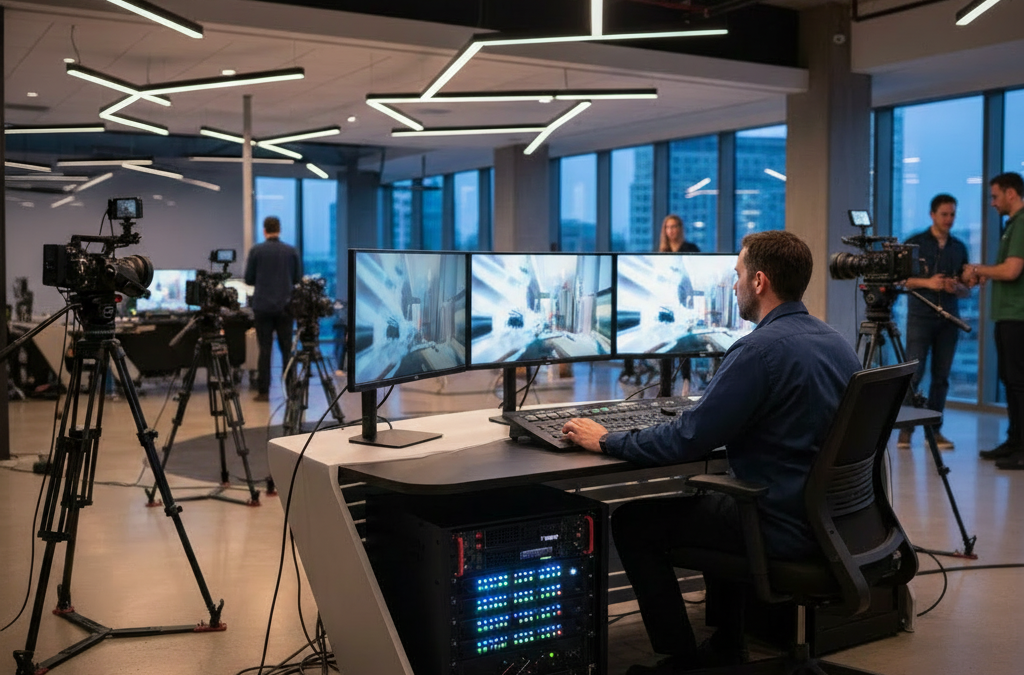
In our experience with Series B SaaS founders, the most effective speakers are those who have practiced with the actual hardware they will use on stage. This includes the specific clicker model and the exact height of the confidence monitors. We often suggest treating the ballroom like a live TV studio, where every movement is choreographed for multi-camera live switching.
- Ear Prompter vs. Teleprompter: Decide early which tool fits the speaker’s style best.
- Wardrobe Check: Avoid small patterns (herringbone) that cause camera ‘jitter.’
- Mic Selection: Choose between DPA headsets for stability or handhelds for a ‘rockstar’ feel.
Stage 4: Redundancy and Stress Testing
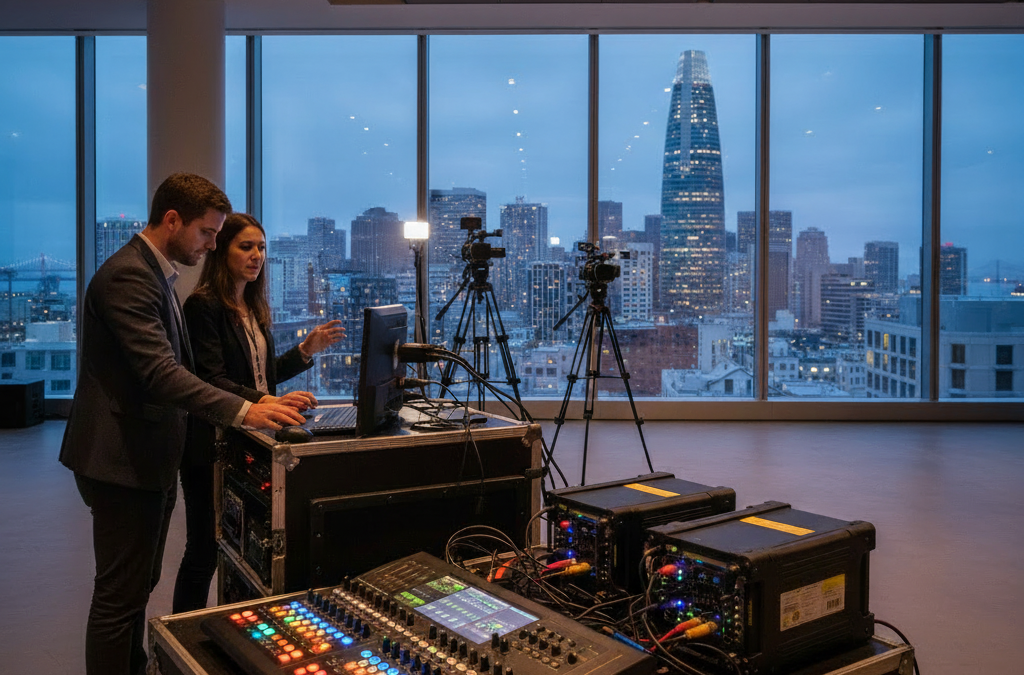
Stage 4 is where we separate the professionals from the amateurs. Redundancy isn’t just about having two of everything; it’s about having a ‘fail-active’ system. If your primary tech keynote production switcher dies, the backup should be frame-synced and ready to take over in under 100 milliseconds.
Here’s an honest, contrarian insight: You are spending too much on the venue and not enough on the ‘Content Factory.’ During Stage 4, we use our internal AI content engine, Ingest.blog, to help clients plan their post-event SEO and social media distribution. By capturing vertical ‘behind-the-scenes’ content during the stress test, you create an event ROI optimization loop that lasts months after the curtains close.
Stage 5: The 48-Hour Lock and Content Atomization
The final 48 hours before a Bay Area tech summit are the most critical. This is the ‘Lock Period.’ No more slide edits. No more ‘just one more feature’ in the demo. This period is dedicated to the crew performing ‘black-start’ tests—simulating a total power loss to ensure the UPS systems hold.
What most people miss is that the keynote is the beginning of the marketing cycle, not the end. A typical Bay Area mid-market client will use the 48-hour window to batch-record ‘social-first’ intros and outros for the keynote clips. This ensures that when the multi-camera live switching feed is edited, you have high-quality assets ready for LinkedIn and X (Twitter) immediately.
- Asset Verification: Double-check all lower-thirds and speaker titles for typos.
- Livestream Latency: Test the ‘Hybrid-first’ accessibility by checking the stream on low-bandwidth connections.
- Final Walkthrough: A full dress rehearsal with all ‘show-ready’ lighting and audio cues.
Ready to scale your content without scaling your internal headcount? Explore our corporate video production services to see how we handle high-stakes keynotes.
Frequently Asked Questions
How much does tech keynote production cost in the Bay Area?
Industry-reported ranges for professional tech keynote production in San Francisco typically fall between $8,000 and $50,000 per finished minute for premium brand films, while full-day event coverage with multi-camera crews ranges from $1,500 to $8,000 per day. Factors include the complexity of motion graphics and the scale of the AV integration.
What is the ’48-Hour Lock’ in event production?
The 48-Hour Lock is a critical pre-production milestone where all visual assets, slide decks, and demo environments are frozen. This prevents last-minute technical bugs and allows the production crew to perform final stress tests on the multi-camera live switching systems and lighting cues without interference.
Why should I hire a production agency instead of a freelance videographer?
A freelance videographer is excellent for single-camera capture, but a tech keynote requires a structured team including a technical director, an audio engineer, and a graphics op. An agency provides the ‘Zero-Fail’ redundancy and integrated event video strategy that a solo operator cannot scale to meet.
How do you handle live AI demo failures?
We implement a ‘Zero-Fail’ demo framework. This includes a dedicated, hardwired network for the live demo, a ‘sim-live’ backup recording that the director can switch to instantly if the live feed lags, and speaker readiness training to help the executive transition smoothly between environments.
Managing a high-stakes keynote requires more than just a camera; it requires a partner who understands the intersection of technology and storytelling. Don’t leave your product launch to chance. For a partner that delivers measurable ROI through integrated production and performance, contact iStudios Media today for a strategic consultation.
How a Keynote Production Agency Protects Your Brand
A professional agency does more than just make slides. They manage the entire flow of the event, from lighting cues to backup power sources. This keeps the focus on your message instead of technical glitches.
By handling the complex stage setup and video feeds, they let you focus on your delivery. This level of support is vital for events where a single mistake could be seen by thousands of people online.
Choosing the Right Production Partner
When looking for help, find a team that understands both live theater and corporate goals. You need a partner who can translate complex data into clear visuals that work on large LED screens and small mobile devices alike.