📋 Table of Contents
According to research from DocSend, investors now spend an average of just 2 minutes and 42 seconds reviewing a pitch deck, making the visual impact of an investor pitch video the fastest way to establish psychological trust. In the high-stakes world of Series B and C rounds, a grainy Zoom recording or a flatly lit one-off video shoot doesn’t just look ‘scrappy’—it signals a lack of operational maturity to VCs who are looking for scale-ready leadership.
Establishing visual authority isn’t about buying the most expensive camera; it’s about mastering the physics of light to reduce cognitive load for your audience. When a founder’s face is properly sculpted with depth, investors subconsciously perceive them as more prepared, transparent, and authoritative. At iStudios Media, we’ve refined a 3-tier lighting hierarchy specifically designed for the San Francisco startup film landscape, where ‘Stealth Wealth’ aesthetics often outperform over-produced commercials.
Tier 1: The Key Light and the Psychology of the ‘Trust Ratio’
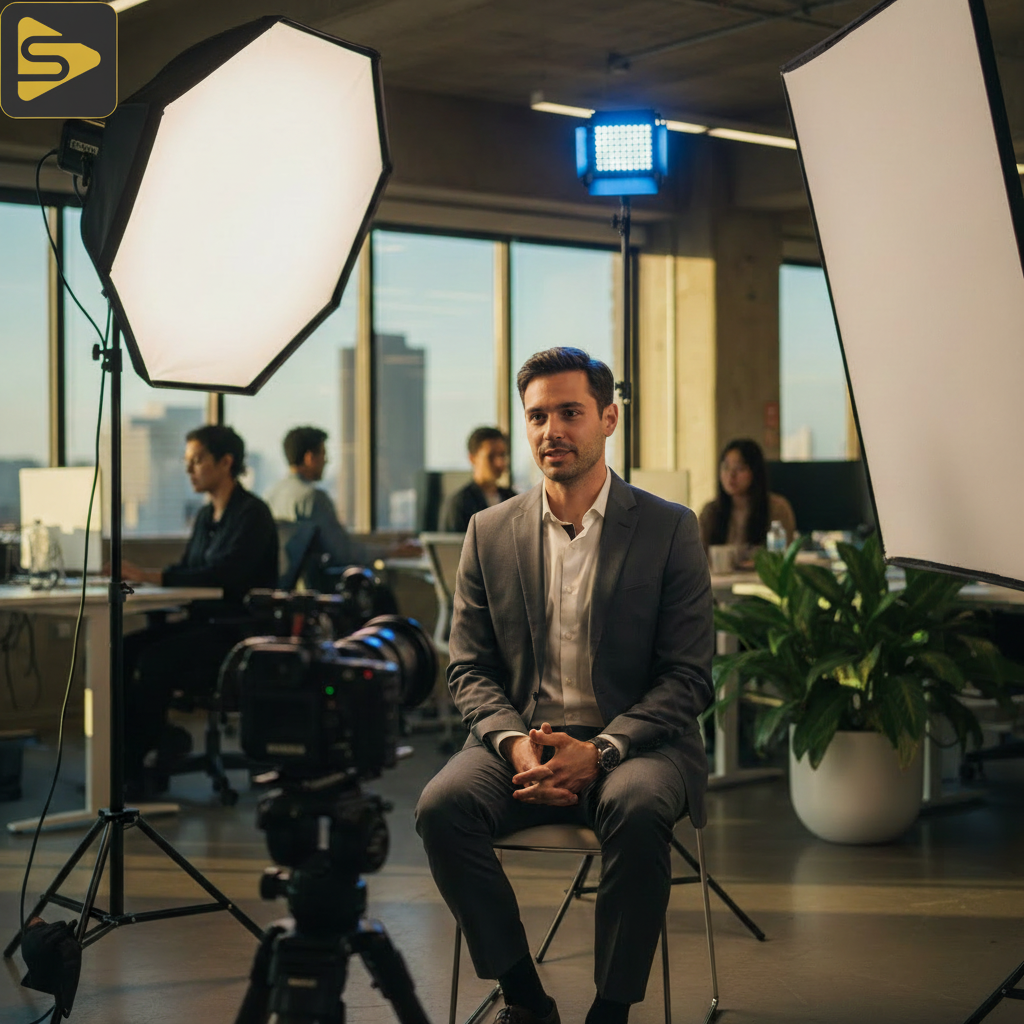
The key light is your primary source of illumination, but its placement determines whether you look like a visionary leader or a deer in headlights. Here’s the thing: most founders make the mistake of placing their light directly in front of them, which flattens features and washes out the ‘executive presence’ required for a high-stakes video production.
- The Rembrandt Angle: Position your key light 45 degrees to the side and slightly above eye level to create a small triangle of light on the opposite cheek.
- Softness Matters: Use a large softbox or diffusion silk; hard shadows translate to ‘harshness’ in personality, whereas soft light suggests approachability.
- The 2:1 Ratio: Aim for a subtle contrast between the lit and shadowed side of the face to create a three-dimensional look that mimics high-end corporate video production.
In our experience with Series B SaaS founders, moving away from a ring light to a dedicated COB (Chip on Board) LED with a deep parabolic softbox immediately elevates the perceived value of the pitch. This setup moves the needle from looking like a freelance videographer project to a professional brand film. If you’re struggling to dial in your look, you can schedule a free consultation with our production team.
Tier 2: The Fill Light and Managing Professional Transparency
The fill light’s job is to manage the shadows created by the key, ensuring the investor can see the nuances of your expressions without losing the depth that signals authority. What most people miss is that the fill light shouldn’t be a second lamp of equal power; it should be a supportive element that preserves the ‘Trust Ratio’.
- Negative Fill: Sometimes, the best fill is no light at all, but rather a black board (V-flat) to deepen shadows for a more cinematic, ‘serious’ tech founder look.
- Reflected Fill: Using a white bounce board to reflect the key light back onto the face creates a more natural, ‘hybrid pitch’ look that works well for remote fundraising.
- Color Consistency: Ensure your fill light matches the color temperature (Kelvin) of your key light to avoid ‘muddy’ skin tones that look amateurish.
The real kicker? Investors are trained to look for micro-expressions. If your lighting is too high-contrast, you might inadvertently hide the very facial cues that build rapport. Using a calibrated fill ensures your investor pitch video maintains a balance of cinematic mood and professional clarity.
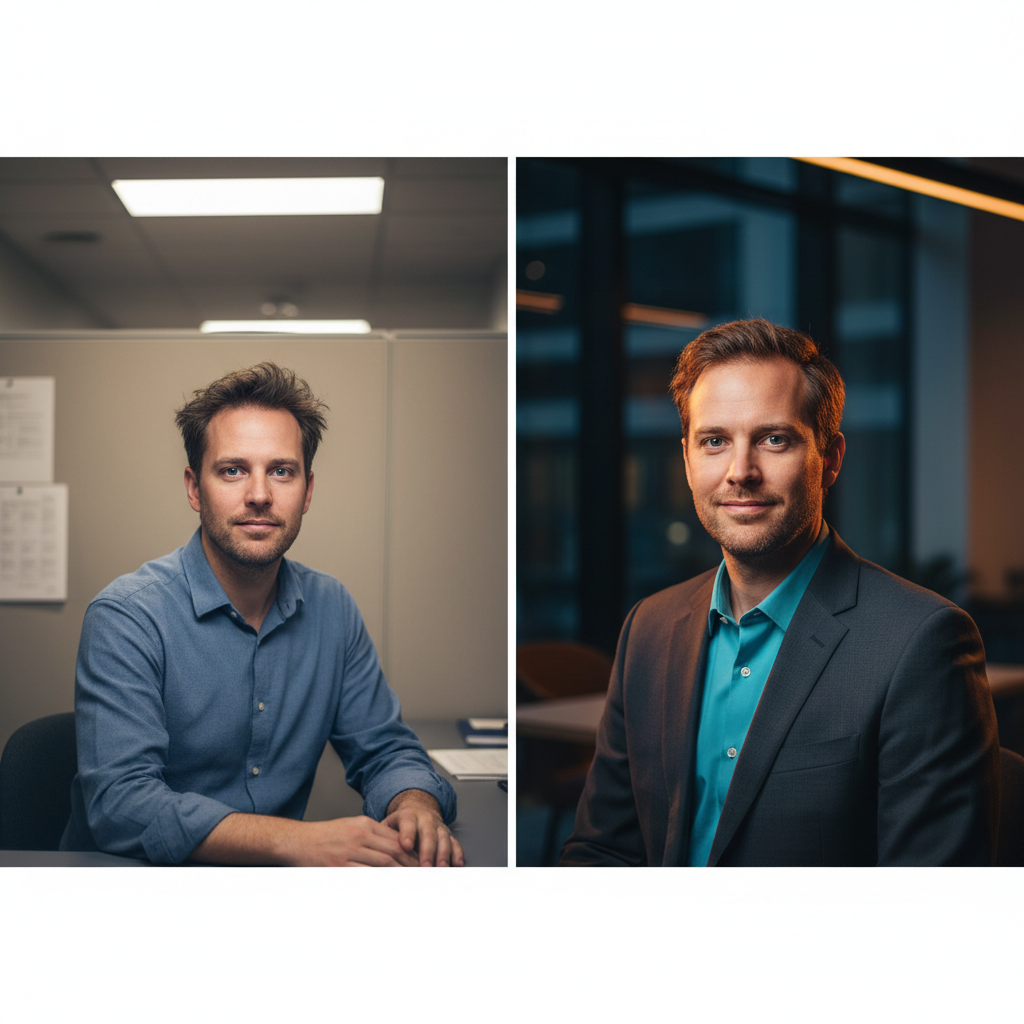
Tier 3: The Backlight (Hair Light) for Scale and Separation
The backlight is the secret weapon for creating ‘Visual Authority’ by physically separating the founder from the background, symbolizing a leader who stands out from the noise. Without this third tier, you risk blending into your office wall, which subconsciously communicates a lack of ‘scale’ to a discerning VC.
- The Halo Effect: A subtle light placed behind the subject, opposite the key, catches the hair and shoulders to create a crisp outline.
- Practical Brand Integration: For modern tech pitches, we often use ‘brand-color’ backlighting—subtle blue or teal accents that reinforce the company’s visual identity.
- Depth of Field: When combined with a wide aperture lens (f/1.8 or f/2.8), the backlight makes the background melt away, focusing 100% of the investor’s attention on your message.
A typical Bay Area mid-market client often overlooks this step, thinking a one-off video shoot only needs to capture what’s in front of the camera. However, that third dimension is what separates a DIY effort from a professionally produced brand film. For founders managing high-velocity content, we use Ingest.blog, our internal AI content engine, to ensure the messaging in these videos is distributed across SEO-optimized channels efficiently.
Comparing Lighting Setups: Budget vs. Professional
While you can hack a 3-tier system with household lamps, the precision of professional gear like the Aputure or Nanlite series allows for the consistency required for multi-day shoots. Below is a comparison of how these tiers translate across different budget levels.
| Tier | DIY / Household Setup | Professional Production |
|---|---|---|
| Key Light | Window light or Floor lamp with white sheet | Aputure 300d II w/ Light Dome II |
| Fill Light | White poster board (Bounce) | Aputure Amaran 100d (Dimmed to 20%) |
| Backlight | Small desk lamp hidden behind chair | Nanlite PavoTube II 6C (RGB Accent) |
The Stealth Wealth Aesthetic: Why Less is Sometimes More
In the SF Bay Area, over-produced lighting can sometimes hurt seed-round authenticity if it looks like a perfume commercial rather than a technical pitch. The ‘Stealth Wealth’ aesthetic focuses on high-quality light that looks like ‘better natural light’ rather than ‘studio light’.
But wait—this doesn’t mean you should settle for low quality. It means using high-end gear to mimic the sun or a high-end office environment. This approach is highly effective for founder video production because it feels grounded yet premium. We often employ this strategy for medical practice owners and biotech founders who need to appear both clinical and innovative. Check out our video production services to see examples of this ‘elevated natural’ style.
Strategic Implementation: How to Use This Monday Morning
You don’t need to be a cinematographer to improve your investor pitch video today. Start by identifying your primary light source and moving it 45 degrees off-center. If you are using a smartphone, ensure you are using the back camera (not the selfie camera) to take advantage of better sensors that handle 3-tier lighting more effectively.
For founders who need to scale their content without scaling their headcount, the focus should be on building a repeatable system. Whether you are filming a product demo or a Series C vision film, these lighting principles remain the same. If you’re ready to move beyond the freelance videographer model and want a partner that understands the intersection of production and performance marketing, contact iStudios Media today for a strategic consultation.
Frequently Asked Questions
How much does professional investor pitch video production cost in the Bay Area?
Typical Bay Area pricing for a high-quality investor pitch video ranges from $2,500 to $15,000 per project. This usually includes pre-production strategy, a professional 3-tier lighting setup, high-end audio, and professional editing. The range depends on the number of locations, use of motion graphics, and the length of the final cut.
Can I achieve a professional look with just natural window light?
While natural light can be beautiful, it is inconsistent. For a high-stakes pitch, you need control. If you use a window as your key light, you still need a fill (like a bounce board) and a backlight (like a small LED) to create the 3-tier hierarchy. Professional LEDs allow you to maintain the same look regardless of the time of day.
What is the ‘Trust Ratio’ in lighting?
The ‘Trust Ratio’ refers to a lighting setup (usually 2:1 or 3:1) that creates enough shadow to define facial features—signaling depth and maturity—while keeping both eyes clearly visible. In psychological terms, ‘flat’ lighting can feel ‘hidden’ or ‘masked,’ whereas sculpted lighting feels transparent and authoritative.
Why is lighting more important than camera resolution for VCs?
Most VCs watch pitch videos on laptops or mobile devices where 4K vs 1080p is barely noticeable. However, the human brain processes light and shadow instantly. Poor lighting creates ‘visual noise’ that increases cognitive load, making it harder for the investor to focus on your data and vision. Good lighting removes that friction.