📋 Table of Contents
According to recent industry data from Wyzowl, 88% of marketers say video provides a positive ROI, yet the logistical cost of flying creative directors across the country has become a budget-killer. A hybrid production workflow is no longer a futuristic concept; it is the standard for Bay Area companies needing high-fidelity content without the enterprise-level travel overhead.
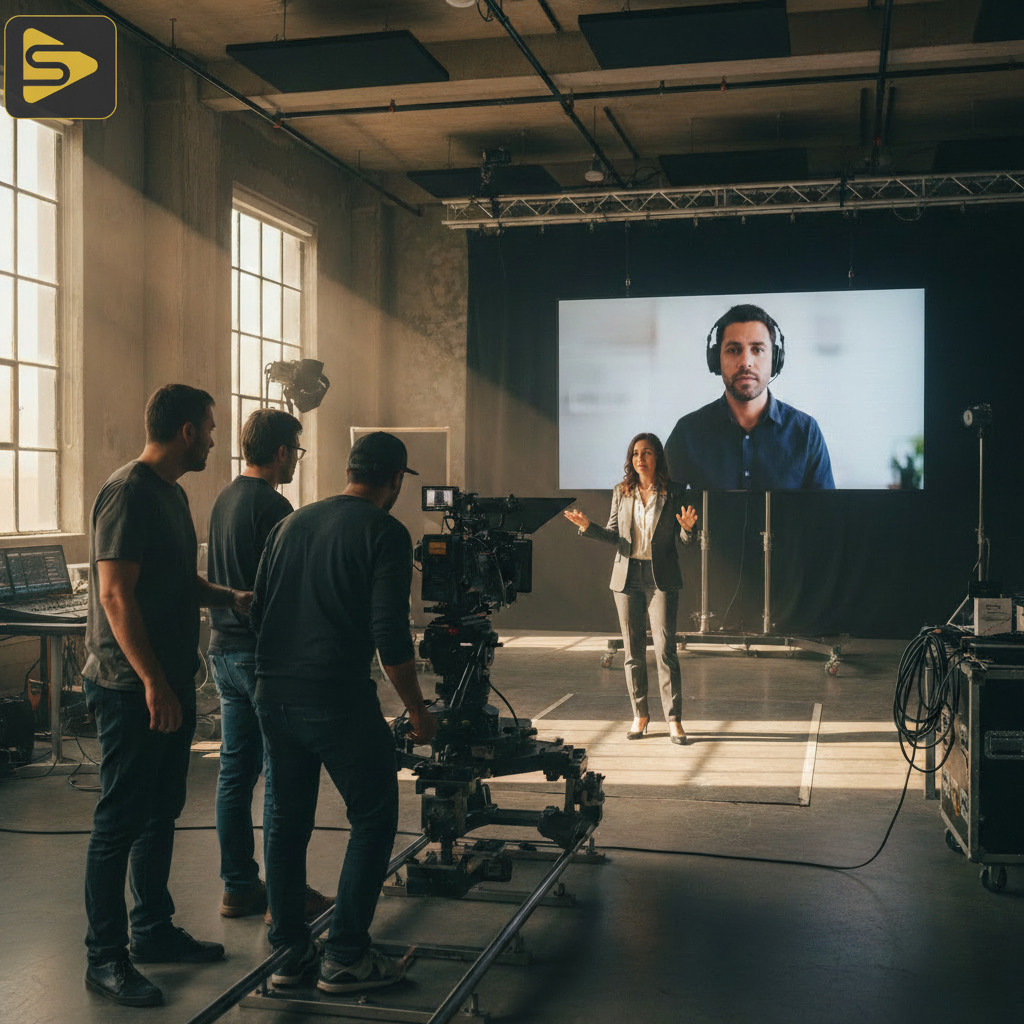
For a Series B SaaS founder or a CMO at a mid-market tech firm, the choice used to be binary: hire a freelance videographer for a one-off video shoot and hope for the best, or pay for a full agency team to travel to San Francisco. Today, the hybrid production workflow bridges this gap, allowing remote stakeholders to direct local, elite crews in real-time. This model preserves brand integrity while drastically reducing the time-to-market for critical assets.
Why the Hybrid Production Workflow is the New Enterprise Standard
The real kicker is that remote oversight often results in better creative outcomes because the director is focused on the monitor, not the catering or the flight home.
In our experience with mid-market clients, the shift toward decentralization has been driven by three primary factors:
- Cost Efficiency: Eliminating travel, lodging, and per diems for non-essential on-site staff saves roughly 20-30% of a standard production budget.
- Talent Access: You can pair a world-class creative director in London with a specialized camera crew at our San Leandro studio.
- Speed: Local crews understand the unique logistical nuances of the Bay Area, from micro-climates to tech-campus security protocols.
Transitioning to this model requires more than just a Zoom link; it requires a robust technical stack and a culture of radical transparency between the local production partner and the remote stakeholders.
The Technical Stack: Low-Latency and Virtual Video Villages
A professional hybrid production workflow lives or dies by the quality of the signal sent from the camera to the director’s home office.
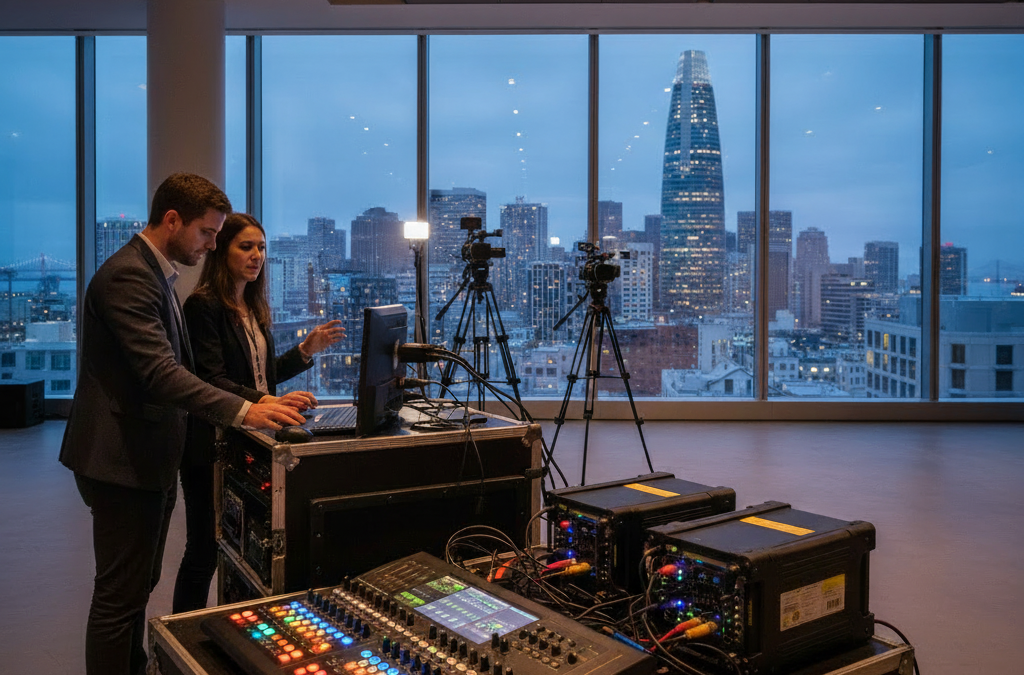
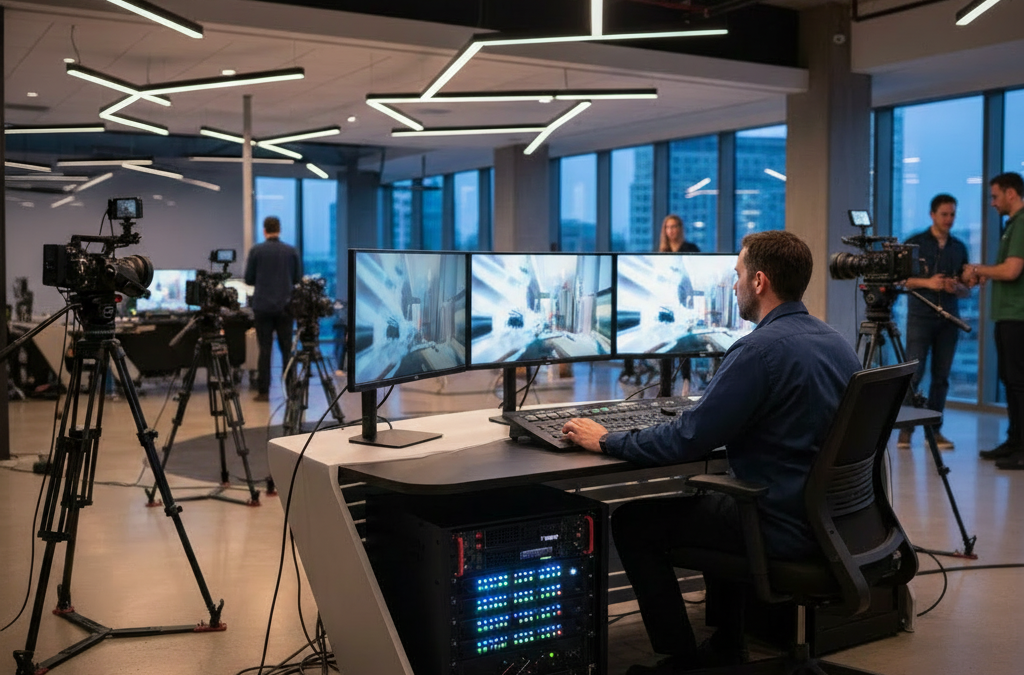
We utilize tools like Frame.io for real-time review and Teradek Core for low-latency streaming. This creates a “Virtual Video Village” where a CMO in New York sees exactly what the DP sees in San Francisco, with less than 200ms of delay. This isn’t a grainy webcam feed; it’s a pixel-perfect 10-bit stream that allows for precise adjustments to lighting, wardrobe, and performance.
Essential Hardware for Hybrid Success
- 5G Bonded Cellular: Ensures a stable uplink even in signal-dead zones on tech campuses.
- Spatial Audio Feeds: Allows the director to hear the “room tone” and communicate privately with the local producer.
- Multi-Cam Monitoring: Providing both the “hero” shot and a wide “behind-the-scenes” view so the director understands the physical space.
Ready to see how this works in practice? Schedule a free consultation to discuss your next Bay Area shoot.
Managing Local SF Crews vs. The One-Off Video Shoot
What most people miss is that a freelance videographer often lacks the infrastructure to support remote creative direction at scale.
When you hire a dedicated SF video production partner, you aren’t just getting a camera operator; you are getting a localized production office. This is critical for corporate comms and HR teams who need to operate within strict enterprise security and compliance frameworks. A typical Bay Area mid-market client might need a multi-day shoot across three locations; a hybrid workflow allows the HR director to stay at HQ while overseeing every frame.
| Feature | Freelance Videographer | Hybrid Agency Partner |
|---|---|---|
| Monitoring | Low-res webcam or none | Zero-latency HD streaming |
| Communication | Text/Phone calls | Dedicated Intercom/IFB |
| Asset Hand-off | Physical hard drives | Cloud-based proxy workflow |
Security-First Production for High-Stakes Tech
For Series A-C startups, protecting intellectual property during a product launch is non-negotiable.
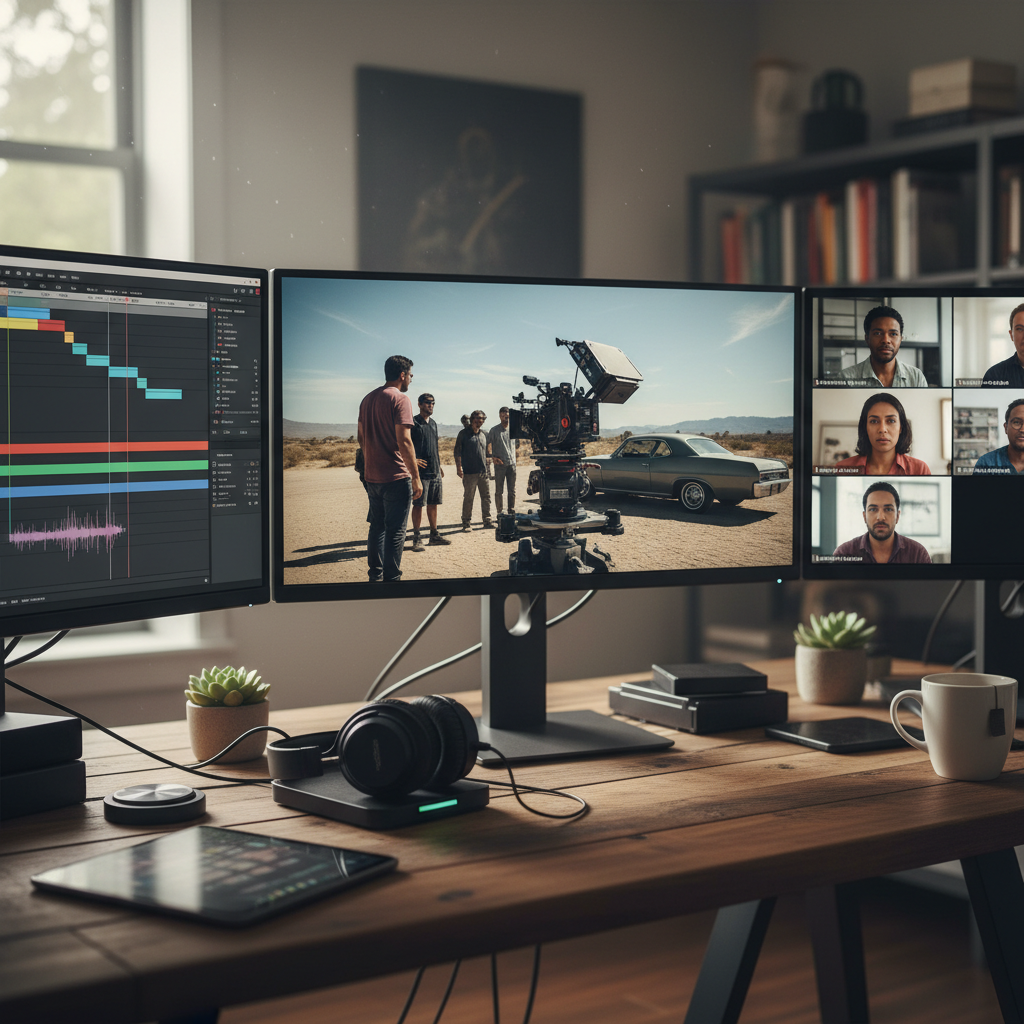
The hybrid production workflow must include encrypted streaming and secure asset management. We prioritize NDAs and secure data handling, ensuring that even when a director is remote, the footage never touches an unsecured server. In the post-strike landscape, local SF labor compliance is also a major factor; working with a structured partner ensures that all crew members are properly insured and classified, protecting the hiring company from liability.
The Asynchronous Feedback Loop: Speeding Up Post-Production
The real magic happens when the shoot ends and the post-production begins.
By using cloud-based asset hand-off protocols, our editors can begin cutting footage while the crew is still wrapping the set. This “follow-the-sun” model is how we help clients scale content without scaling headcount. If you’re looking to maintain a high content velocity, you might even leverage our internal AI content engine, Ingest.blog, to turn video transcripts into SEO-optimized articles instantly.
Post-Production Milestones
- DIT Uploads: High-speed proxy uploads during lunch breaks.
- Remote Edit Sessions: Live-streaming the Premiere Pro or Resolve timeline for real-time feedback.
- Version Control: Centralized feedback via Frame.io to avoid the “death by email” trap.
Here’s the thing: you don’t need to be on-set to have control. You just need the right partners who prioritize your vision over their convenience.
Scaling Your Brand with iStudios Media
iStudios Media is the Bay Area’s only full-stack media and performance marketing agency that combines premium production with data-driven growth.
We don’t just film; we integrate your video content into a larger ecosystem of SEO, Google Ads, and marketing automation. Whether you are a Medical Practice Owner needing patient acquisition videos or an Event Producer requiring a multi-camera livestream, our hybrid systems ensure you get enterprise quality with startup agility.
Next Steps for Your Monday Morning
Don’t wait for your next big campaign to test this. Start by auditing your current production costs—specifically travel and “lost time” for senior creatives. If those numbers are creeping up, it’s time to pivot to a local partner who speaks the language of remote direction.
Ready to transform your production strategy? Contact iStudios Media today for a free consultation on building your custom hybrid production workflow. Let’s build something scalable.
Frequently Asked Questions
How do you ensure no lag during remote creative direction?
We utilize bonded cellular technology and dedicated hardware encoders like Teradek. By bypassing standard Wi-Fi and using multiple 5G networks simultaneously, we achieve sub-second latency, allowing directors to give talent notes in real-time as if they were standing five feet away from the camera.
Is a hybrid production workflow more expensive than a local shoot?
Actually, it is typically more cost-effective. While there is a small technical fee for the streaming infrastructure, it is far lower than the cost of airfare, hotels, and travel days for a director or executive team. Typical savings range from $2,500 to $10,000 per project depending on the team size.
Can remote stakeholders see all camera angles at once?
Yes. Our Virtual Video Village setup allows for a multi-view feed. You can see the main cinema camera, a secondary angle, and a wide room shot (BTS) simultaneously. This gives the remote director full situational awareness of the set, lighting, and crew movements.
What happens if the internet connection fails on set?
We always record high-resolution files locally to the camera. If a stream drops, the local producer takes over creative cues temporarily while the technical team switches to a backup cellular provider. We never rely on a single point of failure for your production.