📋 Table of Contents
According to a 2024 report by Section, 87% of marketers are now using AI daily, yet only a fraction have measured the actual impact on their billable hours. While the software subscription might only cost $20, the real in-house vs agency cost debate isn’t about the tool—it’s about the ‘Prompting Opportunity Cost’ that eats your team’s most valuable time.
The Myth of the ‘Free’ AI Content Engine
Most Bay Area marketing directors assume that giving a junior manager a ChatGPT login is a shortcut to infinite content, but they’re missing the hidden manager tax. The reality is that AI doesn’t replace labor; it shifts it from creation to curation, which is often more mentally taxing and expensive for your high-value talent.
- Human-in-the-Loop Verification: A typical Bay Area mid-market client often finds that for every hour an AI spends generating text, a human spends two hours fact-checking and brand-tuning.
- Prompt Engineering Fatigue: The diminishing returns of teams struggling with quality control can lead to burnout faster than traditional creative work.
- Fragmented Tooling: Managing five different AI subscriptions creates ‘shadow work’ that doesn’t show up on a P&L but slows down every campaign launch.
Why Operational Drag Kills Marketing Agency ROI
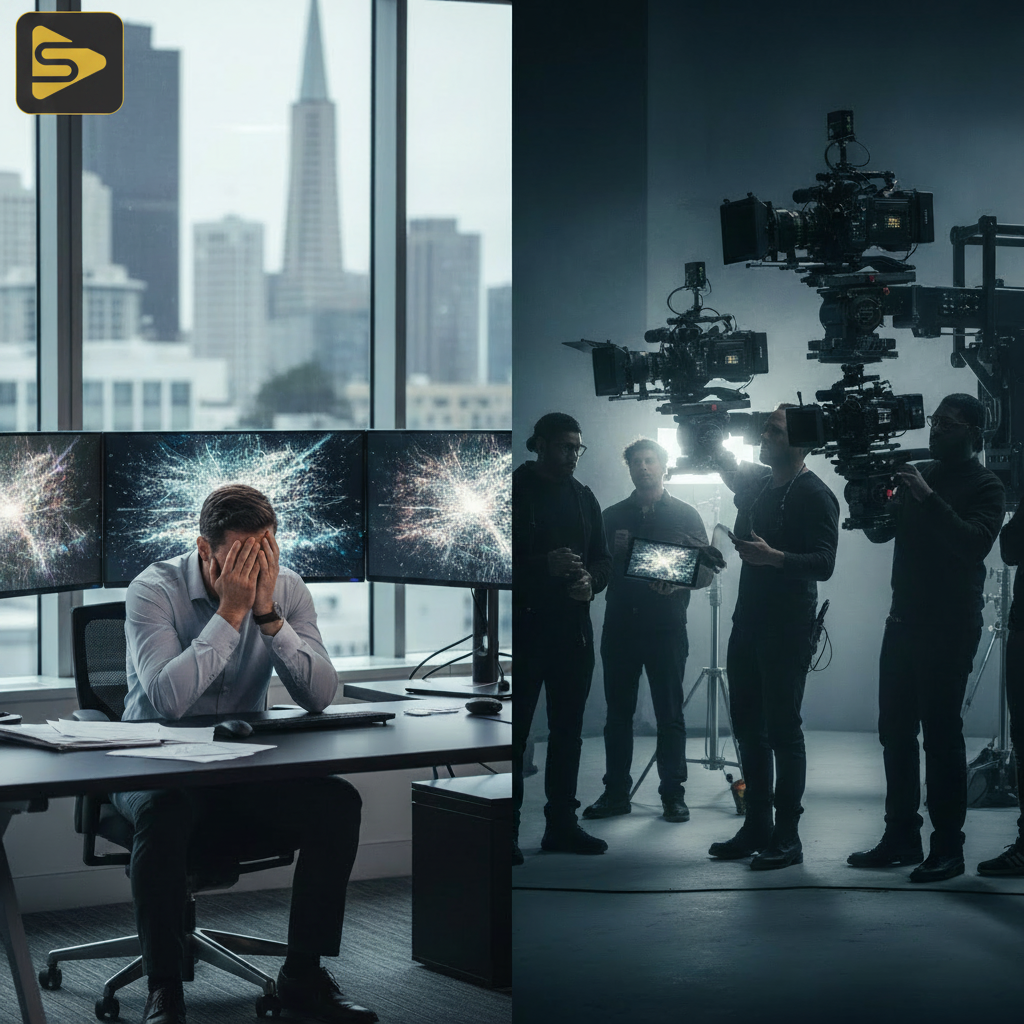
When you look at marketing agency ROI, you have to account for the speed of execution. An in-house team member might spend four hours trying to get an AI video tool to generate a usable 30-second clip, whereas a specialized agency uses a consolidated workflow to deliver the same asset in minutes. This ‘Operational Drag’ is the silent killer of the modern Bay Area marketing budget.
The Throughput Thursday Lesson: The Prompting Opportunity Cost Formula
The single most important metric you can track this week is how much your ‘free’ AI tools are actually costing you in salary dollars. We call this the Prompting Opportunity Cost (POC), and it helps founders decide if they are building a marketing machine or just a prompt laboratory.
How to Calculate Your AI Labor Math
To find your true AI labor math, use this simple formula:
(Hourly Rate of Employee × Hours Spent Prompting/Editing) + (Senior Oversight Time × Manager Rate) = True AI Asset Cost
Consider this comparison table for a single high-quality brand video:
| Factor | In-House AI Attempt | Agency Retainer (iStudios) |
|---|---|---|
| Labor Hours | 12-15 hours (Prompting + Fixes) | 1 hour (Briefing + Review) | Tech Stack Cost | $300/mo (Fragmented tools) | Included in Retainer | Quality Assurance | Variable (Hallucination risk) | Guaranteed Brand Alignment | Total Estimated Cost | $1,800 – $3,200 | Fixed Retainer Portion |
If you’re spending more time managing the tool than the strategy, it’s time to pivot. Schedule a free consultation to see how we streamline this for you.
The Skill Gap Crisis and the Salary Premium
Hiring a dedicated ‘AI Orchestrator’ in the San Francisco market now commands a significant salary premium, often exceeding traditional creative roles by 20-30%. For many Series B SaaS founders, this makes the in-house vs agency cost even more lopsided when you factor in benefits, equity, and the 18-month obsolescence cycle of AI talent.
- Talent Retention: AI specialists are currently in high demand; losing one can set your internal production back by months.
- Infrastructure Costs: Beyond salaries, enterprise-grade security and GPU credits add a layer of AI Total Cost of Ownership that few startups budget for.
- Liability Risks: In-house teams rarely have the same insurance coverage for AI-generated IP hallucinations that a professional video production agency carries.
Consolidating Your Tech Stack Bloat
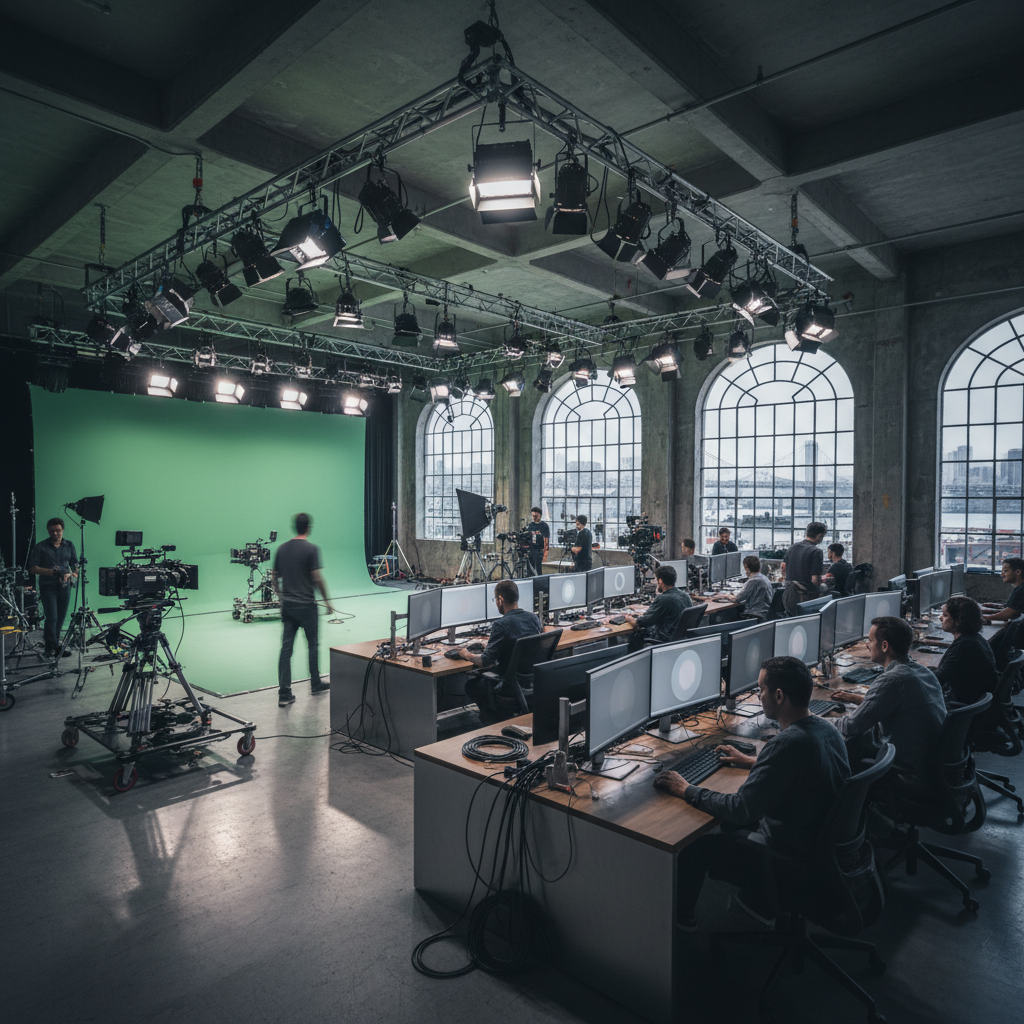
Here’s the thing: most companies have a ‘Frankenstack’ of AI tools that don’t talk to each other. An agency acts as an ‘Innovation Insurance Policy,’ keeping the tech updated so you don’t have to. For high-velocity content, we use Ingest.blog, our internal AI content engine, to maintain SEO speed without the manual labor tax typically associated with blogging.
Production Efficiency: Beyond the Prompt
True production efficiency comes from systems, not just software. In our experience with mid-market clients, the bottleneck is never the AI’s ability to generate ideas—it’s the human’s ability to approve them. Agencies provide a structured workflow that forces decision-making, reducing the ‘Hidden Manager Tax’ that plagues internal teams.
- Standardized Briefs: We eliminate the ‘guesswork’ prompting that eats up junior staff time.
- Insured Output: Every asset is vetted for legal compliance and brand safety.
- Scalable Workflows: We scale from one video to fifty without you needing to hire more headcount.
Need to scale your content without scaling your payroll? Check out our social media marketing packages to see how we handle the heavy lifting.
The 18-Month Obsolescence Cycle
The real kicker is that any AI workflow you build in-house today will likely be obsolete by next year. According to Gartner’s marketing trends, the rapid shift in GenAI capabilities means internal teams are often stuck maintaining legacy ‘custom prompts’ while agencies have already moved to the next generation of tools.
What most people miss: The cost of an agency retainer isn’t just for the assets; it’s for the R&D you don’t have to do. In the competitive Bay Area landscape, being six months behind the tech curve can mean the difference between lead dominance and total invisibility.
Actionable Takeaway: Audit Your Wednesday
Before you commit to your next Bay Area marketing budget, perform a ‘Labor Leak Audit’ this coming Wednesday. Have every team member using AI track the exact minutes spent ‘fixing’ or ‘re-prompting’ outputs. If that number exceeds 20% of their total week, you aren’t saving money with AI—you’re paying a premium for inefficient labor.
Ready to trade labor leaks for measurable output? Contact iStudios Media today for a data-driven breakdown of your production potential.
Frequently Asked Questions
Is it cheaper to use an AI agency or do it in-house?
While in-house AI appears cheaper on paper due to low subscription costs, the in-house vs agency cost usually favors agencies when you factor in ‘Prompting Opportunity Cost.’ Agencies spread the cost of high-end tools and specialized talent across multiple clients, providing better marketing agency ROI than a single internal salary.
What is the cost of hiring a video production agency in San Francisco?
Typical Bay Area pricing for professional video production ranges from $2,500 to $15,000 per project for corporate content. Premium brand films can range from $8,000 to $50,000 per finished minute. Agencies provide the equipment, crew, and AI-integrated post-production that would cost a company hundreds of thousands to build internally.
How does AI affect marketing agency ROI?
AI improves ROI by increasing production efficiency and reducing the time-to-market for campaigns. By using an agency that integrates AI into a professional workflow, businesses get the speed of automation with the quality control of human experts, ensuring the Bay Area marketing budget is spent on strategy rather than trial-and-error.
What are the risks of using in-house AI for marketing?
The primary risks include IP infringement, ‘hallucinated’ facts, and brand inconsistency. Furthermore, internal teams often suffer from ‘AI Shadow Work,’ where employees spend hours on low-quality AI outputs instead of high-level strategy. Agencies mitigate these risks through professional indemnification and rigorous quality assurance processes.