📋 Table of Contents
According to Wyzowl’s 2024 State of Video Marketing report, 88% of marketers say video is a vital part of their strategy, yet most Bay Area startups struggle with the ‘content treadmill’—spending heavily on a single brand film that gathers dust after three weeks. The secret to scaling isn’t more filming days; it is a strategic B2B video production workflow that treats every shoot as a raw material harvest for a multi-channel supply chain.
Here’s the thing: most companies approach video as a series of one-off projects. You hire a freelance videographer for a product launch, then another for a testimonial, and another for social clips. This fragmentation is an operational drain. By shifting to a ‘modular’ mindset, you can capture enough evergreen footage in an eight-hour session to fuel your LinkedIn, YouTube, sales decks, and internal training for an entire quarter.
The High Cost of the One-Off Video Shoot
A single one-off video shoot is often the most expensive way to create content because it ignores the compounding value of raw footage. In our experience with mid-market clients, the setup, travel, and lighting labor account for nearly 40% of the daily rate—costs you pay regardless of whether you walk away with one video or twenty.
- Resource Fragmentation: Managing different vendors for every project leads to inconsistent brand voice and technical quality.
- Missed Opportunities: Without a plan, you miss capturing the ‘B-roll’ and vertical snippets that drive organic engagement.
- Scaling Headaches: Relying on external contractors for every small asset makes your content repurposing strategy impossible to maintain.
Instead of viewing video as a finished product, think of it as a video content pillar. One high-quality executive interview can be atomized into dozens of high-intent assets. For companies looking to accelerate this process, we often utilize Ingest.blog, our internal AI content engine, to help bridge the gap between video transcripts and high-velocity SEO blogging.
The Modular Content Framework: Designing for Extraction
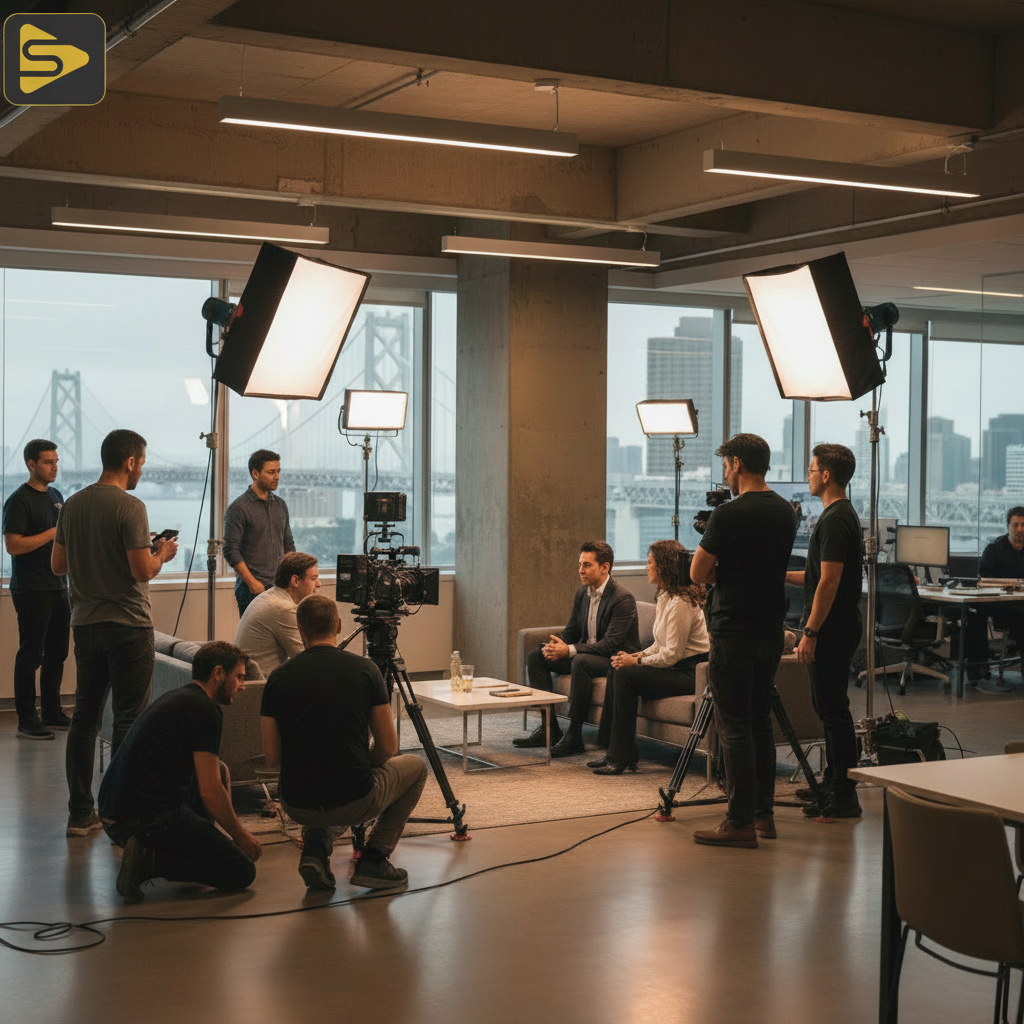
Successful B2B video production starts in the scriptwriting phase, not the editing suite. By using a modular framework, you ensure that every segment of your video can stand alone as a ‘social-first’ snippet without needing a 30-second intro.
- The Hook-First Structure: Every 60 seconds of your script should include a self-contained insight or ‘aha’ moment.
- Standardized B-Roll: Capture ‘lifestyle’ office shots and product close-ups that can be reused across multiple campaigns.
- Vertical Optimization: Frame your main shots so they can be cropped to 9:16 for LinkedIn and Instagram Reels without losing the subject.
What most people miss is that high-production value doesn’t always equal high conversion. In fact, many Series B SaaS founders find that ‘lo-fi’ snippets extracted from a professional interview often feel more authentic and perform better in cold outreach sequences managed through a marketing automation platform.
Comparison: Traditional vs. Modular Production
| Feature | Traditional Shoot | Modular Workflow |
|---|---|---|
| Primary Output | 1 Main Brand Video | 1 Pillar + 15-20 Snippets |
| Cost Per Asset | High ($2,500+) | Low ($200 – $500) |
| Channel Coverage | Website Only | Omnichannel (Social, Email, Ads) |
Implementing Content Atomization for B2B Sales
Strategic corporate media efficiency means your sales team should never have to explain a complex feature twice. By recording a single, high-level product demo, you can slice it into ‘micro-demos’ for specific pain points. These snippets become invaluable for sales enablement, allowing reps to send personalized video responses to prospect questions.
But wait—don’t just cut the video. You need to optimize the distribution. We recommend embedding these videos into dedicated landing pages and tracking engagement via tools like Wistia or Google Analytics. This data tells you exactly which ‘moments’ in your video are driving conversions and which are causing viewers to drop off.
Need a partner to architect your video supply chain? Schedule a free consultation to see how we can maximize your next production day.
The ROI of Sustainable Video Production
Operational sustainability is about preventing team burnout by working smarter. In our work with typical Bay Area mid-market clients, we’ve found that a ‘Shoot Once, Distribute Ten Times’ approach reduces creative overhead by up to 60% over a six-month period. Instead of constantly being in ‘production mode,’ your team stays in ‘distribution mode,’ which is where the actual revenue is generated.
- SEO Synergy: Transcribe your videos to create long-form blog posts, boosting your SEO strategy.
- Paid Media Fuel: Use the various cuts to A/B test different hooks in your Google Ads and LinkedIn campaigns.
- Internal Training: Repurpose executive interviews into onboarding material for new hires to maintain culture at scale.
The real kicker? This workflow allows you to maintain a consistent presence on social media without needing a massive in-house creative team. By leveraging AI-powered tools for automated clipping and subtitling, a single production day can provide enough ‘Shorts’ and ‘Reels’ to post three times a week for months.
Humanizing B2B Through Expert-Led Content
In an era where AI-generated content is flooding every feed, the ‘human-in-the-loop’ approach is your competitive advantage. A B2B video production strategy that centers on your real experts, recorded in high fidelity, builds trust that a generic AI avatar never will. The goal is to use technology to distribute the human element, not replace it.
For example, a typical Bay Area medical practice owner might record a series of patient FAQ videos. By professionally capturing these once, they can be repurposed into YouTube pre-roll ads, Instagram stories, and website FAQ sections, providing a consistent, authoritative voice across the entire patient journey.
Actionable Takeaway: Start Your Video Audit
Before your next shoot, perform a ‘re-shippable’ audit of your existing assets. Look for three-minute segments in past webinars or interviews that can be trimmed into 30-second ‘nuggets.’ If you don’t have these, your next production day must be planned with these ‘extractions’ in mind. Move away from the project-to-project mindset and start building a library that works for you 24/7.
Ready to stop the one-off cycle? Connect with iStudios Media today to plan a high-efficiency production strategy that scales with your business.
Frequently Asked Questions
How much does B2B video production cost in the Bay Area?
Typical B2B video production ranges from $2,500 to $15,000 per project depending on scope. However, by using a modular workflow, the cost per individual asset drops significantly as you extract multiple videos from a single day’s production.
What is a modular content framework?
A modular content framework is a method of scripting and filming video so that segments can be easily detached and used as standalone pieces. This is essential for an effective content repurposing strategy, allowing one shoot to serve multiple platforms.
Can I use AI to help with video repurposing?
Yes, tools like Descript, Munch, and our own Ingest.blog can help automate the transcription and clipping process. However, professional oversight is required to ensure the ‘hooks’ and brand messaging remain high-quality and effective for B2B audiences.
Why is ‘shoot once, distribute ten times’ better than one-off shoots?
It maximizes corporate media efficiency by reducing the overhead costs associated with setup, travel, and planning. It ensures a consistent stream of content for social media and sales, preventing the ‘content gaps’ that happen between major projects.