📋 Table of Contents
- The High-Rise Failure Mode: The ‘Glow Violation’ Shutdown
- The Guardrail: The 10-Degree Downward Shielding Rule
- Comparison: Standard Lighting vs. SF Compliant Lighting
- Navigating Bay Area Film Permits for Exterior Lighting
- When CGI is a Better ROI than Physical Lighting
- The Compliance Checklist for Creative Directors
- FAQs
In San Francisco, a single unshielded 5K HMI pointed at the wrong angle from a 40th-floor balcony isn’t just a creative choice; it’s a potential $1,000-per-day violation of the SF exterior lighting standards. According to the SF Environment Department, urban light pollution has increased significantly, leading to stricter enforcement of bird-safe and ‘Dark Sky’ initiatives that directly impact how we film high-rise commercial content.
Here’s the thing: most production teams treat high-rise lighting like a standard night exterior, only to have the SF Film Commission or building engineering shut them down mid-setup. The failure mode isn’t usually the light quality—it’s the ‘Light Glow’ spill that violates the 2024 SF Lighting Ordinance. We’ve developed one specific guardrail to prevent this: The 10-Degree Downward Shielding Rule.
The High-Rise Failure Mode: The ‘Glow Violation’ Shutdown
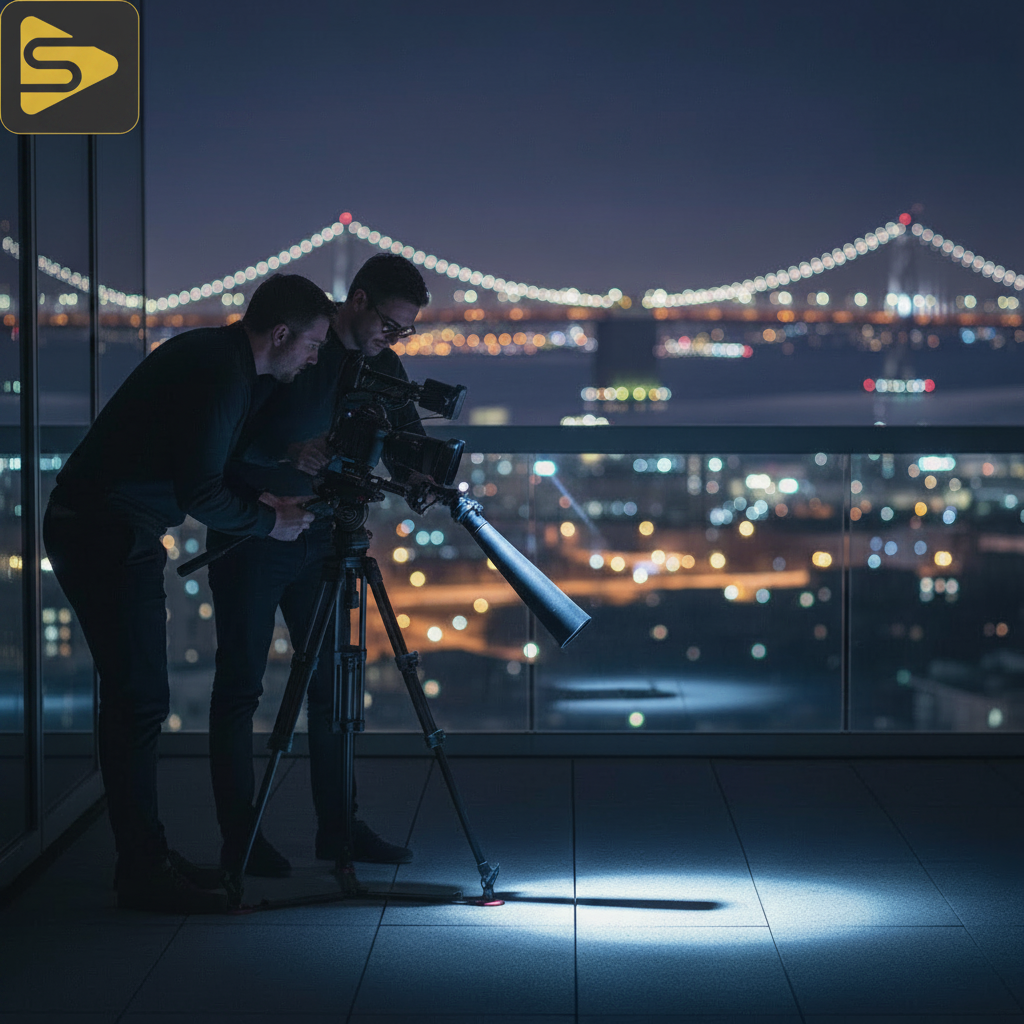
In our experience with mid-market clients looking for that ‘Succession’ style high-rise aesthetic, the biggest risk is the unintended illumination of the atmosphere. When you are shooting 500 feet above Market Street, your light doesn’t just hit your subject; it travels for miles, creating a haze that violates bird-safe building standards.
- The Mistake: Using open-face fixtures or wide-beam LEDs without snoots or long-neck barn doors on skyscraper balconies.
- The Consequence: Immediate intervention by building security or a formal complaint to the SF Film Commission, resulting in permit revocation.
- The Hidden Cost: A typical Bay Area Series B SaaS company we’ve worked with might lose an entire $15,000 production day because the lighting rig wasn’t pre-cleared for ‘upward spill’ compliance.
Why San Francisco is Different
San Francisco sits on a major migratory bird path, and the Audubon Society’s Lights Out program has heavily influenced local building codes. Unlike Los Angeles, where the ‘glow’ is often embraced, SF requires all exterior lighting to be ‘fully shielded’ to prevent light from emitting above the horizontal plane. This makes San Francisco video production particularly challenging for night exteriors.
The Guardrail: The 10-Degree Downward Shielding Rule
The real kicker? You don’t have to sacrifice the ‘rim light’ look to stay legal. You just need to apply a strict engineering guardrail to every fixture mounted above the 5th floor.
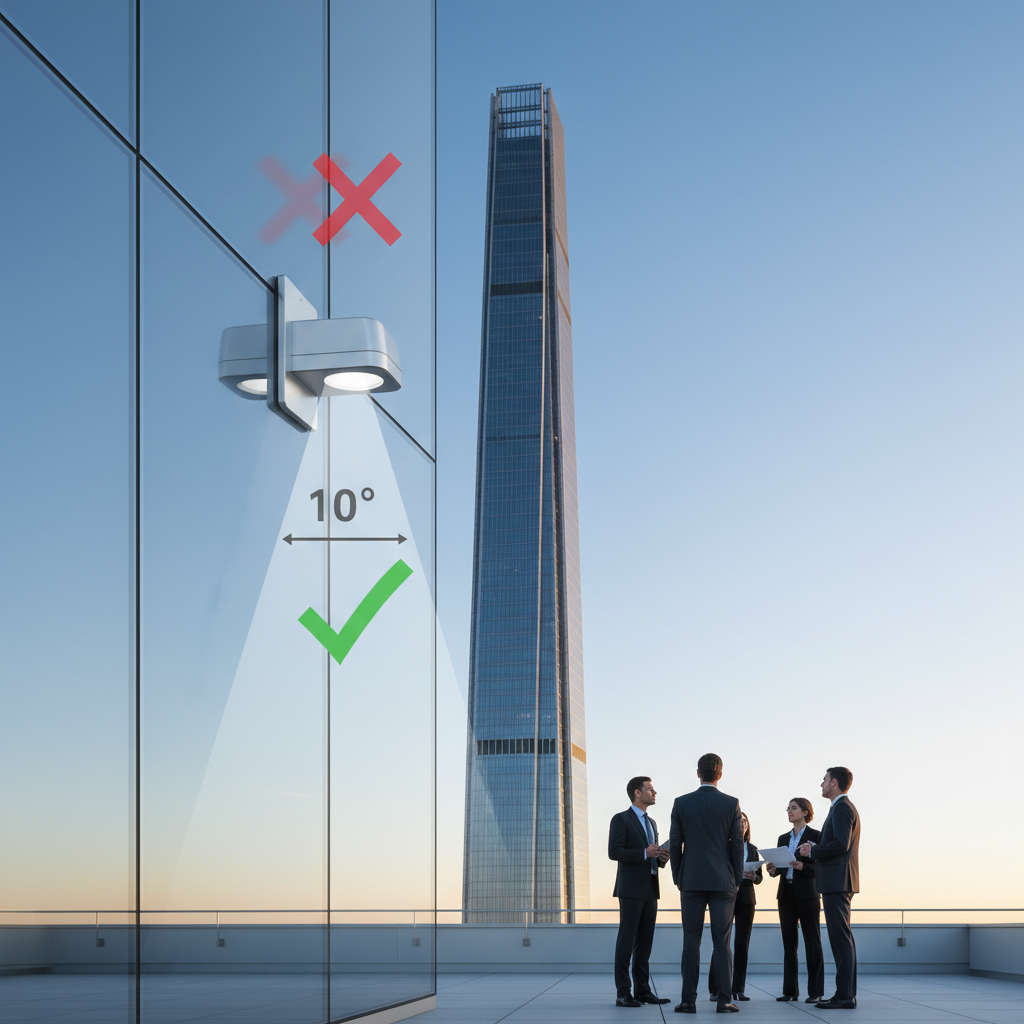
The 10-Degree Guardrail dictates that no fixture may be aimed at an angle higher than 10 degrees below the horizon line. If the shot requires a low-angle ‘hero’ light, you must use a physical top-flag or a ‘snoot’ that extends at least 1.5 times the diameter of the lens. This ensures that the SF exterior lighting remains focused on the terrace and the talent, not the fog layer.
- Step 1: Use digital inclinometers on every lamp head to verify the downward angle.
- Step 2: Deploy ‘honeycomb’ grids (30 or 60 degrees) on all LED panels to eliminate side-spill.
- Step 3: Swap high-wattage HMIs for narrow-beam LED spot fixtures like the Aputure 600c with a spotlight mount for surgical precision.
Need help navigating these complex requirements? Schedule a free consultation with our production leads to plan your next high-rise shoot safely.
Comparison: Standard Lighting vs. SF Compliant Lighting
What most people miss is that compliant lighting actually looks better on camera. By controlling the spill, you increase the contrast ratio and make the city lights in the background pop without the ‘haze’ of light pollution. Use the table below to evaluate your rig.
| Feature | Standard High-Rise Setup | SF Compliant Guardrail Setup |
|---|---|---|
| Fixture Type | Open-face LED / HMI | Narrow-beam Spot / Grid-controlled LED |
| Light Control | Standard Barn Doors | Extended Snoots / Honeycomb Grids |
| Aiming Angle | Variable (often horizontal) | Minimum 10° Downward Tilt |
| Environmental Impact | High Light Pollution / Bird Risk | Zero Upward Spill / Dark Sky Compliant |
Navigating Bay Area Film Permits for Exterior Lighting
Securing Bay Area film permits for high-rise work requires more than just a certificate of insurance. The SF Film Commission often asks for a ‘lighting plan’ if you are shooting after 10:00 PM in residential-adjacent zones like SoMa or Nob Hill. If your plan doesn’t mention ‘shielding’ or ‘downward orientation,’ expect delays.
One contrarian insight we’ve gained: Sometimes, the best way to light a high-rise exterior is from the inside. By using high-output fixtures pushed through specialized diffusion inside the room, you utilize the building’s own glass as a natural (though reflective) shield, often bypassing the strictest ‘exterior’ ordinances altogether. However, this requires careful management of interior reflections—a task for an experienced San Francisco video production team.
The Engineering Side of Skyscraper Production Rigging
Safety vs. Aesthetics is a constant battle. In San Francisco video production, the wind shear at 400 feet is no joke. Our guardrail includes a ‘double-point’ tethering system for every light, regardless of its weight. If a flag catches a gust of wind off the Bay, it shouldn’t become a projectile. We always recommend using a dedicated rigging grip for any high-altitude SF exterior lighting setup.
For teams looking to scale their content production without the headache of manual permit tracking, we use marketing automation platforms to manage our pre-production checklists, ensuring no compliance step is missed. We even leverage Ingest.blog, our internal AI content engine, to keep our clients updated on changing local ordinances through automated reporting.
When CGI is a Better ROI than Physical Lighting
But wait—is the physical rig even worth it? In 2024, virtual production and high-end CGI have become viable alternatives. If the SF exterior lighting guardrails for a specific building are too restrictive (e.g., historical landmarks with zero-attachment rules), we often advise clients to shoot on a green screen or volume stage.
- Physical Shoot: Better for authentic skin tones and talent interaction with the environment. Typical cost: $8,000–$50,000 per finished minute.
- Virtual Production: Better for total control and 24/7 ‘Golden Hour.’ Often more cost-effective for complex night scenes.
- Hybrid Approach: Shoot plates on location with minimal lighting, then enhance in post-production.
The Compliance Checklist for Creative Directors
Before you sign off on a high-rise creative brief, run through this checklist to ensure your outdoor cinematography tips don’t lead to a legal headache. This is the standard we apply to every Bay Area film permits application.
- Check the ‘Bird-Safe’ Status: Is the building located in a high-risk zone near the water?
- Verify Rigging Points: Does the building allow suction-cup mounts or only weighted stands?
- Calculate the Throw: Will your light hit the building across the street? (A major cause for ‘nuisance’ complaints).
- Review the 10-Degree Rule: Are all fixtures aimed down, or are they spilling into the clouds?
Ready to capture the perfect San Francisco skyline without the permit drama? Contact iStudios Media today for a professional assessment of your high-rise production needs. Our team handles everything from SF exterior lighting design to complex rigging and local compliance.
Key Takeaways for High-Rise Success
- Adopt the 10-Degree Rule: Always aim lights downward to stay within SF Environment Department ‘Light Glow’ guidelines.
- Prioritize Shielding: Use snoots and grids to prevent light pollution and protect migratory birds.
- Plan for Wind: High-altitude rigging requires double-tethering and professional grip oversight.
- Consult Early: Work with the SF Film Commission during the treatment phase, not the day before the shoot.
Frequently Asked Questions
What is the SF Light Glow Ordinance?
The SF Light Glow Ordinance refers to local building and environmental codes designed to reduce urban light pollution. For SF exterior lighting in production, it means all light sources must be shielded to prevent light from shining upwards, protecting the ‘Dark Sky’ and local wildlife, specifically migratory birds along the Pacific Flyway.
Do I need a special permit for high-rise filming in SF?
Yes, you need a standard permit from the SF Film Commission, but high-rise shoots often require additional ‘Use of Facilities’ agreements from building management and potential ‘Notice to Neighbors’ if using high-wattage SF exterior lighting that could impact surrounding residential towers in areas like Rincon Hill or SoMa.
What are the best outdoor cinematography tips for night shoots in SF?
Focus on ‘subtractive’ lighting. Rather than trying to light the whole scene, use the existing city glow as your base and add small, controlled ‘pools’ of light for your talent. Use narrow-beam LEDs with honeycomb grids to keep the light off the surrounding architecture and maintain compliance with SF exterior lighting rules.
How much does high-rise video production cost in the Bay Area?
Typical San Francisco video production for high-rise projects ranges from $2,500 to $15,000 per project for basic shoots, while premium brand films or commercials involving complex rigging and SF exterior lighting can range from $8,000 to $50,000 per finished minute depending on the crew size and equipment needs.