📋 Table of Contents
According to a 2024 report by Harvard Business Review, nearly 75% of venture-backed startups fail to return capital, often due to premature scaling before establishing a repeatable sales engine. For founders navigating a Series B product launch, the pressure isn’t just to grow—it’s to prove that every dollar spent on production translates into measurable pipeline velocity.
The Strategic Pivot: Why Your Series B Product Launch Needs a Hierarchy
The transition from Series A to Series B is often an identity crisis where founder-led sales must evolve into a scalable, content-driven marketing engine. Most teams fail here because they treat every asset with equal weight, leading to resource burnout and a fragmented brand voice.
- Efficiency-First GTM: Moving away from ‘growth at all costs’ requires a ruthless prioritization of assets that directly impact the demand generation funnel.
- Revenue Enablement: Every video and PDF must serve a specific stage of the buyer journey, from visionary brand films to high-intent technical collateral.
- Resource Allocation: By using a marketing asset hierarchy, you ensure that your $50,000 budget isn’t swallowed by a single ‘hero’ video that your sales team can’t actually use in a pitch.
Here’s the thing: a one-off video shoot might give you a pretty asset for LinkedIn, but it won’t sustain a six-month GTM motion. You need a modular system—a ‘Lego-brick’ library that evolves with your product iterations. Whether you’re a biotech firm in South San Francisco or a fintech lead in Palo Alto, the framework remains the same.

Tier 1: High-Fidelity Hero Assets (The Visionary Layer)
Tier 1 assets are designed to stop the scroll and establish your category leadership during a Series B product launch. These are your ‘Brand Films’ and ‘Commercials’ that define the Why behind your expansion, typically ranging from $8,000–$50,000 per finished minute for premium work.
What most people miss is that Tier 1 shouldn’t just be ‘fluff’; it must anchor your visionary GTM motion. In our experience with mid-market clients, a single high-production brand film can be atomized into dozens of shorter social clips, providing the foundation for your entire content waterfall.
- Brand Anthem Films: High-production value videos that communicate the mission to investors and enterprise buyers.
- Product Keynotes: Polished, multi-camera presentations that mimic the ‘Apple style’ for major feature releases.
- Interactive Landing Pages: Immersive digital experiences that house your Tier 1 video content.
The real kicker? You don’t need a freelance videographer for this; you need a production partner who understands how to build a scalable content system. Need help mapping your Tier 1 strategy? Schedule a free consultation with our strategy team today.
Tier 2: Technical Deep-Dives (The Functional Layer)
If Tier 1 gets them in the door, Tier 2 assets close the gap between curiosity and intent. These are the ‘how-it-works’ videos, demo reels, and technical whitepapers that prove your product-market fit expansion is backed by substance.
In a tighter economic climate, we see Series B companies ditching Tier 1 fluff in favor of these high-intent assets. Why? Because your Sales Readiness depends on the technical team’s ability to explain complex features without being in the room. A typical Bay Area mid-market services client might spend $2,500–$15,000 per project on these detailed video production assets.
| Asset Type | Primary Goal | Typical Format |
|---|---|---|
| Product Walkthrough | Feature Education | 2-3 min Screencast/Animation |
| Technical Webinar | Lead Generation | 45 min Live Stream |
| Comparison Guides | Decision Support | Interactive PDF/Blog |
Transitioning these assets into a repeatable engine is where Ingest.blog, our internal AI content engine, becomes invaluable. It allows us to take the transcript of a technical deep-dive and instantly generate 10+ SEO-optimized blog posts, ensuring your startup video strategy feeds your organic search growth.
Tier 3: Social Proof & Validation (The Trust Layer)
Tier 3 is the most undervalued layer of the Series B product launch, yet it carries the highest conversion weight. This includes customer testimonials, case study videos, and user-generated content (UGC) that validates your claims.
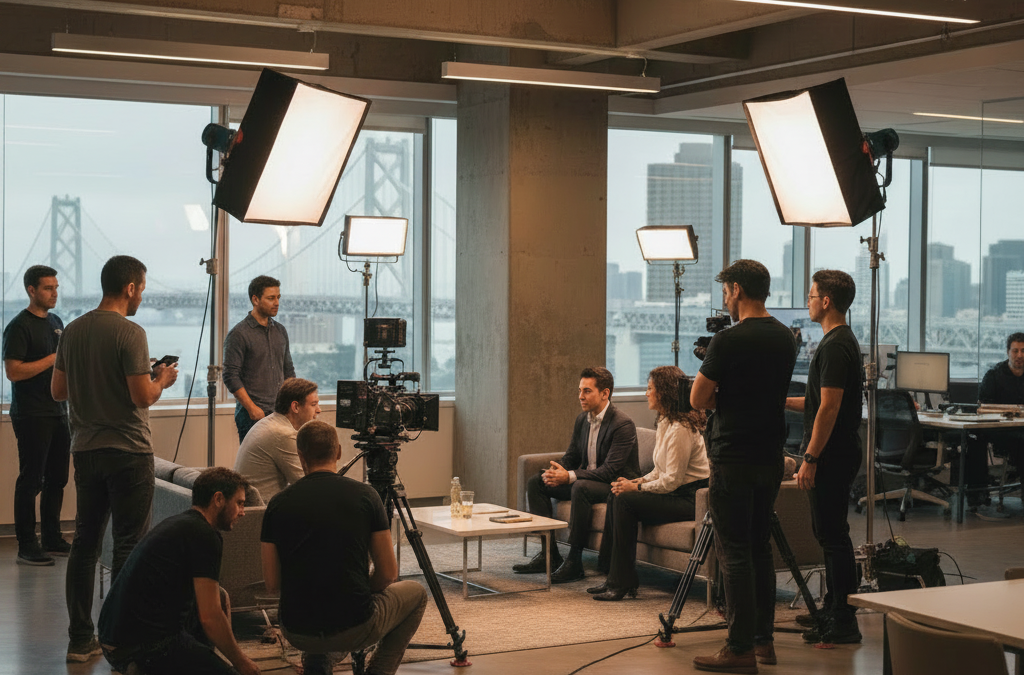
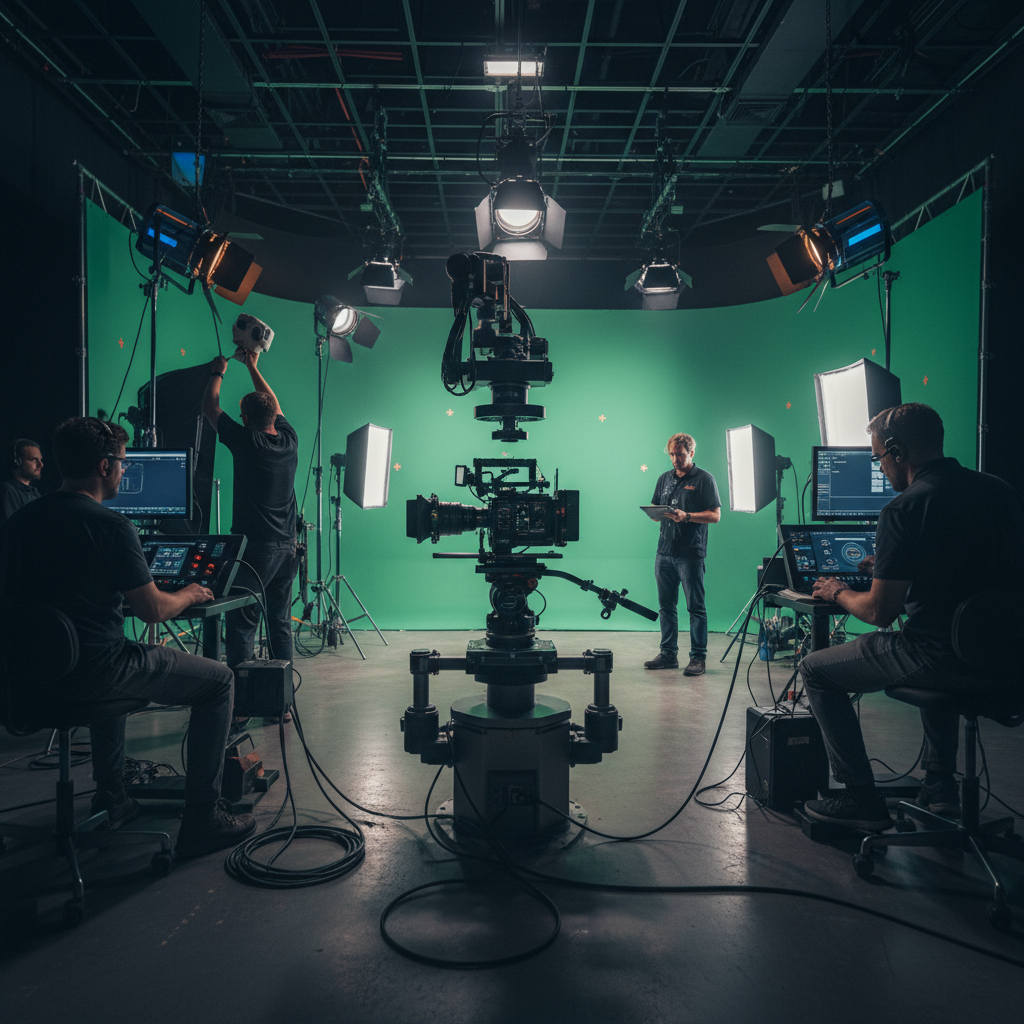
But wait—don’t just film a ‘talking head’ in a dark office. For a Series B scale-up, your social proof needs to look as professional as your product. We recommend on-site corporate photography and high-quality studio sessions to capture the human element of your brand.
- Video Testimonials: Real stories from Series A/B customers who have seen measurable ROI.
- User Snapshots: Short, punchy 15-second clips of the product in the wild.
- Data-Backed Case Studies: Visualizing the numbers that prove your solution works.
The contrarian insight? Start with Tier 3. By capturing your customer proof first, you gain the narrative insights needed to write a more authentic Tier 1 visionary script. This ‘Reverse Hierarchy’ approach often leads to much higher sales alignment.
Operationalizing the Content Waterfall: From Tier 1 to 20+ Assets
The secret to a high-ROI Series B product launch is the ‘Content Waterfall.’ This is the process of taking one flagship Tier 1 asset—like a 2-minute brand film—and breaking it down into a modular library of Tier 2 and Tier 3 content.
For example, a single day of event live streaming at a San Francisco conference can yield a full-length keynote (Tier 1), five feature-specific clips (Tier 2), and ten customer interview snippets (Tier 3). This prevents the dreaded ‘content gap’ that happens three weeks after a launch when the initial hype dies down.
What most founders miss is the distribution. You need a marketing automation platform to ensure these assets reach the right persona at the right time. Without an automated lead nurture sequence, your expensive Tier 1 film is just a vanity metric on YouTube.
Budgeting for Scale: Bay Area Industry-Reported Ranges
When planning your marketing asset hierarchy, you need to be realistic about Bay Area costs. A one-off video shoot might seem cheaper upfront, but a structured agency partner provides the scalability required for a Series B motion.
- Corporate Video Production: $2,500–$15,000 per project (Tier 2/3 focus).
- Brand Films: $8,000–$50,000 for premium visionary work (Tier 1 focus).
- Monthly Social Management: $1,500–$6,000/mo to keep the waterfall flowing.
- SEO Retainers: $2,000–$10,000/mo to ensure your assets are discoverable.
Ready to build a content library that actually drives revenue? Contact iStudios Media for a custom production and performance marketing plan tailored to your next launch.
Frequently Asked Questions
How much should a Series B startup spend on a product launch video?
Typical Bay Area pricing for a high-fidelity Tier 1 launch video ranges from $8,000 to $50,000. However, the focus should be on the total cost of the asset hierarchy. A smart Series B product launch allocates 40% to Tier 1, 40% to Tier 2 technical assets, and 20% to Tier 3 social proof to ensure full-funnel coverage.
Why is a marketing asset hierarchy better than a one-off video shoot?
A one-off video shoot lacks the strategic depth needed for a sustained GTM motion. A hierarchy ensures that you have the right content for every stage of the buyer journey—from initial awareness (Tier 1) to technical validation (Tier 2) and final trust-building (Tier 3), preventing gaps in your sales cycle.
How can we repurpose Tier 1 assets into Tier 3 content?
We use a ‘Content Waterfall’ workflow. A Tier 1 brand film can be edited into 15-second social teasers, while the b-roll captured during the shoot can be used for Tier 2 product demos or Tier 3 customer testimonial backgrounds, maximizing the ROI of a single production day.
What are the most important assets for sales enablement during a launch?
During a Series B product launch, Tier 2 technical deep-dives and Tier 3 customer validation are critical for sales enablement. These assets reduce friction by answering technical questions and providing third-party proof, allowing your sales team to move prospects through the pipeline faster without constant manual intervention.
Actionable Takeaway for This Week
Before you hire a freelance videographer for your next launch, audit your current library. Identify one ‘Gap’ in your hierarchy—usually the Tier 2 technical layer—and commit to producing three high-intent demo clips. This simple shift will do more for your revenue enablement than a dozen generic social posts ever could.