📋 Table of Contents
According to recent data from HubSpot, 54% of consumers want to see more video content from brands they support, yet most scaling companies fail because they treat production as a creative expense rather than a financial lever. For startups navigating the SF Series B content framework, the challenge isn’t just making content—it’s ensuring every frame justifies its impact on your Customer Acquisition Cost (CAC).
The transition from Series A to Series B is often a move from ‘proving the product’ to ‘scaling the machine.’ In the San Francisco Bay Area, where the talent market is tight and investor expectations are high, a SF video production strategy must be more than a collection of pretty shots. It needs to be a structured system that moves prospects from cold awareness to closed-won deals without the friction of a bloated sales team.
The Strategic Pivot: Why Series B Content Needs a Framework
At the Series B stage, the goal shifts from finding product-market fit to achieving repeatable, efficient revenue growth.
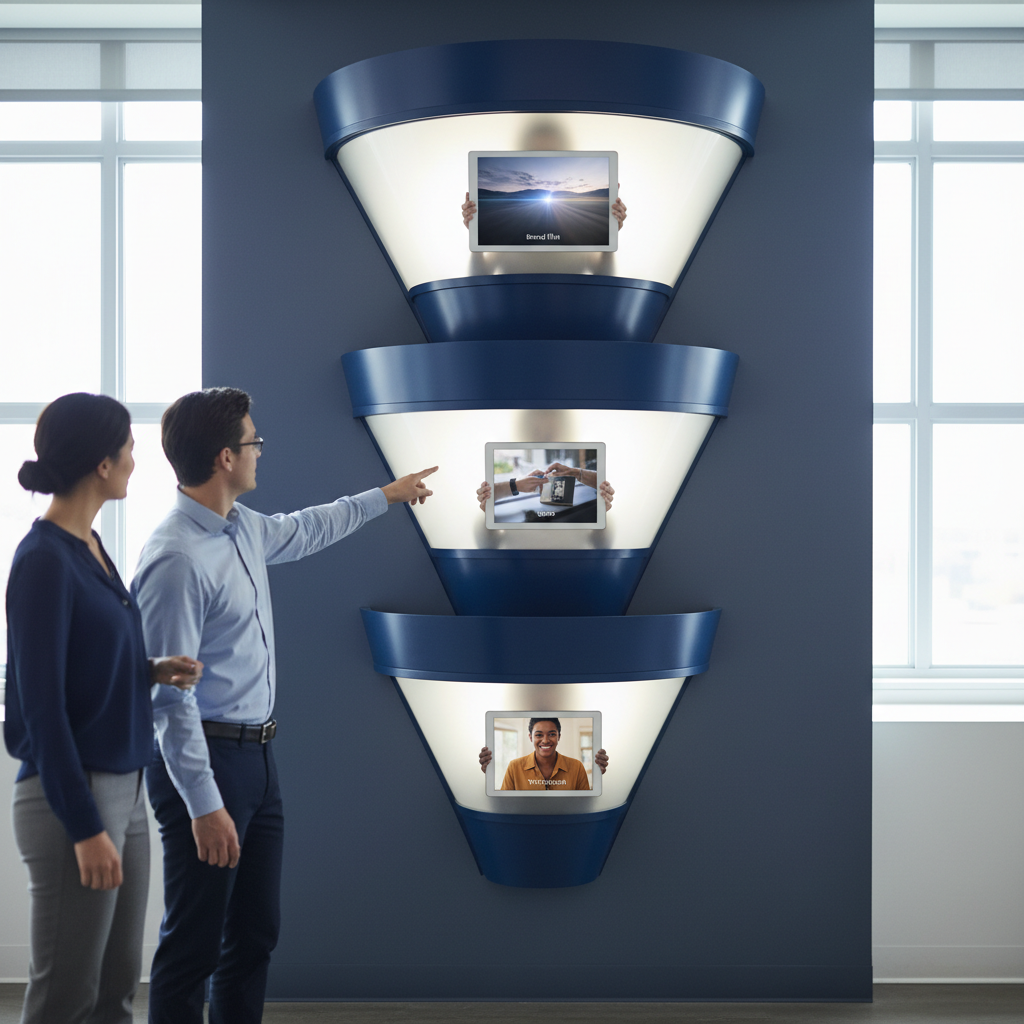
Most companies at this stage suffer from ‘Content Fragmentation’—hiring a freelance videographer for a one-off video shoot that looks great but doesn’t connect to the buyer’s journey. Here is how the most successful Bay Area firms categorize their production assets:
- Narrative Design: Moving away from feature lists toward category-dominance storytelling.
- Signal-Based Content: Deploying specific assets based on intent data from platforms like 6sense or Demandbase.
- Efficiency Mandate: Using high-production value where it matters (Top of Funnel) and high-velocity value where it converts (Bottom of Funnel).
The Problem with the ‘One-Off’ Production Mindset
The real kicker? A generic marketing agency will sell you a brand film, but they won’t tell you how to chop that film into 15 high-intent social assets for LinkedIn. In our work with Series B SaaS founders, we consistently see that the highest ROI comes from ‘Content Rationalization’—identifying the 20% of assets that drive 80% of the pipeline.
| Asset Type | Ideal Funnel Stage | Production Level | Key Metric |
|---|---|---|---|
| Brand Vision Film | Top of Funnel (TOFU) | High ($15k – $50k) | Brand Lift / Awareness |
| Product Walkthroughs | Middle of Funnel (MOFU) | Medium ($5k – $10k) | Demo Requests |
| Customer Case Studies | Bottom of Funnel (BOFU) | Medium ($3k – $8k) | Sales Velocity / Close Rate |
TOFU: Using SF Video Production Strategy for Brand Authority
Top-of-funnel content isn’t about explaining what you do; it’s about validating why the problem you solve matters more than the status quo.
In the competitive Bay Area ecosystem, your brand film needs to look like it belongs on a cinema screen, but function like a lead magnet. This is where corporate video production meets narrative design. You aren’t just selling a tool; you are selling a future state of the industry.
- Visual Consistency: Series B companies must move away from ‘scrappy’ to ‘scalable’ aesthetics to win enterprise trust.
- Emotional Resonance: Address the pain points identified in your Series B GTM strategy.
- Distribution: Don’t just host it on your site; use it for LinkedIn Ads and Meta campaigns to build a retargeting audience.
What most people miss is that TOFU video is a data-gathering tool. By tracking view percentages, you can identify high-intent prospects for your sales team to pursue. If you’re looking to scale your content velocity without scaling headcount, we often recommend Ingest.blog, our internal AI content engine, to help distribute these narratives across your blog and social channels efficiently.
MOFU: Converting Interest with Sales Funnel Video Alignment
Middle-of-funnel content is where you bridge the gap between ‘I’m interested’ and ‘I need to see how this works.’
The biggest mistake in sales funnel video alignment is keeping content gated behind long forms. Modern B2B buyers, especially in tech-heavy regions like San Jose and San Francisco, prefer ‘un-gated’ educational content. They want to self-educate before they ever talk to a sales rep.
- Interactive Product Demos: Short, punchy clips that solve a specific problem.
- Webinar Highlights: Don’t just post the full hour; post the three minutes that actually matter.
- Expert Interviews: Position your founders as thought leaders through professional podcast production.
Need help mapping your current assets to the funnel? Schedule a free consultation with our strategy team to audit your content library.
BOFU: Driving Conversion and Reducing Sales Friction
Bottom-of-funnel content is a sales enablement tool designed to answer the questions that kill deals at the finish line.
Here’s the thing: your sales team is likely hearing the same five objections every week. Instead of having them repeat the answers, use your Series B marketing content budget to create ‘Objection-Crusher’ videos. These are low-cost, high-utility assets that can be sent directly by AEs during the negotiation phase.
- Implementation Walkthroughs: Show them how easy it is to get started.
- Security & Compliance Briefs: Vital for medical practices and fintech firms.
- Social Proof: High-quality photography and video testimonials from current users in similar verticals.
In our experience with mid-market clients, these assets often do more to move the needle on revenue than the flashy brand film that gets all the likes on LinkedIn. They are about utility, not just vanity.
The Financial Lever: Stabilizing CAC During Scale
Content is not a luxury; it is a financial instrument to stabilize your Customer Acquisition Cost during a rapid scaling phase.
As you increase ad spend, your CAC will naturally rise unless you improve your conversion rate. A robust SF Series B content framework ensures that for every dollar spent on traffic, you have the necessary assets to catch, nurture, and convert that traffic. This is the essence of Revenue Operations (RevOps).
- Asset Reusability: One day of event live streaming can yield 20+ social clips, 5 blog posts, and 2 case studies.
- Automation: Use a marketing automation platform to trigger the right video at the right time in the lead nurture sequence.
- Testing: A/B test different video thumbnails and hooks to see what actually drives clicks.
According to Forbes, companies that integrate video into their full sales cycle see significantly higher retention rates than those that rely on text alone.
How to Implement the Framework This Week
Don’t try to overhaul everything at once. Start by auditing your sales calls. What are the top three questions your prospects ask? Create three 60-second videos answering those questions. That is your first step toward sales funnel video alignment.
From there, you can look at higher-level production. Whether you need a studio session in San Leandro or a multi-camera shoot in downtown SF, the key is intentionality. Stop paying for a freelance videographer to ‘make a video’ and start partnering with a growth agency to ‘build an asset.’
Ready to build a content engine that scales with your Series B funding? Contact iStudios Media today for a strategic audit of your production and performance marketing needs.
Frequently Asked Questions
What is the typical cost for Series B video production in the Bay Area?
Industry-reported ranges for corporate video production typically fall between $2,500 and $15,000 per project. For premium brand films or commercials, costs can range from $8,000 to $50,000 per finished minute, depending on the complexity of the shoot, talent, and post-production requirements.
How do I know if my content is actually driving ROI?
The best way to measure ROI is through full-funnel attribution. Track how many leads viewed a specific video before converting. At the Series B stage, you should be looking for a correlation between video engagement and a decrease in the sales cycle length or an increase in average contract value (ACV).
Can I use AI to help with my Series B content strategy?
Absolutely. AI is excellent for content distribution, SEO research, and initial drafting. We use our internal AI content engine, Ingest.blog, to help clients maintain high content velocity. However, for high-stakes brand films and trust-building testimonials, high-quality human production remains the gold standard for Series B companies.
Should I hire an in-house videographer or an agency?
For most Series B companies, a hybrid approach works best. An in-house person can handle quick social clips, but an agency like iStudios Media provides the specialized gear, multiple crew members, and strategic performance marketing integration (SEO, Google Ads, CRM automation) that a single hire cannot match.