📋 Table of Contents
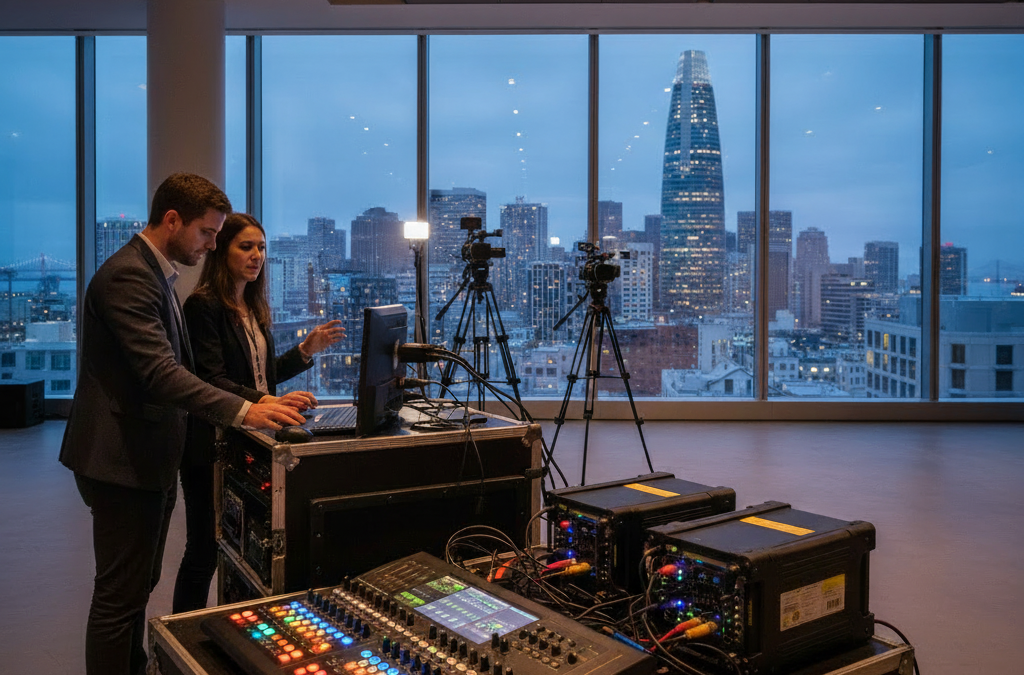
According to a 2024 survey by Bizzabo, 80% of event organizers cite technical issues as their primary source of onsite stress. In the high-stakes environment of a Silicon Valley product launch or a Moscone Center keynote, SF event videography requires more than just a cameraman; it requires a bulletproof technical roadmap to ensure your vision survives the reality of the venue.
Most event failures don’t happen because a camera breaks; they happen because the production team and the AV crew are speaking different languages. A technical brief acts as the universal translator, bridging the gap between creative ambition and technical execution. For a Series B SaaS founder or a corporate marketing director, this document is the difference between a high-conversion brand film and a folder full of unusable footage.
The Foundation of SF Event Videography: Audio and Visual Synchronization
The most expensive camera in the world is useless if you haven’t secured a clean, isolated audio feed from the house sound board. What most people miss is that SF venues—ranging from historic industrial spaces in Dogpatch to modern glass towers in SoMa—each present unique acoustic and electrical challenges.
- Audio Signal Path: Specify if you need an XLR house feed, ambient room mics for Q&A, or dedicated lavaliers for your VIP speakers.
- Frame Rates and Resolution: While 4K is standard, many San Francisco startups now request 6K workflows to allow for vertical cropping in post-production for LinkedIn and TikTok.
- Color Grading Specs: Ensure your brief includes Log profile requirements to maintain brand consistency across all corporate video production assets.
Advanced Lighting for Tech-Focused Venues
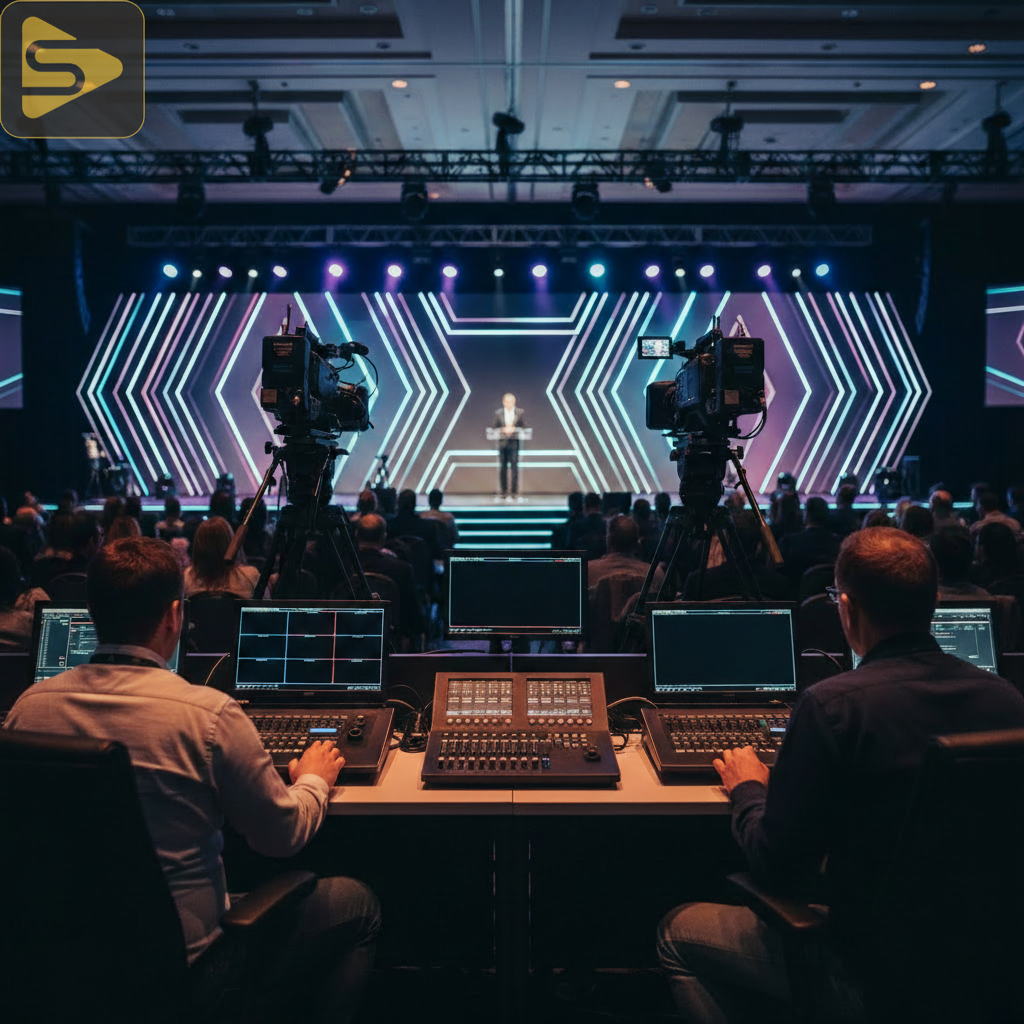
San Francisco’s unique architecture often means dealing with massive floor-to-ceiling windows or flickering industrial LED overheads. Your brief should specify a dedicated lighting plot to counteract the ‘Silicon Valley grey’ aesthetic. It’s often better to bring in a mobile lighting kit rather than relying on house lights that aren’t balanced for skin tones on camera.
Documenting the Run-of-Show for Multi-Camera Success
A technical brief is your insurance policy against missed moments during a fast-paced conference video planning session. In our experience with mid-market clients, the ‘Day-of’ schedule changes 90% of the time, so your brief must include a clear hierarchy of priorities.
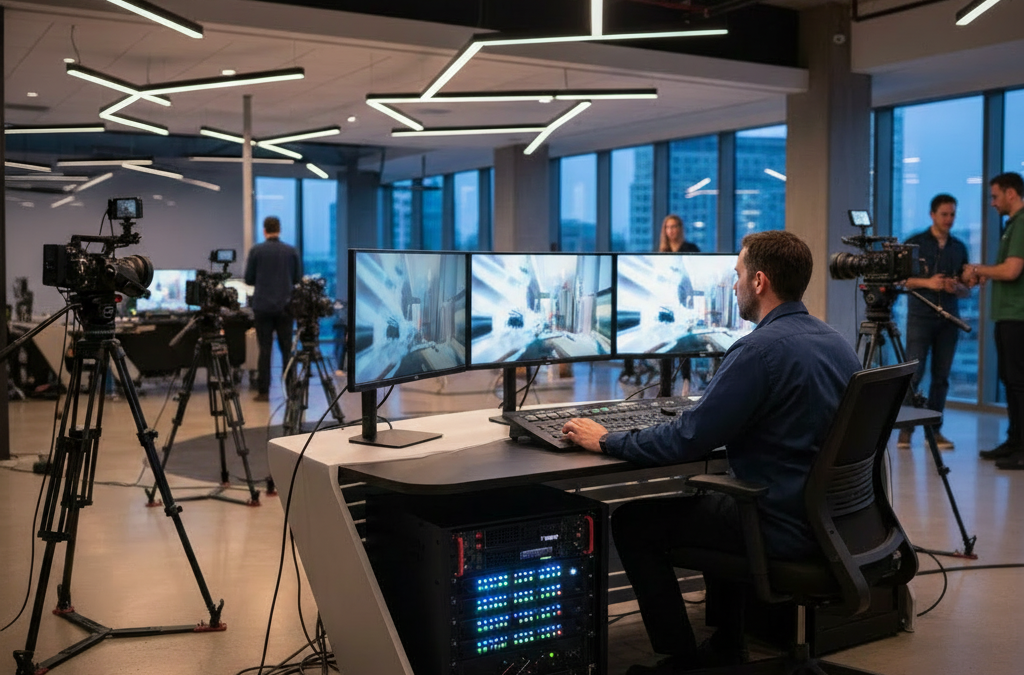
- Camera Placements: Map out Camera A (Master Shot), Camera B (Tight on Speaker), and Camera C (Reaction/B-Roll).
- Tally and Intercom: For a multicam livestream setup, specify the need for a comms system so the director can guide operators in real-time.
- Redundancy Plans: Always document the ‘Plan B’ for signal loss. This includes local recording on all cameras even if the primary stream is to the cloud.
The real kicker? Most event producers forget to schedule a ‘Tech Check’ at least two hours before doors open. Use this time to sync timecodes across all devices, preventing hours of manual alignment in post-production.
Ready to elevate your next event? Schedule a free technical consultation with our SF-based production leads today.
Navigating San Francisco Logistics: Permitting and Union Labor
San Francisco is a complex landscape of union-regulated venues (like the Moscone Center) and private hubs where a freelance videographer might face unexpected restrictions. A professional technical video production brief must address these logistical hurdles before the first case is unloaded.
| Venue Type | Labor Requirements | Power/Bandwidth Needs |
|---|---|---|
| Convention Centers | Often requires Union (IATSE) stagehands | Dedicated 20-amp circuits + 10Gbps Fiber |
| Tech Startup HQs | Non-union; internal security clearance | High-speed Wi-Fi 6; limited circuit access |
| Historic Venues | External load-in assistance required | May require portable power generators |
Here’s the thing: If you’re filming at a venue with union labor, your brief needs to clearly state who is responsible for ‘pushing glass’ (moving gear) and who is allowed to plug in cables. Ignoring these local nuances can lead to massive budget overruns and day-of delays.
The ‘Raw to Viral’ Pipeline: Rapid Delivery Specs
In the SF tech scene, speed-to-market is the only metric that matters for social engagement. We often see Series B SaaS founders who need a highlight reel on LinkedIn before the keynote speaker has even left the stage. To achieve this, your brief must prioritize the ‘Raw to Viral’ pipeline.
- Cloud Uploads: Specify the use of tools like Frame.io or Teradek for real-time proxies.
- On-Site Editor: For high-priority events, include a dedicated editor in the brief who works in parallel with the filming team.
- AI-Integrated Workflows: We use Ingest.blog, our internal AI content engine, to help select clients turn event transcripts into SEO-optimized blog posts and social snippets within hours.
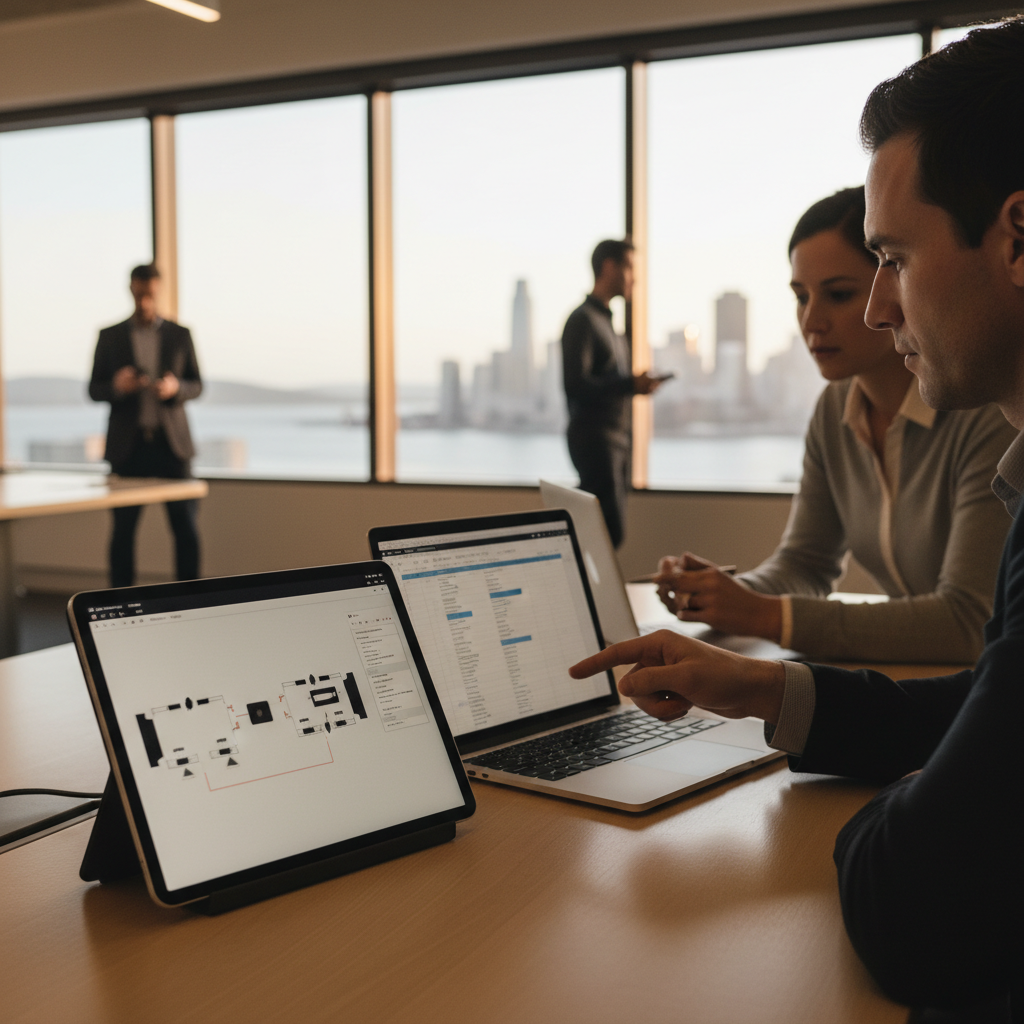
But wait—don’t forget the aspect ratios. A modern brief should demand both 16:9 for YouTube and 9:16 for Instagram Reels. In our work with corporate comms teams, we’ve found that capturing for both formats simultaneously saves roughly 30% in post-production costs.
Budget-Optimized Workflows: 4K vs. 6K for Bay Area Startups
There is a common misconception that more K’s equal better video. While 8K sounds impressive in a pitch, the reality is that most SF event videography is consumed on mobile devices or 1080p monitors. The real value of high-resolution capture isn’t the pixel count; it’s the ‘crop-ability.’
What most people miss is that 6K data rates require significantly more expensive storage and faster processing power. For a typical Bay Area mid-market client, we recommend a 4K 10-bit workflow. This provides enough data for professional color grading and a 200% zoom without losing quality on a standard HD stream.
If you’re managing multiple vendors, ensure your social media marketing team is aligned on these specs. There’s nothing worse than a one-off video shoot that produces files too large for your internal team to edit.
Data Privacy and Security for Tech Summits
When filming at tech summits involving sensitive IP or unreleased products, security is a technical requirement, not an afterthought. San Francisco startups are rightfully protective of their trade secrets. Your brief should outline strict data handling protocols.
- NDAs and On-Site Conduct: Ensure all crew members have signed project-specific NDAs.
- Encrypted Storage: Require the use of encrypted SSDs for all raw footage transfers.
- Live Stream Security: If you are running a multicam livestream setup, specify password-protected or SSO-integrated viewing platforms to prevent unauthorized access.
According to Forbes, data breaches in the corporate sector are increasingly targeting third-party vendors. By including security specs in your technical brief, you position yourself as a reliable, enterprise-ready partner.
Future-Proofing Your Content Library
The smartest marketers don’t view an event as a single day of filming; they view it as a content mine. A single day of SF event videography should yield a 6-month library of assets. To do this, your brief must include a dedicated B-roll shot list for tech conferences.
Instead of just filming the stage, instruct your crew to capture:
- High-energy networking in the lobby
- Close-ups of product demos and UI/UX screens
- Short, 30-second ‘man on the street’ attendee testimonials
- Cinematic ‘hero shots’ of the San Francisco skyline or venue architecture
This approach ensures that even a one-off video shoot feeds your paid advertising and organic social channels for months to come. Don’t settle for a static recording; build a brief that scales your brand.
Need help building your next technical brief? Click here to book a free strategy session with iStudios Media and let’s map out your production.
Frequently Asked Questions
How much does SF event videography typically cost?
Industry-reported ranges for professional event production in the Bay Area typically fall between $2,500 and $15,000 per project. Premium multi-camera setups with live switching and rapid-turnaround editing can range higher depending on crew size and equipment requirements.
What is the difference between an event producer and a videographer?
An event producer manages the overall logistics, run-of-show, and vendor coordination, while a videographer focuses specifically on the technical capture of visual content. For seamless results, your technical brief should serve as the primary communication tool between these two roles.
Do I need a permit for filming in San Francisco?
Permissions depend on the location. Private venues generally only require owner approval, but filming on public sidewalks or parks often requires a permit from the San Francisco Film Commission. Always include permitting responsibility in your technical brief to avoid day-of shutdowns.
How quickly can I get a highlight reel after the event?
With a modern technical brief that includes on-site editing or cloud-based proxy workflows, a 60-second highlight reel can be delivered within 12 to 24 hours. Without these pre-planned technical specs, standard industry turnaround is typically 5 to 10 business days.