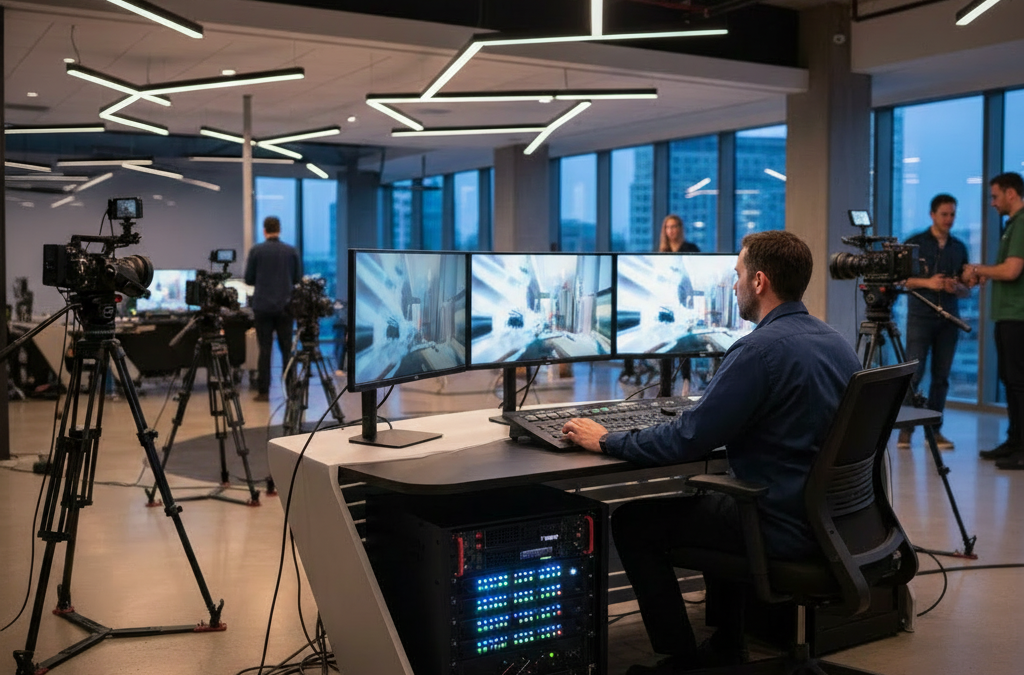
Despite being the global epicenter of AI and innovation, San Francisco’s aging infrastructure often turns a high-stakes SF event livestreaming production into a buffering nightmare. According to recent industry benchmarks, even a 1% packet loss can degrade a 4K broadcast to the point of unwatchability, signaling a lack of technical maturity to your VCs and engineers in the room.
If you are a marketing director or startup founder, you’ve likely felt the sting: the keynote starts, the remote audience spikes, and suddenly the frame rate plummets. You aren’t just fighting bad luck; you’re fighting the “Concrete Canyons” of the Financial District and the notorious network congestion of SoMa. This guide breaks down why your professional event broadcast is failing and how to build a fail-safe stack that actually works in the Bay Area.
The Irony of Gigabit Fiber in SoMa and Union Square
Just because a venue in the Mission District or SoMa claims to have “Gigabit Fiber” doesn’t mean your livestream will have a dedicated, stable path to the cloud. Most San Francisco venues use shared circuits where your broadcast bandwidth competes with the guest Wi-Fi, the catering team’s POS system, and the neighboring office’s cloud backups.
In our experience with mid-market clients, the most common culprit is ISP throttling during peak conference hours. When every building on the block is hitting the same node for a 10:00 AM keynote, the local exchange experiences massive network jitter. Jitter—the variance in time between data packets arriving—is the silent killer of smooth video. A freelance videographer with a single laptop and an Ethernet cable simply cannot overcome this localized congestion.
Bonded Internet: Navigating the SF ‘Concrete Canyons’
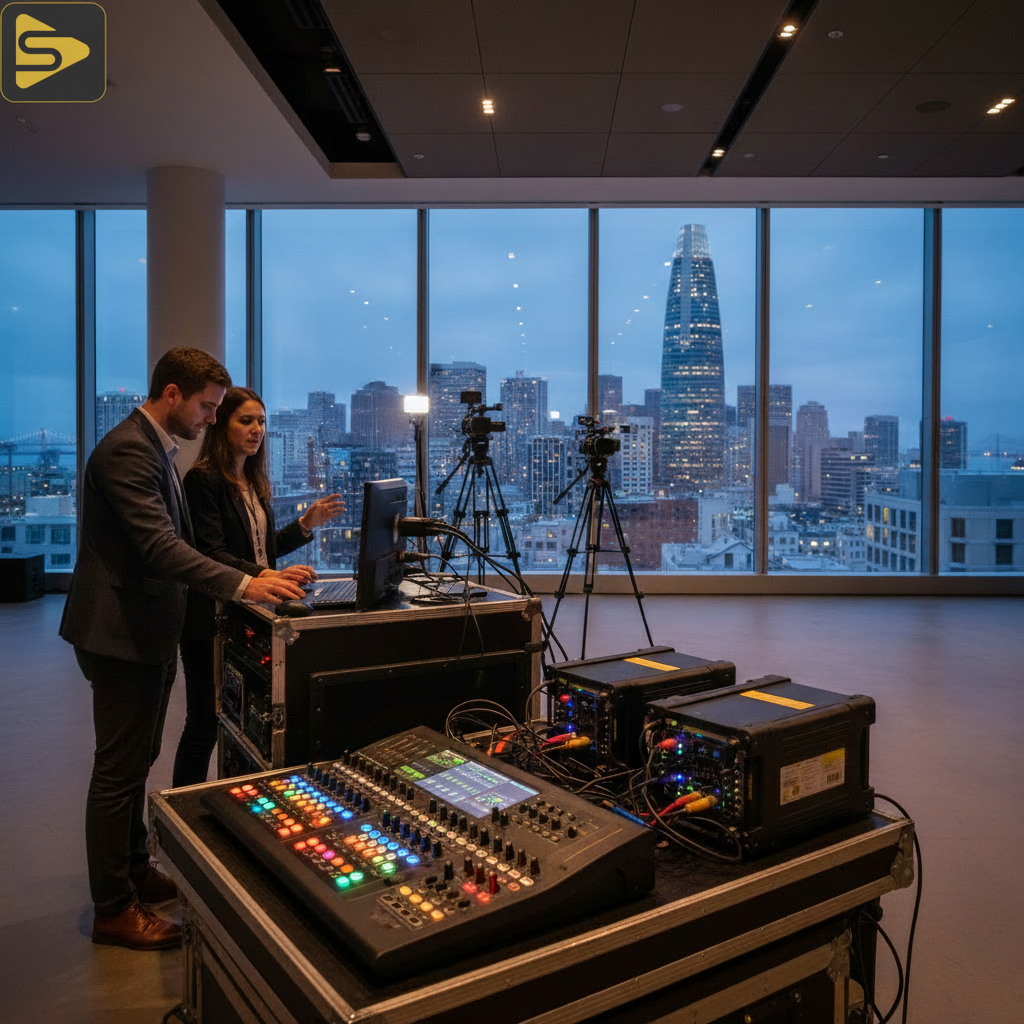
Reliable SF event livestreaming requires more than one connection; it requires a bonded network strategy that treats connectivity like a diversified investment portfolio. In the Financial District, tall buildings act as Faraday cages, bouncing 5G signals and creating unpredictable “dead zones” that can cause a livestream signal drop in an instant.
We recommend a “Triple Threat” stack for high-stakes events:
- Primary: Dedicated Venue Ethernet (VLAN-isolated).
- Secondary: Bonded Cellular (AT&T and Verizon combined via a Peplink or Teradek Link Pro).
- Tertiary: Starlink (if outdoor line-of-sight is available) or a microwave link.
By using a hardware-based bonding solution, your stream is split across these paths and reassembled in the cloud. If the venue’s fiber dips, the cellular takes the load without a single dropped frame.
Need a partner who understands the Bay Area’s unique connectivity challenges? Schedule a free consultation with our production team today.
SRT vs. RTMP: Why Your Protocol Choice Matters
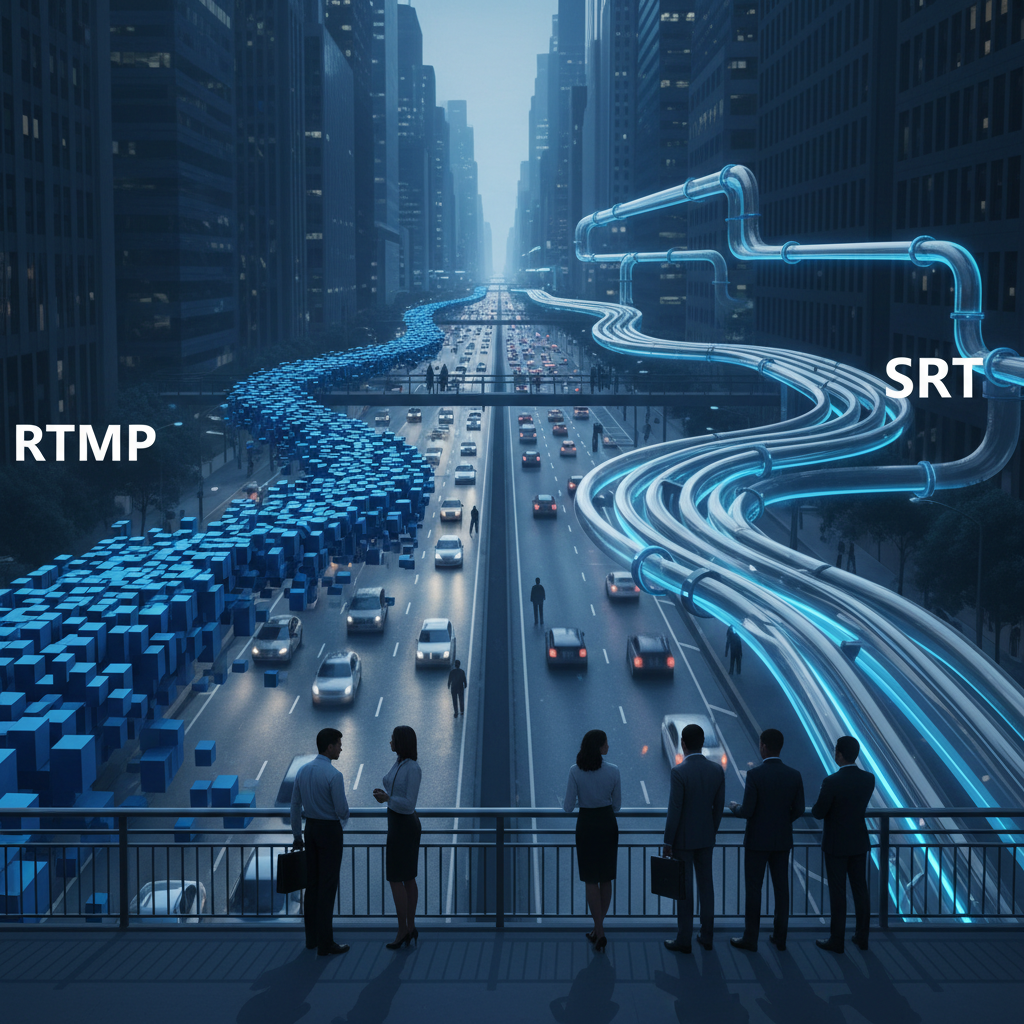
The traditional RTMP (Real-Time Messaging Protocol) is the industry standard, but it is remarkably fragile when faced with San Francisco’s microclimates and urban interference. RTMP is a “fire and forget” protocol; if a packet is lost, it’s gone, resulting in a visual glitch or a frozen stream.
Transitioning to SRT (Secure Reliable Transport) is the single most effective technical change you can make this year. SRT was designed specifically for unstable networks. It uses an intelligent retransmission mechanism that recovers lost packets in real-time. According to the SRT Alliance, this protocol can maintain high-quality video even over networks with up to 10% packet loss. If you’re hiring for a professional event broadcast, ask the lead engineer if they support SRT—if they don’t, you’re taking an unnecessary risk.
Hardware Bottlenecks: The ‘One-Off Video Shoot’ Trap
Many marketing leads try to save budget by hiring a one-off video shoot provider who uses a consumer-grade encoder or a single laptop running OBS. While these tools are great for vlogs, they lack the dedicated processing power required for a multi-hour corporate event. When a laptop gets hot, the CPU throttles, and frames start dropping—not because of the internet, but because the hardware can’t keep up with the encoding demands.
| Feature | Freelance/DIY Setup | iStudios Professional Stack |
|---|---|---|
| Encoder | Software-based (Laptop) | Hardware-based (Dedicated) | Connectivity | Single Venue Line | Bonded Fiber + 5G + Satellite | Protocol | RTMP | SRT with HEVC Encoding | Redundancy | None | Failover to Secondary Encoder |
The Marketing Cost of Lag: Brand Authority at Stake
For a Series B startup launching a product in Mission Bay, a glitchy stream isn’t just a technical hiccup; it’s a brand failure. In a city where your audience consists of developers and VCs, technical execution is equated with product quality. A livestream signal drop during a demo suggests that your internal operations might be just as unstable as your broadcast.
For those managing high-volume content, we often use Ingest.blog (our internal AI content engine that we also offer to select clients) to rapidly turn livestream transcripts into SEO-optimized blog posts and social snippets. This ensures that even if a few people missed the live moment due to their own local connection, your message remains clear and searchable within hours.
Don’t let technical debt ruin your next big reveal. Explore our full-stack production services to see how we handle integrated marketing and media.
Try This: The ‘Pre-Flight’ Network Audit
Before your next event, don’t just run a speed test. Use a tool like PingPlotter to monitor the connection for at least two hours during the same time of day as your scheduled event. This will reveal if the venue suffers from periodic “micro-outages” or ISP throttling that a 30-second speed test would miss. If you see consistent spikes in network jitter, it’s time to bring in a bonded cellular solution.
Key Takeaways for Decision Makers
- Stop relying on venue Wi-Fi: Always demand a dedicated, hardwired VLAN.
- Bond your connections: Combine fiber with cellular to eliminate single points of failure.
- Upgrade your protocol: Shift from RTMP to SRT for better packet recovery.
- Invest in hardware: Use dedicated encoders instead of laptops to prevent thermal throttling.
Ready to ensure your next San Francisco event is broadcast in flawless 4K? Contact iStudios Media for a comprehensive technical site survey and production quote. We don’t just film; we ensure your message reaches your audience without interruption.
Frequently Asked Questions
Why does my livestream lag even when the venue says they have fast internet?
Speed is not stability. A venue might have 1Gbps download speeds, but if the upload speed is shared or the network has high jitter, your stream will buffer. Professional SF event livestreaming requires a dedicated upload path (VLAN) that is isolated from the rest of the building’s traffic.
What is the difference between RTMP and SRT?
RTMP is the older standard used by platforms like YouTube and Facebook, but it is prone to crashing if the connection dips. SRT is a modern protocol designed to handle packet loss and network congestion, making it much more reliable for professional event broadcast needs in dense urban areas like San Francisco.
How much does professional event livestreaming cost in the Bay Area?
Typical Bay Area pricing for event live streaming ranges from $1,500–$8,000 per day. This depends on the number of cameras, the complexity of the network bonding required, and whether you need on-site engineers to manage the broadcast and audio mix.
Can I use 5G for my corporate livestream?
While 5G is fast, it is unreliable as a single source due to network congestion and physical obstructions in the Financial District. We recommend using 5G only as part of a bonded internet San Francisco setup, where it acts as a backup to a primary wired connection.