📋 Table of Contents
According to recent data from HubSpot, 54% of consumers want to see more video content from brands they support, yet most startups burn their entire budget on a single, over-produced hero film that fails to convert. For high-growth teams, product launch content isn’t just about looking polished; it’s about building a repeatable engine that fuels your GTM motion across every stage of the buyer’s journey.
Here’s the thing: the old way of hiring a freelance videographer for a one-off video shoot and hoping for the best is dead. In the competitive Bay Area tech ecosystem, founders need a structured content waterfall that balances high-level vision with technical validation. We call this the 3-Tier Content Hierarchy.
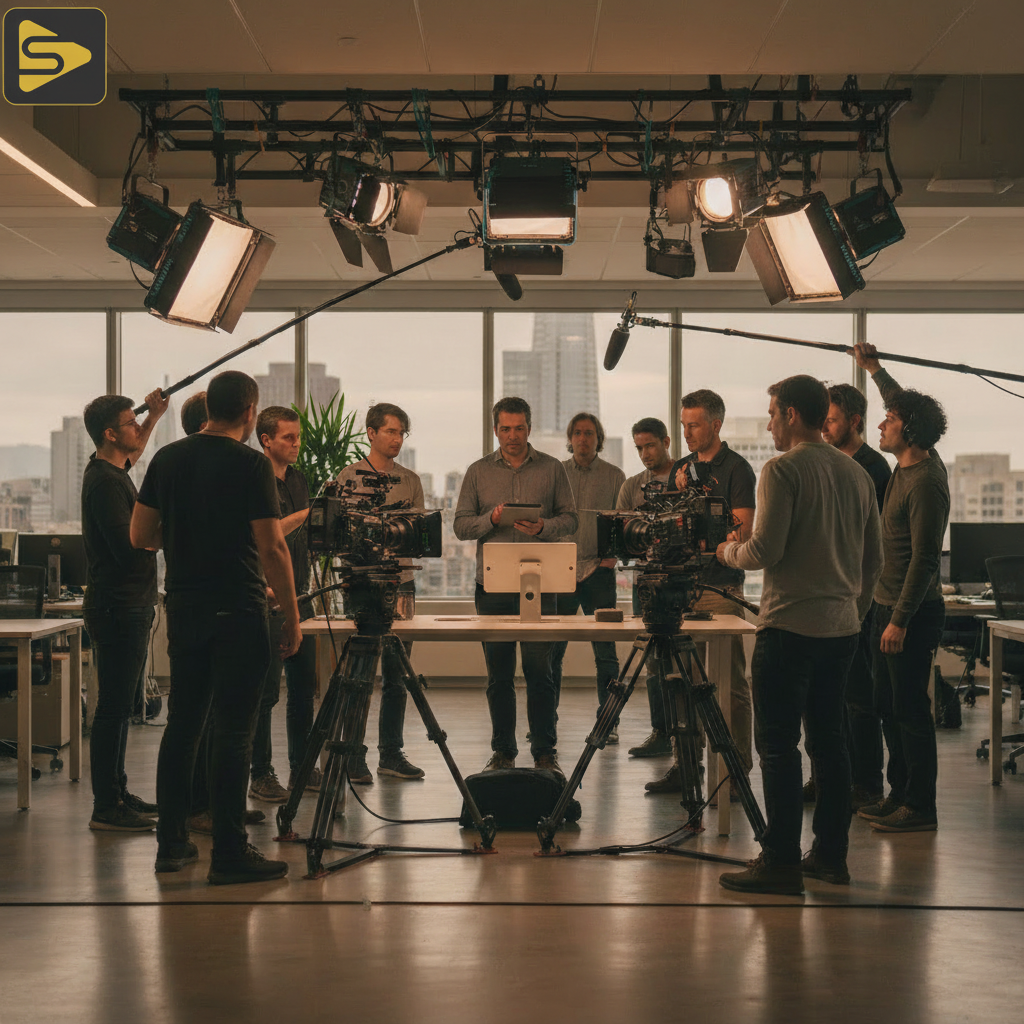
Tier 1: The Authority Layer – Visionary Brand Films
Your Tier 1 content is designed to establish category creation and visionary authority.
In our experience with Series B SaaS founders, this is where you define the ‘why’ before the ‘how.’ While a one-off video shoot might give you a pretty asset, a strategic Tier 1 brand film positions your company as the inevitable leader in your space. This is particularly critical for AI-first product narratives where the technology is complex, but the business outcome must be crystal clear.
- The Goal: Emotional resonance and high-level problem identification.
- Typical Investment: Corporate video production for these premium assets typically ranges from $8,000 to $50,000 per finished minute.
- Distribution: Website hero section, LinkedIn executive profiles, and investor decks.
What most people miss is that Tier 1 shouldn’t be a generic corporate commercial. It should feel like a manifesto. For Bay Area startups, this often means leaning into Founder-Led Sales, where the CEO’s vision is the primary hook. If you’re struggling to articulate this vision, schedule a free consultation with our strategy team to map out your narrative.
Tier 2: The Validation Layer – Technical Demos and Case Studies
Tier 2 content is where you prove the product actually works and fits into the modern GTM motion.
Once you’ve captured attention, sophisticated buyers—especially in the B2B and biotech sectors—demand technical proof. This is the ‘under-the-hood’ layer. Instead of a glossy montage, Tier 2 focuses on Product-Led Growth (PLG) by showing the interface, the workflow, and the results. A typical Bay Area mid-market client uses these videos to reduce friction in the sales cycle by answering technical objections before they are even raised.
- Interactive Demos: Short, 60-90 second walkthroughs of high-value features.
- Customer Stories: High-fidelity social proof that highlights specific ROI metrics.
- Expert Interviews: Deep dives into the architecture or methodology behind the product.
The real kicker? Tier 2 content often has a longer shelf life than Tier 1. While your brand vision might evolve, your core product value propositions remain stable. This is where SEO-optimized video content can drive consistent organic traffic to your demo pages.
Tier 3: The Community Layer – Social Proof Snippets
Tier 3 is about high-velocity, short-form content that keeps your brand top-of-mind in the ‘SF Tech’ community.
This is the most undervalued part of the product launch content stack. Rather than one big launch day, Tier 3 allows for a ‘Stealth to Scale’ framework, where you release rapid-fire content over 90 days. This includes ‘edutainment’ snippets for B2B audiences on LinkedIn and X (Twitter). For startups with limited bandwidth, we often deploy Ingest.blog, our internal AI content engine, to help scale the distribution of these insights across multiple platforms without increasing headcount.
| Content Type | Primary Platform | Production Style |
|---|---|---|
| Founder Vlogs | LinkedIn / X | Raw / Authentic | Event Highlights | Instagram / Threads | Fast-paced / Energetic |
| Micro-Tutorials | YouTube Shorts | Educational / Crisp |
But wait—don’t mistake ‘raw’ for ‘low quality.’ Even your social snippets need professional audio and lighting to maintain brand equity. According to research from Forbes, brand consistency across all platforms can increase revenue by up to 23%.

Allocating Your Bay Area Startup Marketing Budget
The best way to maximize ROI in a high-interest-rate environment is to stop thinking about video as a cost center and start seeing it as a performance asset.
We recommend a 20/50/30 budget split for most Series A-C launches. Spend 20% on your high-end Tier 1 vision, 50% on the Tier 2 validation assets that actually close deals, and 30% on Tier 3 community building. This ensures you aren’t just creating a ‘ghost’ campaign that disappears after a week. By integrating your production with paid media management, you can ensure these assets reach high-intent decision-makers in the Bay Area and beyond.
Need help building your waterfall? If you’re tired of managing fragmented vendors and want a partner who understands both cinematography and CRM automation, we’re here to help. Click here to book a strategy session.
The ‘Local-First’ Paradox: Physical Events to Digital Loops
Bay Area startups have a unique advantage: the physical density of the tech ecosystem.
Many of our clients use local physical events—launch parties in SoMa or workshops in Palo Alto—to fuel their digital content loops. By capturing multi-camera event live streaming or high-end photography during these moments, you generate months of Tier 3 content in a single day. This ‘Physical-to-Digital’ pipeline is the secret weapon of the most successful GTM motions in Silicon Valley.
Key Takeaways for Your Next Launch
- Tier 1 is for Authority: Don’t lead with features; lead with a manifesto.
- Tier 2 is for Validation: Use technical demos to kill sales objections early.
- Tier 3 is for Velocity: Use short-form snippets to stay top-of-mind.
- Integrate Everything: Link your content to a marketing automation platform to track real ROI.
FAQs
How much should a Series A startup spend on product launch content?
While budgets vary, typical Bay Area industry ranges for a full-funnel content suite (Tiers 1-3) fall between $15,000 and $75,000. The key is not the total spend, but the allocation. Investing too much in a single hero film without supporting social proof snippets often leads to poor campaign performance and low ROI.
Why is founder-led content becoming more important than corporate branding?
In the current SF tech boom, buyers crave authenticity and direct access to visionaries. Founder-led content builds trust faster than polished corporate messaging. By showing the person behind the product, startups can humanize their brand, making them more relatable to both investors and early adopters in the B2B space.
Can we use AI to help scale our product launch content?
Yes, but AI should be used for distribution and iteration, not for the core creative vision. We use tools like our internal engine, Ingest.blog, to turn long-form video transcripts into blog posts, social captions, and email sequences. This allows lean teams to maintain high content velocity without needing to hire a massive in-house creative department.
What is the biggest mistake startups make during a video shoot?
The most common error is failing to plan for ‘content atomization.’ Founders often focus on the final 3-minute video and forget to capture the raw behind-the-scenes footage, vertical snippets, and high-res photography needed for a multi-channel launch. Always ensure your production partner has a plan to extract maximum value from every hour on set.
Ready to execute a world-class launch? Don’t settle for a generic marketing agency that doesn’t understand the nuances of the Bay Area tech scene. Contact iStudios Media today for a data-driven approach to your next product launch.