📋 Table of Contents
According to a 2024 report by Freeman, 82% of B2B attendees say that personalized, post-event digital content significantly influences their purchasing decisions after the show floor closes. Yet, most San Francisco marketing teams treat their post-event content sprint as an afterthought, letting high-value footage sit on a hard drive until the lead’s memory of the conversation has completely evaporated.
The reality of the Bay Area conference circuit—from Dreamforce to SF Tech Week—is that the real ROI isn’t found in the badge scans; it’s found in the speed-to-feed velocity of your content. If you aren’t publishing curated takeaways while the attendee’s dopamine levels are still high, you’re effectively paying a ‘procrastination tax’ on your sponsorship investment. This guide breaks down how to move beyond the generic recap and execute a technical workflow that fuels your pipeline for months.
The Anti-Recap: Why Your Event Summary is Killing Engagement
Nobody wants to watch a three-minute montage of people shaking hands set to upbeat corporate stock music. In our experience with Series B SaaS founders, the content that actually converts is ‘Zero-Click’ value—specific, actionable insights that can be consumed directly in a LinkedIn feed or a Slack community.
- The Vibe vs. The Slides: Stop focusing on the keynote slides; attendees can download those. Capture the hallway conversations and the ‘unfiltered’ reactions that happen between sessions.
- Hyper-Personalized Follow-ups: Use session intent data to send specific video clips to high-value prospects rather than a generic ‘thanks for coming’ email.
- Micro-Moment Content: Short, 30-second clips of a founder answering a single question often outperform a 10-minute polished corporate video.
The real kicker? Most companies wait weeks for a one-off video shoot to be edited, by which time the industry conversation has moved on. By adopting an agile post-event content sprint, you bypass the bottleneck of traditional production and enter the ‘Dark Social’ conversation while it’s still relevant.
Hour 0 to 24: The Rapid Extraction Phase
The first 24 hours are about data integrity and initial triage. While a freelance videographer might just hand you a drive and walk away, a strategic partner focuses on the immediate utility of the assets. We recommend a ‘tri-stream’ ingestion process to ensure nothing is lost in the chaos of a Bay Area conference.
- Automated Transcription: Run all raw audio through tools like Descript or Otter.ai immediately to create a searchable text database of every word spoken.
- The ‘Hook’ Audit: Identify the first 5 seconds of every interview or panel. If there isn’t a polarizing or insightful statement in that window, it’s a B-roll candidate, not a featured clip.
- CRM Integration: Tag your footage by topic and speaker so your sales team can use marketing automation platform workflows to send relevant snippets to specific lead segments.
What most people miss is that your event content strategy should begin before the cameras even start rolling. By pre-defining your ‘content pillars,’ you can categorize footage in real-time. For businesses scaling content velocity, we often utilize Ingest.blog (https://ingest.blog), our internal AI content engine, to help bridge the gap between video transcripts and SEO-optimized long-form articles.
Hour 24 to 48: The Repurposing Engine
By the second day, your goal is to turn 10 hours of raw conference footage into a diverse asset library. This is where you move from ‘recording’ to ‘architecting’ a conference video marketing machine. Instead of one long video, think in terms of modular units that can be rearranged.
| Asset Type | Target Platform | Primary Goal |
|---|---|---|
| 60-Second ‘Hot Takes’ | LinkedIn / X | Thought Leadership |
| 15-Second BTS Clips | Instagram / TikTok | Brand Personality |
| 3-Minute Deep Dives | YouTube / Email | Lead Nurture |
| Transcribed Articles | Company Blog | SEO / Search |
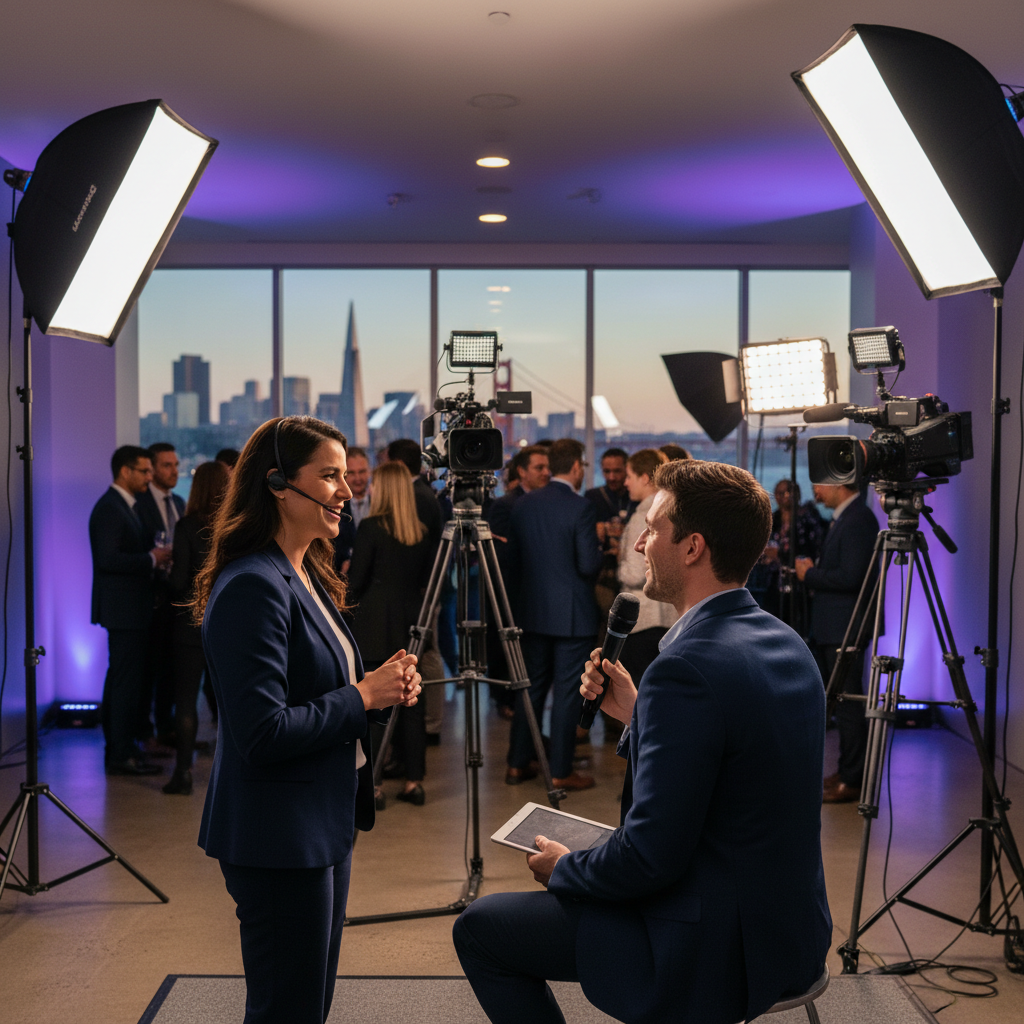
Transitioning from a one-off video shoot mindset to a ‘content harvesting’ mindset allows you to scale without increasing headcount. For instance, a typical Bay Area mid-market client can generate 30+ unique pieces of social content from a single day of multi-camera filming if the post-production workflow is handled by an integrated team rather than fragmented vendors.
Need a partner who can execute this at speed? Schedule a free consultation to discuss your upcoming event production needs.
Hour 48 to 72: Distribution and Pipeline Acceleration
The final stage of the post-event content sprint is about deployment. According to HubSpot’s State of Marketing Report, video is the most effective format for B2B lead generation, but only if it reaches the prospect during the consideration phase. By hour 72, your first ‘wave’ of content should be live.
- The ‘FOMO’ Sequence: Create a short teaser for those who didn’t attend, offering an ‘executive summary’ in exchange for an email address.
- Social Selling Bundles: Provide your AEs and SDRs with a folder of 15-second ‘conversation starters’ they can drop into LinkedIn DMs.
- Paid Media Amplification: Use Google Ads and LinkedIn Ads to retarget people who visited your booth with the specific session content they missed.
Here’s the thing: The ‘Anti-Recap’ strategy works because it respects the audience’s time. Instead of asking them to sit through a highlight reel, you’re giving them the ‘CliffNotes’ version of the industry’s most important conversations. This builds massive trust and positions your brand as a curator of value, not just a vendor with a booth.
The Multi-Channel Blueprint: Beyond the Booth
While video is the centerpiece, a truly integrated event content strategy leverages every medium. In our work with medical practice owners and corporate comms teams, we’ve found that high-quality studio photography and headshots taken on-site provide a year’s worth of assets for LinkedIn profiles and internal culture building.
The real power of a post-event content sprint is that it solves the ‘content drought’ that usually follows a major marketing push. By treating the event as a production studio, you’re not just networking—you’re filming a season’s worth of content in 48 hours. This is the difference between a generic marketing agency and a growth partner that understands systems thinking.
Measuring ROI: The Metrics That Matter
Forget ‘likes’ and ‘shares’ for a moment. To prove the value of your conference video marketing to a CMO or VP, you need to track how content influences the sales cycle. We recommend looking at ‘Content-Influenced Pipeline’—how many closed-won deals engaged with at least three pieces of post-event content?
- Inbound Intent: Are prospects mentioning specific video clips in their initial discovery calls?
- Sales Velocity: Does the 72-hour follow-up window result in faster meeting bookings compared to the standard 2-week delay?
- SEO Longevity: Use Google Analytics to track the long-tail traffic to your event-related blog posts over the following six months.
Ready to turn your next SF conference into a 90-day content engine? Contact iStudios Media today for a tailored production and performance strategy.
Frequently Asked Questions
How much does professional post-event video production cost in the Bay Area?
Industry-reported ranges for corporate video production typically fall between $2,500 and $15,000 per project. For premium brand films or multi-day conference coverage, costs can range from $8,000 to $50,000 per finished minute depending on the crew size, technical requirements, and the speed of the post-production workflow required.
Can we use AI to speed up our post-event content sprint?
Absolutely. We utilize AI-powered tools for rapid transcription, automated social clipping, and content distribution. By using our internal engine, Ingest.blog, we can turn hours of session footage into SEO-optimized articles in a fraction of the time it takes manual copywriters, allowing you to hit that 72-hour window consistently.
Why is the 72-hour window so critical for conference content?
The ‘dopamine tail’ of a major event like Dreamforce or SF Tech Week typically lasts about three days. After that, attendees return to their daily fires and the urgency to implement new ideas fades. Delivering high-value content within this window capitalizes on their peak interest and significantly increases lead conversion rates.
What is the difference between an integrated agency and a freelance videographer?
A freelance videographer typically focuses on the ‘shoot and ship’ model—delivering raw files or a single edit. An integrated agency like iStudios Media combines production with an event content strategy, SEO, and marketing automation platform expertise to ensure the video actually drives measurable ROI and integrates with your existing CRM pipeline.