📋 Table of Contents
- The Strategic Value of Multi-Camera Livestreaming
- Recorded Keynotes: When Precision Trumps Spontaneity
- The Cost-Benefit Analysis: Bay Area Industry Ranges
- The Decision Matrix: Which Format Should You Choose?
- Technical Requirements for Broadcast-Grade Streaming
- Maximizing Production ROI with Post-Event Distribution
- FAQs
According to a recent report by HubSpot, 54% of consumers want to see more video content from brands they support, but the format of that video dictates whether they actually stay tuned. For Bay Area event producers, the choice between multi-camera livestreaming and recorded keynotes is no longer just a technical hurdle—it’s a strategic decision that impacts audience retention and brand trust.
The real kicker? While a pre-recorded video offers the safety of a second take, the ‘Authenticity Pivot’ in B2B marketing shows that audiences are increasingly craving the raw, real-time energy of a live broadcast. They don’t want a polished advertisement; they want to feel like they are in the room. This shift is pushing marketing directors to move away from the ‘watch later’ graveyard of recorded sessions toward interactive, real-time engagement (RTE).
The Strategic Value of Multi-Camera Livestreaming
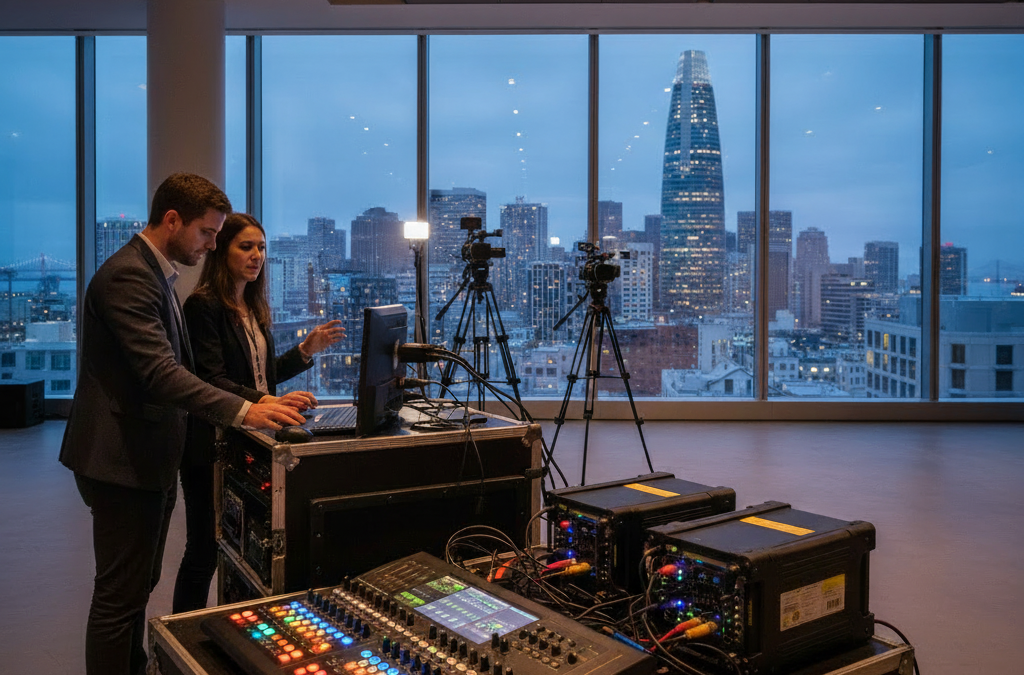
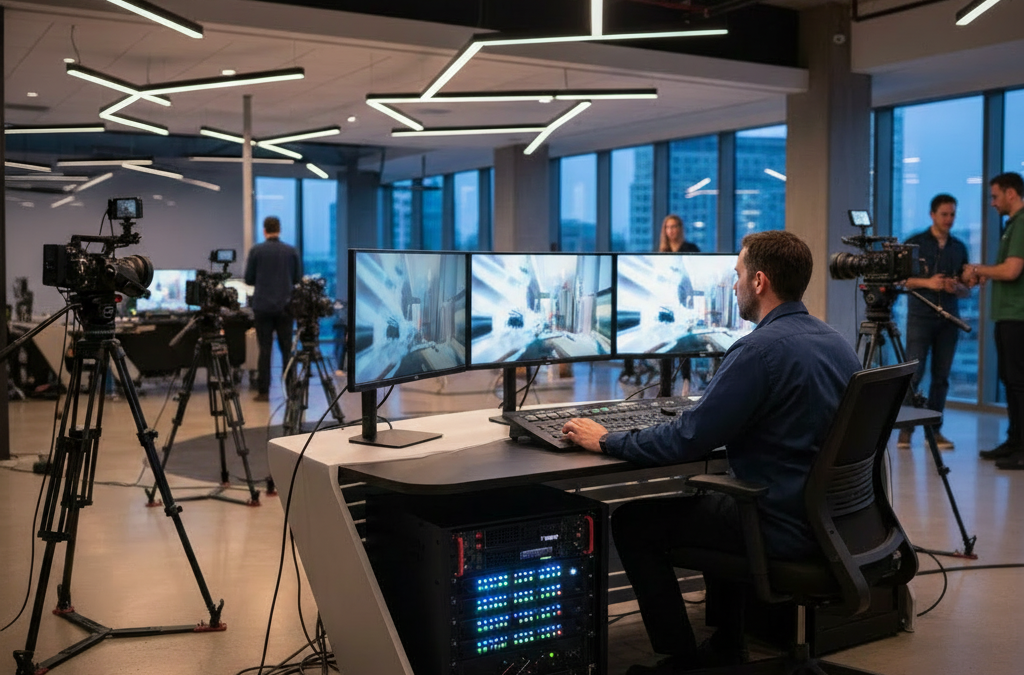
Multi-camera production transforms a static presentation into a dynamic broadcast-grade experience that mimics the energy of live television.
- Dynamic Perspectives: Switching between wide shots, tight close-ups, and audience reactions keeps the viewer’s brain engaged, reducing the ‘Zoom fatigue’ common in single-cam setups.
- Real-Time Engagement: Live Q&A and polls create a feedback loop that pre-recorded content simply cannot replicate.
- Instant VOD Pipeline: A well-executed live stream can be chopped into social clips almost immediately after the event ends.
In our experience with Series B SaaS founders, the ‘FOMO’ factor of a live event often leads to 3x higher initial viewership compared to a video-on-demand (VOD) release. When your audience knows the content is happening now, they prioritize it. Conversely, a one-off video shoot that is edited and posted weeks later often struggles to gain traction in a crowded LinkedIn feed.
Recorded Keynotes: When Precision Trumps Spontaneity
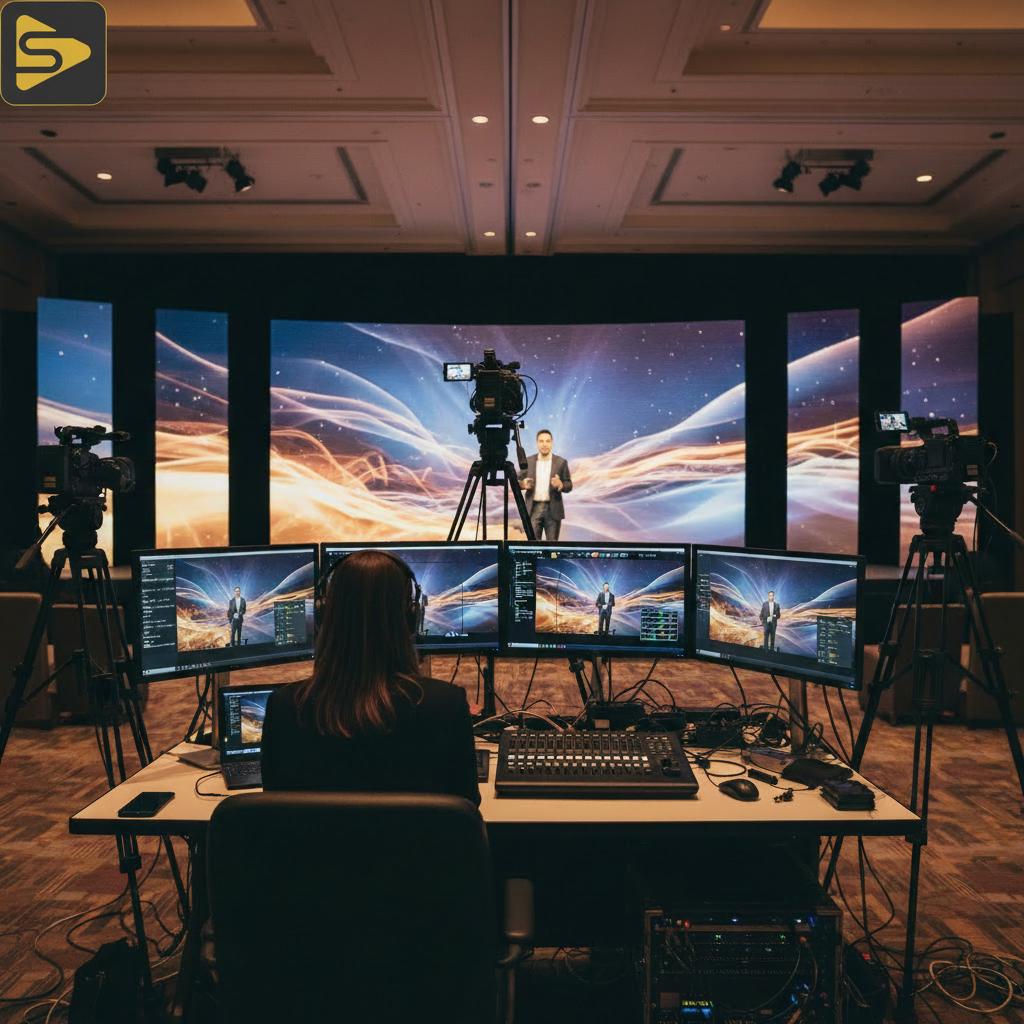
Recorded keynotes are the gold standard for high-stakes product launches where every word and frame must be perfect.
What most people miss is that a pre-recorded session isn’t just a safety net; it’s a storytelling tool. By using corporate video production techniques like color grading, sound design, and motion graphics, you can create a cinematic experience that a live stream might struggle to match under pressure.
- Zero Technical Risk: No worries about internet drops or audio glitches during the main event.
- Post-Production Polish: You can edit out the ‘ums,’ ‘ahs,’ and awkward pauses that occur in live settings.
- Global Accessibility: Recorded content can be subtitled and localized for different regions before it ever goes live.
But wait—there is a downside. The ‘Post-Polish Era’ has made audiences cynical. If a keynote feels too sterile, it loses its human connection. We often suggest a ‘Hybrid-Live’ approach: record the high-risk technical demos but keep the speaker’s intro and outro live to maintain that vital psychological proximity.
The Cost-Benefit Analysis: Bay Area Industry Ranges
Budgeting for event production in the San Francisco Bay Area requires an understanding of the scale and crew involved.
| Service Type | Price Range (Typical SF) | Best For |
|---|---|---|
| Multi-Camera Livestream | $1,500 – $8,000 per day | Conferences, Town Halls, Real-time Q&A |
| Recorded Brand Film | $8,000 – $50,000 / finished min | Product Launches, Investor Decks |
| Corporate Event Recap | $2,500 – $15,000 per project | Internal Comms, Social Proof |
Choosing a freelance videographer for a complex multi-camera setup is a common mistake we see among smaller startups. While a solo operator is great for a simple interview, multi-camera livestreaming requires a director, a technical lead, and often a dedicated audio engineer to ensure broadcast-grade quality. At iStudios Media, we provide the full-stack crew necessary to manage latency and multi-source broadcasting without the stress of vendor fragmentation.
Need help deciding which format fits your 2025 budget? Schedule a free consultation with our production team today.
The Decision Matrix: Which Format Should You Choose?
The best way to decide is to look at your primary goal: Is it reach, or is it retention?
- Choose Multi-Camera Livestreaming if: You are launching a community-led initiative, hosting a town hall, or need to generate immediate buzz. It leverages the ‘FOMO’ factor and allows for real-time audience video feeds to be integrated into the main stage.
- Choose Recorded Keynotes if: You are producing an evergreen training series, a high-budget commercial, or an investor pitch where precision is non-negotiable.
- Choose a ‘Simulive’ Strategy if: You want the engagement of a live chat with the safety of a pre-recorded video. This involves playing a recorded video at a specific time while the speaker interacts with the audience in the chat.
For mid-market clients, we often recommend a live-to-VOD pipeline. This means filming the event with a full multi-camera production crew and then using the raw footage to create high-velocity social content. To scale this content distribution, we use Ingest.blog, our internal AI content engine, to turn video transcripts into SEO-optimized blog posts and LinkedIn articles in minutes.
Technical Requirements for Broadcast-Grade Streaming
Success in multi-camera livestreaming depends on more than just cameras; it’s about the infrastructure behind them.
- Bandwidth: You need a dedicated upload speed of at least 10-20 Mbps. Never rely on shared hotel Wi-Fi.
- Switching: A hardware switcher (like a Blackmagic ATEM) is essential for seamless transitions between angles.
- Latency Management: For interactive events, keep your latency under 5 seconds so the Q&A feels natural.
Here’s the thing: Many organizers try to save money by using a one-off video shoot approach for a live event, only to find that their equipment isn’t rated for continuous multi-hour streaming. This leads to overheating and signal loss. Reliable livestream production in SF requires enterprise-grade gear and redundant backups.
Maximizing Production ROI with Post-Event Distribution
The value of your event shouldn’t end when the stream stops.
A typical Bay Area medical practice owner we worked with used their live-streamed patient seminar to create six months’ worth of social media content. By capturing high-quality multi-cam footage, they were able to pull out snippets for Instagram Reels, YouTube Shorts, and even Google Ads. This approach ensures that your initial investment in production continues to feed your marketing automation platform with fresh leads.
Effective content distribution involves:
- Transcriping the audio for SEO-rich blog posts.
- Creating ‘Vertical-First’ crops for mobile-first platforms like LinkedIn.
- Using the footage for retargeting ads in your Google Ads campaigns.
Ready to scale your content without scaling your headcount? Contact iStudios Media to discuss a custom production and performance marketing plan.
Frequently Asked Questions
What is the main difference between multi-camera livestreaming and a recorded keynote?
Multi-camera livestreaming happens in real-time, allowing for live audience interaction and a sense of urgency. Recorded keynotes are filmed in advance, offering higher production polish and the ability to edit out mistakes. Live streams are better for engagement, while recordings are better for evergreen, high-precision storytelling.
How much does corporate event video production cost in the Bay Area?
Industry-reported ranges for Bay Area production vary by scope. A basic multi-camera live stream typically starts around $1,500 per day, while high-end brand films can range from $8,000 to $50,000 per finished minute. Most mid-market corporate events fall in the $2,500 to $15,000 range for a full production package.
Can I use a freelance videographer for a multi-camera live stream?
While a freelance videographer is excellent for one-off video shoots or simple interviews, a multi-camera live stream usually requires a specialized crew. You need someone to handle the technical switching, an audio engineer for clear sound, and a producer to manage the stream health and audience interaction simultaneously.
What is a ‘Simulive’ strategy?
Simulive is a hybrid approach where a pre-recorded keynote is broadcast at a scheduled time as if it were live. This allows the speaker to be present in the live chat to answer questions in real-time without the stress of a live performance, combining the safety of a recording with the engagement of a live event.
How do I ensure my live stream doesn’t crash?
Reliable streaming requires a dedicated hardwired internet connection (not Wi-Fi), redundant encoders, and professional-grade cameras. Working with a dedicated production partner ensures you have back-up systems in place, such as cellular bonding, to keep the stream running even if the primary internet fails.