📋 Table of Contents
In 2026, hiring a full-time videographer is the fastest way to set $150,000 on fire while watching your Series B burn rate spiral out of control. Most founders think they are saving money by bringing content creation in-house, but they are actually subsidizing a specialized employee’s health insurance while their $40,000 camera rig loses 30% of its value every twelve months.
The reality of internal video production costs in the San Francisco Bay Area is staggering when you factor in the ‘Hidden Tax’ of employment. We aren’t just talking about a $112,000 base salary; we are talking about the equity, office space, specialized hardware, and the inevitable creative plateau that happens when one person is responsible for every stage of the funnel. Smart CMOs are moving toward a variable-cost model, trading fixed overhead for high-performance agile creative pods that deliver ten times the output at a fraction of the risk.
The Hidden TCO of Internal Video Production Costs
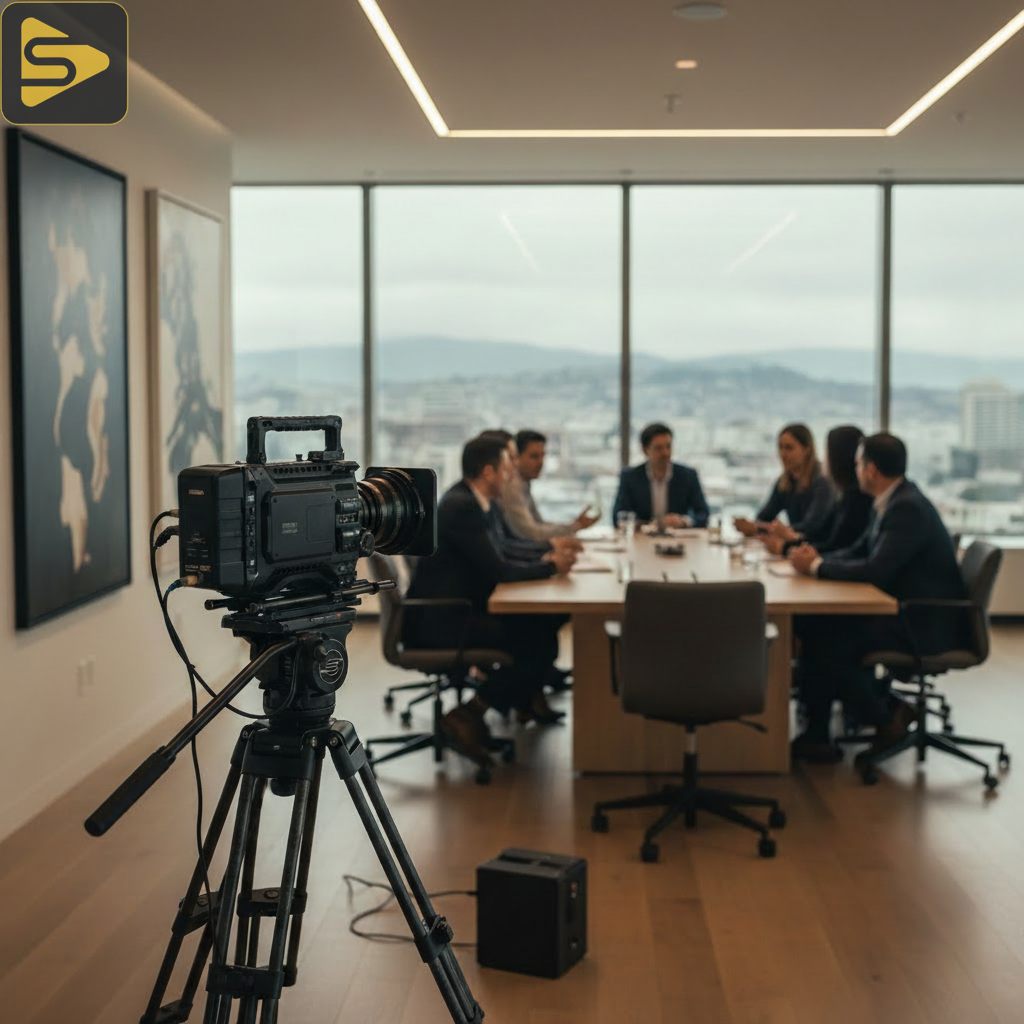
What most people miss is that a full-time creative hire is actually a $200,000 commitment once you account for the Bay Area’s competitive benefits and equipment depreciation. Here is the breakdown that HR won’t show you:
- The Equipment Trap: A professional cinema kit (Sony FX6/FX9, G-Master glass, lighting, and audio) costs $35k–$50k upfront and is obsolete in three years.
- The Software Tax: Adobe Creative Cloud, Frame.io, stock music licenses, and AI-automation tools add $500/month per seat.
- The Management Overhead: Your VP of Marketing shouldn’t be spending 5 hours a week giving feedback on B-roll cuts.
- The Skill Gap: One person cannot be a world-class DP, an expert motion graphics designer, and a data-driven performance editor simultaneously.
Consider a Series B fintech startup in Palo Alto we recently audited. They were paying a solo ‘Content Lead’ $130k plus equity. Their output? Two high-quality videos a month. By shifting to a Bay Area production partner, they tripled their ad creative volume for the same monthly spend, allowing them to test 15 different hooks on LinkedIn instead of just one. Their cost-per-acquisition (CPA) dropped by 42% in ninety days because they prioritized distribution strategy over a fixed headcount.
Why Series B Marketing Strategy is Shifting to Variable Costs
Fixed payroll is the enemy of the 2026 exit window; flexibility is the only thing that matters when you’re scaling toward a liquidity event. According to Forbes, companies that maintain lean internal teams while outsourcing specialized execution grow 2.5x faster than those that over-hire in-house. A Series B marketing strategy should be built on ‘Agile Production Pods’—specialists who drop in, execute a high-ticket sprint, and leave without lingering on your P&L.
Wait—here is the contrarian truth: Your in-house videographer actually wants to leave. Top-tier creative talent is fleeing full-time roles for high-ticket freelance ‘sprints’ because they can make more money and work on more diverse projects. If you have a full-time editor in 2026, you likely aren’t getting the best talent; you’re getting the talent that values a steady paycheck over creative excellence. To win, you need a full-service marketing agency that employs those top-tier specialists for you.
| Expense Category | In-House (Annual) | iStudios Media (Annual) |
|---|---|---|
| Base Salary / Retainer | $112,000 | $72,000 – $96,000 |
| Benefits & Payroll Tax | $33,600 | $0 |
| Equipment & Software | $15,000 | Included |
| Total Cost | $160,600 | $84,000 (Avg) |
Need to see the math for your specific team? Get a free audit of your creative spend and see how much burn rate you can shave off this quarter.
The 2026 Creative Tech Stack: AI vs. Headcount
AI tools have turned a 3-person video team into a part-time task for a specialized partner, making the ‘In-House Studio’ model look like a relic of the ZIRP era. In 2026, we use AI-augmented video production workflows to handle transcription, color grading, and even rough-cut assembly. This doesn’t replace the human element; it replaces the expensive, slow hours you used to pay an employee to sit through.
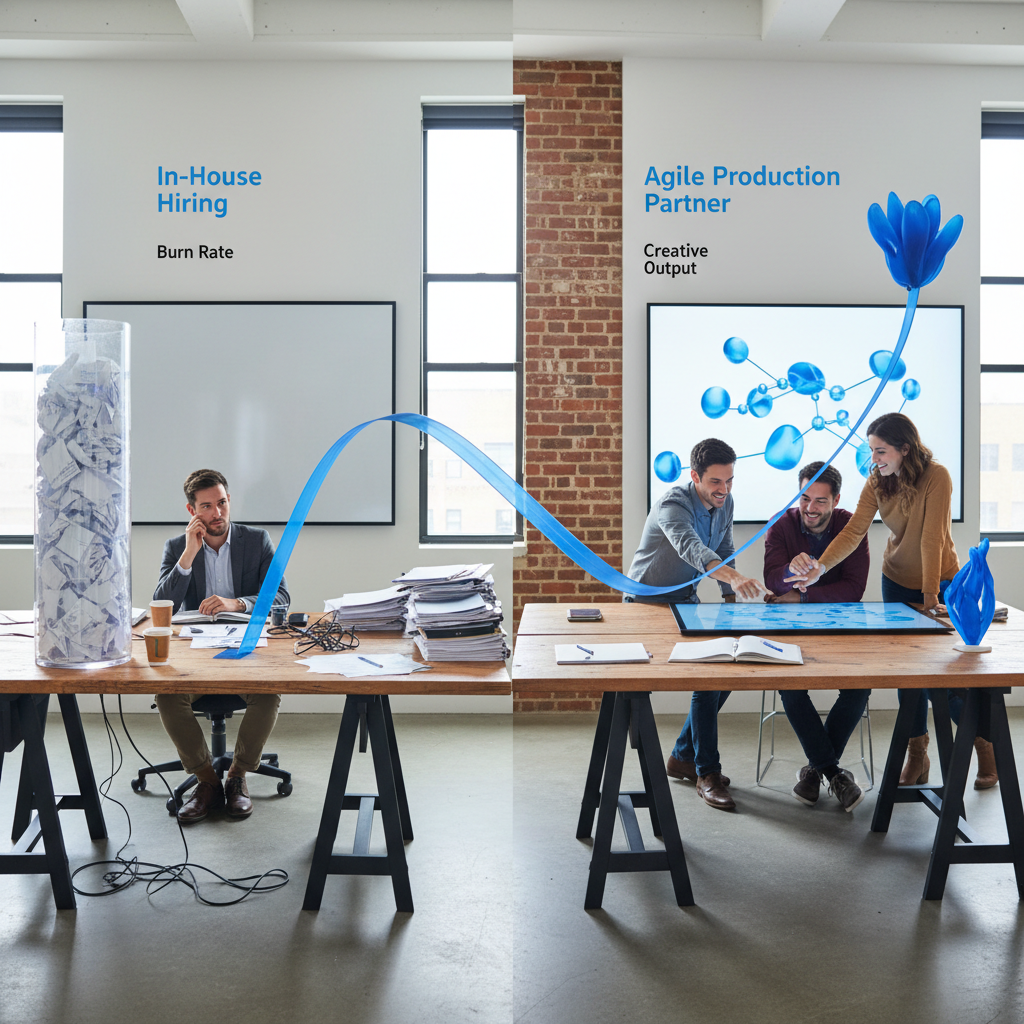
The Failure of the ‘In-House Agency’ Model
- The Echo Chamber: Internal teams lose perspective on what’s working in the broader market because they only look at your brand.
- Zero Distribution Strategy: Most internal videographers know how to make things look ‘pretty’ but have zero understanding of performance marketing or SEO.
- Scalability Bottlenecks: When you need 50 assets for a product launch, your one in-house person becomes a massive bottleneck.
The real kicker? Most internal teams lack the infrastructure for performance video marketing. They produce a video, upload it to YouTube, and hope for the best. An award-winning agency like iStudios Media integrates video production with CRM automation and Google Ads management to ensure every frame drives a lead. We call this ‘Production with a Purpose.’
Performance-Driven Video ROI: Moving Beyond ‘Brand Films’
If your video doesn’t have a tracking pixel attached to it, it’s not an investment; it’s an expensive hobby. In the San Francisco Bay Area, where the cost of living inflates every salary, you cannot afford ‘creative experimentation’ without measurable ROI. We recently worked with a medical practice in San Jose that was spending $4,000/month on a part-time social media ‘creator’ who produced zero patients. We replaced that with a targeted local SEO and video ad strategy that generated 22 high-value patient inquiries in the first 30 days.
The shift is clear: Founders are moving from ‘Creative Experimentation’ to ‘Performance-Driven Video ROI.’ They want assets that work across the entire funnel—from cold outreach systems (like Apollo) to lead nurturing in their CRM. This level of technical integration is almost impossible for a solo in-house creative to manage.
How to Transition from In-House to an Agile Production Partner
Transitioning doesn’t mean firing everyone tomorrow; it means restructuring your team to focus on strategy while outsourcing the heavy lifting of production and distribution. Here is how sophisticated Bay Area CMOs are making the switch:
- Audit the Output: Calculate your total internal video production costs over the last 12 months and divide it by the number of leads generated. The number will likely shock you.
- Shift to Fractional Leadership: Use a fractional creative director to set the vision and a partner like iStudios Media to execute the ‘pods.’
- Demand Multi-Channel Assets: Stop making one ‘hero’ video. Demand 30 micro-assets from every shoot day to fuel your Meta, LinkedIn, and TikTok ads.
The Efficiency Era is here. In 2026, the brands that win aren’t the ones with the biggest internal studios; they are the ones with the most efficient pipelines. Don’t let your Series B burn rate be a casualty of an outdated hiring model.
Ready to stop overpaying for content? Schedule your free strategy session with iStudios Media today and let’s build a production system that actually scales with your revenue.
Frequently Asked Questions
What is the average salary for a videographer in the Bay Area in 2026?
As of 2026, a mid-level videographer in the San Francisco Bay Area commands a base salary between $105,000 and $135,000. However, when you include payroll taxes, health insurance, 401k matching, and equity, the true cost to the employer often exceeds $165,000 per year before equipment costs.
Why is a production partner better than an in-house team for Series B startups?
A production partner offers variable costs, meaning you only pay for what you need during active campaigns. This protects your burn rate. Additionally, agencies provide a ‘full-stack’ team (DPs, editors, SEO experts) for the price of one salary, ensuring your video assets are actually optimized for lead generation.
How do internal video production costs affect company valuation?
High fixed overhead reduces your EBITDA and increases your burn rate, which can negatively impact your valuation during Series C or exit negotiations. By moving production to a variable-cost model, you demonstrate fiscal discipline and a more scalable marketing infrastructure to potential investors.
Can AI replace my in-house video editor?
AI cannot replace the creative strategy or the high-end cinematography required for brand authority, but it has replaced 70% of the manual labor involved in editing. This is why a specialized partner using AI-augmented workflows can deliver assets 3x faster than a traditional in-house employee using legacy methods.