📋 Table of Contents
According to Wyzowl’s 2024 Video Marketing Report, 88% of marketers say video is an essential part of their strategy, yet the ‘Executive Time-Tax’ remains the single biggest bottleneck to production. In the Bay Area’s high-velocity tech scene, getting a C-suite executive to commit to a four-hour hybrid video production shoot is often a non-starter.
The solution isn’t to settle for grainy Zoom calls or to hire a budget freelance videographer for a one-off video shoot that lacks strategic depth. Instead, sophisticated marketing directors are adopting a decentralized production workflow. By decoupling the interview from the location, you can capture high-level insights via remote video capture and pair them with cinematic, on-site corporate cinematography SF teams to maintain brand authority.
Why Hybrid Video Production is the New Standard for ROI
The real kicker? You don’t lose quality when you stop treating the camera as a tethered ball-and-chain for your executives.
In our experience with Series B SaaS founders, the most effective way to scale content is to move away from the traditional model where the entire crew must be in the room with the subject. A hybrid approach allows for high-frequency content creation without the logistical nightmare of cross-country travel or massive office disruptions.
- Reduced Executive Downtime: A remote interview takes 45 minutes; a full on-site setup takes 4 hours.
- Cost Efficiency: Redirect travel budgets into high-end corporate cinematography SF for B-roll that lasts for years.
- Global Reach: Interview a CTO in London and a VP in San Francisco, then tie them together with consistent, high-quality local office footage.
- Visual Continuity: Using professional color grading ensures that even remote executive interviews feel like they belong in a premium brand film.
The Technical Friction of Quality Parity
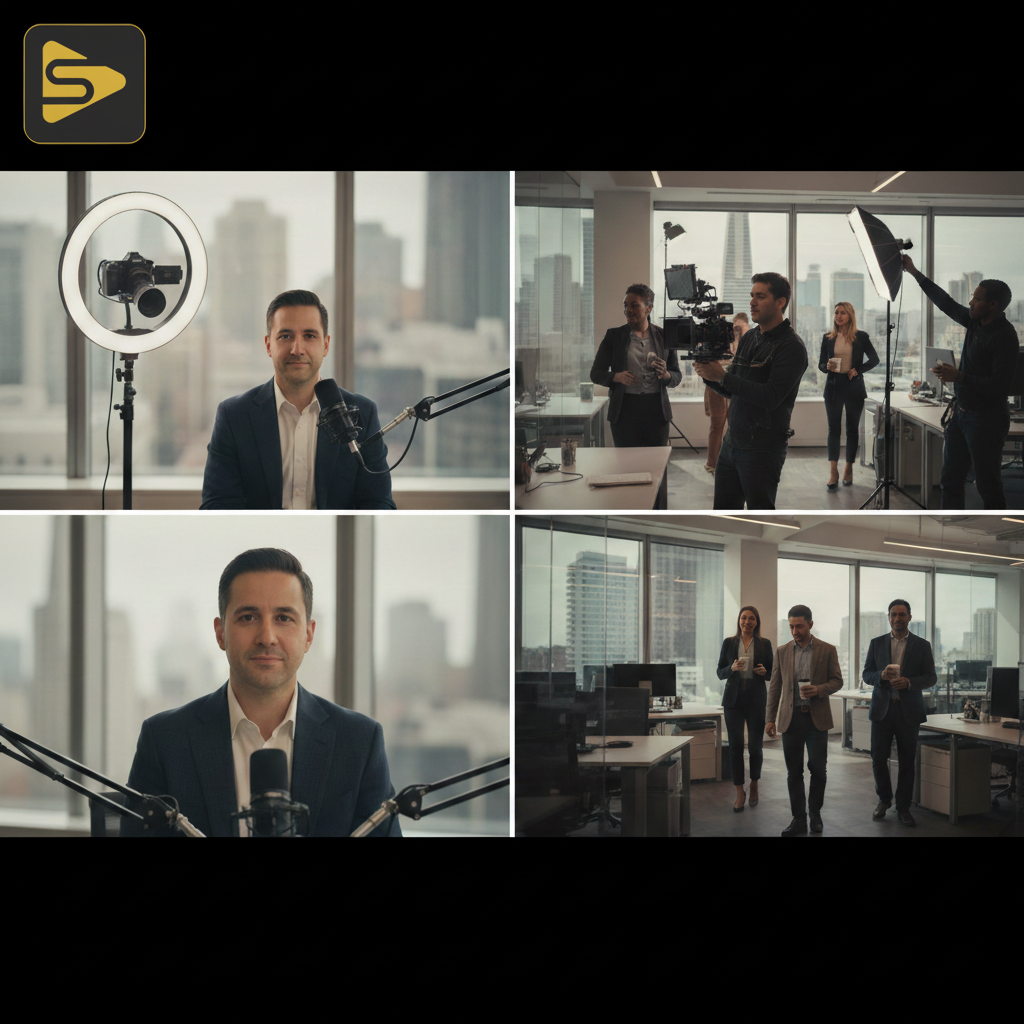
Here’s the thing: most remote video looks like a webinar, while B-roll looks like a movie. To bridge this gap, we utilize “Remote Drop Kits”—pre-configured cases containing a 4K mirrorless camera, a professional shotgun mic, and a simple LED panel that the executive simply plugs in. This ensures the remote video capture matches the bit-rate and color science of our professional cinema cameras.
What most people miss is that audio quality is 70% of the perceived value. Even if the video is slightly compressed, high-fidelity audio recorded locally on the remote device (using tools like Riverside.fm) makes the final product feel expensive. For companies looking to scale this even further, Ingest.blog, our internal AI content engine, can help distribute these video insights into high-performing SEO blog posts automatically.
Bridging the Gap: Remote Executive Interviews vs. On-Site B-Roll
Visual continuity is the difference between a professional brand film and a disjointed collection of clips.
When blending these two worlds, the goal is to make the remote footage feel intentional. We achieve this by using a “Fly-in B-roll” crew. While the executive is interviewed via a high-end remote video capture session, a local production team spends a half-day at your headquarters capturing the “soul” of the company: the collaborative meetings, the product in action, and the office culture.
| Feature | Traditional Production | Hybrid Production Model |
|---|---|---|
| Executive Time | 4-6 Hours | 45-60 Minutes |
| Production Cost | High (Travel + Crew) | Medium (Optimized Local Crew) |
| Content Volume | Single Asset | Multi-Asset (Modular) |
| Visual Quality | Uniform | High (with AI-Upscaling) |
But wait—how do you ensure the lighting matches? A typical Bay Area mid-market client will often use a consistent color palette in their B-roll that complements the neutral tones of a home office. By applying a unified LUT (Look-Up Table) in post-production, we can harmonize disparate light sources.
Ready to see how this fits your budget? Schedule a free consultation to discuss your 2024 content calendar.
The Hybrid Creative Workflow: A Step-by-Step Guide
Success in hybrid video production isn’t about the gear; it’s about the pre-production choreography.
- The Tech Audit: Before the interview, we conduct a lighting and network speed test with the executive’s team.
- The B-Roll List: We identify “Universal B-roll”—shots that can be used across multiple videos, such as wide shots of the SF skyline or close-ups of software interfaces.
- The Asynchronous Capture: We record the remote executive interviews using platforms that record locally to avoid internet glitches.
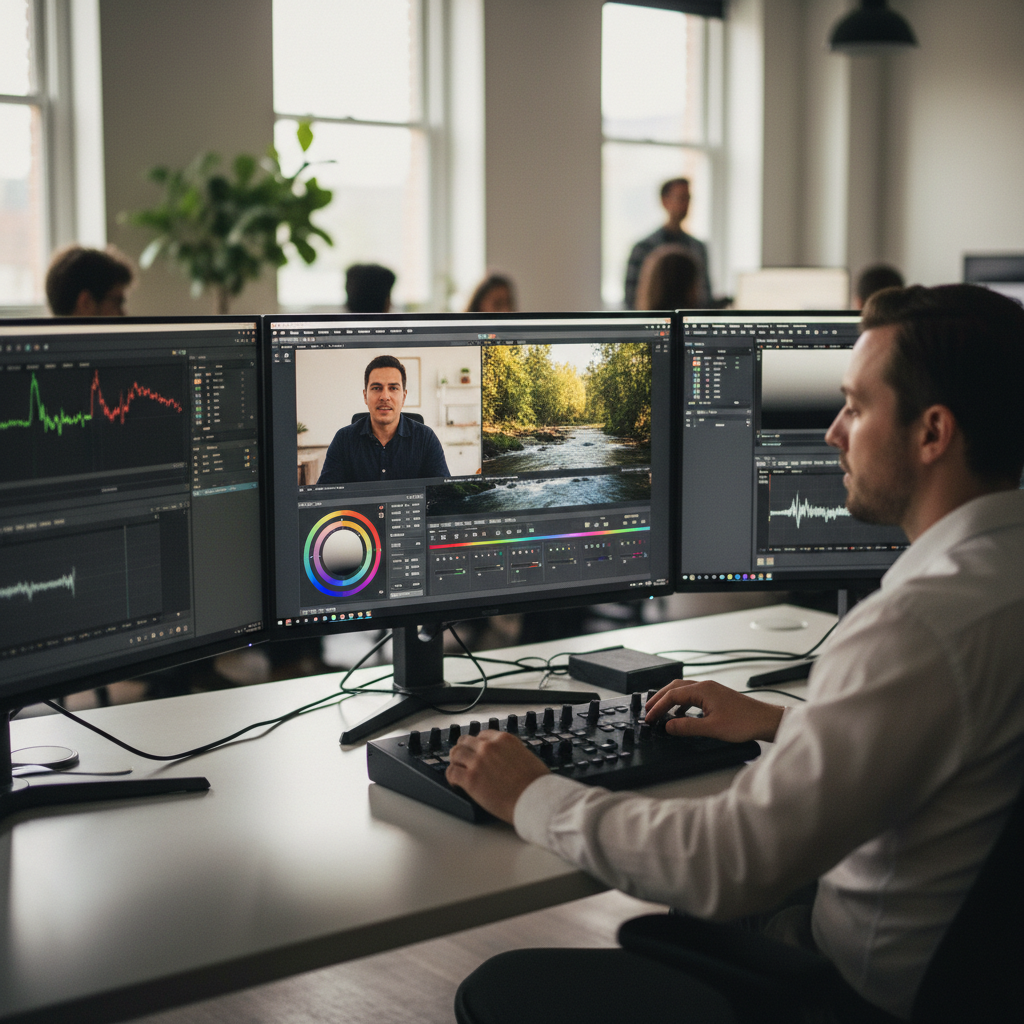
- The Integration: Our editors use AI-powered noise reduction and upscaling to bring the remote feed up to 4K standards.
Directing Through a Screen
The psychological shift in remote directing is profound. Without the physical presence of a crew, executives often feel more relaxed, leading to more authentic performances. However, the director must be more vocal. According to Harvard Business Review, virtual communication requires 20% more clarity to achieve the same level of understanding as in-person interaction.
As a growth partner, we don’t just hit record. We coach your leaders through the lens, ensuring their body language matches the high-energy B-roll we’ve captured on-site.
Advanced CRM Automation for Video Leads
Producing the video is only half the battle; the real ROI comes from how you distribute it.
For our medical practice owners and B2B clients, we integrate these video assets into a marketing automation platform. When a lead watches 50% of a case study video, the CRM triggers a specific nurture sequence. This turns a simple brand film into a high-intent lead generation tool.
- Lead Nurturing: Use video snippets in email sequences to increase click-through rates by up to 300% (Source: HubSpot).
- Pipeline Tracking: See exactly which video assets are closing deals in your CRM dashboard.
- SEO Synergy: Embedding these videos on your site improves dwell time, a key signal for SEO performance.
Need help integrating video into your sales funnel? Talk to our automation architects today.
Typical Bay Area Pricing for Hybrid Models
Understanding the investment is crucial for Series A-C founders who need to justify every dollar to their board.
While a one-off video shoot with a freelance videographer might seem cheaper upfront, it often lacks the post-production polish needed for an investor deck. Industry-reported ranges for corporate cinematography SF and hybrid projects typically fall between $2,500 and $15,000 depending on the volume of B-roll and the complexity of the remote kits used.
The real saving isn’t just in the production cost—it’s in the opportunity cost of your executive’s time. If your CEO’s time is valued at $500/hour, saving them three hours on set pays for a significant portion of the production itself.
Conclusion: Make the Shift This Week
Don’t let logistical friction stall your content engine. Start by identifying one recurring video series—like a monthly product update or a founder’s vlog—and transition it to a hybrid video production model. Capture the interview remotely this Tuesday, and schedule a half-day B-roll shoot at your office this Friday. You’ll have a premium asset ready for social, email, and your website by next week without ever needing to clear the CEO’s calendar for a full day.
Frequently Asked Questions
How do you ensure remote video looks professional?
We use high-end Remote Drop Kits or professional platforms like Riverside that record locally on the user’s computer. This bypasses Zoom compression. Combined with AI-upscaling and professional color grading in post-production, we can match remote feeds to our 4K on-site B-roll with high precision.
Is hybrid production cheaper than traditional on-site filming?
It is often more cost-effective because it eliminates travel costs and minimizes executive downtime. While the technical setup for remote capture requires specialized tools, the overall efficiency allows for a higher volume of content to be produced within the same budget compared to traditional models.
What equipment does an executive need for a remote interview?
At a minimum, a high-quality external webcam and a USB microphone. However, for premium results, we provide ‘Drop Kits’ that include a mirrorless camera and professional lighting. We also conduct a tech rehearsal to optimize their existing environment for the best possible visual outcome.
Can hybrid video production work for event coverage?
Absolutely. We often use a hybrid model for conferences where key speakers are remote. We mix their live stream with on-site multi-camera filming of the audience and local presenters, creating a seamless experience for both in-person and virtual attendees while maintaining high production standards.