📋 Table of Contents
In 2024, a Series B fintech startup in Palo Alto realized they were paying $162,000 a year for a Director of Content who produced exactly four blog posts and two LinkedIn videos per month. By switching to hybrid production models, they slashed their overhead by 60% while increasing their creative output by 5x.
Here is the cold truth: the dream of the ‘all-in-house’ creative team is officially dead in the Silicon Valley ecosystem. As interest rates remain high and venture capital mandates shift from ‘growth at all costs’ to ‘path to profitability,’ the $140k+ generalist content lead has become a liability rather than an asset. At iStudios Media, we are seeing a massive migration toward variable-cost structures that prioritize execution over titles.

The Efficiency Debt of the In-House Content Trap
The real kicker? Most Series B firms aren’t suffering from a lack of talent; they are suffering from structural obsolescence.
- The Salary Ceiling: A $142k salary actually costs a company closer to $190k after benefits, payroll tax, and equity.
- The Tech Stack Burden: In-house leads require Adobe Creative Cloud seats, Frame.io subscriptions, and high-end hardware.
- The Skill Gap: One person cannot be a world-class cinematographer, SEO strategist, and CRM automation architect simultaneously.
What most people miss is the ‘Efficiency Debt’—the hidden cost of a single employee trying to manage a fragmented vendor list while simultaneously attempting to be a ‘creator.’ According to Harvard Business Review, organizational drag costs the average company more than 20% of its productive capacity. In a high-pressure Bay Area environment, that drag is lethal. This is why a full-service marketing agency model is outperforming internal hires in 2026.
| Metric | In-House Director | Hybrid Production Model |
|---|---|---|
| Annual Cost (Fully Burdened) | $185,000+ | $72,000 – $90,000 |
| Monthly Video Output | 2-4 units | 12-20 units |
| Tech/Equipment Overhead | Company Paid | Included |
| Scalability | Fixed | On-Demand |
Why Bay Area Marketing Recruitment is Shifting to Fractional Leads
The ‘Middle Management Squeeze’ is real: companies are replacing $140k+ salaries with $5k/mo strategic retainers and specialized execution partners.
But wait—this isn’t just about saving money. It is about the ‘Fractionalization’ of the C-suite. A Fractional Content Lead provides the high-level strategy, while hybrid production models handle the heavy lifting of cinematography, SEO, and paid media distribution. This allows a lean internal team to focus on the ‘Voice’ while the agency provides the ‘Engine.’
One of our clients, a $20M SaaS provider in San Jose, was struggling with a 9-month content backlog. By firing their internal ‘generalist’ and partnering with an award-winning agency like iStudios, they cleared the backlog in 45 days. We didn’t just write copy; we deployed a full-stack media system that integrated their CRM with their video ad spend.
Need to audit your current team’s output? Schedule a free Marketing Efficiency Ratio (MER) audit with our team today.

The Content ROI Myth: Brand-Driven vs. Revenue-Driven
In today’s market, ‘brand awareness’ is a luxury that Series B startups can no longer afford without a direct tie to the pipeline.
The shift toward hybrid production models is driven by the need for measurable Marketing Efficiency Ratios (MER). Investors at firms like Sequoia and Andreessen Horowitz are no longer impressed by ‘viral’ reach; they want to see sustainable pipeline generation. Here’s what we’ve discovered at iStudios:
- Creator-Led Growth: Series B firms are now hiring influencers for specific campaigns rather than full-time journalists.
- AI-Augmented Production: We use AI to handle the work of a 5-person team, passing those efficiency gains directly to the client.
- Integrated Performance: Content is useless if it isn’t optimized for Google’s latest algorithm updates and backed by aggressive paid media.
The contrarian truth? Most ‘Content Directors’ spend 60% of their time in meetings and 40% managing other freelancers. You are essentially paying a six-figure salary for a project manager. A performance partner eliminates that layer of fat.
Operational Leverage: How to Scale Without Scaling Headcount
The goal isn’t to have the biggest team; it’s to have the highest output per dollar spent.
The hybrid production models we build for SF Bay Area firms focus on ‘Operational Leverage.’ This means using a CRM automation platform to distribute content across LinkedIn, Meta, and Google Ads without human intervention. For example, a medical practice in Hayward saw a 40% increase in patient bookings simply by automating their video testimonial distribution—no extra staff required.
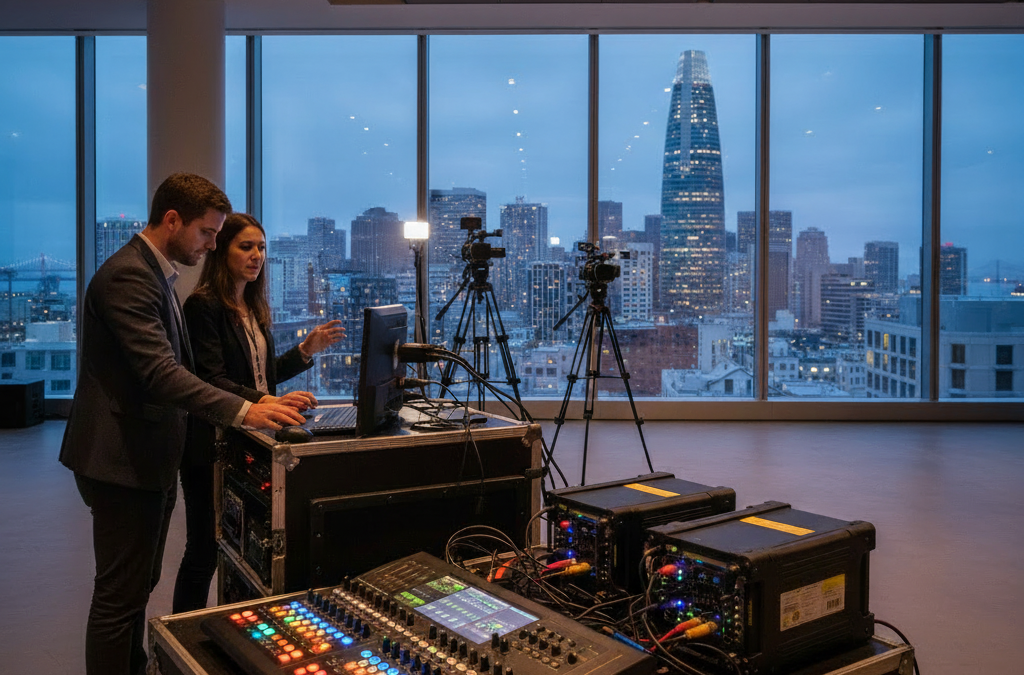
What most people miss is that a full-service marketing agency provides more than just creative; they provide the infrastructure. We bring the studio, the 8K cameras, the SEO data, and the automation scripts. Your in-house team stays lean, agile, and focused on high-level brand narrative.
The Death of the Generalist and the Rise of the Specialist
The ‘Generalist’ content director who does ‘a little bit of everything’ is the biggest bottleneck in your growth strategy.
Modern marketing requires extreme specialization. You need an SEO expert who understands Search Engine Land’s latest core update, a cinematographer who knows how to light for high-conversion social ads, and an engineer who can bridge the gap between your ads and your CRM. Finding this in one person is like finding a unicorn that also does taxes. It doesn’t exist.
Ready to stop overpaying for overhead? Partner with iStudios Media and get a full-stack production team for the cost of one mid-level hire.
Frequently Asked Questions
What are hybrid production models in marketing?
Hybrid production models combine a lean in-house strategic team (often just one person) with a high-output external production and performance partner. This model allows companies to scale content production and technical marketing (SEO, Ads, Automation) without the massive overhead of full-time salaries, benefits, and equipment costs.
Why are Series B startups moving away from in-house content teams?
Series B startups are under intense pressure to reach profitability. High-salary in-house teams create ‘fixed-cost’ burdens that are difficult to scale or pivot. By moving to a hybrid model, these firms convert fixed overhead into variable costs, allowing them to scale production up or down based on performance and funding cycles.
Is a full-service marketing agency better than a freelancer?
While freelancers are cheap, they often lack the integrated systems and scalability of an agency. A full-service marketing agency like iStudios Media provides a cohesive workflow between video production, SEO, and paid media, ensuring that every piece of content is strategically distributed to drive measurable ROI, rather than just looking good.
How do hybrid production models improve Content ROI?
These models improve ROI by significantly lowering the ‘Total Cost of Ownership’ per piece of content. By leveraging agency-owned equipment, AI-augmented workflows, and specialized experts, companies can produce 5x the content for 50% of the cost of an in-house team, drastically improving their Marketing Efficiency Ratio (MER).
Here’s the bottom line: In the Bay Area, speed and efficiency are the only currencies that matter. If you are still clinging to the 2021 model of hiring a massive in-house creative team, you aren’t just overspending—you’re being outpaced by competitors who have already embraced the lean, high-output future of hybrid production. Don’t let your content strategy become a cost center; turn it into a revenue engine.