📋 Table of Contents
According to a 2024 report by Wyzowl, 88% of marketers say video is an integral part of their strategy, yet the logistics of coordinating busy executives often stall the creative process. In the high-pressure environment of the San Francisco Bay Area, the hybrid production framework has evolved from a pandemic-era necessity into a strategic advantage for scaling companies.
The real kicker? You no longer need your entire C-suite on a soundstage in San Leandro to get a perfect brand film. By leveraging a structured hybrid production framework, marketing directors can maintain total creative control from a remote laptop while our local crew handles the heavy lifting on-site. This approach eliminates the ‘too many cooks’ syndrome often found with a one-off video shoot and replaces it with surgical, real-time feedback loops.
The Architecture of a Hybrid Production Framework
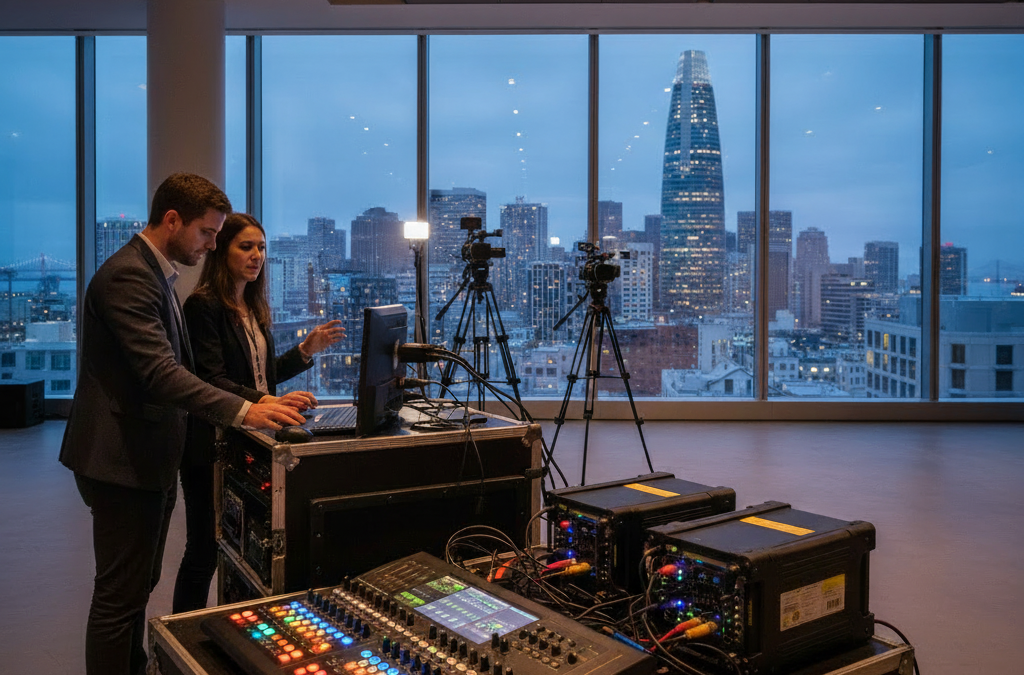
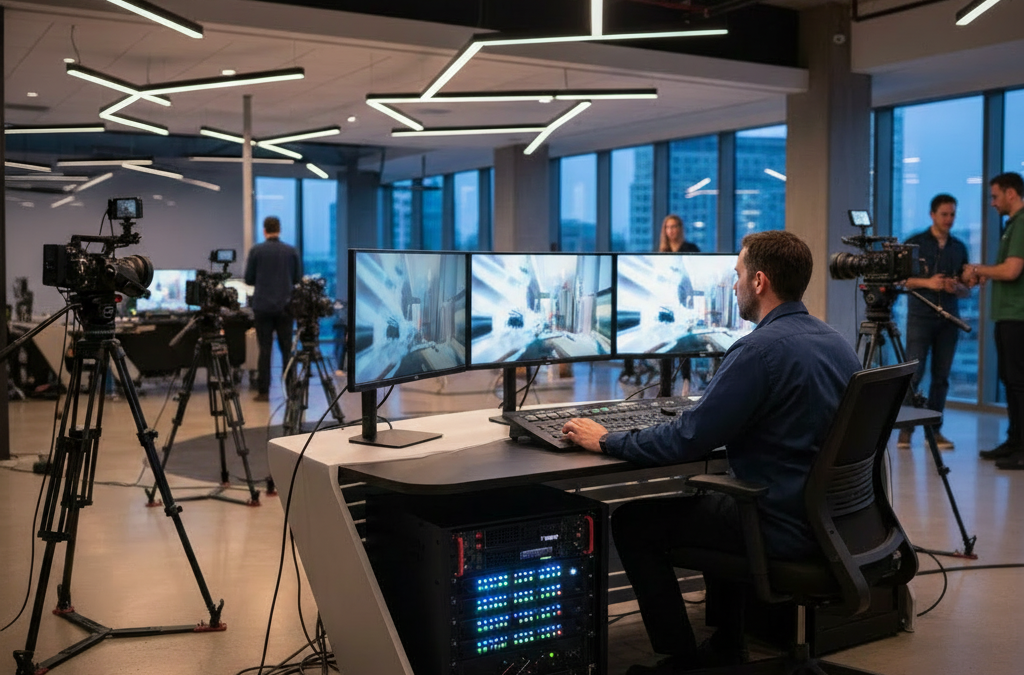
A successful hybrid workflow relies on the technical bridge between the physical set and the digital ‘video village’ where stakeholders reside.
- Remote Video Village: Utilizing low-latency streaming hardware like Teradek Cube or Blackmagic Web Presenters to send a 1080p feed directly to Zoom or Frame.io.
- Camera-to-Cloud (C2C): Implementing tools like Adobe’s Frame.io C2C to upload proxies instantly, allowing remote editors to start cutting while the talent is still in makeup.
- Dedicated Remote Producer: A specific role on our team tasked solely with managing the remote feed and ensuring stakeholder questions are heard by the director.
Why the ‘Director of Remote’ is Your New Best Friend
In our experience with Series B SaaS teams, the biggest friction point isn’t the technology—it’s the communication lag. When you hire a freelance videographer, they are often too busy pulling focus to check a Slack channel. A professional SF corporate video agency provides a dedicated liaison who monitors the remote chat, ensuring that a CMO’s concern about a brand logo’s placement is addressed before the next take. This level of integrated video production saves hours of costly reshoots.
Technical Protocols for Zero-Latency Feedback
Latency is the silent killer of creative momentum; even a three-second delay can make it impossible for a remote stakeholder to give timely direction to talent.
To combat this, we utilize high-speed bonded internet solutions that prioritize the video stream. This ensures that when a founder in New York sees a performance they love, their ‘that’s the one!’ arrives in the director’s ear in real-time. This technical precision is what differentiates a professional hybrid video production from a messy, improvised Zoom call.
| Feature | Standard Production | Hybrid Framework |
|---|---|---|
| Stakeholder Presence | Physical Travel Required | Global Remote Access |
| Feedback Loop | Post-Shoot Review | Real-Time Zero Latency |
| Data Transfer | Physical Hard Drives | Camera-to-Cloud (C2C) |
| Cost Efficiency | High Travel/Logistics | Optimized Talent Spend |
Security and IP Protection in the Cloud
Managing sensitive brand assets requires more than just a public link. For our medical practice clients and fintech partners, we use encrypted, password-protected streams. According to Forbes, data security remains a top priority for 2025 enterprise operations. Our hybrid production framework includes end-to-end encryption for all live feeds, ensuring your unreleased product demos stay within the ‘room.’
Need help navigating the technical side of your next shoot? Schedule a free consultation with our production leads to see our remote setup in action.
Managing the ‘Ghost in the Machine’ Effect
The psychological gap between on-set talent and a voice coming from a speaker can feel jarring if not managed correctly.
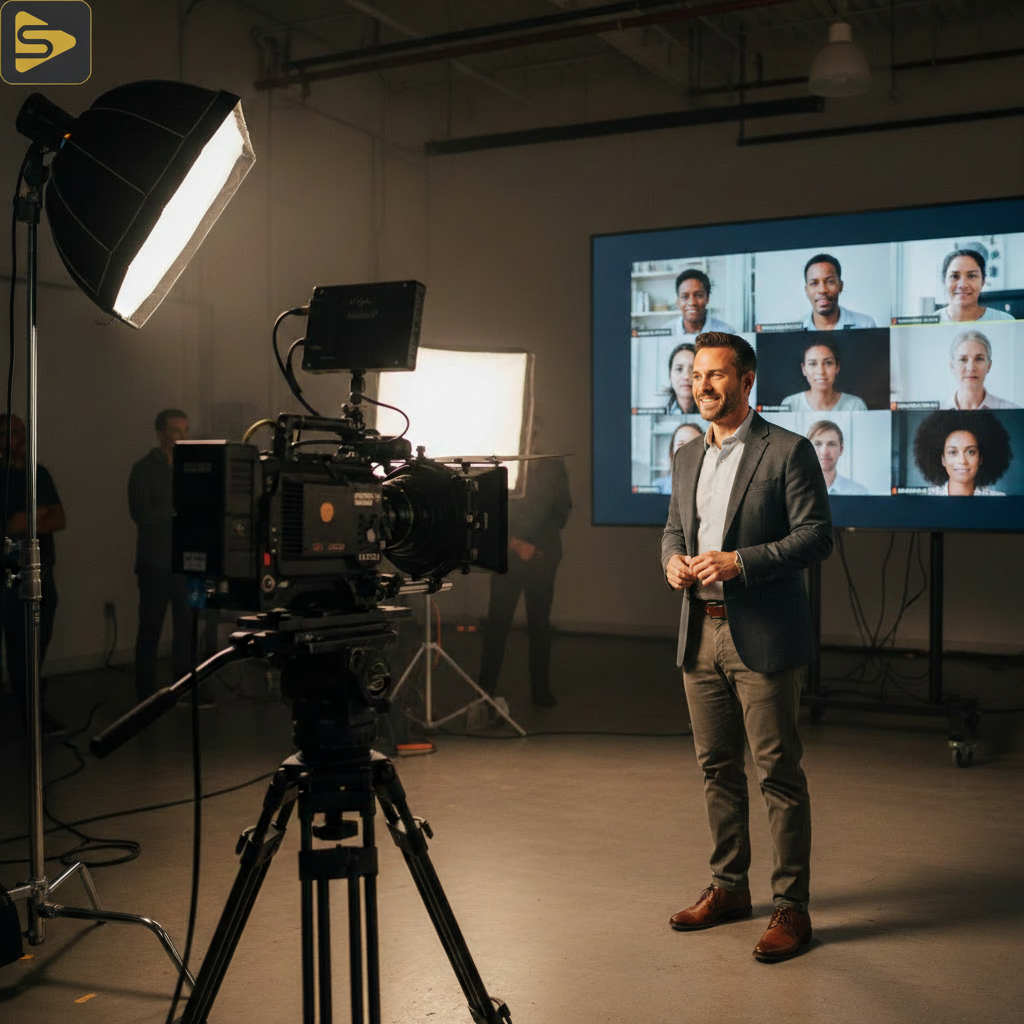
What most people miss is the need to ‘humanize’ the remote stakeholders for the talent. We place large-scale monitors on-set so the talent can see the people they are speaking to during breaks. This creates a unified team environment rather than a feeling of being watched by an invisible jury. It’s about democratizing the set—allowing junior creatives to watch the process from anywhere while keeping the talent comfortable and focused.
- Pre-Production Syncs: Every hybrid project begins with a technical rehearsal for remote users.
- Visual Cues: We use on-set tally lights to signal to talent when a remote stakeholder is about to speak.
- Asynchronous Review: For non-critical updates, we use Ingest.blog, our internal AI content engine, to help distribute production notes and social snippets quickly to the wider team.

The Hybrid Budget Audit: Reallocating Travel Savings
One of the most compelling reasons to adopt a hybrid production framework is the massive shift in budget utility.
Here’s the thing: when you aren’t paying for five business-class flights from New York to SFO, that $10,000–$15,000 doesn’t just vanish. In our work with mid-market clients, we typically reallocate those savings into high-end post-production, 3D motion graphics, or extended paid advertising spend. You aren’t spending less; you are spending smarter on elements that actually appear on screen.
Case Study: The Series C Product Launch
A typical Bay Area tech company recently needed a global product launch film. The CEO was in London, the VP of Product was in Tokyo, and the talent was at our San Leandro studio. By using real-time collaboration tools, we finished the shoot in six hours—three hours faster than their previous in-person session. The lack of physical ‘huddles’ on set allowed the director to maintain a rigorous pace while remote stakeholders provided ‘go/no-go’ approvals via a dedicated chat channel.
Sustainability and the Future of SF Corporate Video
Intentional hybrid production is no longer a compromise; it is a commitment to sustainability and efficiency.
By reducing the carbon footprint associated with production travel, companies can align their marketing efforts with ESG (Environmental, Social, and Governance) goals. Organizations like the EPA highlight the importance of reducing corporate travel to meet climate targets. A hybrid production framework allows you to produce world-class content without the environmental cost of a 20-person fly-in crew.
But wait—don’t mistake this for a ‘hands-off’ approach. Successful hybrid shoots require more prep work than traditional ones. You need a partner who understands marketing automation and digital workflows as well as they understand lighting and lenses.
Implementing Your Hybrid Workflow This Week
The best way to start is to stop viewing remote access as a ‘backup’ and start viewing it as the primary interface for your busy decision-makers.
- Audit your current tech stack: Do you have the bandwidth for a 10Mbps outbound stream?
- Define the ‘Remote Rules of Engagement’: Who has the final say in the chat? When is it okay to interrupt a take?
- Choose the right partner: Look for an SF corporate video agency that lists ‘Remote Monitoring’ as a core service, not an add-on.
Ready to scale your content without scaling your travel budget? Contact iStudios Media today for a walkthrough of our hybrid production capabilities and a custom quote for your next project.
FAQs About Hybrid Production
How much does a hybrid production setup cost?
While industry-reported ranges for corporate video production vary from $2,500 to $15,000+, adding a hybrid framework typically adds 10-15% to the base cost for specialized hardware and a remote liaison. However, this is usually offset by the thousands saved in stakeholder travel and lodging expenses.
What is the minimum internet speed required for remote monitoring?
For a stable, high-definition 1080p feed with minimal latency, we recommend a dedicated upload speed of at least 10-15 Mbps. On-site, we often use bonded cellular solutions to ensure a consistent stream even if the local Wi-Fi fluctuates during the shoot.
Can I give direction directly to the talent while remote?
Yes, though we recommend doing this through the director to maintain a single point of command on set. Our setup allows for a ‘God Mic’ system where remote stakeholders can speak directly into the talent’s earpiece or an on-set speaker during breaks for immediate clarification.
How do you handle security for unreleased products?
We use enterprise-grade streaming platforms that offer AES-256 encryption and multi-factor authentication. Unlike standard video calls, our professional hybrid feeds are point-to-point, ensuring that your sensitive IP is only visible to authorized stakeholders on the approved list.