📋 Table of Contents
According to Wyzowl’s 2024 Video Marketing Report, 87% of marketers say video has directly increased sales, yet for Series A founders, the wrong format can actually erode trust. Choosing between Direct-to-Camera vs. Narrative B-Roll isn’t just a creative choice; it’s a capital allocation decision that dictates how the market perceives your leadership and your product’s maturity.
In the high-stakes environment of the SF Bay Area, founders often feel pressured to choose between the raw intimacy of a ‘talking head’ and the polished sheen of a cinematic brand film. Here’s the reality: investors and customers are currently experiencing a ‘trust deficit.’ They don’t want a generic corporate sizzle reel that looks like a stock footage library. They want to see the person behind the vision. However, relying solely on a freelance videographer for a one-off video shoot often results in content that lacks the strategic depth needed for Series A marketing.
The Case for Direct-to-Camera: Building Narrative Authority
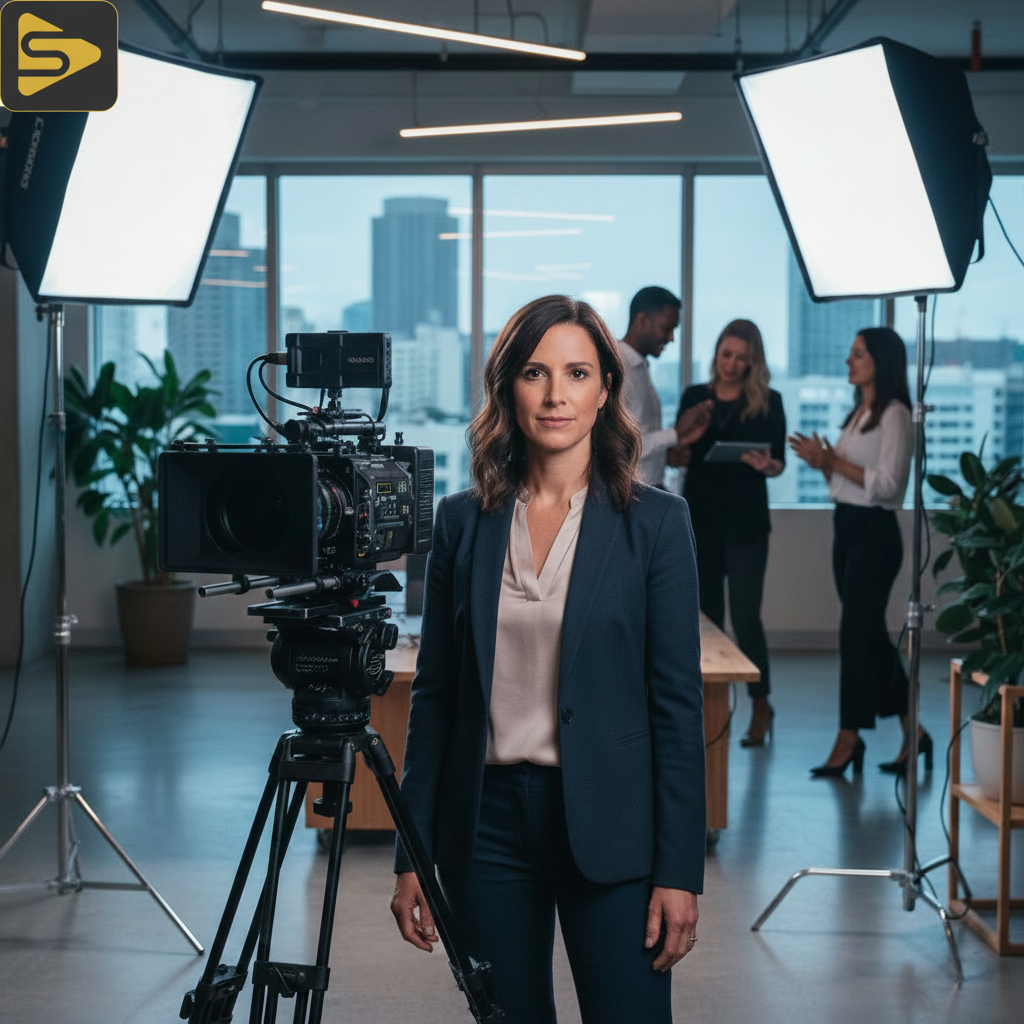
Direct-to-camera video acts as a transparency tool that de-risks your brand by putting a human face to the technology. When a founder looks directly into the lens, they are simulating the intimacy of a boardroom presentation, which is essential for founder-led growth.
- High Conversion Potential: Direct-to-camera formats often outperform high-production shoots on LinkedIn because they feel like a peer-to-peer conversation rather than an advertisement.
- Speed to Market: This format allows for rapid content distribution, enabling founders to respond to market shifts or news cycles in real-time.
- Lower Overhead: While it requires professional lighting and audio to maintain credibility, it avoids the costs associated with multi-day location scouts and large cast ensembles.
The real kicker? In our experience with Series B SaaS founders, those who lean into direct-to-camera updates for their talent pipelines see significantly higher engagement from top-tier engineering candidates who value founder transparency. This isn’t just about ‘vlogging’; it’s about establishing narrative authority in a crowded market.
When to Use Direct-to-Camera
- Investor updates and fundraising ‘bridge’ content.
- LinkedIn thought leadership and industry commentary.
- Product launch explainers where the ‘Why’ matters more than the ‘How’.
- Internal culture memos and recruitment outreach.
Narrative B-Roll: Visual Proof Over Aesthetic Filler
Narrative B-roll should never be ‘filler’; it must serve as visual evidence that substantiates the claims made in your startup brand video. For a Series A company, high-end cinematography is about positioning your company as an incumbent rather than a scrappy underdog.
The ‘vibe shift’ in SaaS is real: overly cinematic B-roll that shows people laughing over coffee in a generic office now signals ‘expensive and slow’ to agile buyers. Instead, modern B2B video marketing utilizes ‘Product-Led B-Roll’—high-velocity UI/UX walkthroughs, real-world hardware stress tests, or authentic team collaboration sessions.
| Feature | Direct-to-Camera | Narrative B-Roll |
|---|---|---|
| Primary Goal | Trust & Authority | Context & Scale |
| Typical Cost | $2,500 – $7,500 | $8,000 – $25,000+ |
| Best Platform | LinkedIn, X, Email | Homepage, YouTube, Events |
Transitioning from a static update to a narrative-driven film helps bridge the gap between being a ‘founder with an idea’ and a ‘CEO with a company.’ If you’re struggling to balance these formats, schedule a free consultation with our strategy team to map out your content roadmap.

The 70/30 Rule: A Strategic Video Framework for Founders
The most effective Series A video strategy utilizes a 70/30 split: 70% direct-to-camera for authority and 30% narrative B-roll for context. This hybrid approach ensures you are building a personal brand while simultaneously showcasing the scale of your operations.
Here’s how a typical Bay Area mid-market client implements this: They record a high-quality direct-to-camera ‘anchor’ video once a month. We then overlay that with narrative B-roll captured during a single, high-efficiency production day. This maximizes your ‘Return on Content’ (ROC) without requiring the founder to be on set for 48 hours straight.
- The Anchor: The founder addresses a specific industry pain point.
- The Proof: Cutaways to the actual software interface or team in action.
- The Distribution: Slicing the 70/30 edit into 15-second micro-content for social ads.
What most people miss is that Ingest.blog, our internal AI content engine, can take the transcripts from these videos and turn them into a month’s worth of SEO-optimized blog posts, ensuring your video investment works twice as hard.
Avoiding the ‘One-Off Video Shoot’ Trap
Many startups fall into the trap of hiring a freelance videographer for a single day, only to realize the footage doesn’t fit their long-term Series A marketing goals. A one-off video shoot often lacks the brand guidelines and technical consistency required for scaling.
Instead of thinking about ‘a video,’ think about a ‘visual system.’ This includes consistent lighting kits for your office, a standardized color grade for your B-roll, and a repeatable workflow for your digital marketing team to deploy content across Google Ads and LinkedIn.
The Hidden Costs of Cheap Production
- Brand Inconsistency: Low-quality audio makes even the smartest founder sound amateur.
- Lack of ROI Visibility: Without proper tracking and distribution, a $10k video is just an expensive file on a hard drive.
- Technical Debt: Using non-scalable assets that need to be re-shot within six months.
Need a partner who understands the speed of a Series A startup? Contact iStudios Media for a data-driven approach to production.
Integrating Video into Your CRM and Paid Media
Video shouldn’t live in a vacuum; it should be integrated into your marketing automation platform. For instance, a direct-to-camera video can be used as a high-intent lead magnet in an automated nurture sequence.
In our work with Series B SaaS teams, we’ve found that embedding a founder video into a LinkedIn Lead Gen Form can increase completion rates by up to 20%. This is where the Direct-to-Camera vs. Narrative B-Roll debate settles: use the direct-to-camera for the ‘handshake’ and the B-roll for the ‘tour’.
- Meta/LinkedIn Ads: Use narrative B-roll to stop the scroll, then transition to direct-to-camera for the pitch.
- Email Sequences: Use short, direct-to-camera GIFs to humanize cold outreach.
- Sales Decks: Embed 30-second narrative ‘proof’ clips into your investor presentations.
Key Takeaways for This Week
- Audit your current assets: Do you have a high-quality ‘talking head’ that clearly explains your value prop?
- Stop the ‘Sizzle’: Replace generic lifestyle B-roll with actual product or process footage.
- Test the 70/30 split: Try a raw LinkedIn video this week and compare its engagement to your polished brand film.
Ready to scale your personal brand and startup authority? Book a free strategy consultation with the iStudios Media team today. We specialize in integrated production and performance marketing for the Bay Area’s most ambitious founders.
Frequently Asked Questions
Is direct-to-camera video too ‘unprofessional’ for a Series A brand?
Absolutely not. In fact, high-intent buyers and investors currently prefer the authenticity of direct-to-camera content over highly edited corporate films. The key is ensuring the technical quality—lighting and audio—is professional. This creates ‘unpolished authority’ where the focus is on the message, not the production bells and whistles.
How much should we budget for a startup brand video in the Bay Area?
Typical industry-reported ranges for professional corporate video production in the Bay Area fall between $2,500 and $15,000 per project. For premium brand films or commercials with extensive narrative B-roll, budgets often range from $8,000 to $50,000 per finished minute, depending on the crew size and location requirements.
Can we use AI to generate narrative B-roll instead of filming?
While AI-generated B-roll is improving, it often creates a ‘trust gap’ for Series A founders. Authenticity is your greatest asset during fundraising and recruitment. We recommend using real footage of your team and product to provide genuine social proof, reserving AI for background elements or conceptual visualizations that are difficult to film.
How do we measure the ROI of our founder video strategy?
ROI should be measured through a combination of engagement metrics (view-through rates on LinkedIn), lead quality (conversion rates on landing pages with video), and qualitative feedback from sales calls. By integrating video into your marketing automation platform, you can track exactly how video consumption correlates with pipeline velocity and closed-won deals.