📋 Table of Contents
According to Wyzowl’s 2024 State of Video Marketing report, 87% of marketers say video has directly increased sales, yet many Bay Area firms still treat high-end content as a one-off expense rather than a performance asset. In a market where a single Bay Area production can range from $8,000 to $50,000 per finished minute, failing to balance your creative vision with a distribution engine is a recipe for expensive silence.
The 50-20-30 rule is our internal framework designed to solve this. It ensures that your vision doesn’t just look good on a 4K monitor in a San Leandro studio, but actually reaches the LinkedIn feeds of the CMOs and VPs you’re targeting. Here is how we break down the math of high-performance media.
The 50-20-30 Framework for Production Budget Allocation
Strategic budget allocation is the difference between a viral brand film and a beautiful video that sits at zero views on YouTube.
- 50% Creative & Production: This covers the ‘magic’—the strategy, the crew, the gear, and the editing.
- 20% Logistics & Operations: This covers the ‘friction’—permits, locations, talent fees, and Bay Area travel.
- 30% Distribution & Promotion: This covers the ‘momentum’—paid spend, SEO optimization, and platform-specific cuts.
What most people miss: The 30% for distribution isn’t an afterthought; it’s the primary driver of your marketing video ROI. If you spend $20,000 on a brand film but $0 on getting it in front of people, your cost-per-view is effectively infinite. By contrast, a structured production partner will insist on a distribution plan before the cameras even roll.
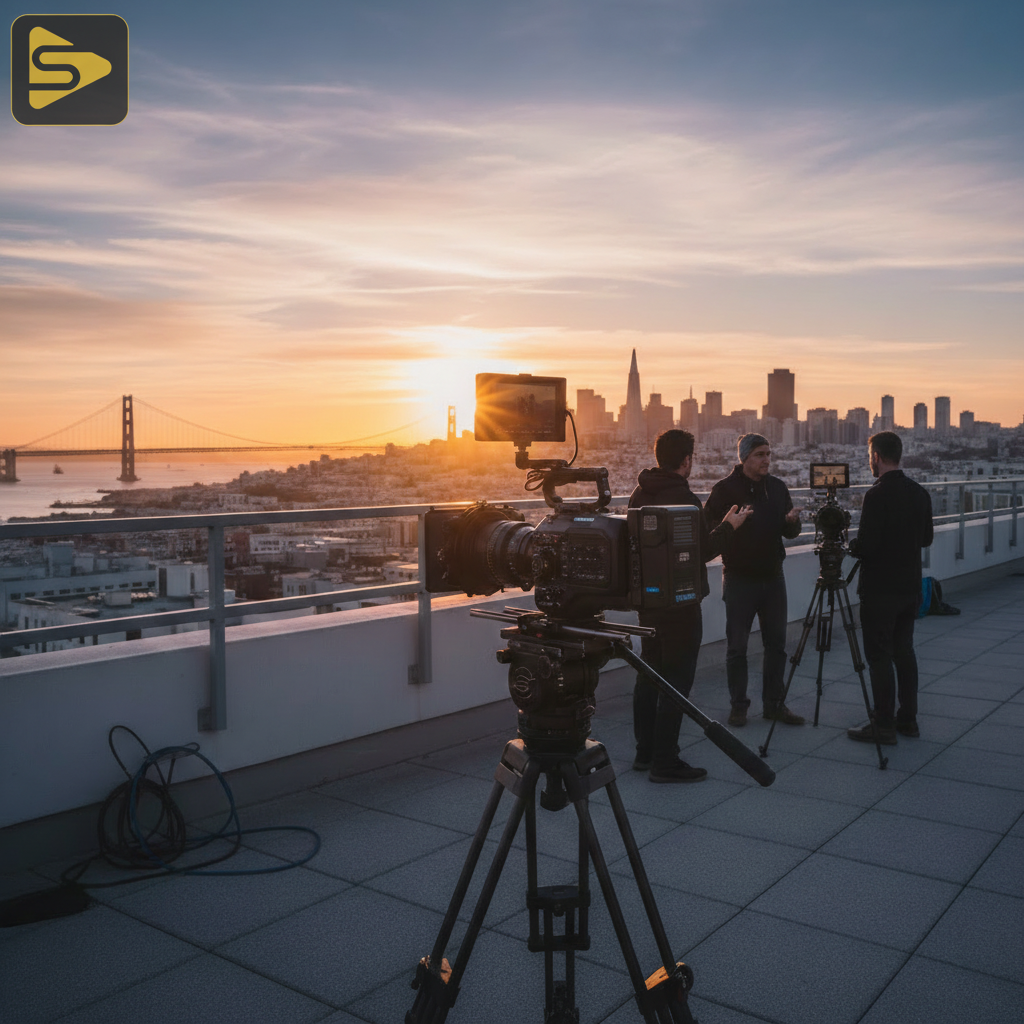
Why 50% Creative is the Floor, Not the Ceiling
In an era where AI-generated mediocrity is flooding every channel, your creative must work harder to earn attention. Here’s the thing: a freelance videographer might save you money on the day of the shoot, but they often lack the strategic depth to ensure the content aligns with your mid-funnel sales goals. For a typical Bay Area Series B SaaS company, that 50% creative spend should include:
- Pre-production strategy and scriptwriting that speaks to pain points.
- High-end cinematography using cinema-grade kits (Red, Arri, or Sony FX series).
- Post-production including professional color grading and sound design.
- Motion graphics that explain complex technical products.
Navigating the 20%: The ‘Hidden’ Costs of SF Creative Strategy
Logistics in the San Francisco Bay Area are a unique beast that can swallow a budget if you aren’t prepared for local nuances. From the $500–$2,500 daily cost of studio photography sessions to the complexities of filming in the Presidio or downtown San Jose, logistics require a dedicated slice of the pie.
The real kicker? Trying to save on the 20% often leads to 100% failure. We’ve seen mid-market clients try to bypass permits or professional talent, only to have a one-off video shoot shut down by local authorities or ruined by poor acting. A professional agency manages these variables so you don’t have to.
| Expense Category | Typical Bay Area Range | Why It Matters |
|---|---|---|
| Location Permits | $500 – $3,000 | Prevents shutdowns in high-traffic SF areas. |
| Professional Talent | $800 – $2,500/day | Ensures brand credibility and faster shoots. |
| Equipment Insurance | Included in Agency Fee | Protects against the high cost of gear damage. |
Need a partner who handles the headache of Bay Area logistics? Schedule a free consultation to see how we streamline the process.
The 30% Rule: Why Distribution is the New Creative
Content distribution is no longer a luxury; it is the only way to cut through the noise on platforms like LinkedIn and Meta. Many founders make the mistake of spending their entire budget on the ‘hero’ video, leaving nothing for the content distribution strategy. In our experience with enterprise CMOs, the most successful campaigns are those where 30% of the total budget is reserved for paid amplification and SEO.
But wait—distribution isn’t just about ‘boosting’ a post. It’s about architecture. This includes:
- Creating 15-second ‘snackable’ cuts for social media.
- Optimizing the video for Google Search (SEO).
- Setting up marketing automation platform sequences to lead-nurture viewers.
- Using Ingest.blog, our internal AI content engine, to turn video transcripts into high-ranking blog posts instantly.
The ROI of Targeted Distribution
Consider a typical medical practice owner in the East Bay. They might spend $5,000 on a patient testimonial video. If that video just sits on their website, it might get 10 views a month. If they apply the 30% rule and put $1,500 into Google Ads management and local SEO, that video could reach 5,000 local patients, resulting in a much higher return on the initial Bay Area production investment.
Comparing Models: Agency Partner vs. Freelance Videographer
While a freelance videographer is great for a quick event recap, they rarely have the infrastructure to manage the 50-20-30 framework. They are creative-heavy but logistics-light and distribution-empty. A full-stack agency provides a SF creative strategy that views video as a cog in a larger machine. At iStudios Media, we combine production with paid advertising and CRM automation to ensure your content actually converts.
The Contrarian Insight: Sometimes, you should spend less on the camera and more on the script. A $50,000 production with a weak message will always underperform a $10,000 production with a razor-sharp strategy. Don’t let the gear distract you from the goal.
Executing the 50-20-30 Rule This Week
If you are planning a project for next quarter, start by auditing your current assets. Are you sitting on ‘dead’ content that was never properly distributed? If so, you don’t need a new shoot—you need a content distribution strategy. If you are starting from scratch, use these steps:
- Define your ‘Hero’ asset and its 3-5 ‘Supporting’ micro-assets.
- Allocate 20% of your budget immediately to ‘Safe Operations’ (permits, talent, travel).
- Reserve 30% of your total spend for a 90-day distribution window.
Ready to scale your content without scaling your headcount? Contact iStudios Media today for a strategic production plan that delivers more than just pretty pictures.
Frequently Asked Questions
What is the average cost of corporate video production in the Bay Area?
Industry-reported ranges for Bay Area production typically fall between $2,500 and $15,000 per project. High-end brand films or commercials can range from $8,000 to $50,000 per finished minute. These costs reflect the high price of local union talent, specialized equipment, and the competitive creative market in San Francisco and Silicon Valley.
Why should I spend 30% of my budget on distribution?
Organic reach on platforms like LinkedIn and Facebook has declined significantly over the last five years. Without a dedicated content distribution strategy, even the best creative will fail to reach your target audience. Spending 30% on paid amplification and SEO ensures your content is seen by decision-makers, maximizing your marketing video ROI.
Can I use the 50-20-30 rule for smaller budgets?
Yes. The framework is scalable. Whether your budget is $5,000 or $500,000, the ratios ensure you don’t over-invest in one area at the expense of another. For smaller budgets, you might use more in-house talent to save on the 20% logistics, but you should never drop the 30% distribution allocation if you want measurable results.
How does AI affect the 50-20-30 production framework?
AI is primarily driving efficiency in the 50% creative and 30% distribution phases. We use AI-powered marketing automation and tools like Ingest.blog to accelerate content distribution. However, high-end Bay Area production still requires human-led strategy and cinematography to maintain the brand authority that AI cannot yet replicate.