📋 Table of Contents
Autonomous Performance Marketing is paid media where machine-learning systems set bids, budgets and creative combinations toward a goal you define, instead of following rules a person wrote. Your job shifts to feeding the system clean conversion data and reviewing what it does.
Key Takeaways
- Autonomy > Automation: Move from rigid rules to self-learning systems that adapt in real-time.
- Data Hygiene is the New Creative: The quality of your first-party signals determines your AI’s success.
- Human-on-the-Loop: Shift your team from manual media buying to high-level ecosystem orchestration.
- Predictive ROAS: Use machine learning to forecast long-term value rather than chasing immediate, low-intent clicks.
The Shift to Autonomous Performance Marketing
Autonomy in marketing means moving from “if-this-then-that” rules to systems that define their own path to your goal. While traditional automation handles repetitive tasks, autonomous systems analyze millions of data points to decide which creative to show which user at what exact millisecond.
For a typical Bay Area Series B SaaS company, this shift often means moving away from manual keyword bidding toward algorithmic bidding strategies. Instead of guessing what a click is worth, the system calculates the probability of that click turning into a high-value subscription. This transition improves marketing operations efficiency by allowing your team to focus on strategy rather than spreadsheets.

Most marketers treat AI as a “set it and forget it” tool, but it works better treated as a high-performance vehicle that still needs a skilled driver to set the destination and monitor the gauges. Our digital marketing services are built around that approach.
Agentic AI Workflows: Beyond the Black Box
The biggest fear for CMOs today is the “Black Box” nature of platforms like Google’s Performance Max or Meta’s Advantage+. Agentic AI workflows solve this by acting as intelligent intermediaries that verify, audit, and steer the platform’s native AI toward specific business outcomes.
- Verification: AI agents check if the leads generated match your Ideal Customer Profile (ICP).
- Optimization: Agents adjust budgets across channels based on holistic performance, not just siloed platform data.
- Safety: Automated monitors ensure creative assets remain within brand guidelines even during dynamic creative optimization.
The companies that win are those that feed these agents high-quality seed data. If you feed the machine junk data, it will autonomously find you more junk at a record-breaking pace.
Comparison: Automation vs. Autonomy
| Feature | Traditional Automation | Autonomous Performance Marketing |
|---|---|---|
| Decision Making | Human-defined rules | Self-learning algorithms |
| Budget Allocation | Static/Scheduled | Fluid/Predictive |
| Creative Strategy | A/B Testing | Continuous Multivariate Evolution |
| Primary Driver | Efficiency (Time saved) | Effectiveness (ROI improved) |
Predictive LTV Modeling and Signal-Based Growth
The most sophisticated Autonomous Performance Marketing strategies now rely on Predictive LTV modeling. Instead of optimizing for a $50 lead, the system optimizes for a customer predicted to spend $5,000 over two years. This requires a tight integration between your CRM and your ad platforms.
Privacy changes like Apple’s ATT have made this harder. The solution is focusing on “Zero-party data”—information customers voluntarily share with you. By feeding this data back into your AI marketing automation stack, you create a proprietary advantage that competitors using generic platform data can’t match.
Need help auditing your data signals? Schedule a free consultation with our performance team to see if your tracking is ready for autonomous scaling.
Dynamic Creative Optimization (DCO) at Scale
Creative is the last lever left in a world of automated bidding. Dynamic Creative Optimization allows the AI to assemble thousands of variations of an ad—swapping headlines, backgrounds, and CTAs—to find the perfect match for a specific viewer’s intent.
- Asset Modularization: Break your brand videos and photos into small, reusable components.
- Algorithmic Testing: Let the system run micro-tests on different combinations.
- Feedback Loops: Feed the winning combinations back into your production team for higher-quality “human” iterations.
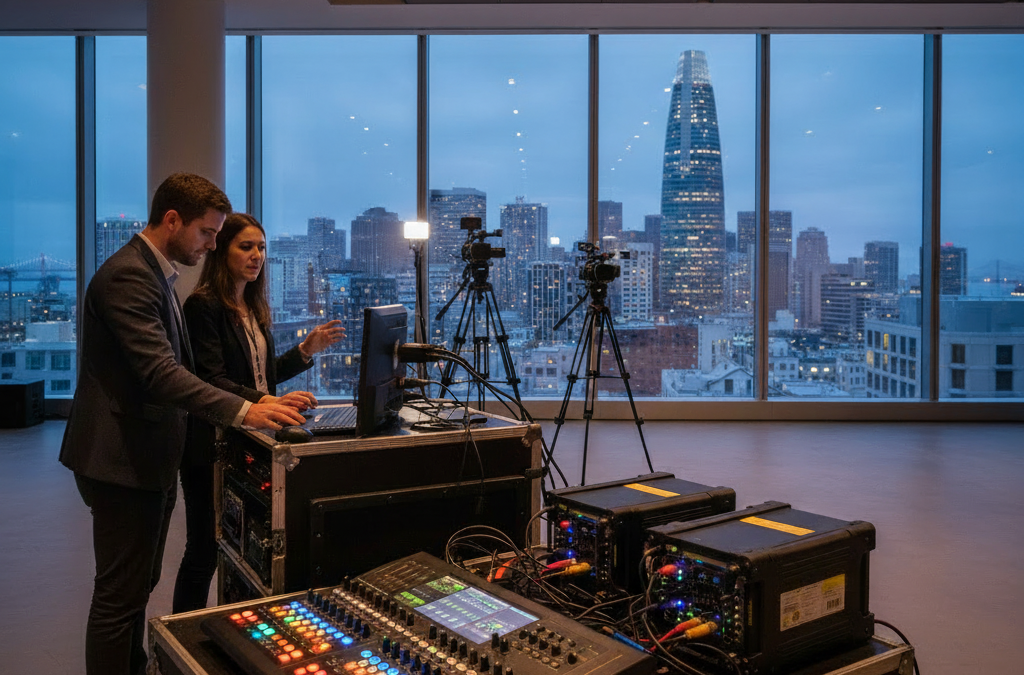
DCO requires a massive volume of high-quality visual assets. A single video production session can yield hundreds of b-roll clips that fuel an autonomous engine for months.
The New Marketing Org Chart: From Buyer to Orchestrator
The role of the media buyer is evolving from pulling levers to Performance Max Optimization and ecosystem orchestration. Your team should no longer be spending hours on manual bids; they should be spending hours on data strategy, creative direction, and customer journey mapping.
The “Black Box” only wins if you let it run without context. Shifting a team’s focus from campaign management to signal management, meaning the quality of the conversion data sent back to Google and Meta, typically does more for cost per lead than any keyword change.
Our AI and automation services cover how to set up these workflows.
Implementing Autonomous Strategies This Week
You don’t need a million-dollar budget to start using Autonomous Performance Marketing. Start by auditing your “conversions”—are you tracking meaningful business outcomes or just vanity clicks? Next, consolidate your campaigns to give the AI more data to learn from. Smaller, fragmented campaigns are the enemy of algorithmic success.
Ready to turn your marketing into a self-learning growth engine? Contact iStudios Media today for a data-driven strategy session that puts you back in control of the AI.
Related reading: Predictive LTV: How to Use It for Value-Based Bidding and Autonomous Marketing Operations: What It Is and How to Start.
Frequently Asked Questions
How does Autonomous Performance Marketing differ from standard automation?
Standard automation follows pre-set rules (e.g., “increase bid by 10% if CTR is high”). Autonomous marketing uses machine learning to dynamically adjust thousands of variables simultaneously, making decisions based on predicted outcomes rather than just historical rules. It is self-optimizing and evolves without constant manual intervention.
Is the “Black Box” of AI advertising safe for my brand?
It is safe only if you implement “Human-on-the-loop” oversight. By setting strict brand safety parameters, using negative keyword lists, and employing third-party monitoring tools, you can leverage the power of AI while ensuring your creative and placements remain aligned with your brand values.
What is the minimum budget for effective algorithmic bidding strategies?
While AI works at any scale, algorithmic bidding requires a “learning phase.” A common guideline is a minimum of 50 conversion events per month per campaign. This provides the system with enough statistical significance to begin making accurate autonomous decisions.
How do I start with Predictive LTV modeling?
Start by connecting your CRM (like Salesforce or HubSpot) to your ad accounts via an API or a marketing automation platform. Begin passing “Offline Conversion” data back to the platforms, signaling which leads actually turned into high-revenue customers, allowing the AI to hunt for similar profiles.