📋 Table of Contents
According to the 2024 Otis Report on the Creative Economy, California’s film and digital media sector remains a high-stakes environment where a single day of permit delays can increase project costs by 20%. For marketing directors, Bay Area production logistics are rarely about the camera gear; they are about navigating a fragmented landscape of municipal bureaucracies and talent union requirements that change every time you cross a county line.
The Permit Friction Index: San Francisco vs. San Jose
The most surprising insight for many CMOs is that San Francisco and San Jose operate with entirely different philosophies regarding public space and speed-to-market. While San Francisco offers iconic vistas, the administrative overhead often requires a lead time that modern social campaigns simply cannot afford.
- San Francisco: Managed by the Film SF commission, requiring a minimum of 4 business days for simple permits and up to 10 for complex street closures.
- San Jose: Often more streamlined through the San Jose Office of Cultural Affairs, favoring tech-campus aesthetics with lower public-impact hurdles.
- Insurance: Both require a minimum of $1M–$2M in General Liability, but SF often demands specific endorsements for the Port Authority or MTA.
Navigating San Francisco Filming Permits
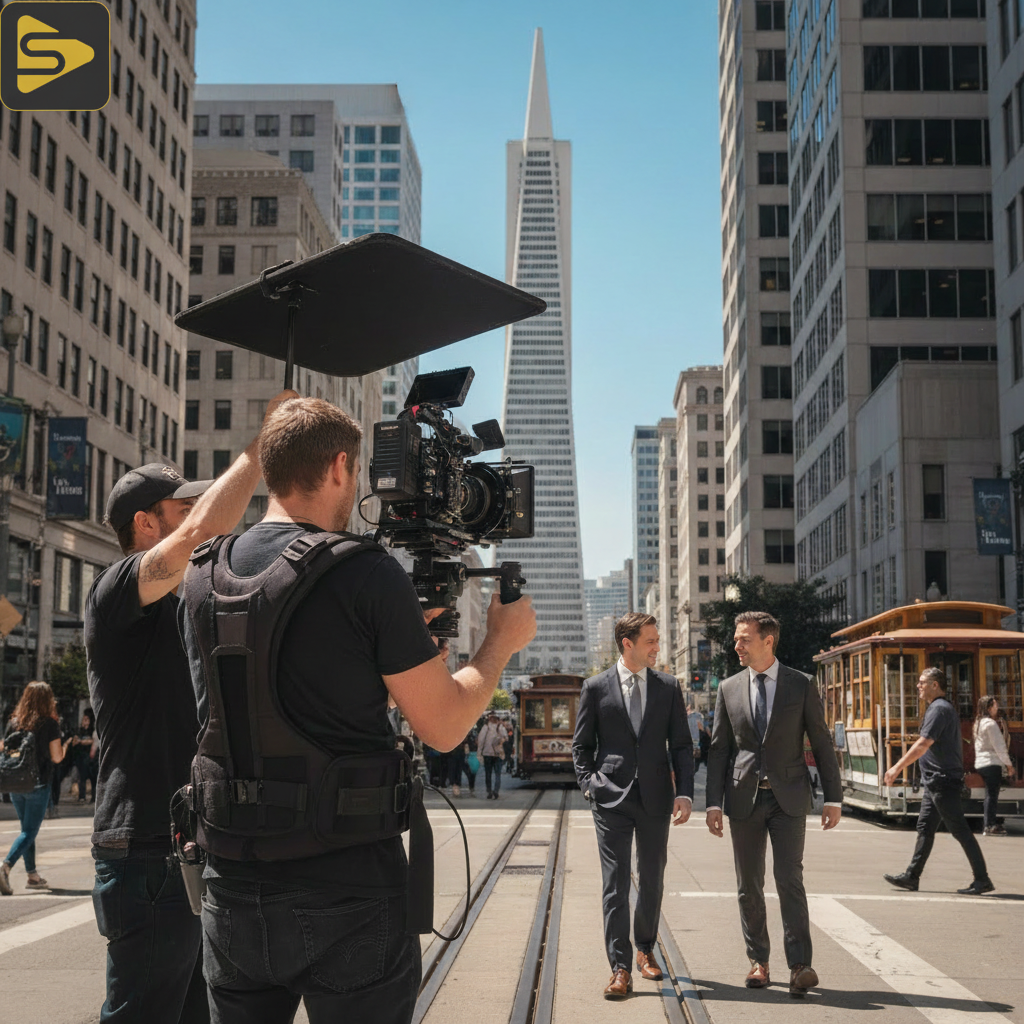
Here’s the thing: filming at the Embarcadero isn’t just about the view; it’s about managing the Port of San Francisco, the SFMTA, and the Film Commission simultaneously. For a typical Bay Area mid-market services client, this means accounting for a $500–$1,000 daily permit fee before a single frame is shot.
But wait—San Francisco also offers a unique ‘JPA’ (Joint Policy Agreement) that can occasionally fast-track permits for recurring content, provided you have a consistent production partner. If you are struggling to keep up with high-volume content demands while managing these hurdles, Ingest.blog, our internal AI content engine, helps our clients bridge the gap between production and distribution velocity.
Talent Union Requirements: The SAG-AFTRA B2B Shift
What most people miss is that the line between ‘influencer’ and ‘actor’ has effectively vanished in the eyes of talent unions. If you are hiring a creator for a brand film in the Bay Area, you are likely triggering corporate video compliance triggers that could lead to significant back-payments if not handled correctly.
| Requirement | Union (SAG-AFTRA) | Non-Union / Creator |
|---|---|---|
| Day Rates | Standardized per Scale | Market Negotiated |
| Pension & Health | ~21% Additional | N/A |
| Usage Rights | Fixed Residuals | Buyout Options |
In our work with Series B SaaS founders, we often see the ‘freelance videographer’ trap, where a one-off video shoot ignores talent residuals, leading to legal friction during a later acquisition or IPO audit. According to SAG-AFTRA’s own guidelines, even B2B content can fall under the Corporate/Educational contract.
Need to ensure your next shoot is compliant? Schedule a free strategy consultation with our production leads to audit your logistics plan.
San Jose vs. SF: Speed-to-Market for Tech Brands
The real kicker? San Jose’s suburban-tech aesthetic often allows for ‘guerrilla-lite’ shoots that are impossible in SF’s dense bureaucracy. While SF requires a permit for any tripod on a sidewalk, San Jose is often more permissive for small-footprint crews shooting near high-security tech campuses, provided you have the right production insurance requirements met.
- Location Scouting Silicon Valley: Look for private-public partnerships where tech campuses allow filming in exchange for brand mentions.
- Multi-camera Filming: San Jose venues are generally more accessible for large gear trucks, reducing load-in costs by 15-20% compared to SF.
- AI-Driven Efficiency: We now use AI-powered marketing automation to track permit windows and talent availability in real-time.

Hidden Costs of ‘Non-Union’ Shoots in a Union-Heavy Territory
A contrarian insight we share with all CMOs: “Cheap” non-union shoots in the Bay Area can actually be more expensive in the long run. Professional union crews bring a level of speed and safety that prevents the kind of catastrophic on-set errors that lead to $50,000+ overages in a single afternoon.
Transitioning from a ‘one-off video shoot’ mentality to a structured Bay Area production logistics framework is what separates scaling startups from those that stall. A typical Bay Area mid-market client saves thousands by bundling their photography, video production, and event live streaming under a single agency that manages all municipal filings and union payroll.
Sustainability Mandates and Future-Proofing
As of 2024, both San Francisco and San Jose are increasing pressure on production companies to adhere to green filming standards. This includes waste diversion requirements and the use of electric power over diesel generators. Failure to include a sustainability plan in your permit application can now lead to immediate rejection in SF.
For corporate comms leads, this isn’t just a hurdle; it’s a PR opportunity. Documenting your ‘green’ production process can be a powerful addition to your ESG (Environmental, Social, and Governance) reporting, as highlighted by Forbes in recent creative industry trends.
Ready to scale your content without the logistical headache? Contact iStudios Media today for a comprehensive production and performance marketing plan.
FAQs
How long does it take to get a San Francisco filming permit?
For most corporate shoots, you should allow at least 4 to 5 business days for a standard permit. If your shoot involves street closures, pyrotechnics, or large-scale multi-camera filming, the Film SF commission recommends applying at least 10 to 14 business days in advance to ensure all municipal departments can sign off.
Do I need a permit to film on a private tech campus in San Jose?
While you don’t need a city permit to film inside private property, you still need a permit if your production footprint (trucks, catering, or lighting) spills onto public sidewalks or streets. Additionally, San Jose campuses often have strict security protocols that require specific production insurance endorsements naming them as additionally insured.
What are the risks of using non-union talent for B2B videos?
The primary risk is a “claim of jurisdiction” from SAG-AFTRA if the content is widely distributed. If a non-union actor later joins the union, they may be entitled to back-payments and residuals under the Corporate/Educational contract. It is often safer to use a production partner that understands how to navigate union waivers for low-budget digital content.
What is the typical cost for Bay Area production logistics management?
In the Bay Area, professional production management typically ranges from $2,500 to $15,000 per project depending on the complexity of the permits and crew size. This investment prevents costly delays and ensures that your brand remains compliant with local laws and labor regulations, protecting your long-term ROI.