📋 Table of Contents
- The Real Cost of Corporate Video Locations in SF
- Virtual Production vs Location Shooting: The Authenticity Gap
- Leveraging Global Scale with Production Sustainability
- The Technical Middle Ground: Virtual Extensions
- Data-Driven Production: Real vs. Surreal Performance
- The Bay Area Decision Matrix: Real or Virtual?
- FAQs
According to a 2024 report by Statista, the global virtual production market is projected to grow by nearly 18% annually as brands pivot away from traditional logistical hurdles. For Bay Area marketers, the choice isn’t just about aesthetics; a hybrid production strategy has become the secret weapon for balancing high-end brand films with the aggressive speed of Series B and C product cycles.
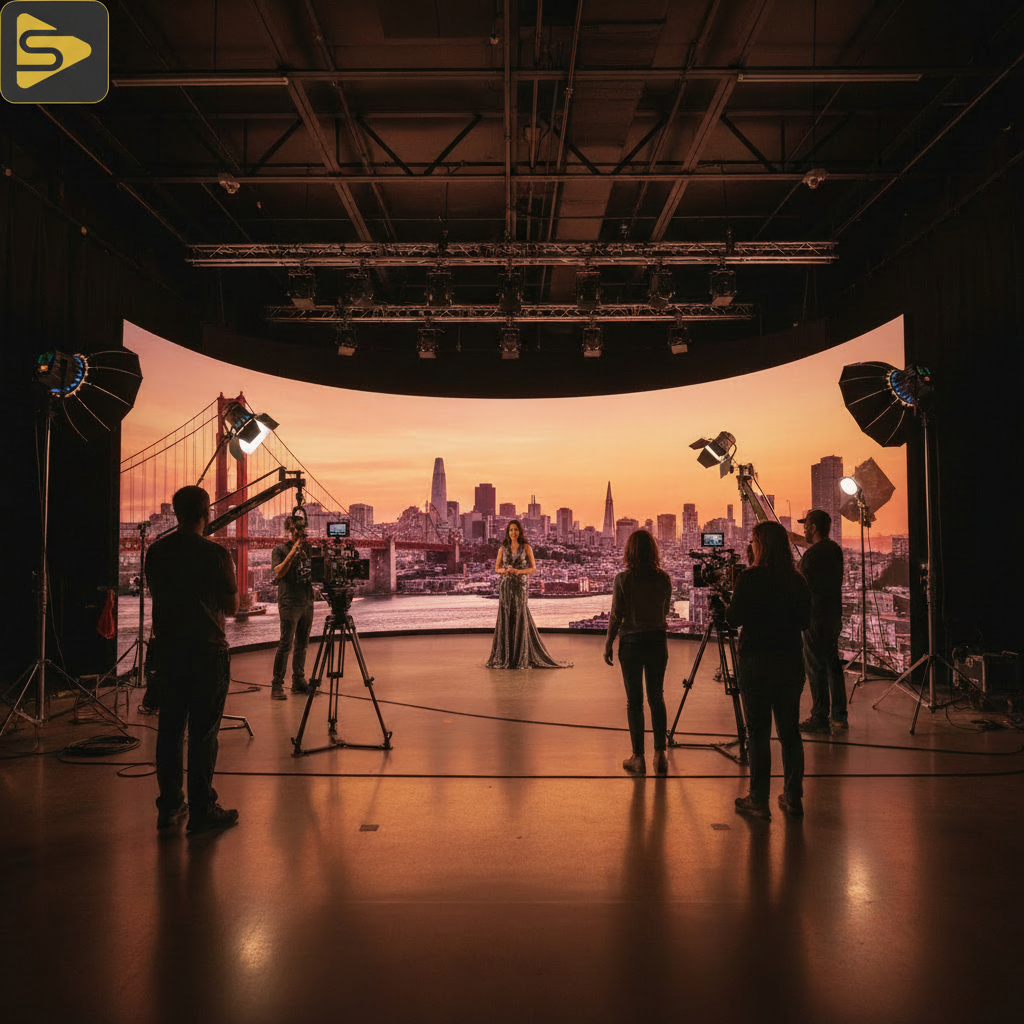
Choosing between a windy afternoon at the Marin Headlands and a controlled LED volume stage in San Leandro can make or break your quarterly budget. While a freelance videographer might suggest a simple one-off video shoot on a sidewalk, enterprise-level growth requires a more calculated approach to brand film production. Here is how sophisticated teams are navigating the ‘Efficiency vs. Prestige’ dichotomy in the San Francisco market.
The Real Cost of Corporate Video Locations in SF
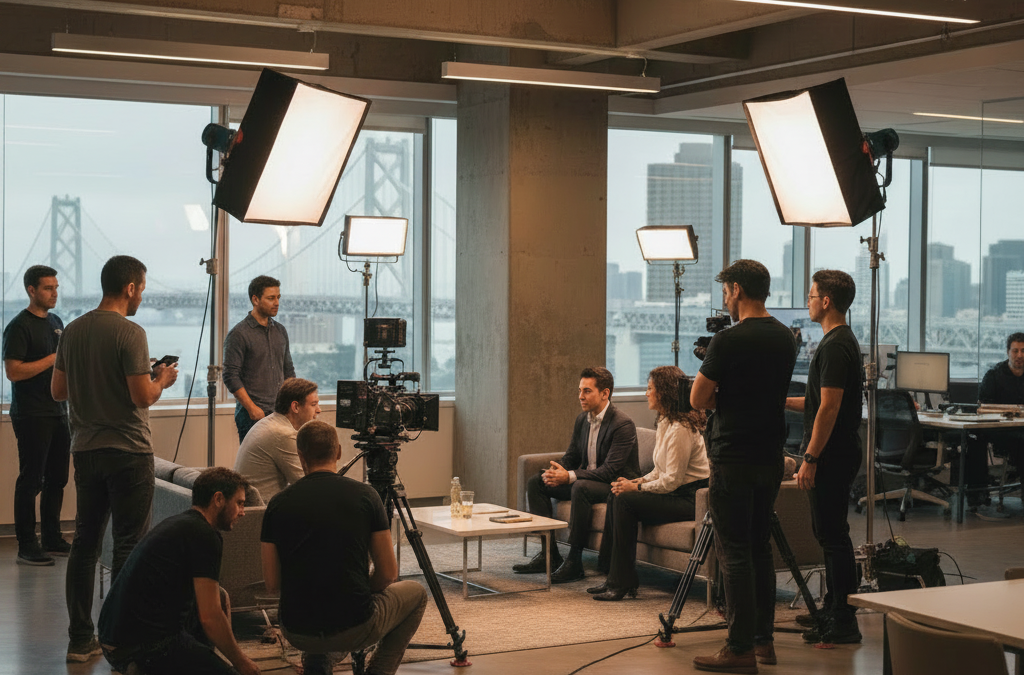
The most expensive part of a San Francisco location shoot isn’t the crew—it’s the ‘Karl the Fog’ tax and the permitting labyrinth. When you commit to corporate video locations in SF, you are essentially gambling against micro-climates that can turn a ‘Golden Hour’ hero shot into a gray, unusable mess in fifteen minutes.
- Permitting and Logistics: Expect to pay between $500 and $3,000 for city permits, depending on the neighborhood and crew size.
- The Talent Factor: High-level executives rarely have an 8-hour window to wait for clouds to clear on a tech campus in Palo Alto.
- Location Fees: Renting a modern ‘Quiet Luxury’ tech office in SoMa can easily reach $5,000–$15,000 per day.
Conversely, a hybrid production strategy allows you to capture the ‘bones’ of a location and extend it virtually. By using NeRFs (Neural Radiance Fields) to digitize iconic landmarks, we can place your CEO in a photorealistic digital twin of your headquarters without the $20k/day rental fee or the security clearance headaches.
Comparison: Real-World vs. Virtual Volume
| Factor | On-Location (SF/Oakland) | Virtual LED Volume |
|---|---|---|
| Daily Rate Range | $2,500 – $15,000+ | $8,000 – $50,000 |
| Lighting Control | Unpredictable (Weather-dependent) | 100% Controlled (Permanent Golden Hour) |
| Sustainability | High carbon footprint (Travel/Catering) | Low footprint (Zero travel required) |
Virtual Production vs Location Shooting: The Authenticity Gap
The most successful brands recognize that Gen Z and savvy B2B buyers have developed a high sensitivity to ‘over-polished’ content. While an LED wall offers perfection, sometimes the raw, gritty aesthetic of an Oakland street or a bustling San Jose manufacturing floor provides a level of credibility that Unreal Engine marketing cannot replicate.
In our work with Series B SaaS founders, we often recommend a ‘Hero and Hybrid’ approach. We film the core brand story on-site to capture the authentic energy of the team, then move to our studio for product demos and executive interviews where lighting precision is non-negotiable. This ensures your brand film production feels grounded in reality while maintaining the polish of a Super Bowl commercial.
Need help deciding which route fits your current campaign? Schedule a free strategy consultation with our production leads to map out your next shoot.
Leveraging Global Scale with Production Sustainability
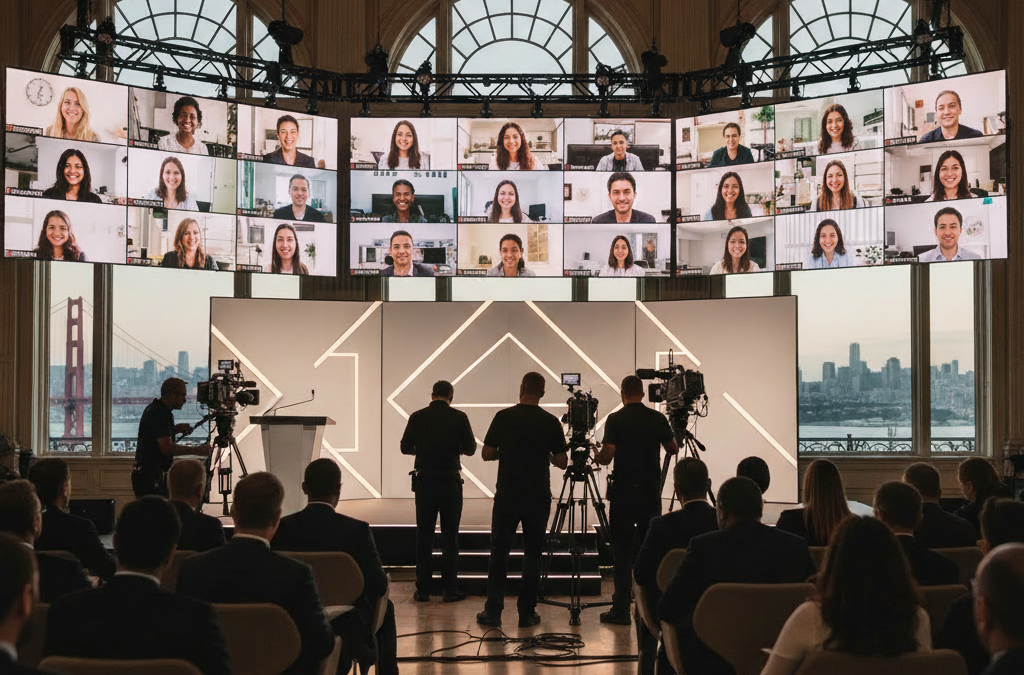
Sustainability is no longer a PR buzzword; it is a line item in the CMO’s annual report. According to the EPA’s guidelines on corporate sustainability, reducing travel is the single most effective way to lower a project’s carbon footprint. A hybrid production strategy allows a San Francisco-based team to ‘film’ in London, Tokyo, and New York all in a single afternoon from a studio in the East Bay.
- Reduced Travel Costs: Eliminate airfare and hotels for a crew of 15.
- Faster Iteration: Change the entire ‘location’ with the click of a button in Unreal Engine.
- Asset Reuse: Once a virtual environment is built, it can be used for social content, vlogs, and investor decks for years.
For companies looking to scale content velocity, we leverage Ingest.blog—our internal AI content engine—to distribute these high-end video assets across SEO-optimized blog posts and social channels, ensuring your production investment works harder across the entire funnel.
The Technical Middle Ground: Virtual Extensions
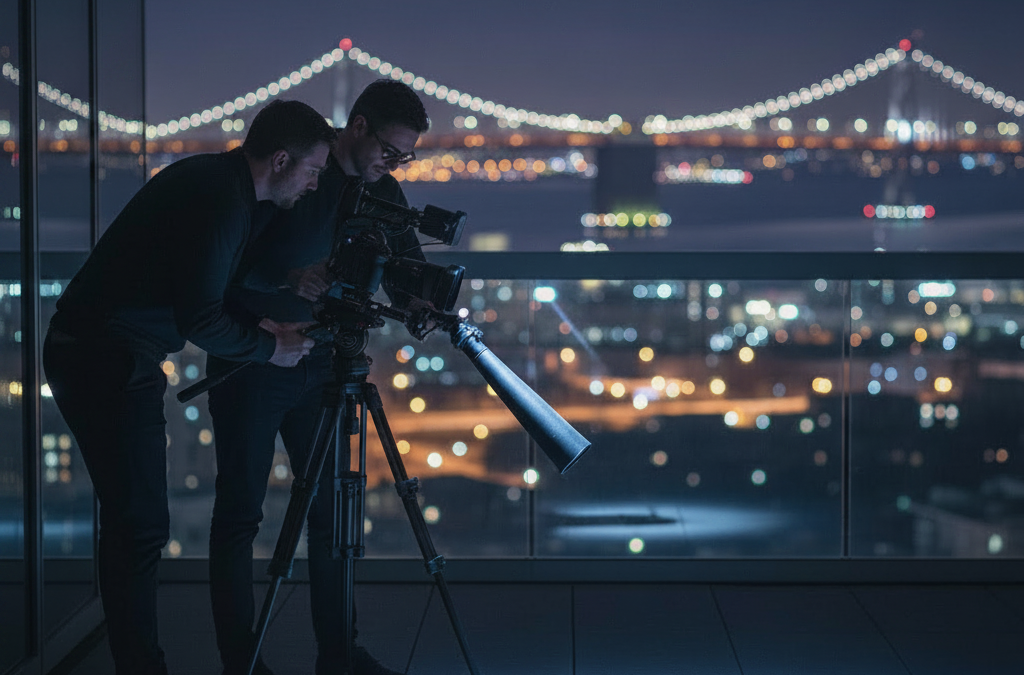
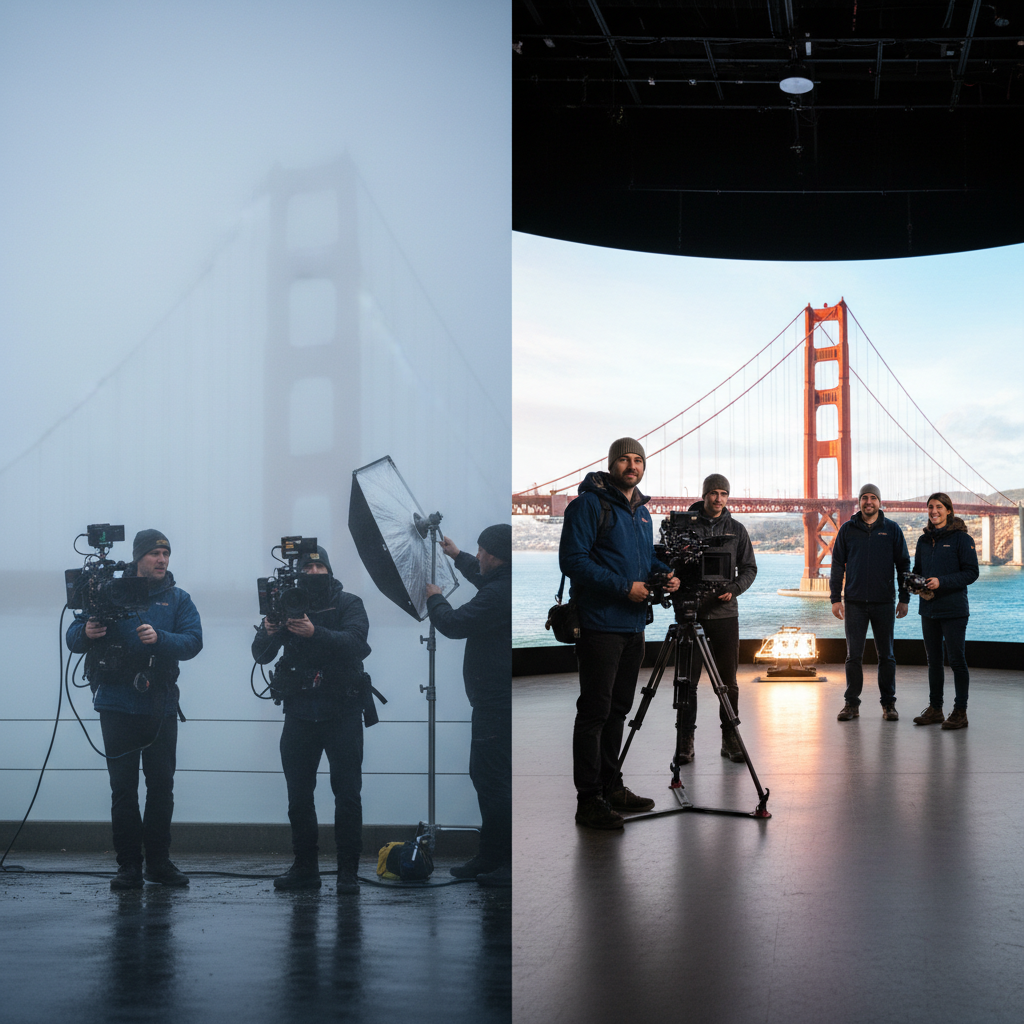
The most sophisticated use of a hybrid production strategy isn’t choosing one or the other, but blending them seamlessly. We frequently see mid-market clients shoot talent on a real rooftop in San Francisco but use virtual extensions to add futuristic elements to the skyline or to ‘clean up’ distracting construction sites in the background.
This approach bypasses the ‘uncanny valley’ of 100% CGI while giving you the creative freedom of a virtual production volume. It’s about using technology to enhance reality, not replace it. This is particularly effective for medical practice owners who need to showcase a high-tech facility that might still be under renovation.
Data-Driven Production: Real vs. Surreal Performance
Before you book a studio, look at your Google Ads and Meta performance data. In many B2B LinkedIn campaigns, ‘Real-World’ imagery often outperforms high-concept virtual sets because it feels more relatable to the end-user. However, for product launches and ‘Category King’ brand films, the ‘Surreal’ perfection of a virtual set signals market dominance and enterprise-grade stability.
- Test the Hook: Use a one-off video shoot to A/B test a real-world background against a virtual one.
- Analyze Retainage: Does your audience drop off when the background looks ‘too’ perfect?
- Optimize for Platform: YouTube audiences often prefer the ‘vlog’ authenticity of real locations, while Instagram rewards the high-gloss aesthetic of LED volumes.
By integrating your digital marketing data with your production choices, you move from ‘making a video’ to ‘engineering an asset.’ Explore our paid media strategies to see how we align creative production with performance metrics.
The Bay Area Decision Matrix: Real or Virtual?
If you are a startup founder preparing for a Series C round, the ‘Prestige’ of a real Silicon Valley campus shot can be invaluable for investor decks. However, if you are a Marketing Director tasked with creating 50 pieces of social content for a global product launch, the efficiency of a virtual production volume is the only way to stay on budget.
The real kicker? Most agencies are either ‘production houses’ or ‘marketing firms.’ At iStudios Media, we are both. We don’t just provide a freelance videographer; we provide a full-stack growth team that understands how to use a hybrid production strategy to drive ROI. Whether you need studio photography sessions or a multi-day brand film production, the goal is always measurable growth.
Ready to stop guessing and start executing? Contact us today for a free consultation on your hybrid production needs.
Frequently Asked Questions
Is virtual production more expensive than location shooting?
Initially, the daily rate for an LED volume is higher than most corporate video locations in SF. However, when you factor in the lack of travel costs, zero weather delays, and the ability to shoot three ‘locations’ in one day, the cost-per-asset is often significantly lower in a hybrid production strategy.
Do I need a special crew for virtual production?
Yes. Virtual production requires an ‘Engine Op’ and technical artists who understand Unreal Engine and camera tracking. Unlike a one-off video shoot with a freelance videographer, virtual sets require a specialized team to ensure the perspective and lighting match perfectly between the real world and the digital backdrop.
Can I use my own office as a virtual set?
Absolutely. We can create a ‘Digital Twin’ of your office using LiDAR scanning or high-res photography. This allows you to ‘film’ in your office anytime without disrupting your employees or dealing with HIPAA constraints if you are a medical practice owner.
How does hybrid production impact SEO?
High-quality video increases ‘dwell time’ on your site, which is a key ranking factor for SEO. By using a hybrid production strategy to create more targeted, localized content (e.g., showing different Bay Area landmarks for different local landing pages), you can significantly improve your local search relevance and conversion rates.