📋 Table of Contents
According to a 2024 Wyzowl report, 88% of marketers say video provides a positive ROI, yet logistical friction in high-density hubs like San Francisco often eats those margins before the first frame is captured. For marketing directors coordinating SF corporate shoots across multiple offices, the challenge isn’t just the creative—it’s the risk mitigation required to move a crew through a city defined by micro-climates and complex permitting.
Managing a multi-location corporate video requires more than just a freelance videographer with a camera; it demands a systems-thinking approach to production. Whether you are a Series B SaaS founder filming at your SoMa headquarters or a CMO coordinating interviews across the Financial District and the East Bay, consistency is your greatest asset. Without a standardized framework, your brand film can quickly look like a disjointed collection of one-off video shoots.
1. Environmental Standardization: The Visual Anchor
Consistency in lighting and audio creates a seamless viewer experience, regardless of how many times your team changes zip codes.
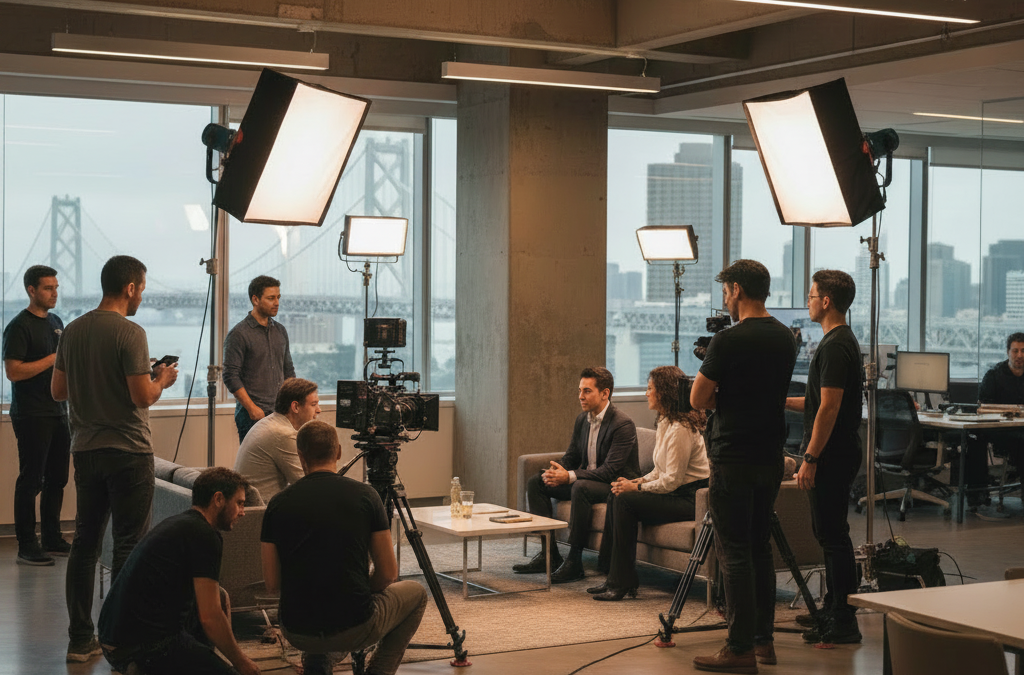
The real kicker? San Francisco’s architecture—while stunning—presents a nightmare of mixed lighting temperatures, from the blue-hued floor-to-ceiling glass of the Salesforce Tower to the warm, industrial brick of the Mission District. To maintain a cohesive look, your production team must employ a “mobile studio” philosophy. This means using high-output LED panels that can overpower the shifting “Karl the Fog” sunlight and standardizing color temperatures across every site.
- Uniform Lighting Kits: Use the same key light modifiers at every location to ensure skin tones remain identical in post-production.
- Audio Profiling: SF offices range from echoey open-floor plans to sound-dampened boardrooms; use consistent lavalier microphones to minimize room acoustic variance.
- Background Curation: Select “Street-to-Suite” transitions that reflect your brand’s maturity rather than generic office backdrops.
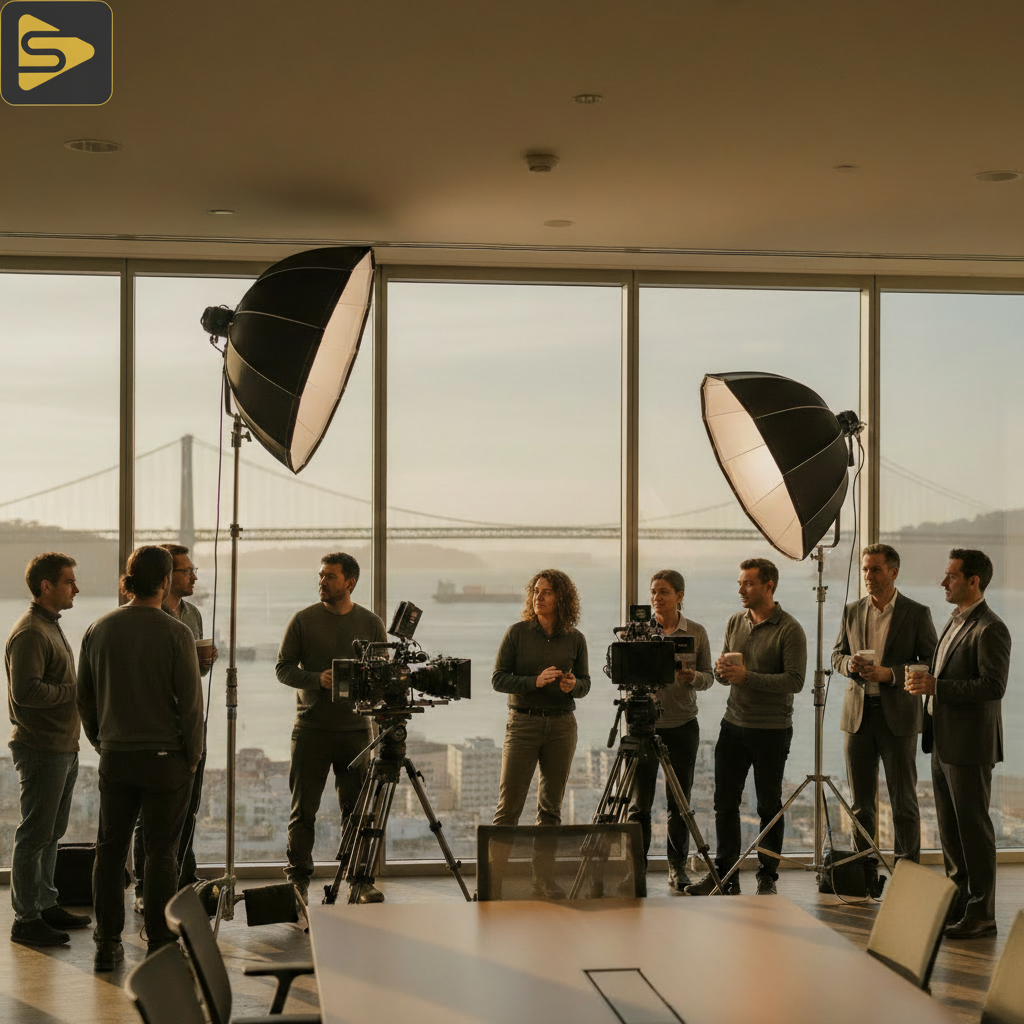
In our experience with mid-market clients, failing to account for the hum of HVAC systems in older Financial District buildings is a common pitfall. A professional video production partner will perform a sound sweep before the CEO sits down. If you’re struggling to keep your content pipeline full while maintaining this quality, our internal AI content engine, Ingest.blog, can help distribute your high-quality video assets across multiple channels efficiently.
2. SF Video Production Logistics: Navigating the Urban Maze
Success in San Francisco production is measured by how well you manage the 90 minutes between locations.
Here’s the thing: San Francisco is a 7×7 mile grid that can take two hours to cross during peak traffic. For SF corporate shoots, we recommend an AI-driven route optimization strategy. This involves timing equipment load-ins to avoid the 8:00 AM Financial District rush and utilizing “Micro-Moment” windows for exterior b-roll. For example, the lighting at the Salesforce Transit Center is most predictable just after the morning fog burns off, usually around 10:30 AM.
| Logistical Factor | Typical Challenge | Risk Mitigation Strategy |
|---|---|---|
| Permitting | SF Film Commission delays | Apply 30 days out for public space b-roll. |
| Parking | No space for grip trucks | Budget for private lot buy-outs or dedicated scouts. |
| Security | High-value gear in public | Hire dedicated production security for street shoots. |
What most people miss is the “Security-First” aspect of SF video production logistics. In high-density neighborhoods, leaving a van unattended for five minutes is a liability. A structured agency ensures a production assistant is always with the gear, protecting your investment and your schedule. Need help planning your next multi-site project? Schedule a free consultation with our production leads.
3. Stakeholder Management in a Hybrid Reality
Remote directors need real-time visibility into the shoot to avoid expensive re-shoots later.
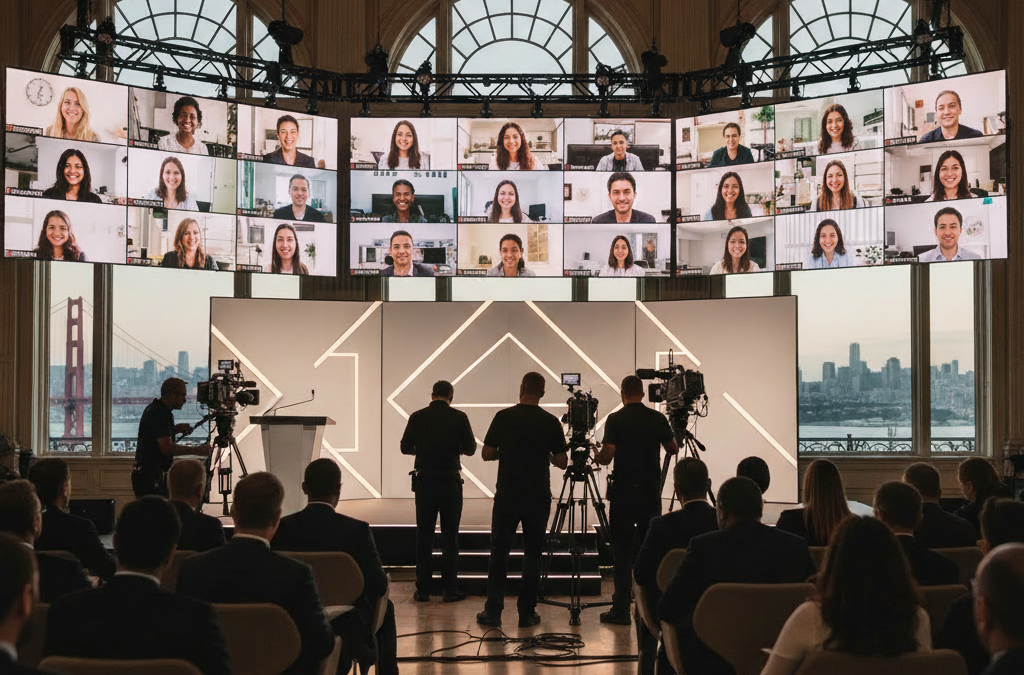
But wait—how do you manage a CMO who is at a conference in Vegas while you’re filming their VP in Oakland? We utilize a hybrid-remote stakeholder workflow. By using low-latency streaming tools, off-site decision-makers can view a high-definition feed of the camera’s monitor in real-time. This ensures that brand messaging and framing are approved on the spot, preventing the “that’s not our brand color” email two weeks later.
- Live Feed Integration: Use platforms like Frame.io or specialized wireless transmitters for remote monitoring.
- Standardized Briefing: Ensure every site lead has the same shot list and brand guidelines.
- On-Site Lead: A dedicated producer should act as the bridge between the technical crew and the corporate stakeholders.
A typical Bay Area mid-market client often has stakeholders spread across the Peninsula. By centralizing the approval process through a digital marketing strategy, we reduce the friction of multi-location production. This level of coordination is what separates a professional agency from a freelance videographer who may lack the infrastructure for remote collaboration.
4. Standardizing Brand Video Across Disparate Environments
Your brand film should feel like a single story, not a patchwork of different offices.
The real secret to standardizing brand video is in the pre-production phase. We develop a “Visual Style Guide” for every project. This includes specific LUTs (color presets), font treatments for lower thirds, and even a guide for what colors employees should wear to avoid clashing with the office interior. According to Forbes, brand consistency can increase revenue by up to 23%, making this pillar essential for ROI.
- Color Grading: Apply a consistent grade in post-production to unify different camera sensors.
- Motion Graphics: Use the same animation templates for all name titles and call-to-actions.
- B-Roll Hierarchy: Mix grit (like the Mission District) with polish (the Embarcadero) to create a multi-dimensional brand image.
For Series B SaaS founders, speed is often the priority. However, rushing SF corporate shoots without a style guide leads to a “Franken-video” that fails to build trust with investors. Our team ensures that whether we are filming corporate photography or full-scale brand films, the visual DNA remains identical.
5. Sustainable and Compliant SF Production
Operating in San Francisco means adhering to some of the strictest environmental and labor standards in the country.
What most agencies won’t tell you is that a “Zero-Waste” production isn’t just a trend; it’s often a requirement for corporate social responsibility (CSR) goals. We implement eco-conscious logistics by reducing the carbon footprint between districts—optimizing crew movements and using rechargeable power stations instead of gas generators. Furthermore, navigating SF Film Commission compliance is non-negotiable for high-profile locations.
In our work with Series B SaaS teams, we’ve found that being able to report on the sustainability of a production is a major win for internal HR and Comms departments. It shows that your brand values match the city it calls home. Ready to scale your content without scaling your internal headcount? Connect with us today to discuss your 2025 production calendar.
Key Takeaways for Your Next SF Shoot
- Standardize early: Define your lighting and audio profiles before the first day of filming.
- Route intelligently: Factor in SF traffic and micro-climates when scheduling moves.
- Stay consistent: Use a Visual Style Guide to unify footage from different environments.
- Go hybrid: Use real-time monitoring to keep remote stakeholders in the loop.
Frequently Asked Questions
How much do SF corporate shoots typically cost?
Industry-reported ranges for corporate video production in the Bay Area typically fall between $2,500 and $15,000 per project. For premium brand films or commercials, costs can range from $8,000 to $50,000 per finished minute, depending on the complexity of the logistics, crew size, and equipment requirements.
Do I need a permit for filming inside my own SF office?
Generally, you do not need a city permit for filming entirely on private property. However, if your production requires parking grip trucks on the street, placing equipment on the sidewalk, or filming in public spaces like the Embarcadero, you must secure permits from the San Francisco Film Commission.
How do you ensure audio consistency in noisy SF environments?
We use high-quality directional microphones and lavaliers to isolate the speaker’s voice. During the scouting phase, we identify potential noise pollutants like server fans or street traffic. In post-production, we use advanced AI-powered noise reduction tools to ensure a consistent sonic profile across all locations.
Can we review footage in real-time if our team is remote?
Yes. We utilize low-latency streaming technology that allows remote stakeholders to view the camera feed from anywhere in the world. This allows for immediate feedback on performance and framing, which is critical for maintaining standardizing brand video goals without everyone being on-site.