📋 Table of Contents
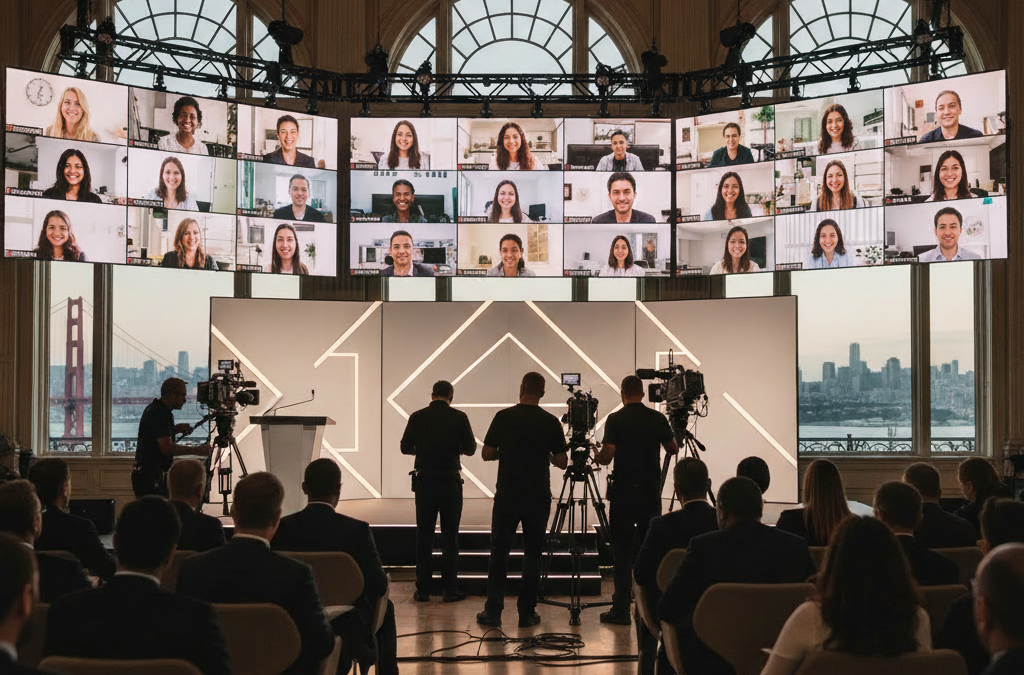
According to Wyzowl’s 2024 State of Video Marketing report, 88% of marketers say video is a vital part of their strategy, yet technical fragmentation remains the silent killer of brand authority. When your CEO is filmed in San Francisco with cinematic depth and your CTO in New York looks like they are trapped in a 2005 webcam, your brand’s perceived value drops instantly.
High-stakes corporate interview production requires more than just hiring a freelance videographer in every city. It demands a rigorous technical blueprint that ensures every frame feels like it belongs to the same master film. For Bay Area marketing directors managing global teams, the challenge isn’t just getting the footage—it’s ensuring that footage doesn’t look like a patchwork quilt in the edit suite.
Key Takeaways for Decision-Makers:
- Standardize color temperatures and lighting ratios to prevent “visual jarring.”
- Implement a universal audio floor-noise specification for seamless cross-cutting.
- Use cloud-based review tools for real-time continuity audits during the shoot.
1. Visual Continuity: Solving the Lighting and Color Puzzle
Visual brand consistency is the difference between a premium executive video series and a disjointed collection of clips. The real kicker? Most agencies focus on the camera brand, but the real secret to continuity lies in the lighting ratios and Kelvin settings.
In our experience with Series B SaaS founders, we find that a “Global-Local” model works best: you hire local crews but provide a mandatory technical rider. This rider should specify a 3:1 lighting ratio and a locked 5600K color temperature across all locations. This prevents the nightmare of trying to color-correct a “warm” office in London against a “cool” studio in San Leandro.
- The Key Light: Must be a large softbox (minimum 32″) to create a wrap-around light that hides skin imperfections.
- The Hair Light: Specific intensity (usually 20% of the key) to separate the executive from the background.
- The Background: Use a shallow depth of field (f/2.8 or wider) to keep the focus on the speaker, not the office clutter.

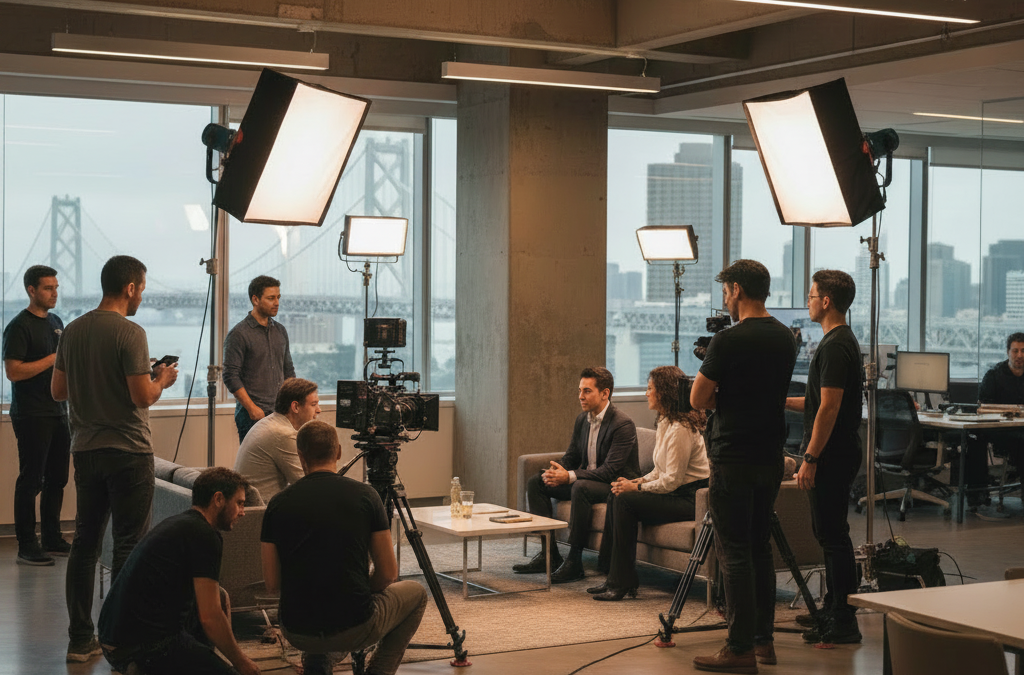
What most people miss is that a one-off video shoot often ignores the “look” of previous interviews. To avoid this, we recommend a centralized video production strategy where a single lead producer vets the lighting setup via a live feed before the first “Action” is called.
2. Auditory Uniformity: The Hidden Continuity Killer
Audio is 50% of the viewing experience, but it’s 90% of the problem in multi-city corporate interview production. If your San Francisco interview has a slight room echo and your Austin interview is crisp and dry, the viewer’s brain will register a “glitch” every time you switch speakers.
Here is the thing: you cannot fix bad acoustics in post-production without making the voice sound robotic. We enforce a strict “dual-mic” policy for all remote video production standards. This includes a boom mic for natural resonance and a lavalier mic for proximity and clarity.
Typical Audio Specifications Table:
| Specification | Requirement | Reasoning |
|---|---|---|
| Sample Rate | 48kHz / 24-bit | Industry standard for broadcast sync. |
| Noise Floor | Below -60dB | Ensures silence is actually silent. |
| Microphone Type | Sennheiser MKH416 or equivalent | Consistent frequency response. |
Ready to upgrade your brand’s voice? Schedule a free consultation to see how we standardize audio for global teams.
3. Distributed Interview Workflows and Cloud Synchronization
The modern CMO needs to scale thought leadership without flying a single crew globally. This is where distributed interview workflows become a competitive advantage. By using tools like Frame.io or Sony Ci, your lead editor in the Bay Area can review a “tech check” clip from a crew in Singapore in under five minutes.
For mid-market clients, we often deploy a “Technical Continuity Audit” before the shoot begins. This involves the local crew sending a 10-second test clip of the frame, the lighting, and the audio levels. This prevents the “I wish we had moved that plant” conversation after the executive has already left the room.
- Real-time Directing: Use high-quality streaming interfaces (like Teradek) so the creative director can see the exact camera feed.
- Instant Uploads: Proxy files should be uploaded immediately for the editorial team to begin the rough cut.
- AI Normalization: We utilize AI-powered audio normalization to ensure loudness standards (LUFS) are identical across the entire series.
If you are looking to scale your written content alongside your video, we sometimes use Ingest.blog, our internal AI content engine, to transform these high-fidelity interviews into SEO-optimized articles at lightning speed.
4. The Cost of Inconsistency in Executive Video
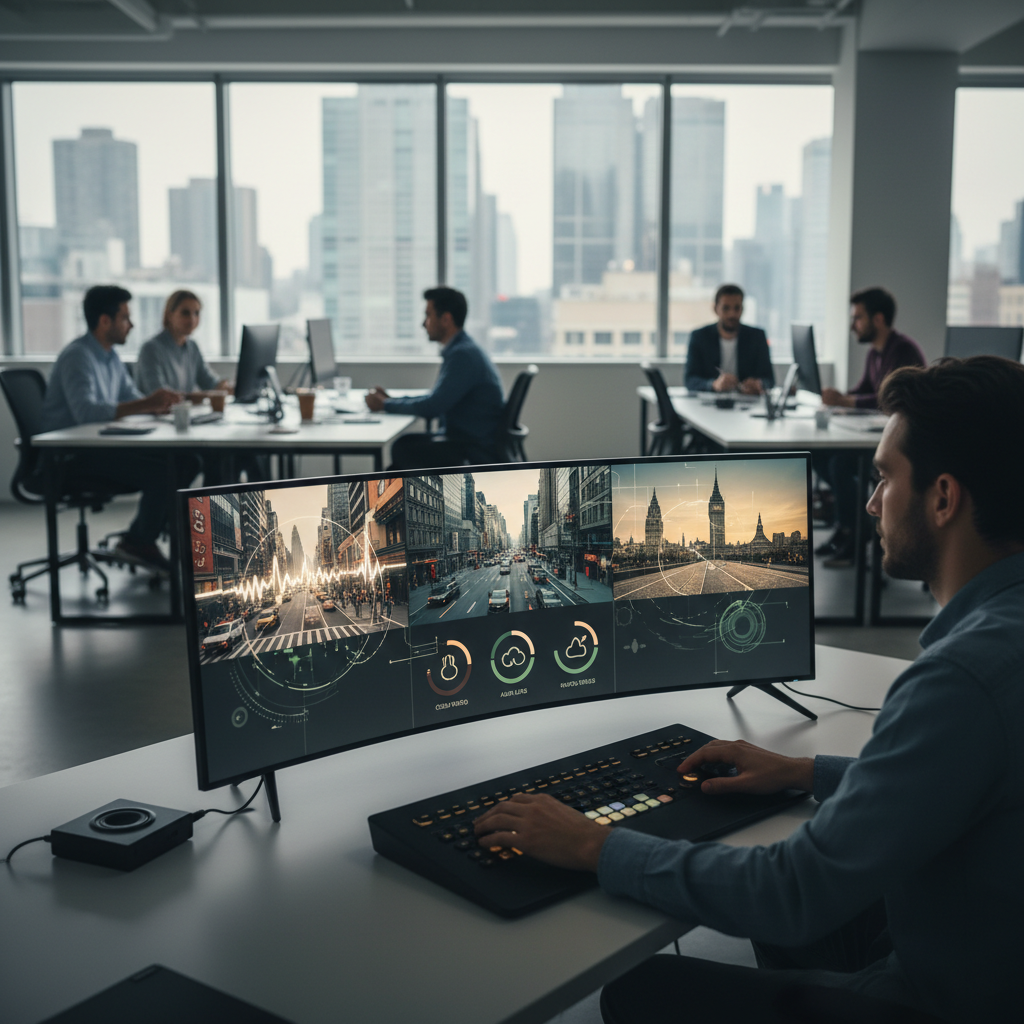
The real kicker about technical fragmentation is that it dilutes corporate brand authority. A typical Bay Area mid-market client might spend thousands on a freelance videographer only to find the footage is unusable for a high-end brand film because the frame rates don’t match (e.g., 23.98fps vs 29.97fps).
But wait—standardization doesn’t mean boring. It means creating a reliable canvas so the executive’s story can shine. According to Forbes, consistency is the key to building consumer trust, and this applies to B2B video just as much as B2C advertising.
Why Technical Consistency Matters:
- Editing Speed: Matches in color and sound mean the editor spends time on the story, not fixing errors.
- Brand Recall: A unified look reinforces a professional image.
- Asset Longevity: High-quality, standardized footage can be repurposed for years across different campaigns.
5. Implementing Production SOPs for Scalability
Scaling content without scaling headcount is the holy grail for enterprise CMOs. The answer lies in Production SOPs (Standard Operating Procedures). Instead of treating every shoot like a new invention, treat it like a manufacturing process.
In our work with Series C tech companies, we provide a “Director’s Kit” to every local partner. This kit isn’t just gear; it’s a PDF detailing the exact framing (headroom, lead room), the wardrobe colors to avoid, and the specific prompts to use during the interview to ensure the best sound bites.
Need a partner who operates within enterprise security and compliance? Contact iStudios Media today for a structured approach to your next production.
Frequently Asked Questions
How do you ensure color consistency across different camera brands?
We mandate the use of color charts (like the X-Rite ColorChecker) at the start of every interview. This allows our editors to use data-driven color matching in DaVinci Resolve, ensuring that a Sony camera in London and a RED camera in San Francisco produce identical skin tones and brand colors.
What is the most common technical failure in multi-city shoots?
The most common failure is mismatched frame rates and shutter angles. If one crew shoots at 24fps and another at 30fps, the motion blur will look different, making the edit feel “jumpy.” Our technical rider explicitly locks these settings before any recording begins to ensure total continuity.
Can we use Zoom or Teams for high-quality corporate interview production?
While fine for internal meetings, Zoom compression destroys visual authority for external marketing. For remote video production standards, we prefer “local recording” apps that record high-bitrate video directly on the user’s device and then upload the raw file, bypassing internet-based compression artifacts.
What is the typical budget for a multi-city executive video series?
Industry-reported ranges for professional corporate video production typically fall between $2,500 and $15,000 per project. For a multi-city series involving local crews and centralized post-production, costs vary based on the number of locations and the complexity of the integrated technical framework.
Don’t let technical fragmentation undermine your brand. Whether you need a single polished brand film or a global executive video series, iStudios Media provides the systems-thinking approach required for enterprise-level results. Book your free strategy consultation today and let’s build your content engine together.