📋 Table of Contents
According to Wyzowl’s 2024 State of Video Marketing report, 88% of marketers say video provides a positive ROI, yet most Bay Area startups are still trapped in the cycle of the expensive one-off video shoot. The reality is that hiring a freelance videographer for a single brand film is no longer a viable multi-channel marketing strategy; you need a content waterfall framework that treats every hour on set as a factory for high-velocity assets.
The Shift from Linear Production to Content Atomization
Modern production isn’t about making one great video; it’s about building a modular library of assets that can be deployed across the entire funnel. Here is why the old model fails:
- The Single-Asset Trap: Spending $10,000 on one 2-minute brand film that only lives on your homepage.
- Platform Friction: Trying to force a 16:9 horizontal video into a 9:16 vertical TikTok environment.
- Content Decay: Watching your engagement drop after three days because you have nothing new to post.
In our work with Series B SaaS founders, we’ve seen that the most successful teams prioritize content atomization. This means planning the shoot so that every interview question, every B-roll sequence, and every product demo can be sliced into “micro-content” for LinkedIn, YouTube Shorts, and Meta Ads.
How the Content Waterfall Framework Multiplies Your Output
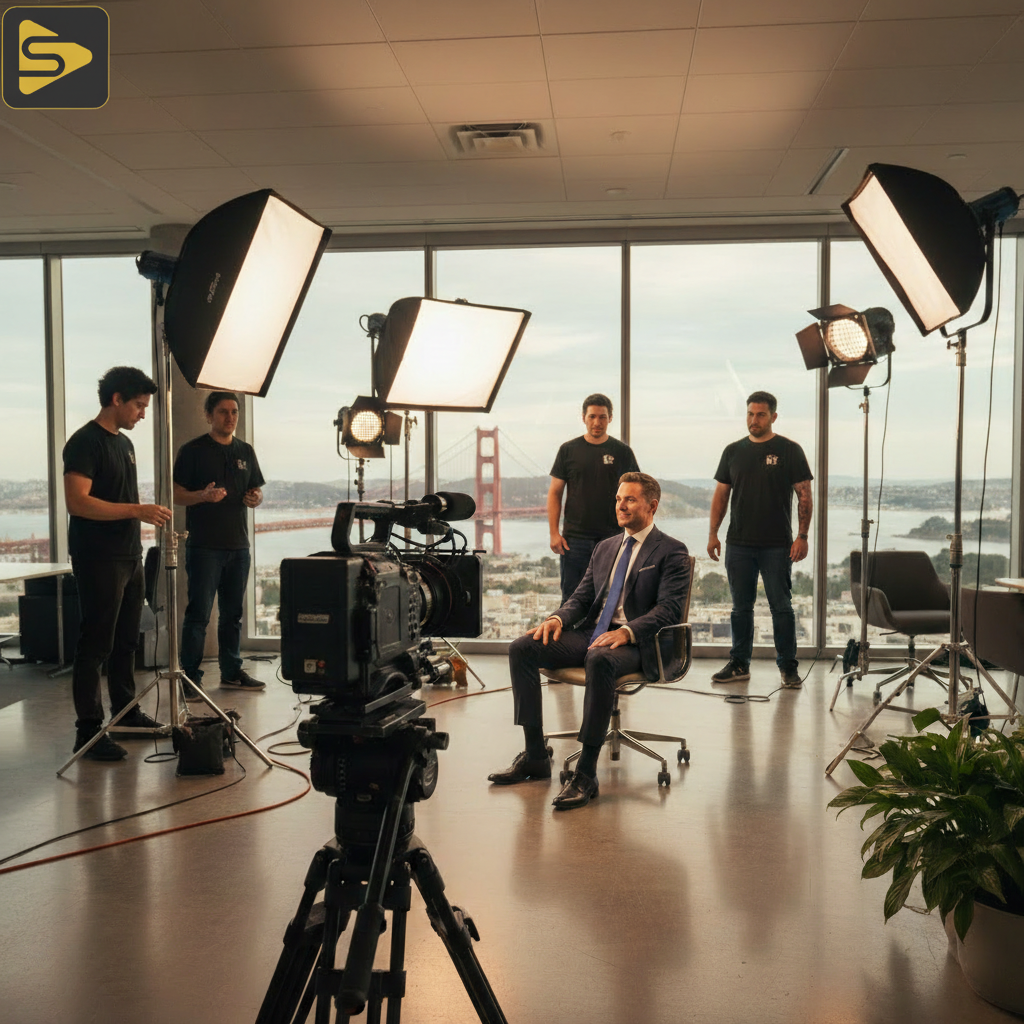
The content waterfall framework works by capturing high-fidelity “pillar” content and systematically breaking it down into platform-native formats. One hour of strategic filming should yield at least 30 distinct pieces of content.
The real kicker? Most of your video production ROI isn’t in the final edit; it’s in the raw files. By using a modular scripting method, you ensure that your talent speaks in 15-30 second soundbites that require zero heavy lifting in post-production. This allows you to feed the “zero-click” content beast, providing value directly in the LinkedIn feed without forcing users to leave the platform.
| Asset Type | Primary Platform | Quantity from 1 Shoot |
|---|---|---|
| Pillar Brand Film | Website / YouTube | 1-2 |
| Educational Shorts | Reels / TikTok / Shorts | 10-15 |
| Expert Insight Clips | LinkedIn / X (Twitter) | 8-10 |
| Paid Social Variations | Meta / Google Ads | 5-8 |
The Modular Scripting Advantage
Stop writing long scripts. Instead, use a “Question-and-Answer” framework where the subject repeats the question in their answer. This creates a self-contained clip that is ready for omnichannel distribution the moment it hits the timeline.
Need help planning your next high-output shoot? Schedule a free strategy consultation with our production team to map out your waterfall.
Why B-Roll is More Valuable Than the Interview
Most marketers treat B-roll as the “background noise” of a video, but in a multi-channel marketing strategy, B-roll is your most versatile currency. High-quality, authentic footage of your team, your product in action, and your office environment can be repurposed as background for text-overlaid Reels or UGC-style creative.
- The Lo-Fi Paradox: Sometimes, a raw B-roll clip with a simple text overlay outperforms a $50k commercial on Meta Ads.
- Contextual Flexibility: A single shot of a surgeon using a medical device can be used for a recruitment video, a patient testimonial, or a LinkedIn thought leadership post.
- Production Efficiency: Capturing “lifestyle” B-roll during setup and teardown doubles your asset count without adding a single dollar to the crew cost.
Leveraging AI for Batch Production Speed
Once the shoot is done, the bottleneck is usually the edit. This is where production efficiency meets modern technology. We often utilize tools like Descript for text-based editing and OpusClip to identify high-engagement hooks automatically.
For our clients focused on high-velocity SEO, we also leverage Ingest.blog, our internal AI content engine, to transform video transcripts into optimized blog posts and social threads instantly. This ensures that your video production ROI extends beyond the screen and into the search engine results pages (SERPs).
Scaling Content Without Scaling Headcount
The goal for a CMO or Marketing Director isn’t to manage more people; it’s to get more output from the same resources. A typical Bay Area mid-market client often struggles with vendor fragmentation—hiring one person for photos, another for video, and an agency for ads.
The content waterfall framework solves this by consolidating production into a single, integrated workflow. When you shoot for the waterfall, you aren’t just making a video; you’re building a 90-day marketing engine. This reduces “content waste” and ensures that every dollar spent on a production day is amortized across dozens of marketing touchpoints.
Key Takeaways for Your Next Shoot:
- Shoot for the Edit: If it’s not a standalone 30-second clip, don’t film it.
- Prioritize Vertical: In 2025, 9:16 is the primary format for discovery.
- Think Zero-Click: Design content that delivers the “aha!” moment without needing a link click to your site.
Ready to stop doing one-off shoots and start building a content engine? Explore our integrated production services or call us to discuss your upcoming campaign.
Common Pitfalls in Multi-Channel Strategy
What most people miss is that omnichannel distribution is not the same as “cross-posting.” Posting a YouTube link on LinkedIn is a recipe for zero reach. The content waterfall framework requires you to export native files for each platform’s specific algorithm.
According to HubSpot’s 2024 data, short-form video has the highest ROI of any social media trend. If your production partner isn’t delivering a folder full of vertical clips alongside your main film, you are leaving money on the table.
FAQs
How many assets should I expect from a single shoot day?
Using our content waterfall framework, a standard 8-hour shoot day should yield 1-2 pillar videos, 10-15 short-form vertical clips, and a library of 20+ professional photos. This provides enough coverage for a full month of daily social posting and multiple ad campaigns.
Does ‘Lo-Fi’ content mean lower quality?
Not at all. In the context of multi-channel marketing strategy, ‘Lo-Fi’ refers to the aesthetic of authenticity (like UGC-style creative). We use cinema-grade equipment to capture this look, ensuring the content feels native to social feeds while maintaining the brand’s professional integrity.
How do I justify the cost of a full production day over a freelance videographer?
The math is simple: a freelance videographer might charge less upfront but deliver one asset. A full-stack agency provides a video production ROI by delivering 30+ assets. When you calculate the cost-per-asset, the integrated waterfall approach is significantly more cost-effective for scaling businesses.
Can this framework work for B2B SaaS companies?
Absolutely. In fact, Series A-C SaaS companies are our primary users of the content waterfall framework. It allows founders to record one expert interview and turn it into a month of LinkedIn thought leadership, product demos, and investor updates without needing to be on camera every day.
Stop wasting your marketing budget on content that doesn’t scale. Click here to book a free consultation and let’s design your content waterfall.