📋 Table of Contents
- The Capture Layer: Beyond the One-Off Video Shoot
- The Processing Layer: Cloud-Based Vision Mixing and AI
- The Distribution Layer: SRT Protocol and Multi-CDN Strategies
- Hybrid Parity: Matching the In-Room Luxury Experience
- Future-Proofing: AI-Driven Switching and Real-time Translation
- The ROI of Integrated Performance Marketing
- Professional Livestreaming FAQs
According to a 2024 report by Grand View Research, the global streaming market is projected to grow by 21% annually, yet 40% of corporate streams fail due to preventable network or hardware bottlenecks. In the high-stakes environment of San Francisco tech, a glitchy feed isn’t just a technical error; it is a brand liability that seasoned professional livestreaming teams must eliminate through rigorous systems.
Key Takeaways for Decision-Makers:
- The “Capture Layer” focuses on NDI 6.0 and 4K glass to ensure source integrity.
- The “Processing Layer” utilizes cloud-based vision mixing and AI to reduce on-site headcount.
- The “Distribution Layer” prioritizes SRT protocols and multi-CDN delivery for zero-fail redundancy.
The Capture Layer: Beyond the One-Off Video Shoot
The foundation of any broadcast is the quality of the raw signal, which requires moving far beyond the capabilities of a freelance videographer with a single DSLR. For professional livestreaming in dense RF environments like the SF Financial District, your capture layer must be hardened against interference.
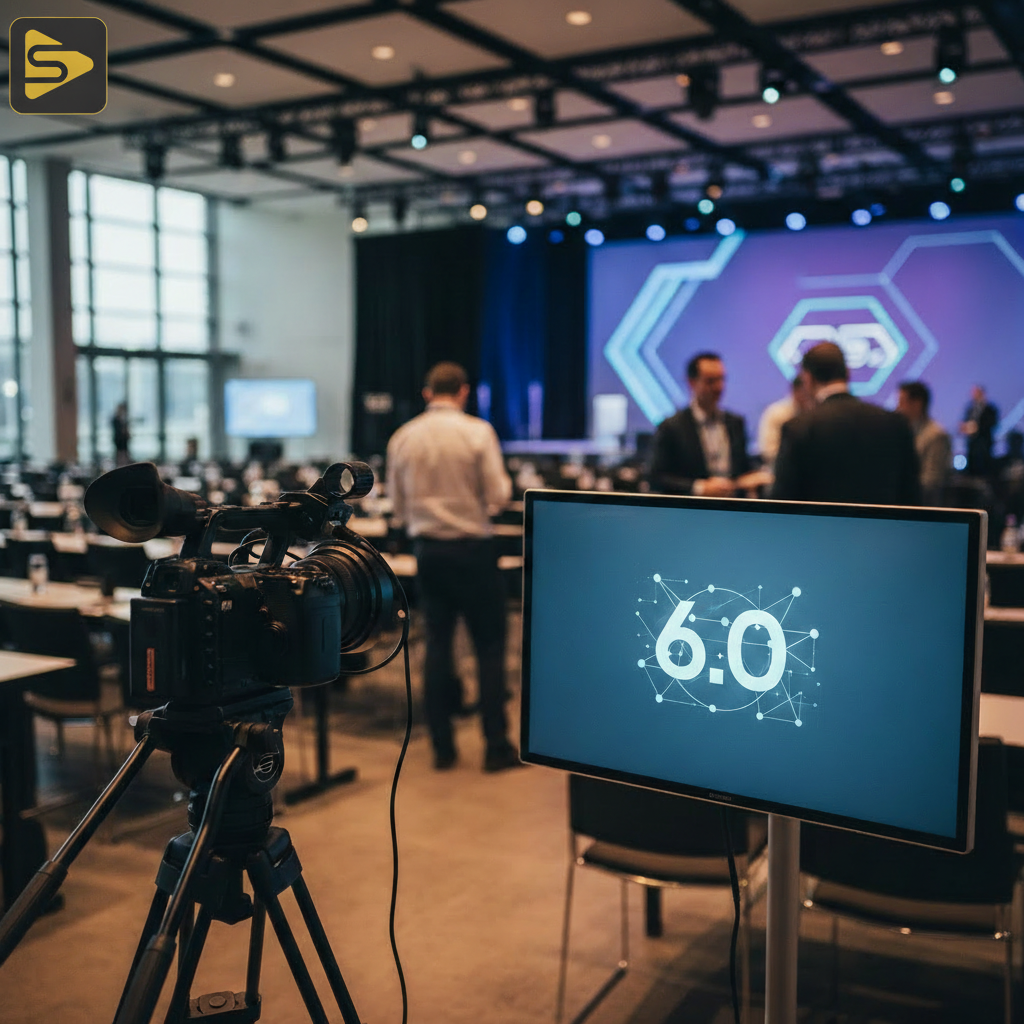
What most people miss is that high-end glass is only half the battle; the protocol used to transport that data is what actually determines reliability. While HDMI and SDI remain industry staples, we are seeing a massive shift toward NDI 6.0 (Network Device Interface) for its ability to carry high-bandwidth, low-latency video over existing 10GbE local networks.
- Cinema-Grade Sensors: Use cameras with at least 10-bit color depth to handle the aggressive compression of web players.
- NDI 6.0 Integration: This allows for bi-directional metadata and control, meaning your engineer can shade cameras remotely.
- Pro Audio Isolation: Never pull audio from the camera; use dedicated Dante-enabled mixers to feed clean redundant lines directly into the encoder.
In our experience with Series B SaaS founders, the “Capture Layer” is where most teams under-invest, assuming a mobile phone or a basic webcam will suffice for a global product launch. However, when you are presenting to VCs and thousands of remote attendees, the visual fidelity must match the “SF luxury standard” they expect from a market leader.
The Processing Layer: Cloud-Based Vision Mixing and AI
The processing layer is the “brain” of your professional livestreaming operation, where multiple inputs are stitched into a cohesive brand narrative. Traditional workflows required massive hardware switchers and a 10-person crew, but modern SF producers are pivoting to lean, cloud-enabled stacks.
The real kicker? You can now achieve a broadcast-grade finish with 50% less on-site staff by offloading heavy lifting to virtualized environments. Here is how the modern hybrid event technical stack compares to legacy setups:
| Feature | Legacy Hardware Stack | Modern 3-Layer Stack |
|---|---|---|
| On-site Footprint | Large (6-10 Rack Units) | Minimal (1-2 Encoders) |
| Switching Logic | Local Physical Switcher | Cloud-based (vMix/Cloud Mix) |
| AI Integration | None / Manual | Auto-captioning & Real-time Translation |
| Redundancy | Manual Failover | AI-driven Auto-switching |
By using multi-camera livestream production techniques paired with cloud vision mixing, we allow remote directors to manage the show from anywhere in the world. This is particularly vital for the SF-to-Global tech corridor, where stakeholders may be split between Silicon Valley and London.
Ready to upgrade your event’s technical backbone? Schedule a free consultation with our production leads to audit your current stack.
The Distribution Layer: SRT Protocol and Multi-CDN Strategies
Distribution is where the “Zero-Fail Redundancy Layer” becomes critical, especially given the unique connectivity challenges of San Francisco’s hilly terrain and dense concrete architecture. Relying on a single venue Wi-Fi connection is the fastest way to a dark screen.
The gold standard for professional livestreaming today is the SRT (Secure Reliable Transport) protocol. Unlike older RTMP streams, SRT is content-aware and can recover from packet loss over unpredictable networks. We pair this with hardware encoder redundancy to ensure that if one ISP drops, the stream continues without a frame of lag.
- Bonded Cellular & Mesh: We use Pepwave or Cradlepoint routers to bond 5G signals from multiple carriers with the venue’s fiber.
- Multi-CDN Distribution: Simultaneously broadcast to LinkedIn, YouTube, and a private white-label player to maximize reach and provide backup viewing options.
- Real-time Analytics: Use tools like HubSpot or specialized stream monitors to track drop-off rates and engagement in real-time.
One honest, contrarian insight: Many agencies will try to sell you on “4K Streaming” for every event. In reality, most corporate networks and mobile viewers can’t reliably sustain a 4K bitrate. We often recommend a high-bitrate 1080p60 stream, which looks sharper and runs smoother than a struggling 4K feed.
Hybrid Parity: Matching the In-Room Luxury Experience
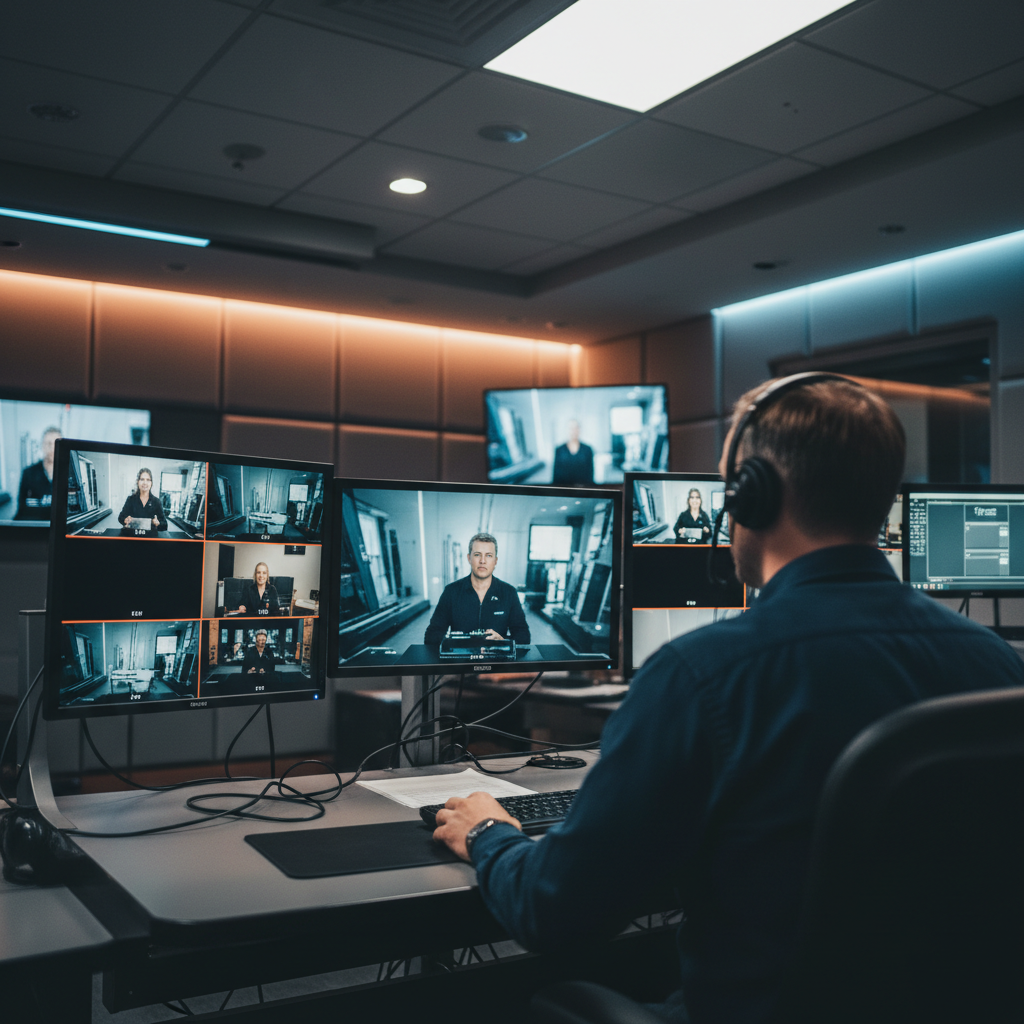
For a typical Bay Area mid-market client, the biggest pain point is the “second-class citizen” feeling remote attendees often get. Professional livestreaming must bridge this gap by ensuring the virtual experience matches the high-end production value of the physical room.
This involves more than just a one-off video shoot; it requires Virtual Green Room Management and dedicated engagement loops. If your in-room attendees are getting a 4K HDR experience with spatial audio, your virtual stack should leverage NDI 6.0 to deliver a similar sensory impact.
For global marketing teams, we also integrate AI-powered marketing automation. This is where we might utilize Ingest.blog, our internal AI content engine, to rapidly distribute key highlights and transcripts from the stream across all social channels within minutes of the event ending. This velocity is what separates a standard broadcast from a growth-focused content engine.
Future-Proofing: AI-Driven Switching and Real-time Translation
The industry is moving toward autonomous production. We are already seeing AI-driven automated switching that follows the active speaker with more precision than a human operator could manage over a 10-hour conference day. For SF event livestreaming, this means your budget can be reallocated from basic labor to higher-end creative elements.
What most people miss: Real-time translation is no longer a luxury; it is a requirement for inclusive global brands. Modern stacks can now inject multi-language audio tracks or live-translated captions directly into the stream with less than 2 seconds of latency. This is a game-changer for Series C startups looking to impress international investors during a high-stakes demo day.
If you’re managing multiple vendors and struggling with inconsistent quality, it’s time to consolidate. Contact iStudios Media to discuss a unified production and performance strategy.
The ROI of Integrated Performance Marketing
Professional livestreaming doesn’t end when the cameras turn off. The data harvested during a stream—viewer duration, heatmaps, and interaction peaks—should feed directly into your marketing automation platform. This allows for hyper-targeted lead nurture sequences based on what parts of the presentation the prospect actually watched.
- Lead Scoring: Prospects who watched the full 45-minute technical deep-dive are scored higher than those who dropped after the intro.
- Content Recycling: Use the high-quality masters to create short-form vlogs and product demo reels for LinkedIn Ads.
- SEO Value: Embedding your stream on a dedicated landing page with a full transcript significantly boosts your organic search presence in the Bay Area market.
Professional Livestreaming FAQs
How do you handle internet failures during a live event in San Francisco?
We utilize a “Zero-Fail” approach by bonding three distinct internet sources: the venue’s hardline fiber, a dedicated Starlink satellite connection, and a multi-carrier 5G bonded cellular rig. This ensures that even if a major ISP fails in the SoMa district, the stream remains live without interruption.
What is the typical cost for professional livestreaming in the Bay Area?
Industry-reported ranges for event live streaming typically fall between $1,500 and $8,000 per day. This depends heavily on the number of cameras, the size of the crew, and the complexity of the distribution layer (e.g., multi-platform vs. single destination).
Why should we use SRT protocol instead of RTMP?
SRT is designed for the modern internet; it includes built-in error correction and encryption. While RTMP is older and more widely compatible, SRT is significantly more stable over long distances and unstable networks, making it the preferred choice for broadcast-grade professional livestreaming.
Can you integrate our CRM with the livestream data?
Yes. By using a sophisticated marketing automation platform, we can track individual viewer behavior and push that data into your CRM. This allows your sales team to see exactly which segments a lead engaged with, enabling more personalized follow-up and higher conversion rates.
Don’t leave your next high-stakes event to chance. Whether you need a multi-camera livestream production or a full-scale hybrid event technical stack, our team is built to execute without hand-holding. Get your free technical consultation today.