📋 Table of Contents
According to Wyzowl’s 2024 State of Video Marketing report, 88% of marketers say video is an essential part of their strategy, yet the logistical hurdle of syncing global executive schedules often kills high-value projects before they start. The hybrid production framework solves this by decoupling the interview location from the visual narrative, allowing you to capture high-stakes insights anywhere while maintaining a premium brand aesthetic.
For marketing directors at growth-stage Bay Area companies, the challenge isn’t just getting the footage; it’s ensuring that a remote executive interview captured in London doesn’t look jarringly cheap when placed next to 4K cinematic B-roll filmed at your San Francisco headquarters. The framework we use at iStudios Media bridges this gap through technical parity and strategic art direction.
Defining the Hybrid Production Framework for SF Corporate Standards
The core of this framework is the intentional blend of high-fidelity local cinematography with high-quality remote capture tools to maximize both reach and ROI.
- Strategic Decoupling: Separating the ‘talking head’ from the ‘visual story’ to save on travel costs.
- Technical Parity: Using hardware ‘drop kits’ to ensure the remote interview meets SF corporate video standards.
- Unified Post-Production: Using advanced color grading to match disparate camera sensors.
In our experience with Series B SaaS founders, the biggest mistake is treating a remote interview as a ‘webcam call.’ Instead, we treat it as a remote film set where the subject is the talent and the technology is the bridge. This shift in mindset moves your content away from looking like a recorded Zoom meeting and toward a polished brand film.
The Transition from One-Off Video Shoots to Scalable Systems
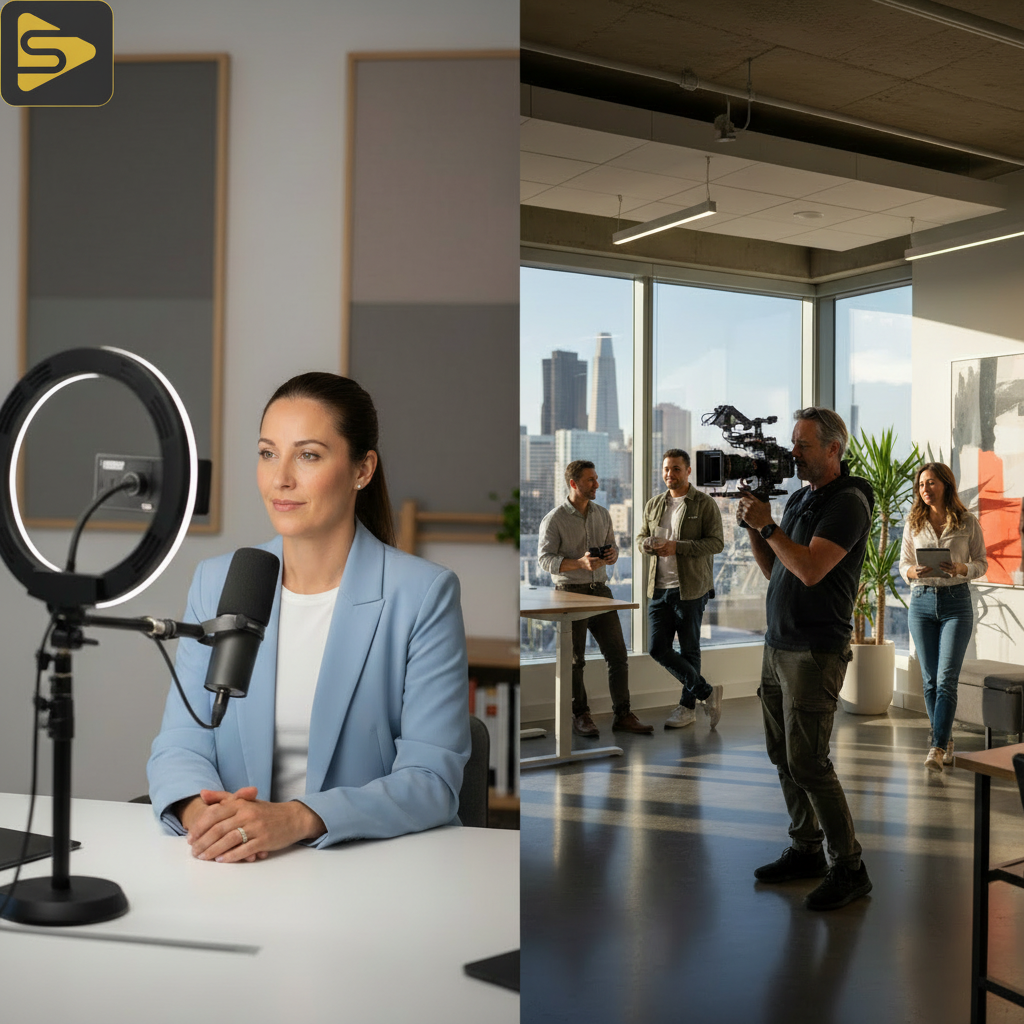
The real kicker? Most companies rely on a freelance videographer for a one-off video shoot, which leads to inconsistent quality across different regions. A framework-based approach ensures that whether your VP is in San Jose or Singapore, the output remains identical. By centralizing production and decentralizing capture, you maintain brand integrity without the enterprise-level travel budget.
Ready to see how this scales for your team? Schedule a free strategy consultation to discuss your production roadmap.
The Technical Stack: Matching Remote Capture with 4K B-Roll
Visual consistency is the difference between a professional brand film and a disjointed internal memo. To achieve this, you must control the variables on both ends of the lens.
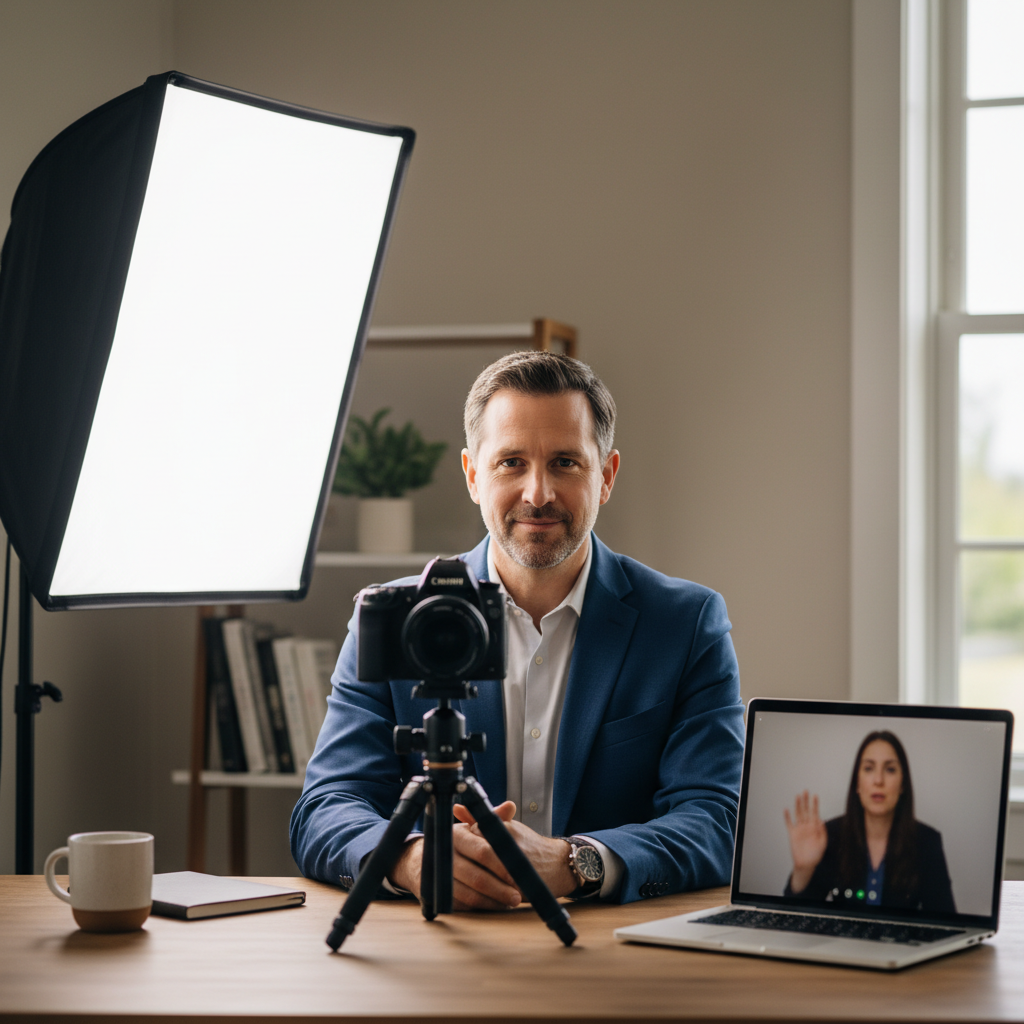
What most people miss is that lighting and audio matter more than the camera sensor itself. Even a 4K webcam looks amateur in a backlit room with echoing audio. We recommend a standardized ‘Drop Kit’—a pre-configured case containing a high-end microphone (like a Shure MV7), a portable LED key light, and a 4K capture device.
| Component | Standard Remote (Low-Fi) | Hybrid Framework (High-Fi) |
|---|---|---|
| Video Source | Integrated Laptop Webcam | iPhone 15 Pro (Log) or Sony ZV-E10 |
| Audio Capture | Laptop Internal Mic | XLR Microphone via USB Interface | Overhead Office Fluorescents | 3-Point Portable LED Kit |
| Software | Zoom/Teams Recording | Riverside.fm or SquadCast (Local ISO) |
The ‘Quality Convergence’ Angle
Here’s the thing: with the advent of AI-enhanced audio tools like Adobe Podcast, we can now make a remote executive interview sound like it was recorded in our San Leandro studio. This ‘Quality Convergence’ allows us to focus our on-site budget where it matters most: high-end B-roll. According to HubSpot’s 2024 Marketing Trends, high production value remains a top-three factor in consumer trust for B2B brands.
Remote Directing: The Secret to High-End Performance
A remote executive interview often fails because the subject feels awkward talking to a lens in an empty room. Remote directing bridges this emotional gap by providing real-time feedback on posture, eye line, and delivery.
- Eye-Line Management: Using a ‘teleprompter’ or ‘Interrotron’ style setup to ensure the executive looks directly at the interviewer, not at their own thumbnail.
- Energy Matching: The director ensures the remote subject’s energy levels match the pacing of the high-energy B-roll captured on-site.
- Technical Support: Handling the troubleshooting remotely so the executive can focus on the message, not the mute button.
But wait—there’s a contrarian truth here: sometimes, the ‘Low-Fi’ texture of a remote interview actually builds more trust with Gen Z and tech-native audiences. They associate perfectly polished studio setups with ‘corporate spin’ and remote setups with ‘authentic transparency.’ The hybrid production framework allows you to lean into this authenticity while framing it with cinematic context.
Cinematic B-Roll: The Visual Glue of the Hybrid Framework
If the interview is the ‘soul’ of the video, the B-roll is the ‘body.’ High-end B-roll provides the visual context that elevates the entire production.
For a typical Bay Area mid-market client, we might spend half a day on-site capturing ‘A-roll’ (the interview) for local staff, but for remote executives, we rely entirely on B-roll to tell their story. This involves capturing high-frame-rate footage of the office, product demos, and ‘day-in-the-life’ sequences that mask the cuts in the remote interview.
Budget Optimization: Where to Spend and Where to Save
The real beauty of the hybrid model is budget reallocation. Instead of spending $5,000 on executive travel and hotels, that capital is redirected into:
- Professional Color Grading: Matching the ‘Log’ footage from a remote iPhone to the Sony/Blackmagic B-roll sensors.
- Motion Graphics: Adding data visualizations that reinforce the executive’s points.
- Sound Design: Creating a custom soundscape that ties the disparate locations together.
If you’re looking to scale your content velocity without doubling your headcount, check out Ingest.blog, our internal AI content engine that helps distribute these video assets across SEO-optimized blog posts and social channels.
Implementation: Your Monday Morning Hybrid Checklist
Transitioning to a hybrid video production model doesn’t happen overnight, but you can start by standardizing your remote capture process today.
- Audit Your Tech: Stop using Zoom for marketing videos. Switch to a platform that records local ISO files (4K video and uncompressed audio) like Riverside.
- Create a ‘Style Guide’: Define the lighting and framing for remote guests so every interview feels part of the same series.
- Hire for Post, Not Just Capture: When looking for a partner, prioritize their ability to color-match and edit, rather than just their ability to show up with a camera.
Need a partner to execute this at scale? Explore our video production services to see how we’ve implemented this for Bay Area tech leaders.
Frequently Asked Questions
How do you match the color between a remote webcam and professional 4K B-roll?
We don’t use webcams. We use high-end smartphones recording in Apple Log or dedicated mirrorless cameras sent as ‘drop kits.’ In post-production, we use DaVinci Resolve to apply color transforms that align the remote footage with the color science of our primary cinema cameras, ensuring a seamless visual flow.
Is the hybrid production framework more expensive than traditional on-site filming?
Generally, it is more cost-effective. While there is an initial investment in remote capture kits or specialized software, you eliminate travel costs, venue fees, and multi-day on-site crew rates. The savings are usually reinvested into higher-quality B-roll and post-production, resulting in a superior final product for the same budget.
What is the biggest risk of using remote interviews for brand films?
The biggest risk is poor audio quality. Viewers will forgive a slightly grainy image, but they will click away from bad audio. We mitigate this by sending external microphones to every remote guest and using AI-powered noise reduction to ensure the sound matches the quality of our on-site studio recordings.
How do you handle remote directing for executives who aren’t tech-savvy?
We provide a ‘White Glove’ service where a technical producer joins the call 30 minutes early to handle all setup. We use remote desktop tools or simple visual guides to adjust their lighting and framing. The executive’s only job is to speak; we handle the technical execution entirely in the background.