📋 Table of Contents
According to a 2024 study by Forbes, viewers form an impression of a speaker’s competence within just 50 milliseconds of seeing them on screen. In the high-stakes world of Silicon Valley, your technical lighting framework is no longer just a production detail—it is the new ‘power suit’ for Bay Area leadership.
Whether you are a Series B founder pitching to VCs or a CMO delivering a keynote, the visual quality of your video content directly impacts your perceived authority. A one-off video shoot with a freelance videographer often results in flat, uninspiring visuals that fail to capture the nuance of executive presence. To achieve true SF video production standards, you must move beyond basic ring lights and embrace a sophisticated, multi-layered approach.
The Foundation: Key Light Diffusion and Skin Tone Accuracy
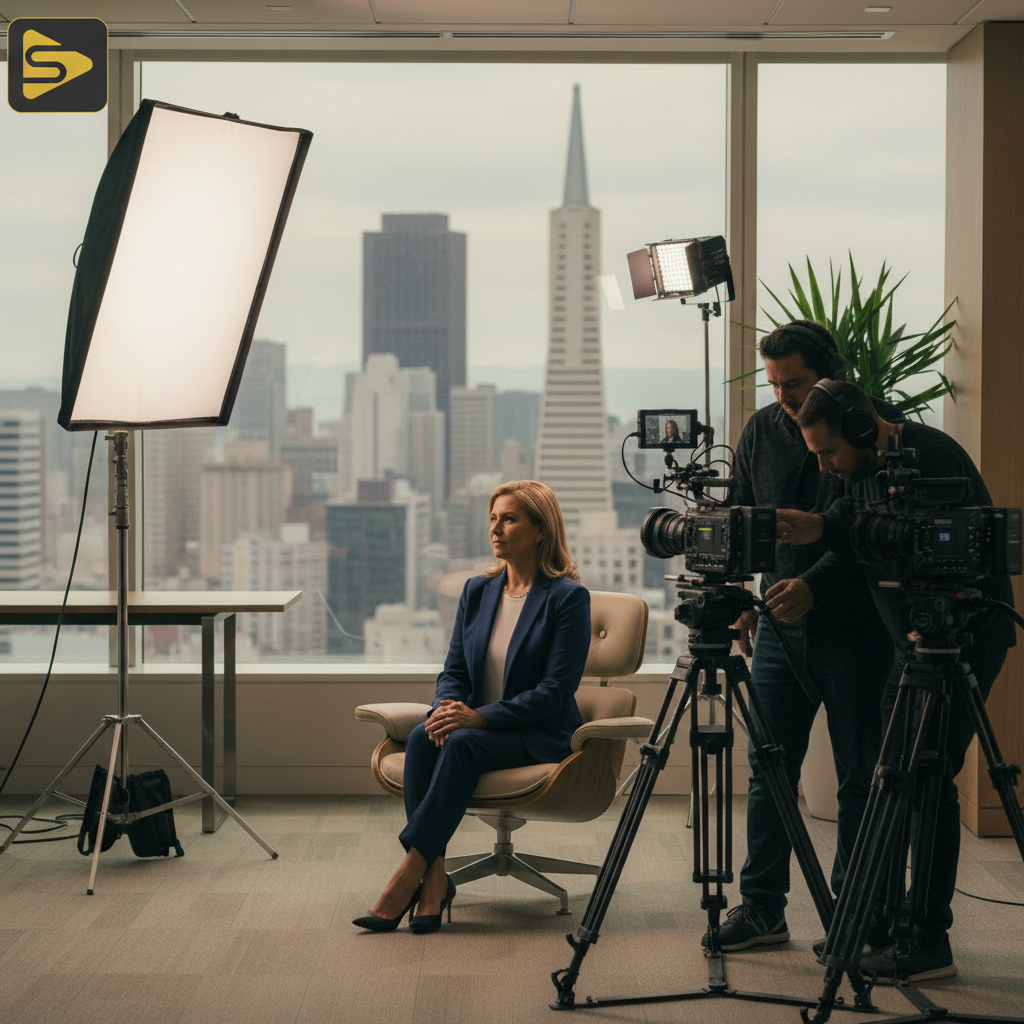
The key light is the primary source of illumination, but in an executive context, its purpose is to create a soft, flattering wrap that preserves skin texture while eliminating harsh shadows. What most people miss is that the quality of your diffusion matters more than the power of the lamp itself.
- High CRI (Color Rendering Index): We prioritize lights with a CRI of 95+ to ensure skin tones look natural, not sickly or green.
- Large Source Diffusion: We use 36-inch to 48-inch softboxes to create a wrap-around light that minimizes facial imperfections.
- Offset Positioning: Placing the light 45 degrees off-camera creates “Rembrandt lighting,” adding a subtle shadow that defines the jawline.
In our work with Series B SaaS founders, we often find that the biggest hurdle isn’t the equipment, but the environment. Standard corporate office glass and overhead fluorescents create a “green spike” that ruins professional footage. A professional executive interview production team will always start by neutralizing these ambient sources before building the technical lighting framework from scratch.
The real kicker? Using corporate video lighting effectively means knowing when to take light away. We use “negative fill” (black flags) on the opposite side of the key light to prevent light from bouncing off white office walls, which maintains that crisp, high-end contrast common in premium video production services.
Tier Two: Creating Depth with the Fill and Hair Light
Depth is the physical manifestation of authority on screen; flat images feel cheap, while layered images feel expensive. The second tier of our technical lighting framework focuses on separating the subject from the background to create a three-dimensional “pop.”
Here’s the thing: the “fill” light shouldn’t just mirror the key. It should be roughly 25-50% of the intensity of your main light. This preserves the dimension of the face while ensuring the shadows aren’t “crushed” into pure blackness. For SF tech leaders, we often use a “bounce” fill—reflecting light off a white board—to keep the look naturalistic rather than staged.
- The Hair Light (Rim Light): A small, focused light placed behind the executive to catch the shoulders and hair.
- Color Contrast: We often set the hair light to a slightly cooler temperature (5600K) if the key light is warm, creating a subtle color separation.
- Psychological Authority: By defining the silhouette, the hair light makes the executive appear larger and more grounded in the frame.
- Reducing Cognitive Load: Proper separation allows the viewer’s brain to instantly focus on the speaker, rather than trying to distinguish them from a cluttered office background.
What many freelance videographer setups ignore is the height of these lights. If the rim light is too high, it creates a “halo” effect that looks like a 90s news broadcast. If it’s too low, it spills into the lens. In a typical Bay Area mid-market client scenario, we spend as much time positioning the backlights as we do the main key to ensure the visual authority is unmistakable.
Need a professional eye to audit your current setup? Schedule a free consultation with our production team to discuss your next executive project.
Tier Three: Background Texture and the ‘SF Tech Minimalist’ Aesthetic
The background of an executive interview should tell a story of success and focus, not distraction. In the Bay Area, the trend has shifted away from the overly blurred “bokeh” of years past toward a more intentional, high-tech minimalist aesthetic.
The third tier of the technical lighting framework involves lighting the environment itself. We use small LED “pucks” or tubes to add splashes of light to bookshelves, plants, or architectural features. This creates “visual rhythm,” drawing the eye through the frame without distracting from the speaker’s narrative.
| Element | Standard Setup | iStudios Executive Tier |
|---|---|---|
| Light Source | Ring Light / Natural Light | Multi-point LED with Soft Diffusion |
| Skin Tone | Auto-white balance (often orange) | Manual Kelvin matching with 95+ CRI |
| Depth | Flat against the wall | 4-6 feet of separation with Rim Lighting |
| Background | Dark or cluttered | Motivated lighting on office architecture |
For corporate video lighting, we often use “motivated” light—making it look like the light is coming from a desk lamp or a window, even if it’s actually a $2,000 studio fixture. This creates a sense of honesty and transparency that resonates with modern audiences. It’s a far cry from the cheap explainer videos or Fiverr video production quality that many startups mistakenly lean on during their early stages.
The SF Hybrid Standard: Lighting as a Marketing Asset
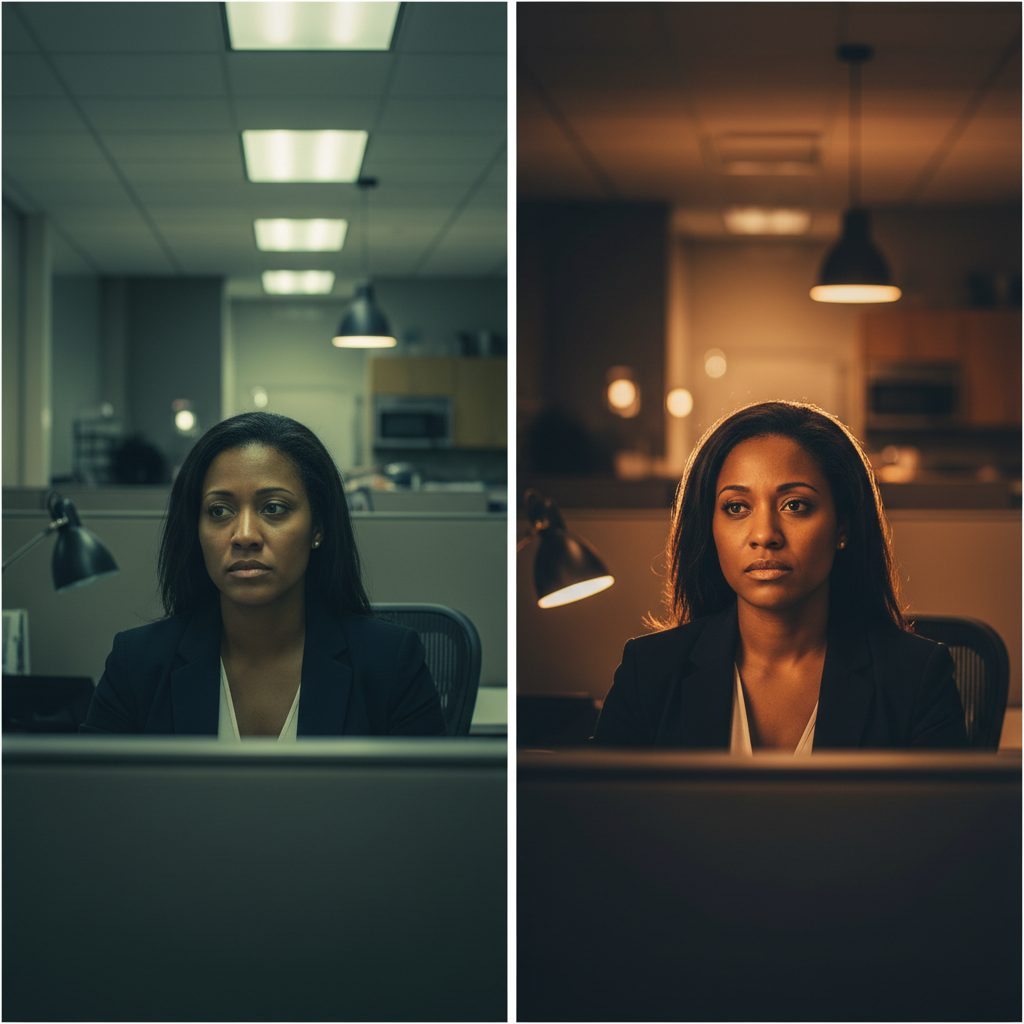
Your lighting setup is the new power suit for Bay Area interviews, especially as hybrid work becomes the permanent standard for leadership. When a CMO appears on a HubSpot webinar or an investor call, the visual fidelity of their feed is a direct reflection of their brand’s attention to detail.
But wait—lighting isn’t just about looking good; it’s about performance. High-quality lighting allows camera sensors to operate at lower ISOs, which eliminates “digital noise” and grain. This makes the video much easier to compress for platforms like LinkedIn or YouTube, ensuring your content looks sharp even on mobile devices.
- Content Velocity: High-quality raw footage requires less post-production color correction, speeding up your turnaround time.
- AI Compatibility: For clients using our internal AI content engine, Ingest.blog, high-quality video provides better source material for generating accurate social snippets and blog content.
- Repurposing Value: A well-lit interview can be cropped for vertical social media without losing professional polish.
In our experience with mid-market clients, the investment in a technical lighting framework pays for itself by increasing the lifespan of the content. A poorly lit video is discarded in six months; a cinematic brand film stays relevant for years.
Overcoming Common Office Lighting Challenges
The real challenge in SF offices isn’t a lack of light—it’s too much of the wrong kind. Large windows overlooking the Bay are beautiful, but they are a nightmare for SF video production standards. The sun moves, clouds pass, and your exposure shifts every five minutes.
The contrarian insight? The best office interviews are often shot with the blinds closed. By blacking out the natural light, we gain total control over the technical lighting framework. We then recreate the “feeling” of natural light using stable, flicker-free LEDs. This ensures that a four-hour shoot looks consistent from the first minute to the last.
- Kill the Overheads: Fluorescent tubes flicker and create “raccoon eyes.” Turn them off.
- Control the Windows: Use ND (Neutral Density) gels on windows if you must keep the view, or block them entirely for consistency.
- Watch the Reflections: Executives often wear glasses or work in offices with glass whiteboards. Use polarized filters and high-angle lighting to kill glare.
If you’re tired of vendor fragmentation and inconsistent quality, it’s time to partner with an agency that treats production as a science. From professional photography to full-scale executive interview production, we handle the technical heavy lifting so you can focus on the message.
Executing the Framework: Why Professional Gear Isn’t Enough
You can buy the most expensive lights on the market, but without the correct technical lighting framework, they are just expensive lamps. The difference between a one-off video shoot and a strategic production partner is the ability to scale these systems across your entire organization.
For enterprise CMOs and VPs, scaling content without scaling headcount is the ultimate goal. This requires a partner that doesn’t just show up with a camera, but integrates with your marketing automation platform and CRM to ensure the content actually drives leads. We aren’t just videographers; we are growth partners who understand that a beautiful video is useless if it doesn’t reach the right audience through paid advertising and SEO.
The real value of professional lighting is the psychological edge it gives you. When you look like the smartest person in the room (or on the screen), people listen longer. In a world of Zoom fatigue and low-resolution webcams, visual excellence is a competitive advantage you cannot afford to ignore.
Ready to elevate your executive presence? Contact iStudios Media today for a free consultation on our executive interview production packages, ranging from $2,500 to $15,000 depending on your needs. Let’s build a visual brand that matches your leadership.
Frequently Asked Questions
What is the most important part of a technical lighting framework?
The most critical element is light diffusion. Even the best lights will look amateurish if they create hard shadows. By using large softboxes or silk diffusion, we create a soft, wrap-around light that flatters the subject and communicates a high-end, professional brand image suitable for SF tech leaders.
Can we achieve professional lighting in a small home office?
Yes, through strategic use of the 3-tier framework. In smaller spaces, we use compact LED panels and negative fill to prevent light spill. The key is controlling the environment and ensuring the executive has enough distance from the background to create depth, even in a limited square footage environment.
How does lighting impact the ROI of my video marketing?
Professional lighting increases viewer retention and brand trust. According to industry data, high-quality production values are correlated with higher conversion rates in paid media campaigns. By investing in a proper framework, you ensure your content is reusable across LinkedIn, Google Ads, and your CRM nurture sequences.
Why shouldn’t I just use a high-end ring light?
Ring lights are designed for close-up vlogging and often create a flat, “deer-in-the-headlights” look with distracting circular reflections in the eyes. For executive interviews, a multi-point setup provides the dimension and shadow-play necessary to convey authority and professional sophistication that a single source cannot match.