
📋 Table of Contents
According to recent PitchBook data, the bar for Series A funding has shifted from pure user growth to proving ‘institutional readiness’ and sustainable unit economics. For founders in the Bay Area, deploying a Series A brand identity framework is no longer a cosmetic choice—it is a strategic signal to VCs that your company has outgrown its ‘scrappy’ seed phase and is ready for institutional scale.
Most founders mistake branding for a logo refresh. In reality, moving from Seed to Series A requires shedding ‘design debt’ and adopting venture scale aesthetics that communicate operational maturity. If your visual presence still looks like a one-off project from a freelance videographer, you are unintentionally signaling a lack of scalability to your potential board members.

The Shift to Institutional Credibility in SF Startup Branding
Institutional credibility is the primary currency of a successful Series A raise in today’s tighter capital market. While seed-stage companies can get away with a one-off video shoot and a basic landing page, Series A investors look for a Visual Identity System (VIS) that can support a 5x increase in headcount without breaking.
The real kicker? Investors use your brand’s consistency as a proxy for your product’s reliability. If you can’t maintain a cohesive brand, they worry you can’t maintain a cohesive codebase. To move forward, you must audit your current assets against these requirements:
- Category Design: Does your visual language position you as a market leader or just another feature?
- Asset Scalability: Can your marketing team produce 100 ads a month using your current guidelines?
- Investor Pitch Assets: Do your decks and demo videos look like they belong to a $50M+ enterprise?
In our experience with Series B SaaS founders, those who invested in a modular brand system during their Series A transition saw significantly faster onboarding for new marketing hires. You can see how we help teams build these systems by exploring our video production services.
Building a Scalable Series A Brand Video Strategy
A high-quality Series A brand video serves as the definitive ‘vibe check’ for both talent and investors. Unlike seed-stage explainers that focus purely on features, a Series A film must articulate your category-defining vision. This is where many startups fail by hiring a freelance videographer who lacks the strategic depth to understand venture-scale narratives.
The transition from ‘scrappy’ to ‘serious’ involves moving toward what we call the ‘Enterprise Serious’ aesthetic. This means higher production value, professional lighting, and a narrative that focuses on ROI and market impact. According to Forbes, visual storytelling is now a critical component of the due diligence process, as it provides a standardized way for partners to present the ‘vision’ to their investment committees.
- The Vision Film: A 90-second anthem that defines the problem and your unique solution.
- The Product Deep-Dive: High-fidelity product videos that prove the tech is real.
- The Founder Narrative: Professional interviews that build trust in the leadership team.
Ready to elevate your visual narrative? Schedule a free consultation with our production leads to discuss your Series A asset library.
Reducing Design Debt: The ROI of a Unified Framework
Design debt is the cumulative cost of all the quick-fix visual decisions you made during your first 18 months of operation. For a typical Bay Area mid-market client, ignoring design debt results in a fragmented brand that confuses customers and slows down the sales cycle. The Series A brand identity framework is designed to pay down this debt before you pour gas on the fire with paid media.
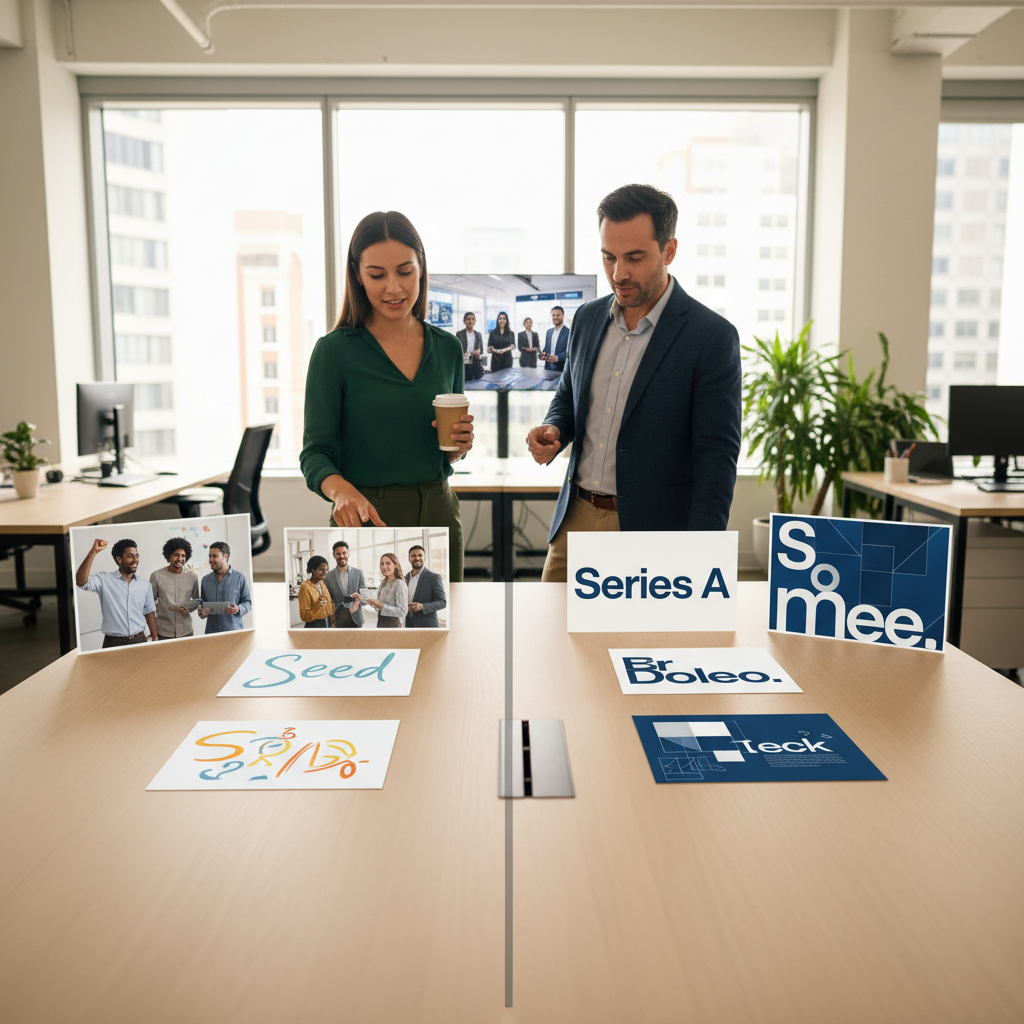
| Asset Type | Seed Stage (Scrappy) | Series A (Institutional) |
|---|---|---|
| Logo/Identity | Generic SVG / Template | Custom Visual Identity System (VIS) |
| Video Content | iPhone/Zoom recordings | Professional 4K Brand Films |
| Digital Sales Room | PDF Decks | Interactive, Branded Investor Portals |
But wait—paying down design debt doesn’t mean spending your entire round on a rebrand. It means creating a system. We often recommend our internal AI content engine, Ingest.blog, to help growth-stage companies maintain high content velocity without ballooning their creative overhead.
Aligning Visual Assets with Product-Market Fit Signaling
Your brand shouldn’t just look good; it should prove that you understand your customer better than the competition. In the SF startup branding landscape, visual cues are used to signal Product-Market Fit (PMF). If you are selling to HR directors, your brand needs to feel stable and empathetic; if you are selling to DevOps, it needs to feel precise and technical.
What most people miss: VCs look for ‘Category Leadership’ cues. They want to see that you aren’t just disrupting a category, but creating a new one. This is achieved through unique color palettes, custom photography (not stock!), and a consistent digital marketing strategy that reinforces your position across all touchpoints.
- Custom Photography: Move away from generic Unsplash images to studio sessions that feature your actual team and product.
- Consistent Typography: Use professional font families that work across web, mobile, and print.
- Data Visualization: Turn your metrics into high-fidelity graphics that make your growth look inevitable.
The ‘Post-Hype’ Aesthetic: Why Minimalism is Evolving
The ‘Corporate Memphis’ look (flat, colorful illustrations) is dead for Series A companies. The current trend is moving toward ‘Post-Hype’ aesthetics—a blend of high-contrast typography, brutalist layouts, and hyper-realistic 3D elements. This shift signals that your company is focused on substance over hype.
Here’s the thing: VCs are currently hyper-sensitive to ‘burn rate.’ If your brand looks too expensive or ‘over-produced’ in a way that doesn’t add value, it can actually be a red flag. The goal of the Series A brand identity framework is to look expensive to replicate but efficient to produce. This is achieved through smart templates and AI-powered marketing automation.
For founders looking to scale their outreach, integrating these assets into a marketing automation platform ensures that every lead nurture sequence carries the same high-fidelity weight as your initial pitch deck.
Executing the Framework: From Audit to Deployment
How do you actually implement this without distracting your engineering team? It starts with a 72-hour audit of every customer-facing asset. If an asset doesn’t align with your new Series A narrative, it either gets updated or deleted. There is no room for ‘legacy’ seed-stage content in a growth-stage company.
The best way to manage this is through a phased rollout:
- Phase 1: Update the ‘Big Three’ (Website Hero, Investor Deck, Brand Film).
- Phase 2: Refresh sales collateral and paid advertising creative.
- Phase 3: Standardize internal comms and employer branding to aid recruitment.
Need a partner to execute this rollout? At iStudios Media, we provide the full-stack production and performance capabilities needed to handle everything from event live streaming for your launch to SEO-driven content strategies that build long-term equity.
Key Takeaways for Series A Founders
- Signal Maturity: Your brand is a proxy for operational excellence.
- Kill Design Debt: Standardize your VIS before scaling spend.
- Focus on Narrative: Use video to articulate category leadership, not just features.
- Build for Scale: Ensure your assets can be deployed through automation systems.
Don’t let a seed-stage brand hold back your Series A growth. Contact iStudios Media today for a strategic audit of your brand assets and a clear roadmap for institutional readiness.
Frequently Asked Questions
How does a Series A brand identity framework differ from a Seed brand?
A Seed brand is focused on proving a concept and finding early adopters, often using flexible, low-cost assets. A Series A framework focuses on institutional readiness, category leadership, and scalability. It involves moving from one-off creative pieces to a comprehensive Visual Identity System (VIS) that can be deployed across large teams and high-budget ad campaigns.
Why is a Series A brand video critical for fundraising?
A professional brand video acts as a high-fidelity ‘elevator pitch’ that ensures your vision is communicated consistently to every partner at a VC firm. It signals that you have the resources and the narrative clarity to compete at a national or global level, moving beyond the ‘scrappy’ expectations of earlier rounds.
Can we use a freelance videographer for our Series A assets?
While freelancers are great for one-off tasks, Series A branding requires a strategic partner who understands venture-scale aesthetics and integrated marketing. A full-stack agency ensures your video, photography, and digital strategy are perfectly aligned, preventing the fragmented ‘Franken-brand’ look that often results from managing multiple disparate vendors.
How much should an SF startup budget for a Series A rebrand?
Industry-reported ranges for a comprehensive Series A visual overhaul in the Bay Area typically fall between $15,000 and $75,000, depending on the number of assets (video, web, sales decks) required. The focus should be on creating a modular system that reduces long-term creative costs rather than just buying one-off expensive assets.