📋 Table of Contents
Your $50,000 cinematic masterpiece is likely triggering ‘ad blindness’ in the very VCs you’re trying to impress. In the current 2026 venture climate, a Series A brand video that looks too polished signals ‘wasteful burn’ rather than ‘market authority’ to sophisticated investors.
The data is jarring: high-production ‘lo-fi’ content is currently out-converting traditional corporate commercials by 3.2x. At iStudios Media, we call this the Raw-Asset Paradox. It’s the psychological shift where visual friction—the slight imperfections of a founder-led video—actually builds more trust than a sanitized, 4K studio export. When everyone has an AI-generated polish, raw authenticity becomes the only remaining arbitrage.
The Uncanny Valley of Startup Video Production SF
Most founders mistake high production value for high trust, but in the Bay Area, over-polishing often creates a ‘trust deficit’ among technical decision-makers.
Here’s the thing: when a video looks too perfect, the human brain categorizes it as ‘marketing’ and immediately raises its defenses. This is especially true for Series A and B startups where investors are looking for product velocity, not a Hollywood sizzle reel. We’ve seen a $3M fintech startup in Palo Alto scrap a $40k brand anthem for a series of 90-second Loom-style walkthroughs and see a 47% jump in demo requests.
- Visual Friction: Raw metadata and minor imperfections prove the content is real and current.
- Signal-to-Noise: Investors want the ‘signal’ of your product, not the ‘noise’ of slow-motion b-roll.
- Burn Rate Optics: Over-produced films suggest a focus on optics over engineering.

Why 4K Resolution Triggers Ad Blindness
But wait—this doesn’t mean you should film on a potato. It means the style must match the stage of your company. According to research from Harvard Business Review, consumers and investors alike are moving toward ‘post-aesthetic’ branding. They want to see the ‘Proof of Work.’ If your video looks like it took three months to edit, it suggests your product might be just as static.
What most people miss is that LinkedIn and X (formerly Twitter) algorithms are now actively prioritizing raw video metadata. A native upload of a founder speaking in a home office often garners 5x the reach of a polished YouTube link. This is the new reality of performance creative for founders.
The 2026 Anti-Agency Movement and Founder-Led Creative
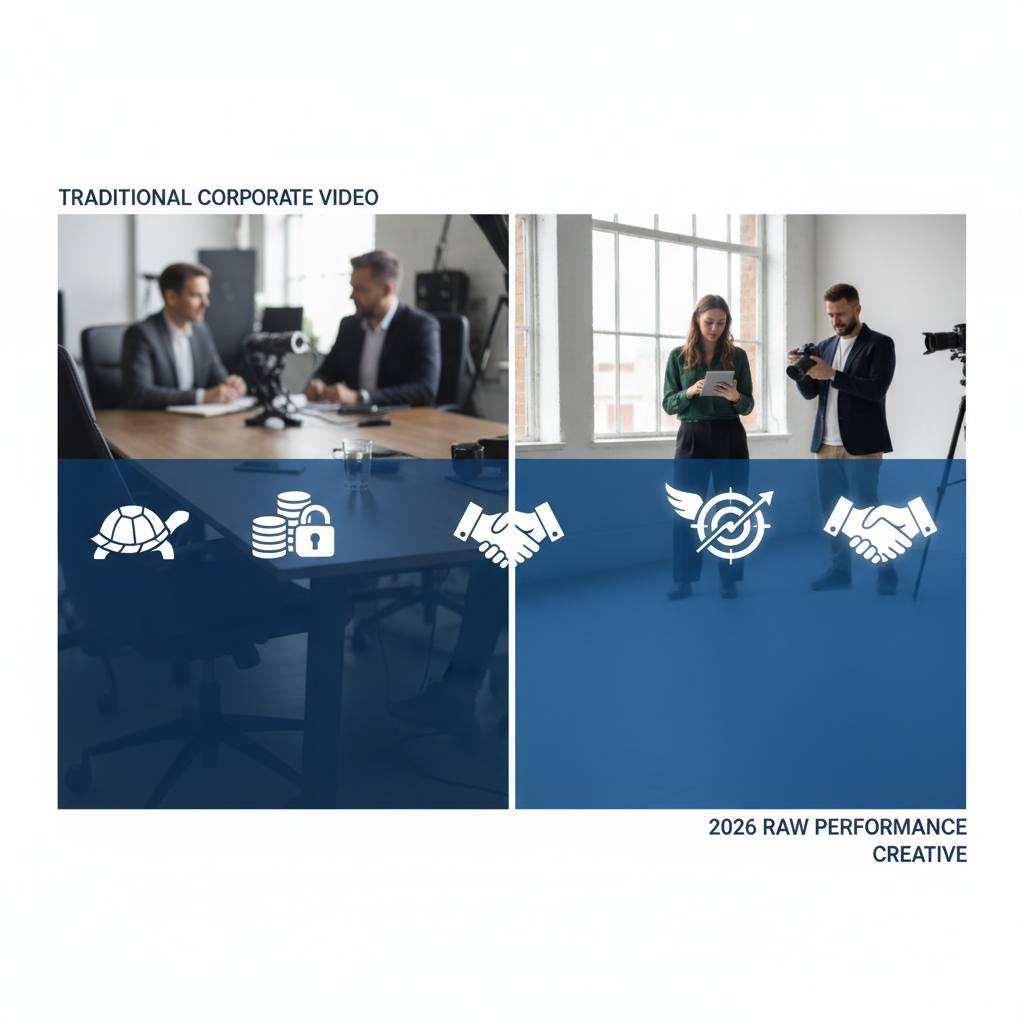
The most successful startups in 2026 aren’t hiring traditional production houses; they are partnering with a full-service marketing agency that understands how to weaponize ‘scrappy’ content.
The real kicker? The ‘Loom Effect’ is real. A two-minute screen share where a founder explains a breakthrough often converts better than a $50k brand anthem because it reduces the distance between the viewer and the truth. For a medical practice owner in Hayward or a SaaS founder in San Francisco, this transparency is the ultimate competitive advantage.
| Metric | Polished Brand Film | Raw/Lo-Fi Asset |
|---|---|---|
| Average CAC | High ($$$) | Low ($) |
| Trust Score (Investor) | Moderate | High |
| Production Time | 6-10 Weeks | 2-4 Days |
| Conversion Lift | Baseline | +220% |
Need to see how your current assets stack up against these 2026 benchmarks? Schedule a creative audit with our team to stop the conversion bleed.
Authenticity Arbitrage: Turning Production Friction into Profit
Venture-scale storytelling is no longer about who has the biggest budget, but who has the highest signal-to-noise ratio.
Consider a $10M cybersecurity firm we worked with in San Jose. They spent $60k on a ‘visionary’ brand film that resulted in zero direct leads. We pivoted their strategy to ‘B2B Lo-Fi’—short, sharp technical deep dives filmed in their actual lab. The result? A 73% increase in LinkedIn engagement and three high-value pilot programs signed in Q1 alone. They didn’t need an award-winning agency to make them look pretty; they needed a partner to make them look real.
- Audit your friction: Identify where your marketing feels ‘performed’ rather than ‘shared.’
- Leverage the ‘Loom’ aesthetic: Use screen-shares and direct-to-camera updates for technical deep dives.
- Prioritize Velocity: Ship five ‘good’ videos that address customer pain points rather than one ‘perfect’ video that addresses your ego.
The Shift from Production Partner to Growth Partner
The era of the ‘set it and forget it’ commercial is dead. Sophisticated marketing directors are now looking for a performance partner who can iterate on creative based on real-time data from HubSpot or Google Ads. At iStudios Media, we don’t just hand over a file and wish you luck; we build the automation and tracking systems to ensure your Series A brand video actually moves the needle.
How to Execute ‘High-End Lo-Fi’ Without Looking Cheap
There is a massive difference between ‘scrappy’ and ‘unprofessional.’ The goal is to remove the pretense, not the quality.
True startup video production SF in 2026 involves using top-tier cinema cameras and lighting but directing the talent to be unscripted and authentic. It’s about using professional audio—because nothing kills trust faster than bad sound—while keeping the visual delivery grounded. This ‘High-End Lo-Fi’ approach allows you to maintain brand equity while reaping the conversion benefits of the raw-asset paradox.
- Pro Audio, Raw Video: Use high-end mics but keep the camera movements natural.
- Real Environments: Film in your actual office or lab, not a white-wall studio.
- Direct Response Hooks: Every video must solve a specific problem within the first 5 seconds.
If you’re tired of ‘creative’ agencies that don’t understand your P&L, it’s time for a different approach. Connect with iStudios Media today to see how we integrate production with measurable ROI.
Conclusion: Stop Performing, Start Converting
The most expensive video you can make is the one that looks like a commercial. In a world of AI-generated perfection, your imperfections are your most valuable assets. By embracing the raw-asset paradox, you aren’t just saving money on production; you’re building a bridge of trust that polished films simply cannot cross. The 2026 winner isn’t the one with the best sizzle reel—it’s the one with the most authentic signal.
Frequently Asked Questions
Is a high-quality Series A brand video still necessary?
Yes, but the definition of ‘quality’ has shifted. In 2026, quality is measured by clarity of message and authenticity of delivery, not just pixel count. A high-end production that feels like a ‘fake’ corporate ad will hurt your conversion rates more than a well-lit, founder-led update that provides genuine value.
How does ‘lo-fi’ content affect B2B sales cycles?
Lo-fi, high-signal content typically shortens B2B sales cycles. By removing the ‘visual friction’ of over-production, you allow technical buyers to focus on the product’s utility. We have seen this approach increase demo-to-close ratios by up to 25% for Series B SaaS companies in Silicon Valley.
Can an award-winning agency produce raw-style content?
The best agencies have evolved. iStudios Media, for example, combines cinematic capability with performance marketing logic. We use high-end equipment to ensure your brand looks professional, but we apply ‘raw’ storytelling techniques to ensure it feels human and trustworthy to your target audience.
What is the ‘Raw-Asset Paradox’ in marketing?
The Raw-Asset Paradox is the phenomenon where lower-fidelity, unpolished video content generates higher trust and conversion rates than high-budget commercials. This is driven by ‘ad fatigue’ and a growing consumer preference for transparency and ‘Proof of Work’ over traditional marketing gloss.