📋 Table of Contents
In the high-stakes world of biotech, SF Bay Area Life Sciences: 2026 Lab-to-Market Video Case Study Strategies have become the definitive benchmark for Series B and IPO-bound firms looking to de-risk their clinical narratives. As the 2026 market shifts toward capital efficiency, generic stock footage of pipettes no longer secures the confidence of sophisticated institutional investors or strategic partners.
Key Takeaways for 2026 Strategy:
- Shift from ‘sterile equipment’ shots to founder-led patient impact narratives.
- Utilize motion graphic overlays to visualize dry-lab to wet-lab AI integration.
- Leverage 4K drone cinematography to highlight proximity to Stanford and UCSF.
- Focus on ‘Speed to Science’ metrics to demonstrate operational resilience.
The Evolution of SF Bay Area Life Sciences: 2026 Lab-to-Market Video Case Study Strategies
Consequently, the ‘Flight to Quality’ isn’t just a real estate trend in South San Francisco; it is a communication mandate. To stand out, marketing directors must move beyond basic documentation and embrace high-production value documentary-style testimonials that bridge the gap between scientific breakthrough and commercial viability.
Effective 2026 strategies prioritize these three pillars:
- Visualizing the Bench-to-Bedside Journey: Documenting the 24-month transition from incubator spaces to independent Class A labs.
- Data-Driven Narratives: Using synchronized motion graphics to display ROI and clinical milestone achievements in real-time.
- Ecosystem Integration: Highlighting how the South San Francisco innovation cluster and East Bay corridors accelerate regulatory pathways.
Visualizing AI-Integrated Drug Discovery
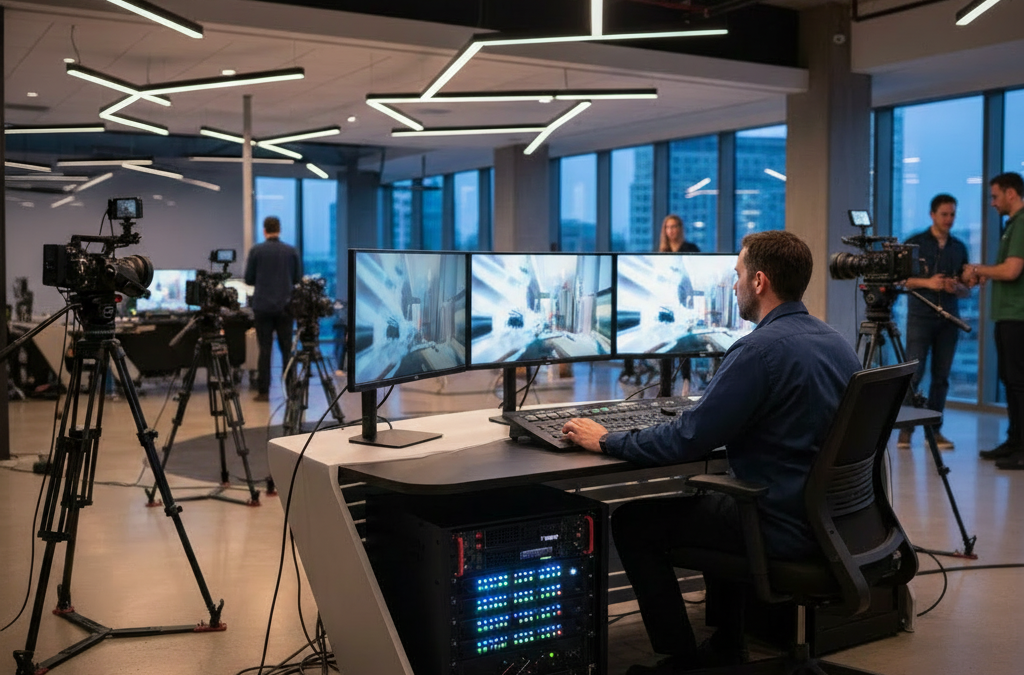
Furthermore, as AI becomes central to therapeutics, your video strategy must visualize the invisible. By showing the seamless workflow between computational dry-labs and automated wet-lab infrastructure, you demonstrate a modern, scalable approach that appeals to tech-forward VCs.
According to research by Forbes, companies that utilize high-fidelity video to explain complex technical processes see a significant increase in investor engagement. This is particularly true for SF life sciences marketing, where the competition for attention in the Peninsula is fierce.
Maximizing Investor Confidence with Biotech Video Production
Strategic SF Bay Area Life Sciences: 2026 Lab-to-Market Video Case Study Strategies focus heavily on ‘de-risking’ the investment. This involves showcasing your GMP manufacturing capabilities and LEED Gold certified facilities as evidence of long-term stability and environmental governance (ESG).
Consider these critical production elements for your next case study:
- The Lead Scientist Perspective: Authenticity is found in the ‘human element’ of the lab, not just the machinery.
- Adaptive Reuse Success: Showcasing how legacy industrial spaces were transformed into high-spec vivariums.
- Operational Excellence: Highlighting supply chain stability through automated lab infrastructure.
Need to audit your current visual assets? Schedule a free video strategy consultation with our production leads to align your 2026 roadmap with market expectations.
| Feature | Traditional Video (2023) | 2026 Lab-to-Market Strategy |
|---|---|---|
| Visual Style | Stock B-Roll & Posed Lab Shots | Documentary-Style & Cinematic Drone | Narrative Focus | General Product Features | Patient Impact & Clinical Milestones | Data Integration | Static Bullet Points | Dynamic Motion Graphic Overlays | Target Audience | Broad Awareness | Series B-D Investors & Strategic Partners |
The Hyper-Local Advantage: South San Francisco to Emeryville
Moreover, the proximity to academic powerhouses like Berkeley and Stanford is a primary driver of ‘Speed to Science.’ Your video content should explicitly mention these geographic advantages to signal your firm’s integration into the world’s most dense talent pool.

Differentiating in the 2026 Supply Glut
With an influx of R&D space hitting the market, developers and tenants must use SF Bay Area Life Sciences: 2026 Lab-to-Market Video Case Study Strategies to highlight tenant success stories. By showcasing a startup’s growth from a fractional lab space to a full-scale facility, you provide a tangible roadmap for prospective investors and talent.
As a full-service marketing agency, iStudios Media understands that video is only one part of the growth engine. Integrated SEO and CRM automation ensure that your high-value video assets reach the right decision-makers at the right time.
Technical Execution: 4K Cinematography and Motion Graphics
Technically, the 2026 standard requires more than just high resolution. It requires a cinematic language that reflects the precision of your science. This includes high-frame-rate captures of automated processes and macro-cinematography of therapeutic milestones.
Key technical requirements for biotech video production include:
- Professional lighting that avoids the ‘sterile’ hospital look while maintaining cleanliness.
- High-fidelity audio for founder interviews to ensure authority and clarity.
- HIPAA-compliant filming protocols for clinical environments and medical practices.
For more on how we handle complex production environments, visit our video production services page.
Attracting Series B/C Funding in a Tight Market
Finally, capital efficiency storytelling is the cornerstone of SF Bay Area Life Sciences: 2026 Lab-to-Market Video Case Study Strategies. In a market where VCs are more cautious, showing how your firm maximized its Series A funding through smart infrastructure and local ecosystem partnerships is vital.
Leveraging insights from McKinsey & Company, we know that clear communication of operational resilience is a top-three factor for late-stage biotech valuation. Your video case studies should act as a visual due-diligence report.
Ready to Scale Your Visual Narrative?
If you are a Series A-C founder or a CMO at an enterprise life sciences firm, the time to upgrade your visual strategy is now. Don’t let your groundbreaking science be represented by mediocre content. Contact iStudios Media today to build a lab-to-market video strategy that delivers measurable ROI.
Frequently Asked Questions
How do SF Bay Area Life Sciences: 2026 Lab-to-Market Video Case Study Strategies differ from traditional marketing?
Unlike traditional marketing that uses generic imagery, the 2026 strategy focuses on high-fidelity, documentary-style storytelling. It emphasizes specific clinical milestones, local ecosystem advantages (like proximity to UCSF), and the ‘human element’ of biotech, providing a more authentic and de-risked narrative for sophisticated investors.
Why is ‘Speed to Science’ important in biotech video production?
‘Speed to Science’ refers to the efficiency with which a company moves from funding to clinical trials. Highlighting this in video case studies demonstrates operational excellence and supply chain stability, which are critical metrics for Series B and C investors in the current Bay Area market.
Can high-production video help with life sciences real estate?
Absolutely. With the 2026 supply glut of R&D space, high-production video is essential for differentiating Class A labs. Showing real-world tenant success stories through cinematic tours and scientist testimonials helps developers fill space by visualizing the functional success of the facility.
What role does AI visualization play in biotech marketing?
AI visualization uses motion graphics to explain how computational dry-labs interact with wet-lab experiments. Since much of modern drug discovery happens in silicon, video is the most effective way to make these complex, invisible processes tangible and impressive to potential partners.