📋 Table of Contents
- The 3vis Framework: Why Strategic Video Content Requires Tiered Fidelity
- Top-of-Funnel: Why Low-Fidelity Often Outperforms a Freelance Videographer
- Middle-of-Funnel: The Hybrid Model for Education and Validation
- Bottom-of-Funnel: When to Invest in 4K Cinema-Grade Production
- Scaling Content Volume Without Scaling Headcount
- The Financial Impact of Production Tiering
- FAQs
According to Wyzowl’s 2024 State of Video Marketing report, 87% of marketers say video has directly increased sales, yet most Bay Area startups are still burning 40% of their creative budget on high-fidelity assets that never convert. The mismatch between production value and user intent is the silent killer of modern marketing margins, making funnel-aligned video production the most critical shift for the upcoming fiscal year.
The 3vis Framework: Why Strategic Video Content Requires Tiered Fidelity
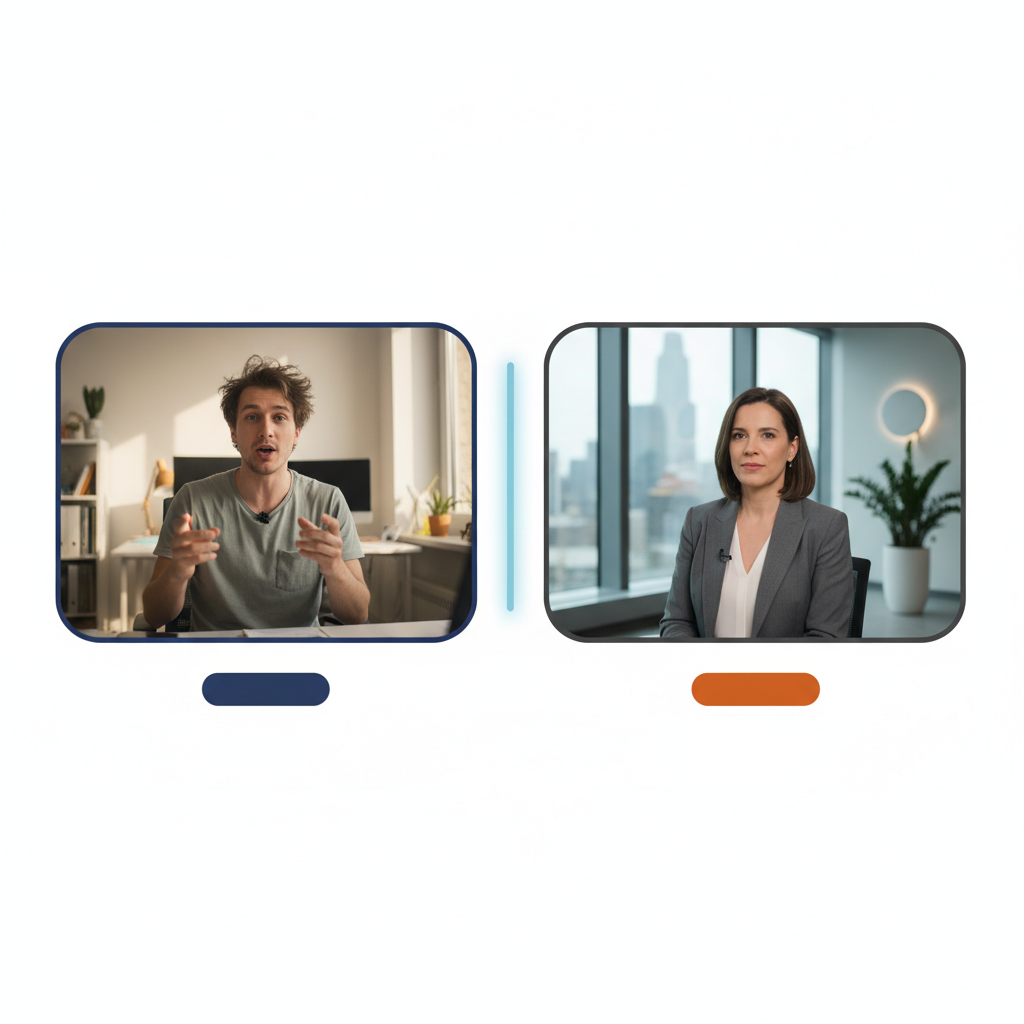
High-production value is no longer a universal signal of trust; in fact, at the top of the funnel, it often acts as a friction point that triggers ‘ad blindness’ in savvy consumers. The 3vis Technical Framework categorizes production into three distinct tiers: Visibility (High Volume/Low Fi), Validation (Mid-Market/Hybrid), and Vision (Premium/Cinematic).
- Tier 1: Visibility (TOF) – Focuses on raw, mobile-first content designed to stop the scroll and test hooks rapidly.
- Tier 2: Validation (MOF) – Blends professional lighting with authentic delivery to build credibility and educate.
- Tier 3: Vision (BOF) – Employs 4K cinema-grade production to solidify brand authority and close the deal.
Here’s the thing: most founders treat every video like a Super Bowl commercial when they should be treating their Top-of-Funnel (TOF) content like a lab experiment. By adopting a tiered approach, you stop over-investing in assets that have a 48-hour shelf life on social media.

Top-of-Funnel: Why Low-Fidelity Often Outperforms a Freelance Videographer
The ‘Authenticity Paradox’ suggests that users are 2.4x more likely to perceive user-generated content (UGC) as authentic compared to brand-created content. When you are operating at the top of the funnel, your primary goal is pattern interruption, not cinematic perfection.
In our experience with Series B SaaS teams, we’ve found that high-frequency, mobile-style videos often achieve a lower Cost-Per-Acquisition (CPA) than polished brand films. Why? Because the audience doesn’t want to be sold to; they want to be helped by a human. If you hire a freelance videographer for a one-off video shoot at this stage without a volume strategy, you’re likely overpaying for a single asset that may not even resonate with your target audience.
- Prioritize hook testing over color grading.
- Use 9:16 vertical formats for LinkedIn and Meta ads.
- Leverage strategic video content to address immediate pain points in under 15 seconds.
Need to see how your current assets stack up? Schedule a free creative audit with our production leads to identify budget leaks in your current funnel.
Middle-of-Funnel: The Hybrid Model for Education and Validation
Once a lead is aware of your solution, the visual language must shift from ‘scrolling’ to ‘studying.’ This is where the 3vis framework introduces ‘Validation’ assets—content that looks professional enough to be credible but raw enough to be relatable.
For a typical Bay Area mid-market client, this often involves full-service podcast production or expert-led demo videos. These assets require professional audio and stable multi-camera setups, but they don’t need the $50,000-per-minute price tag of a national commercial. The goal here is to reduce ‘Production Debt’—the high bounce rate caused when a slick TOF ad leads to a low-quality, confusing product demo.
The real kicker? You can use Ingest.blog, our internal AI content engine, to transcribe these mid-funnel videos and instantly turn them into SEO-optimized long-form articles, maximizing the ROI of every minute spent in the studio.
Bottom-of-Funnel: When to Invest in 4K Cinema-Grade Production
When a prospect is at the decision stage, the technical execution of your video becomes a proxy for the quality of your product or service. This is the only stage where marketing asset quality should be maximized regardless of cost-per-minute, as these assets have the longest shelf life and the highest direct impact on revenue.
| Asset Type | Typical Bay Area Pricing | Optimal Funnel Stage |
|---|---|---|
| UGC / Social Hooks | $500 – $1,500 | Top (Awareness) |
| Product Demos / Case Studies | $2,500 – $7,000 | Middle (Consideration) |
| Brand Films / Hero Videos | $8,000 – $50,000 | Bottom (Conversion) |
But wait—don’t make the mistake of thinking ‘expensive’ equals ‘effective.’ Even at the bottom of the funnel, funnel-aligned video production means the visuals must serve the narrative. For medical practice owners, for instance, a high-end corporate video showcasing patient testimonials and facility cleanliness is far more effective than a generic, overly-stylized commercial.
Scaling Content Volume Without Scaling Headcount
Strategic resource allocation means knowing when to use a skeleton crew and when to bring in a full production house. Most companies fail to scale because they treat video as a series of one-off projects rather than a system.
By using a marketing automation platform, you can trigger specific video deliveries based on where a lead is in your CRM. For example, if a lead watches 50% of a MOF demo, your system can automatically serve them a high-fidelity BOF testimonial via a LinkedIn ad. This is the essence of visual storytelling hierarchy: using data to dictate quality.
- Automate the distribution of low-fi assets to test market fit.
- Reserve your ‘Hero’ production budget for proven messaging.
- Use B2B video marketing best practices to align creative with sales cycles.
What most people miss is that high-production value can actually hurt conversion if the ‘vibe’ doesn’t match the platform. A cinematic masterpiece feels out of place in a TikTok feed, just as a shaky iPhone video feels out of place on an enterprise-level landing page.
The Financial Impact of Production Tiering
Transitioning to the 3vis framework isn’t just a creative choice; it’s a financial optimization tool that protects your margins. According to HubSpot’s latest marketing data, companies that use tiered production strategies see a 35% higher engagement rate on social platforms compared to those using a single-tier approach.
In our work with Series C founders, we see that ‘Creative Efficiency’ becomes the primary lever for growth. Instead of one $30k video, we often recommend a package that includes one $15k hero asset and twenty $750 ‘micro-assets’ for social testing. This ensures that the high-dollar asset is actually seen by a pre-qualified audience.
Ready to stop the budget leakage? Connect with iStudios Media to build a custom 3vis production roadmap for your brand.
Frequently Asked Questions
How do I know if I’m overspending on video production?
If your high-fidelity brand videos have a higher CPA than your raw social content, you are likely over-investing in the wrong funnel stage. Use the 3vis framework to reallocate those funds toward high-volume testing at the top of the funnel while reserving premium budgets for high-intent conversion pages.
Is a freelance videographer better than a full-service agency?
A freelance videographer is excellent for a one-off video shoot where you provide all the strategy. However, for funnel-aligned video production, an agency provides the integrated SEO, ad strategy, and automation workflows necessary to ensure that the content actually generates a measurable return on investment.
Can I use AI to help with the 3vis framework?
Absolutely. We use AI-powered marketing tools to handle the ‘heavy lifting’ of content distribution and versioning. This allows our creative team to focus on high-level visual storytelling hierarchy while ensuring your brand maintains a high volume of presence across all digital channels without increasing headcount.
What is the typical ROI for tiered video production?
While results vary, mid-market clients typically see a significant reduction in ad fatigue and a more stable lead flow. By aligning marketing asset quality with the user’s journey, you ensure that you aren’t scaring off TOF leads with ‘salesy’ production or losing BOF leads with ‘unprofessional’ visuals.