📋 Table of Contents
According to Wyzowl’s 2024 Video Marketing Statistics report, 87% of marketers say video has directly increased sales, yet for Series B founders in the Bay Area, the wrong format can actually dilute brand equity during a critical scaling phase. The choice between direct-to-camera vs. narrative storytelling isn’t just a creative preference; it’s a strategic decision that dictates your cost-per-acquisition (CPA) and investor perception.
Key Takeaways for Decision-Makers
- Direct-to-camera excels at building immediate trust and humanizing complex technical products for LinkedIn and social selling.
- Narrative storytelling is essential for category creation, talent acquisition, and establishing lasting brand authority that outlives the founder’s daily presence.
- The Hybrid Model—using lo-fi for top-of-funnel and high-production narrative for investor relations—is the most efficient way to scale.
1. The Strategic Pivot: Moving Beyond the Scrappy Startup Look
As of 2024, the “build-in-public” raw aesthetics that served you during Seed and Series A often hit a ceiling when you’re chasing enterprise contracts or a Series C valuation. Here’s the thing: while authenticity is a buzzword, professional polish is a signal of operational maturity.
What most people miss is that a Series B brand video needs to do two things simultaneously: maintain the founder’s soul and prove the company is a stable, scalable institution. In our experience with mid-market clients, founders often struggle with “founder burnout” when they try to stay the sole face of the brand. Transitioning to narrative storytelling allows the brand to breathe on its own.
Contrast this with a freelance videographer approach, which often results in a one-off video shoot that lacks the strategic depth required for category leadership. You need a framework, not just a cameraman.
2. When Direct-to-Camera is Your Best Growth Lever
Direct-to-camera content is the ultimate trust-building mechanism for high-ticket Enterprise sales and social selling for CEOs. It works because it eliminates the friction between the visionary and the customer, creating a 1:1 relationship at scale.
- Speed to Market: You can respond to industry shifts in hours, not weeks.
- Lower Production Friction: Ideal for vlogs, product updates, and LinkedIn thought leadership.
- High Engagement: LinkedIn’s algorithm currently favors native, person-centric video over highly produced commercial assets.
The real kicker? While a direct-to-camera vs. narrative storytelling debate often focuses on quality, it should focus on intent. If you are solving a specific, immediate pain point, talk to the lens. If you are painting a vision of the future, show us the world you’re building.
3. Narrative Storytelling: The Tool for Category Creation
Narrative storytelling moves the needle when you need to recruit top-tier talent or convince a skeptical CMO that your SaaS platform is the new industry standard. Unlike a simple one-off video shoot, narrative films use cinematography, pacing, and sound design to evoke an emotional response.
Typical Bay Area pricing for these premium brand films ranges from $8,000 to $50,000 per finished minute. Why the investment? Because narrative content has a longer shelf life. While a founder-led update might be obsolete in three months, a well-crafted brand film can anchor your website for two years.
But wait—don’t fall into the trap of “over-production.” A common mistake we see is startups spending $40k on a video that looks like a perfume commercial but explains nothing about the product. The startup storytelling framework must remain grounded in the problem-solution set.
| Criteria | Direct-to-Camera | Narrative Storytelling |
|---|---|---|
| Best For | Trust, Speed, Social Selling | Vision, Brand Equity, Recruiting |
| Typical Cost | $2,500 – $7,500 | $10,000 – $50,000+ |
| Shelf Life | Short (Weeks/Months) | Long (1-3 Years) |
| Platform Fit | LinkedIn, X, Email Nurture | Homepage, Keynotes, Investor Decks |
Need help deciding which format fits your current runway? Schedule a free consultation with our production leads to audit your current content stack.
4. The Efficiency of Authority: A Founder-Led Content Strategy
For Series B founders, the goal is “Efficiency of Authority.” You want to be perceived as an expert without spending 10 hours a week in a studio. This is where a structured founder-led content strategy becomes vital.
Instead of random acts of content, we recommend a “Core and Spoke” model:
- The Core: One high-production narrative brand film for the homepage.
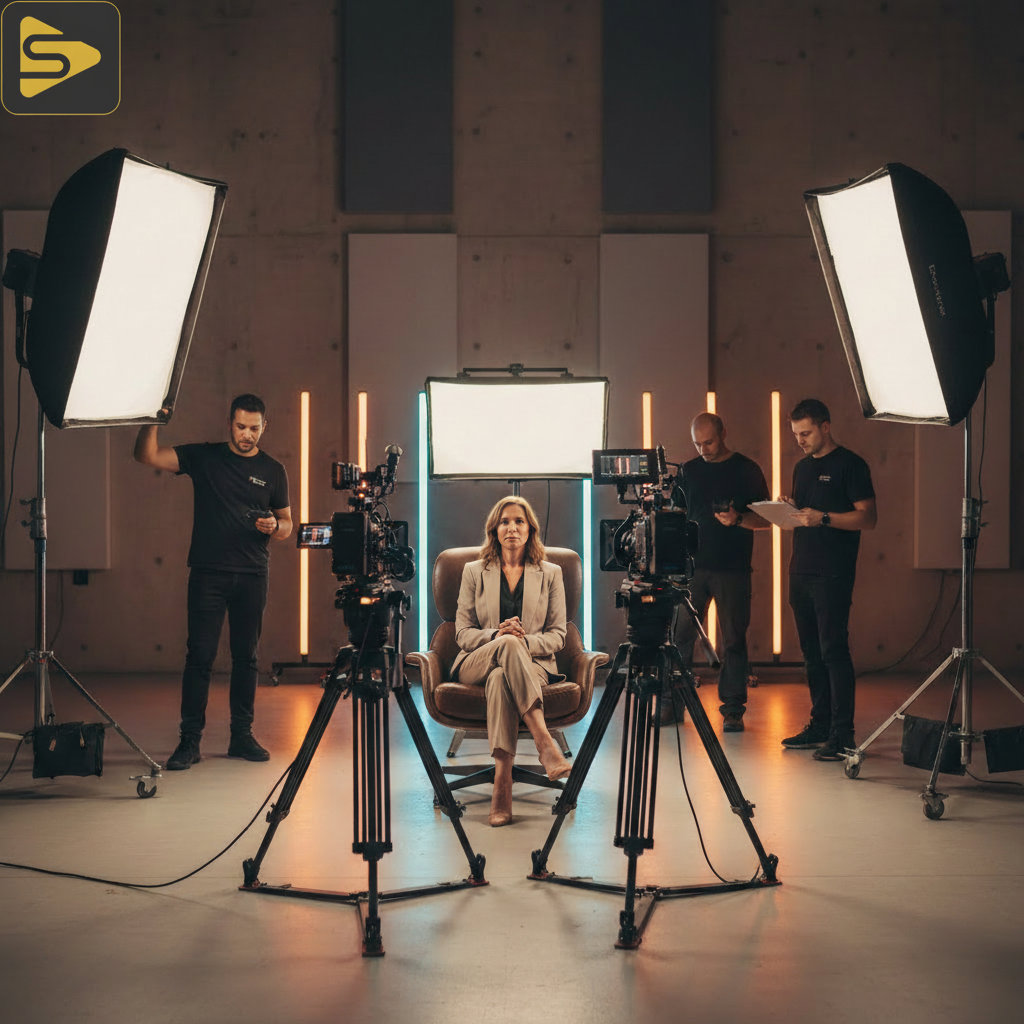
- The Spokes: Monthly studio sessions in our San Leandro facility to batch 12-15 direct-to-camera clips.
- The Distribution: Using Ingest.blog, our internal AI content engine, we can repurpose these videos into SEO-optimized blog posts and social threads instantly.
This hybrid approach balances the raw authenticity of a founder with the polished authority of a market leader. According to Forbes, consistent brand presentation across all platforms can increase revenue by up to 23%.
5. Selection Criteria: Choosing Based on Your Series B Goals
How do you choose between direct-to-camera vs. narrative storytelling when budgets are tightening? Look at your primary KPI for the next two quarters.
If your goal is Product-Led Growth (PLG) and reducing churn, direct-to-camera demo reels and “vlog” style updates are superior. They feel helpful and personal. If your goal is Enterprise Category Creation, you need the cinematic gravity that only narrative storytelling provides.
In our work with Series B SaaS founders, we often find that the biggest hurdle isn’t the budget—it’s the script. A freelance videographer will ask you what you want to say; a growth partner will tell you what your market needs to hear. This is the difference between a vendor and a consultant.
For those managing complex pipelines, integrating these video assets into your marketing automation platform ensures that a high-value narrative film is served exactly when a lead hits the “consideration” stage of your CRM.
6. The Investor Angle: What VCs Want to See
Venture capital sentiment has shifted. In 2024, investors are looking for “Default Alive” companies with disciplined marketing spends. A $100k brand film might look like a red flag if your unit economics are shaky. Conversely, a founder who only posts lo-fi iPhone videos might look like they haven’t figured out how to scale their message.
The sweet spot for an investor deck is a 90-second narrative intro that establishes the massive market opportunity, followed by a direct-to-camera deep dive into the “how” from the founder. This shows you have both the vision (narrative) and the technical grip (direct-to-camera).
Ready to upgrade your brand’s visual authority? Contact iStudios Media today for a strategic production roadmap tailored to the SF Bay Area ecosystem.
Frequently Asked Questions
Is direct-to-camera better for LinkedIn?
Generally, yes. LinkedIn’s algorithm prioritizes “human-centric” content. Direct-to-camera videos typically see higher click-through rates (CTR) in the feed because they resemble peer-to-peer communication rather than an advertisement. However, narrative storytelling is often more effective for LinkedIn Sponsored Content aimed at high-level executives who value high-production signals.
How much should a Series B brand video cost?
Industry-reported ranges for a professional Series B brand video in the Bay Area typically fall between $10,000 and $30,000. This covers pre-production strategy, a professional crew, and high-end post-production. While you can find a freelance videographer for less, they often lack the marketing strategy required to drive actual ROI.
Can I mix both styles in one campaign?
Absolutely. In fact, a hybrid approach is the most effective founder-led content strategy. Use a high-quality narrative video as your “anchor” content for your website and use direct-to-camera “spokes” for social media, email marketing, and lead nurture sequences within your marketing automation platform.
How long does a narrative storytelling production take?
A standard narrative brand film usually takes 4 to 8 weeks from initial strategy to final delivery. This includes scriptwriting, location scouting, filming, and several rounds of professional editing. If you need a faster turnaround for a product launch, direct-to-camera content can often be produced in under 10 days.
Why should I hire an agency instead of a freelance videographer?
A freelance videographer focuses on the “shot,” while an agency focuses on the “outcome.” For Series B startups, you need a partner who understands how video integrates with your SEO, Google Ads, and CRM automation. iStudios Media provides a full-stack approach that ensures your video content actually generates leads and revenue.