📋 Table of Contents
According to a recent report by HubSpot, 87% of video marketers say video has a direct, positive impact on sales, yet 40% cite lack of time or logistics as their biggest hurdle. In the San Francisco Financial District, a successful SF corporate video production isn’t just about the right lens; it’s about surviving the Montgomery Street loading dock at 7:00 AM without a parking ticket.
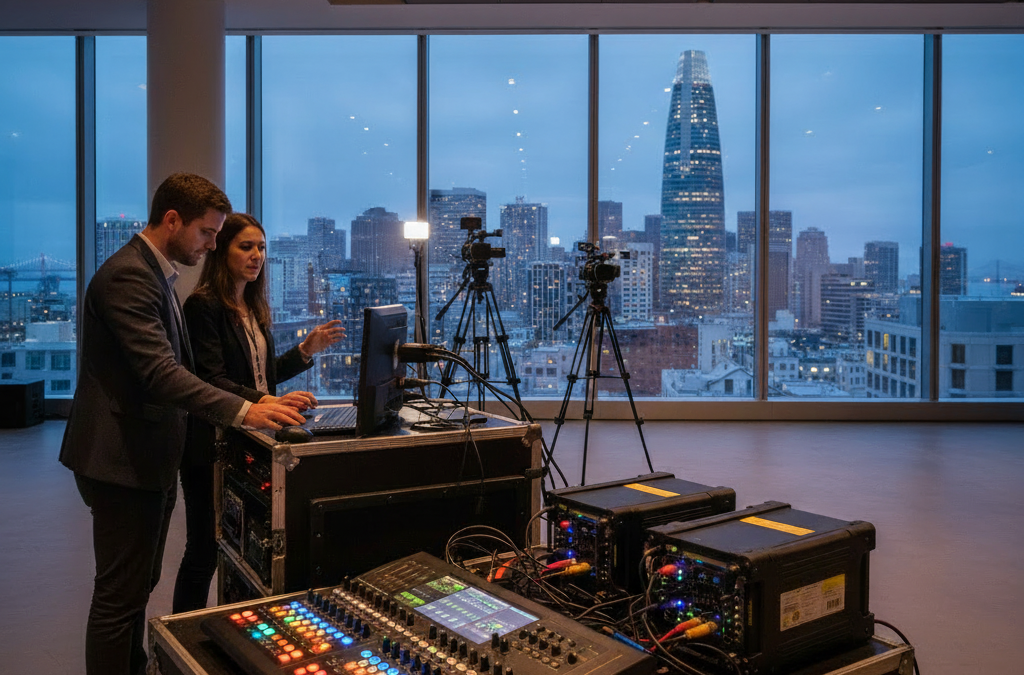
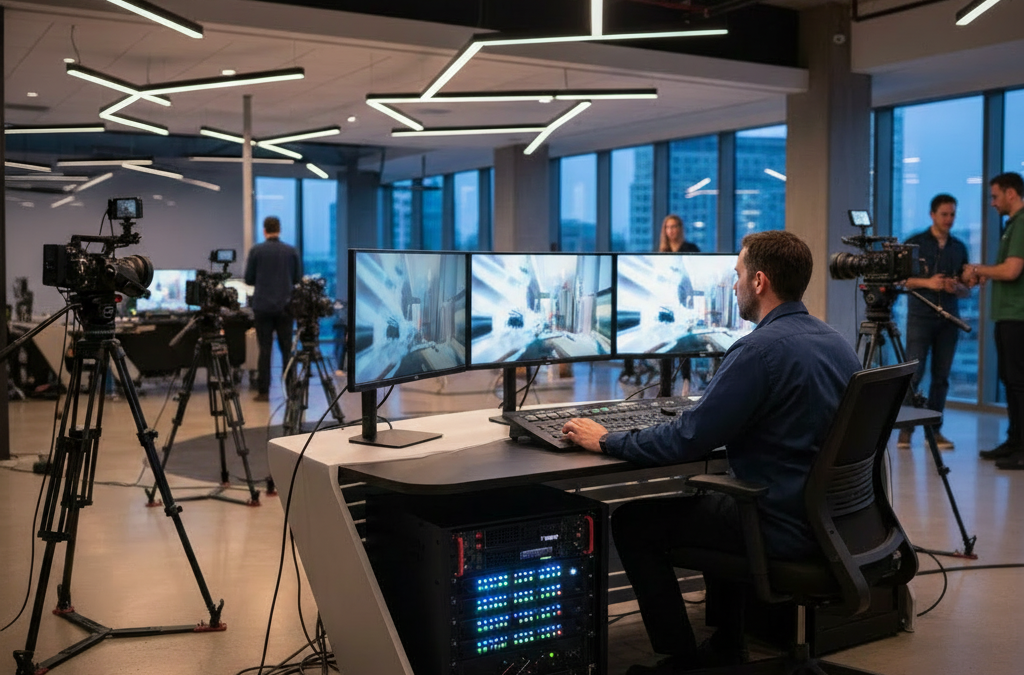
Production in high-rise environments like the Salesforce Tower or the Transamerica Pyramid presents unique friction points that a freelance videographer or a one-off video shoot crew might overlook. For Series B startup founders and enterprise CMOs, a logistical oversight doesn’t just delay the schedule—it risks building access and professional reputation. This audit serves as a risk-mitigation tool for decision-makers who need polished results without the operational headache.
1. The COI and Building Management System (BMS) Protocol
The first rule of high-rise production is that your Certificate of Insurance (COI) is your actual ticket to entry, not your equipment list.
- Policy Minimums: Most Tier-1 property managers (like Shorenstein or Boston Properties) require $2M to $5M in general liability, often with specific “Additional Insured” language that must be exact.
- BMS Coordination: You must clear your crew list and vehicle plate numbers with the Building Management System at least 72 hours in advance.
- Union Requirements: In some SF landmarks, you may need to coordinate with on-site SEIU staff for freight elevator operation.
In our experience with mid-market clients, failing to name the specific building LLC on the COI is the #1 reason crews are turned away at the service entrance. Don’t let a clerical error kill your production day. If you’re scaling content across multiple locations, you can learn more about our strategic production frameworks to keep your workflow consistent.
2. The Freight Elevator Gauntlet and Load-In Logistics
San Francisco’s Financial District is notorious for its 15-minute yellow-zone limits, making office video shoot logistics a race against the SFMTA.
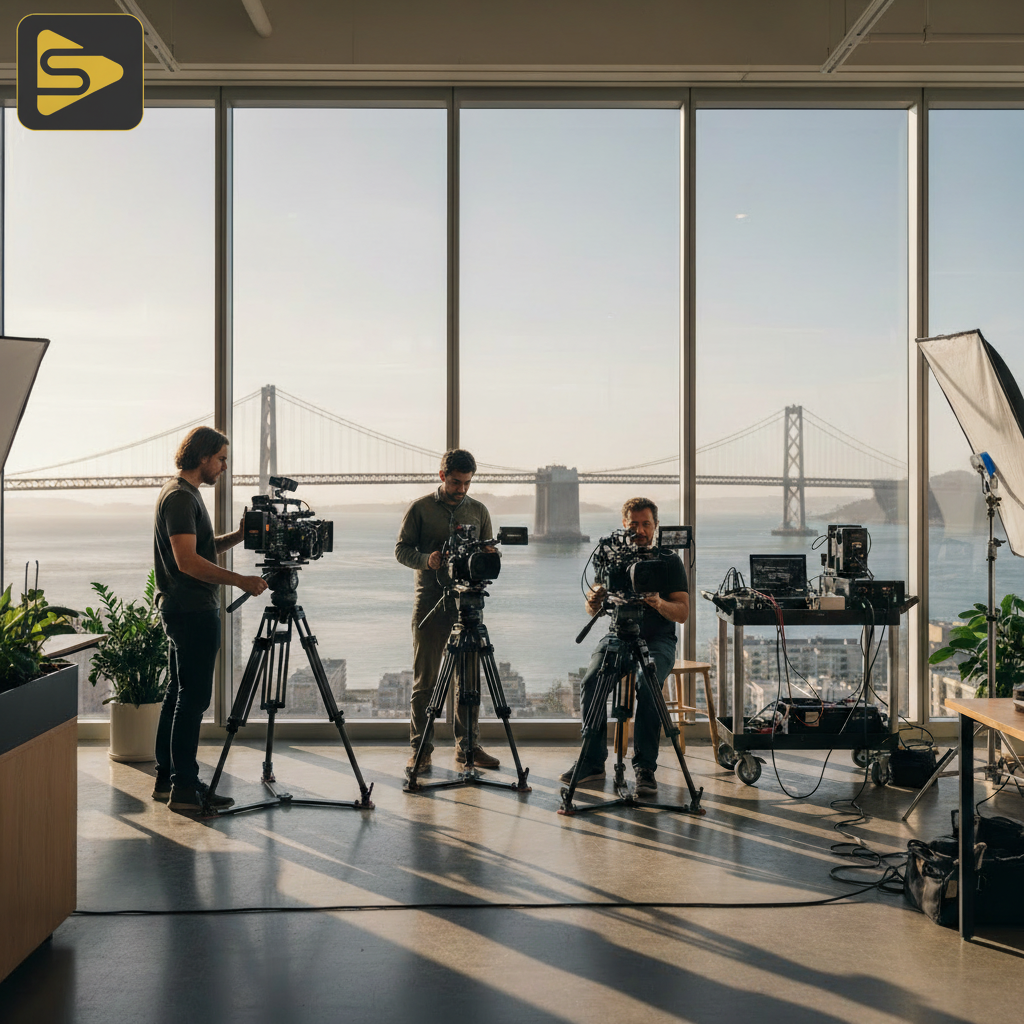
The real kicker? Most high-rises won’t allow gear through the lobby; you are at the mercy of the freight elevator schedule, which is often shared with catering and trash removal. Here is how to audit your load-in:
- Loading Dock Clearance: Verify the height of the loading bay; many historic SF buildings cannot accommodate a standard box truck.
- The “Stealth” Kit: For active trading floors, we recommend a minimalist footprint—high-output LED mats instead of bulky C-stands.
- Priority Access: Book the freight elevator for a dedicated window to avoid gear sitting on a sidewalk in the Tenderloin or SoMa.
Transitioning from a one-off video shoot mentality to an enterprise media production approach means accounting for these micro-delays. A typical Bay Area mid-market client often loses two hours of shooting time simply because they didn’t account for the “swing elevator” transfer on the 30th floor.
3. The ‘Quiet Set’ and Acoustic Management
Managing acoustic challenges in active Financial District high-rises requires more than just a good microphone; it requires a structural audit of the HVAC system.
What most people miss is that LEED-certified buildings often have high-velocity air systems that create a low-frequency hum invisible to the ear but devastating to a lavalier mic. We recommend using highly directional shotgun mics and scheduling interviews during “low-load” HVAC hours. Furthermore, you must account for the “Salesforce Tower Shadow”—the sudden shift in natural light and street noise as the sun moves behind neighboring skyscrapers.
| Challenge | Enterprise Solution | Freelance Risk |
|---|---|---|
| HVAC Hum | Frequency-tuned noise gates | Post-production hiss |
| Street Noise | Double-walled sound blankets | Interrupted takes |
| Active Office | Silent-running ‘Quiet Set’ protocol | Disrupted employees |
Need a partner who understands these nuances? Schedule your free consultation for a site-specific technical audit.
4. RF Interference and Wireless Frequency Coordination
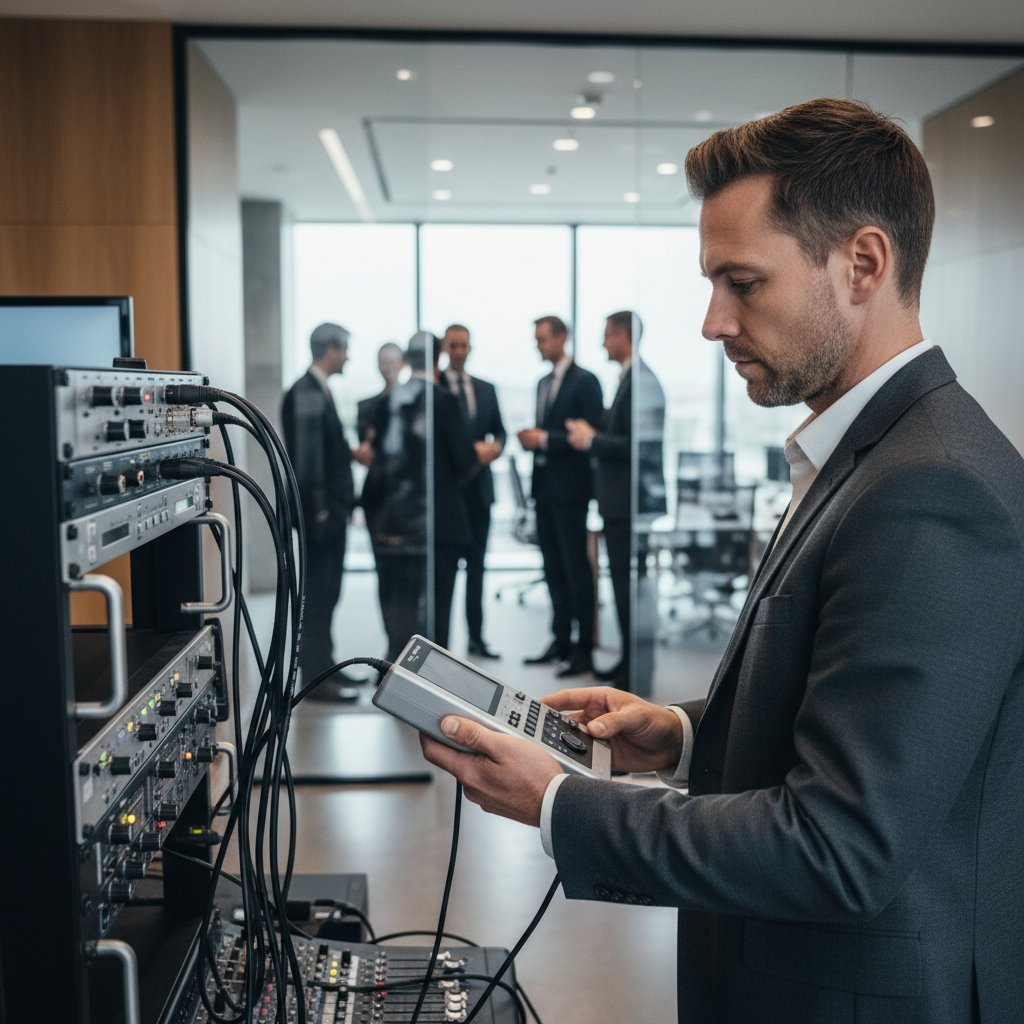
High-rise towers are essentially giant antennas, and the high-rise wireless frequency coordination in SF is some of the most congested in the world.
Between 5G cell towers, internal Wi-Fi meshes, and neighboring corporate security radios, your wireless video transmitter will likely fail if you haven’t scanned the spectrum. Here’s the thing: glass-heavy architectural spaces act as a Faraday cage or a reflector, causing signal drop-offs in the middle of a live stream. For critical enterprise media production, we always recommend hard-wired SDI lines or 5G bonding units that can aggregate multiple signals.
- Spectrum Analysis: Use a dedicated RF scanner to find clean channels before the CEO sits down.
- Signal Bonding: If live streaming, don’t rely on guest Wi-Fi; use a bonded cellular solution.
- Hardware Redundancy: Always record locally to the camera, even when streaming to the cloud.
For high-growth companies using our internal AI content engine to scale their video distribution, maintaining high signal integrity at the source is non-negotiable for quality AI-upscaling later.
5. Power Grid Paranoia and LEED Constraints
Navigating vintage electrical infrastructure in historic SF landmarks requires a deep understanding of the building’s Power Distribution Unit (PDU).
In our work with Series B SaaS founders, we’ve seen shoots blow a circuit on a shared wall, taking down the entire engineering team’s workstations. Modern SF corporate video production should rely on high-capacity V-mount batteries to remain “off-grid” within the office. This not only prevents electrical mishaps but also eliminates the tripping hazard of cables stretched across a busy hallway.
- Battery-First Lighting: Use 200W+ LED COB lights that run on batteries.
- Circuit Mapping: If you must plug in, ensure you are on a dedicated 20-amp circuit away from server racks.
- Zero-Waste Production: Many LEED-Gold buildings require a sustainability plan for production waste.
FAQs for SF Corporate Video Production
Do I really need a COI for a small office shoot?
Yes. Almost every commercial building in the San Francisco Financial District requires a Certificate of Insurance (COI) naming the property manager and owner as additionally insured. Without this, security will likely deny your team access to the service elevator, regardless of your company’s tenancy.
How do I handle signal drop-offs in glass-heavy SF towers?
High-rise towers often suffer from RF interference. The best approach is to use a wireless frequency coordinator or, more reliably, to run physical SDI cables for video and XLR for audio. If you are live streaming, use bonded cellular hardware that combines signals from multiple carriers.
What is the best time to shoot for natural light in the Financial District?
Lighting in SF is tricky due to “canyon effects” from skyscrapers. Mid-morning (10 AM) or early afternoon (2 PM) are generally best to avoid the harsh glare of the sun reflecting off neighboring glass towers or the deep shadows cast by the Salesforce Tower.
Can we shoot in the lobby or public areas of our building?
Usually, no. Your lease typically covers your specific suite. Shooting in common areas, lobbies, or plazas requires additional permits from the city or specific permission from building ownership, often involving extra fees and security escorts.
Effective SF corporate video production is a blend of creative vision and logistical precision. By following this 5-point audit, you mitigate the risks that typically derail high-stakes shoots. Whether you are a Marketing Director at a Series C startup or a Corporate Comms lead at a global firm, your production partner should be a growth partner who handles the friction so you can focus on the message.
Ready to execute a flawless shoot in the heart of San Francisco? Contact iStudios Media today for a professional site walkthrough and a data-driven production plan that respects your timeline and your building’s protocols.