📋 Table of Contents
According to data from Harvard Business Review, nearly 75% of venture-backed startups fail to return capital, often because they scale their burn rate before perfecting their market presence. For founders navigating a Series A product launch, the transition from ‘scrappy MVP’ to ‘market leader’ is the most dangerous inflection point in the business lifecycle.
Here’s the thing: investors aren’t just looking at your code anymore; they are looking at how you present that code to the world. A one-off video shoot might have worked for your seed round, but a Series A milestone demands a repeatable, scalable brand asset development strategy. You need a production pipeline that functions like an assembly line, not a series of frantic creative experiments.
At iStudios Media, we’ve seen that the difference between a successful launch and a quiet flop usually comes down to operational efficiency. This guide breaks down the 4-stage production pipeline designed to maximize your creative output while protecting your runway.
Stage 1: The Strategic Blueprint & Minimum Viable Creative
Strategic alignment is the only way to ensure your production budget doesn’t vanish into ‘creative exploration’ that fails to convert.
What most people miss is that your launch assets shouldn’t just be pretty—they should be modular. Instead of hiring a freelance videographer for a single day of filming, you should be planning for ‘Minimum Viable Creative’ (MVC). This means identifying the core messaging pillars that satisfy both early adopters and Series B-focused investors.
- Audience Mapping: Define the technical buyer vs. the economic buyer.
- Asset Audit: Review existing MVP assets to see what can be upscaled vs. scrapped.
- AI-Augmented Ideation: Use generative tools to storyboard concepts in hours, not weeks.
- Distribution Planning: Determine if you need LinkedIn-first professional content or high-energy TikTok/Reels native clips.
In our experience with mid-market clients, starting with a documented blueprint reduces post-production revisions by up to 40%. It moves you away from the ‘hope and pray’ method of a one-off video shoot and toward a predictable digital marketing strategy.
Stage 2: High-Velocity Content Production for Series A Product Launch
Production at the Series A level is about capturing the highest quality raw material that can be atomized across every marketing channel.
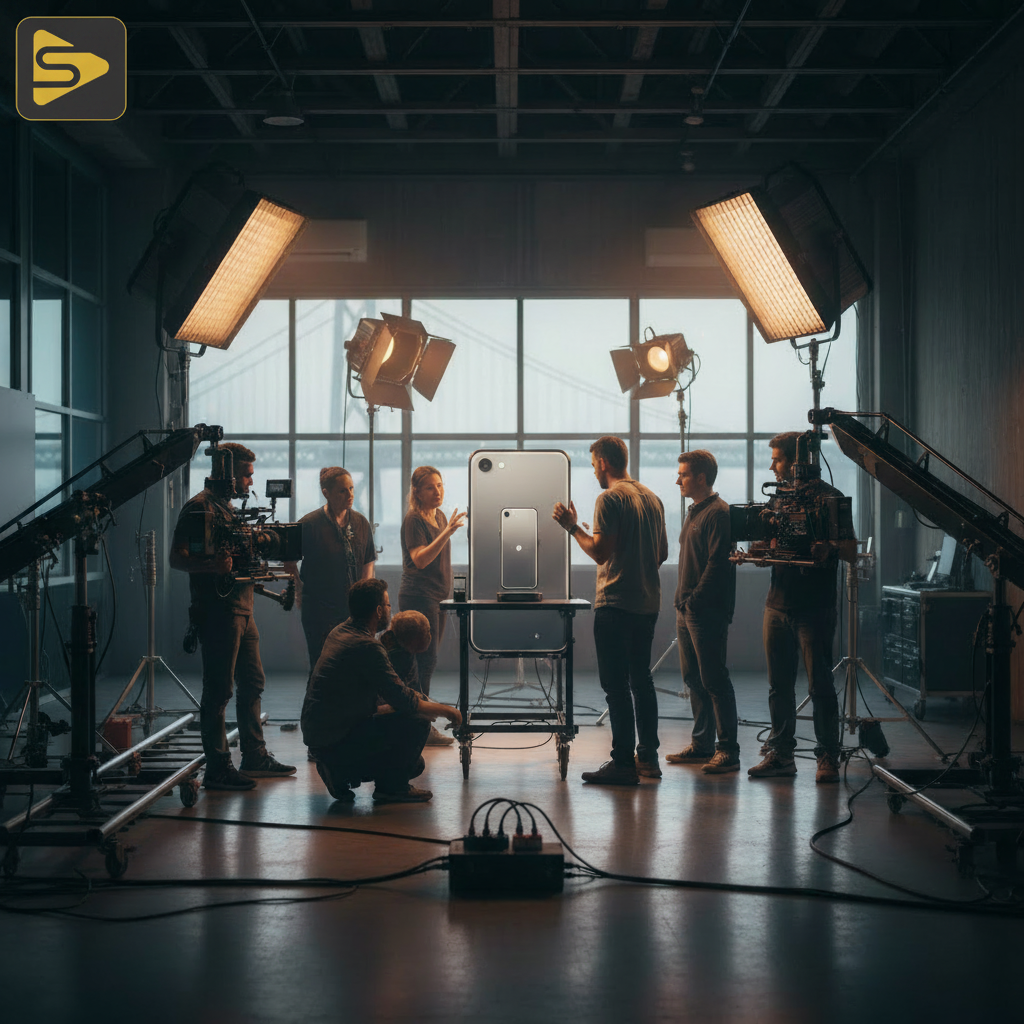
The real kicker? You don’t need a Hollywood set; you need a structured environment where you can batch-produce content. For Bay Area startups, this often involves a mix of corporate video production and on-site photography. The goal is to capture enough ‘hero’ footage to last for six months of post-launch momentum.
| Asset Type | Series A Budget Range (Typical) | Primary Purpose |
|---|---|---|
| Hero Brand Film | $8,000–$25,000 | Website Header / Investor Relations |
| Product Demo Reels | $2,500–$7,000 | Sales Enablement / Knowledge Base |
| Social Ads (Batch) | $3,000–$10,000 | Lead Gen / Paid Media |
But wait—don’t forget the ‘Founder-Led’ angle. Integrating personal brand content during your formal production days allows you to humanize the company. This is where a professional studio photography session in San Leandro or a multi-camera interview setup pays for itself by providing a year’s worth of LinkedIn authority content.
Stage 3: Post-Production & Creative Production Automation
The heaviest lift in any Series A product launch happens after the cameras stop rolling, where raw footage is transformed into a high-cadence content engine.
This is the stage where most startups fail because they treat every video as a standalone project. Instead, use a ‘Modular Production’ approach. One 2-minute brand film should be edited into five 15-second social ads, three 30-second product teasers, and dozens of high-quality stills. This is also where we utilize Ingest.blog, our internal AI content engine, to help select clients scale their SEO content velocity alongside their video assets.
- Color Grading & Sound Design: The ‘polish’ that separates you from a freelance videographer.
- A/B Creative Testing: Creating multiple versions of hooks for your Google Ads and Meta campaigns.
- Localization: Adapting assets for different regional markets if your Series A involves global expansion.
Need a partner to handle the heavy lifting? Schedule a free consultation with our production leads to map out your launch assets.

Stage 4: Omnichannel Asset Deployment & Optimization
A launch isn’t a single day; it’s a ‘Pulse’ that needs to be sustained through data-driven distribution.
Once your brand asset development is complete, the focus shifts to marketing velocity. You need to ensure your CRM and marketing automation platform are primed to handle the influx of leads. According to HubSpot’s State of Marketing report, companies that use video in their lead nurture sequences see significantly higher conversion rates.
- Landing Page Integration: Embedding high-performing video to reduce bounce rates.
- Email Nurture Sequences: Using video thumbnails to increase click-through rates (CTR).
- Sales Enablement: Providing your sales team with ‘snackable’ demo clips for cold outreach.
- Performance Monitoring: Using tools like Google Analytics and Looker Studio to track which assets drive the most revenue.
What most founders miss is the ‘Post-Launch Retention’ phase. Use the leftover B-roll and behind-the-scenes footage to keep your community engaged once the initial hype dies down. This prevents the ‘Big Bang’ launch failure where traffic falls off a cliff after week two.
Why a ‘One-Off Video Shoot’ Fails Your Series A
The contrarian truth? High-quality video alone won’t save a bad Go-to-Market (GTM) strategy, but a cheap-looking video will definitely kill a good one.
When you hire a freelance videographer, you’re often buying their time, not their strategic brain. For a Series A product launch, you need a partner who understands how a podcast production episode can be turned into a whitepaper, or how a livestream event can be repurposed into a year’s worth of social proof. You aren’t just making a video; you’re building a brand equity library.
Consider a typical Bay Area mid-market services client we worked with recently. By shifting from disjointed shoots to an integrated pipeline, they were able to increase their content output by 3x without increasing their monthly spend. They stopped paying for ‘projects’ and started investing in a ‘system.’
Key Takeaways for Founders and Marketers
- Think Modular: Every hour of filming should yield at least 10 unique assets.
- Invest in Sound: Viewers will forgive average video, but they will close a tab over poor audio.
- Automate the Boring Stuff: Use AI for transcription, اولیه storyboarding, and SEO metadata.
- Measure ROI: Track your assets through your CRM to see what actually moves the needle.
Ready to build a production pipeline that scales with your growth? Contact iStudios Media today for a free strategy audit of your current brand assets. We help Bay Area startups transition from MVP to market authority with integrated production and performance marketing.
Frequently Asked Questions
How much should a Series A startup budget for video production?
While costs vary, a typical Bay Area Series A product launch budget for a full suite of assets ranges from $10,000 to $50,000. This usually covers a hero brand film, several product demos, and a library of social media content. Framing this as a long-term investment in brand asset development helps justify the spend to investors.
Can we just use a freelance videographer for our launch?
A freelance videographer is great for a one-off video shoot, like a basic testimonial. However, they often lack the infrastructure to handle the omnichannel deployment, CRM integration, and high-volume editing required for a full-scale Series A product launch. A full-stack agency provides the strategic oversight needed to ensure assets actually drive ROI.
What is ‘Minimum Viable Creative’ in the context of a launch?
Minimum Viable Creative (MVC) is the practice of producing the highest-impact assets with the least amount of waste. Instead of producing five high-budget commercials, you produce one core ‘Hero’ asset designed for maximum repurposing. This ensures you have a professional presence across all channels without exhausting your Series A runway on production alone.
How does AI fit into the production pipeline?
AI is used as a ‘velocity multiplier.’ We use AI for rapid storyboarding, automated transcription, and generating SEO-optimized show notes for podcast production. This allows our creative team to focus on high-level strategy and cinematography while reducing the billable hours spent on administrative post-production tasks.