📋 Table of Contents
According to Wistia’s 2024 State of Video Report, businesses are now prioritizing high-production value for cornerstone content, even as social clips trend toward lo-fi. The choice between a professional video environment and your own office space often determines whether your brand signals ‘market leader’ or ‘budget startup’ to prospective Series C investors.
The Authenticity Paradox: Professional Video Environment vs. Office Reality
High-frequency social content thrives on the raw energy of an office, but your cornerstone brand films require the controlled precision of a dedicated space. Here is the thing: what looks ‘authentic’ on a smartphone often looks ‘unprofessional’ when projected in a boardroom or featured on a high-converting landing page.
- Acoustic Control: Office HVAC systems and glass-walled conference rooms create echo that post-production can rarely fix perfectly.
- Lighting Consistency: Changing sunlight in a San Francisco office can ruin a four-hour shoot, causing color shifts between takes.
- Brand Authority: A brand film shot in a controlled studio signals a level of stability that a cluttered breakroom cannot match.
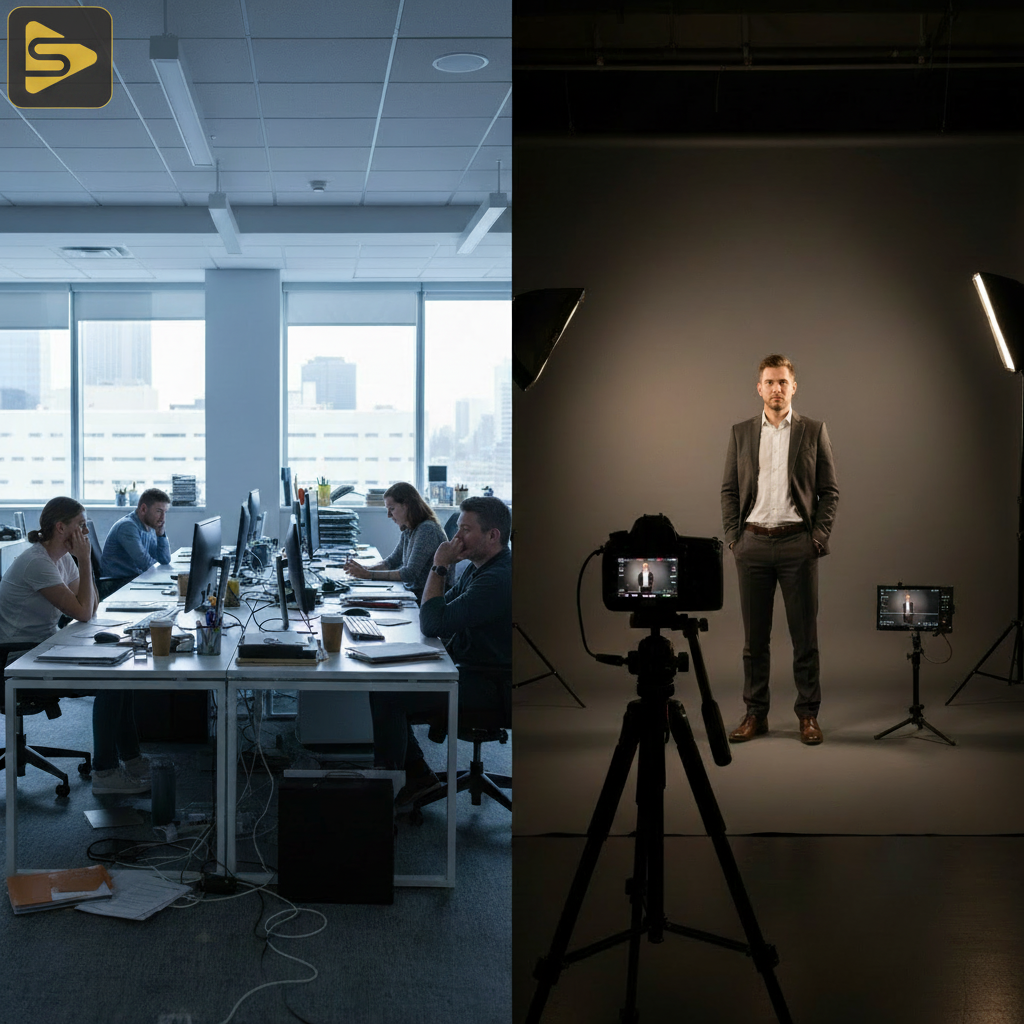
San Francisco Film Studio vs Office: The Hidden Cost Factors
Renting a studio feels like an added expense, but the ‘free’ office space often carries heavy video production cost factors that stakeholders overlook. In our work with Series B SaaS founders, we often find that office shoots take 30% longer due to interruptions and logistical hurdles.
Consider the logistical drain of a one-off video shoot in a working environment. You aren’t just paying for the freelance videographer; you are paying for the downtime of your staff and the manual labor of moving furniture.
| Feature | Office Filming | Professional Studio |
|---|---|---|
| Acoustic Dampening | Minimal (Echo-prone) | High (Soundproofed) |
| Setup Time | 2-3 Hours | 30-60 Minutes |
| Typical Cost | $0 (Direct) / $1,500+ (Disruption) | $1,500 – $8,000 / day |
Why Batching Content Changes the ROI Equation
The real kicker is that studio rentals only become hyper-efficient when you move away from the one-off video shoot model. By batching 30 days of content into a single day, the daily rate of a studio like our San Leandro facility is amortized across dozens of assets.
For high-velocity teams, we use Ingest.blog, our internal AI content engine, to ensure that the transcripts from these studio sessions are immediately turned into SEO-optimized articles and social posts, squeezing every drop of value from the rental fee.
Acoustic Dampening and Lighting: The Technical Decision Matrix
Professional lighting is not just about brightness; it is about the ability to create depth and separation between the subject and the background. Most Bay Area offices utilize overhead LED panels that create unflattering shadows on executive talent, a problem easily solved in a professional video environment.
- Light Control: Studios allow for total darkness, meaning every light source is intentional.
- Sound Quality: Professional studios feature specialized acoustic dampening that captures the ‘warmth’ of a voice, essential for podcast production.
- Power Requirements: High-end cinema lights can trip breakers in older San Francisco office buildings.
Need help deciding if your office is camera-ready? Schedule a free consultation with our production leads to evaluate your space.
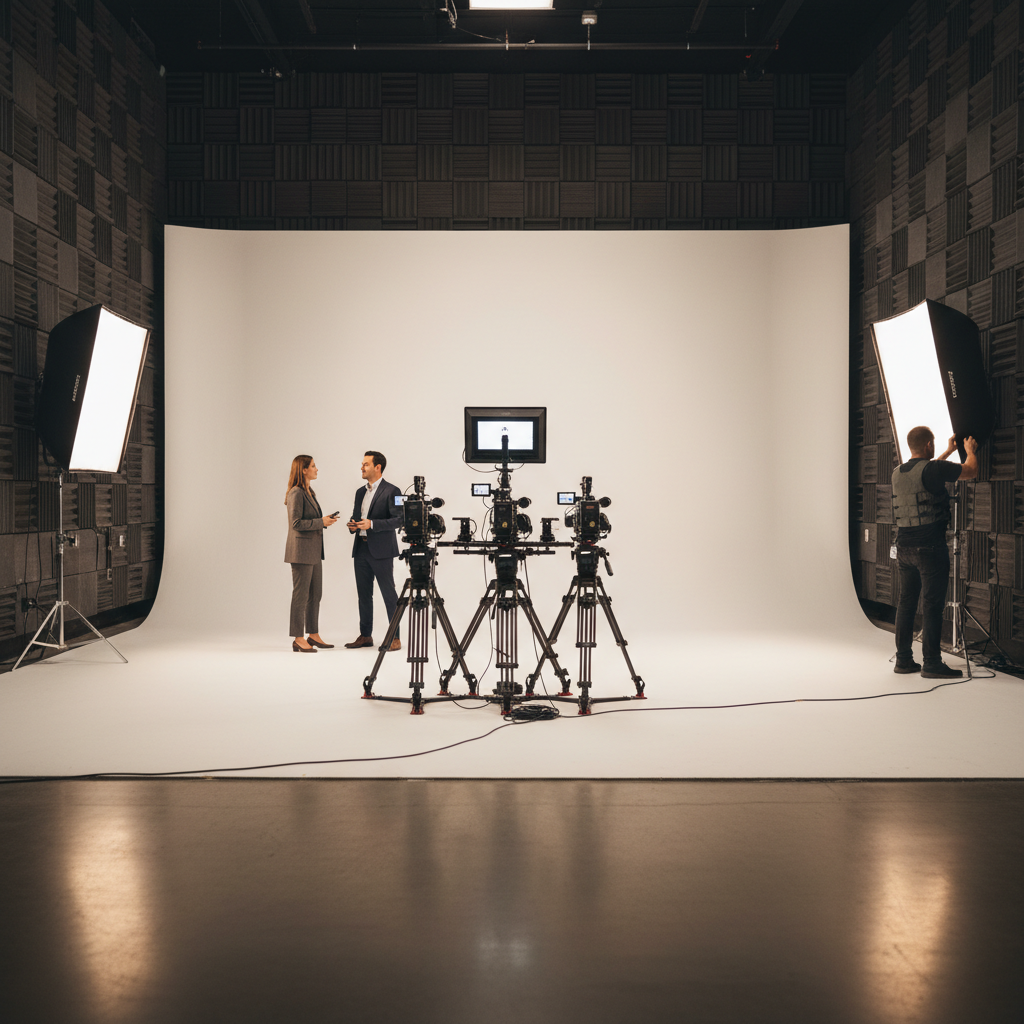
The Psychology of the Set: Talent Performance Matters
What most people miss is how the environment affects the person in front of the camera. In our experience with mid-market clients, executives are significantly more focused and ‘on’ when they step into a professional soundstage compared to their own desks.
But wait—there is a contrarian view worth considering. If your brand relies on ‘radical transparency’ (common in early-stage biotech or developer tools), the sterile nature of a studio might actually hurt your brand authority. In these cases, we recommend a hybrid approach: bringing a mobile studio kit into the office to enhance the existing environment.
Video Marketing Logistics: Planning for Series A-C Growth
Startup founders often view video as a luxury, but scalable video marketing logistics are a core growth lever. A freelance videographer might be cheaper for a single day, but they lack the infrastructure to handle the post-production and CRM automation required to turn that video into leads.
- Standardization: Using a consistent studio setup ensures your videos look like they belong to the same brand over a 12-month period.
- Scalability: It is easier to scale content without scaling headcount when you have a dedicated production partner.
- Security: For medical practice owners or corporate HR, studios provide a private environment free from HIPAA or privacy concerns present in an open office.
Applying the Decision Matrix to Your Q4 Strategy
The best way to choose is to audit your upcoming content calendar. If your goal is high-authority LinkedIn thought leadership or a Series C investor deck, the professional video environment is non-negotiable. If you are documenting daily culture for Instagram Stories, stay in the office.
This week, look at your top-performing video. Was it successful because of the raw setting, or despite it? According to HubSpot’s Marketing Trends, 54% of consumers want to see more video content from brands they support, but their tolerance for poor audio has hit an all-time low.
Ready to elevate your production value without the enterprise overhead? Click here to book a strategy session and see how our integrated production and performance systems can scale your brand.
Frequently Asked Questions
How much does a professional video environment cost in the Bay Area?
Typical Bay Area pricing for a professional studio ranges from $1,500 to $8,000 per day. This usually includes the space, basic lighting grids, and sound treatment. High-end soundstages with cyclorama walls or LED volumes will sit at the higher end of that range, while boutique creator spaces are more accessible for startups.
Can’t I just use a freelance videographer in my office?
You can, but the hidden costs often outweigh the savings. A freelance videographer lacks the controlled environment of a studio, meaning they spend more billable hours troubleshooting bad lighting and background noise. For cornerstone brand assets, the lack of control can result in a lower ROI despite the lower upfront cost.
What is the biggest advantage of a studio for corporate training videos?
Consistency and speed are the primary advantages. In a studio, the lighting and sound settings can be saved and replicated perfectly for every module. This prevents the ‘visual drift’ that happens when training series are filmed over several months in different office locations, maintaining a professional standard for internal comms.
Is acoustic dampening really that important for short-form video?
Yes. While viewers might tolerate average video quality, poor audio quality triggers an immediate bounce. Acoustic dampening removes the ‘hollow’ sound that characterizes amateur video, making your brand sound more authoritative and keeping viewers engaged longer on platforms like LinkedIn and YouTube.