📋 Table of Contents
According to recent industry data from HubSpot, 82% of marketers report that high-quality video content directly impacts their lead generation efforts, yet multi-city roadshows often fail due to fragmented execution. Implementing a rigorous pre-production blueprint for multi-city tech conferences is the only way to ensure your Series C startup or enterprise brand maintains a premium identity while scaling across regional hubs.
Stage 1: The Hub-and-Spoke Event Content Strategy
Centralized strategy prevents the ‘cookie-cutter’ fatigue that plagues most regional tours by allowing for localized creative execution within a standardized technical framework. When managing tech conference video production across cities like San Francisco, Austin, and New York, the logistical weight can crush a small internal team.
The real kicker? Most brands treat each city as a silo, hiring a different freelance videographer in every location. This leads to inconsistent lighting, mismatched audio quality, and a nightmare for your post-production team. Instead, we recommend a ‘Hub-and-Spoke’ model:
- The Hub: A core production lead and creative director who set the visual style, brand guidelines, and technical specs.
- The Spokes: Localized capture teams (like our Bay Area event videography crew) who execute the established playbook.
- The Tech Stack: Using a unified marketing automation platform to track lead attribution from session scans to post-event video views.
Defining Scalable Event Infrastructure
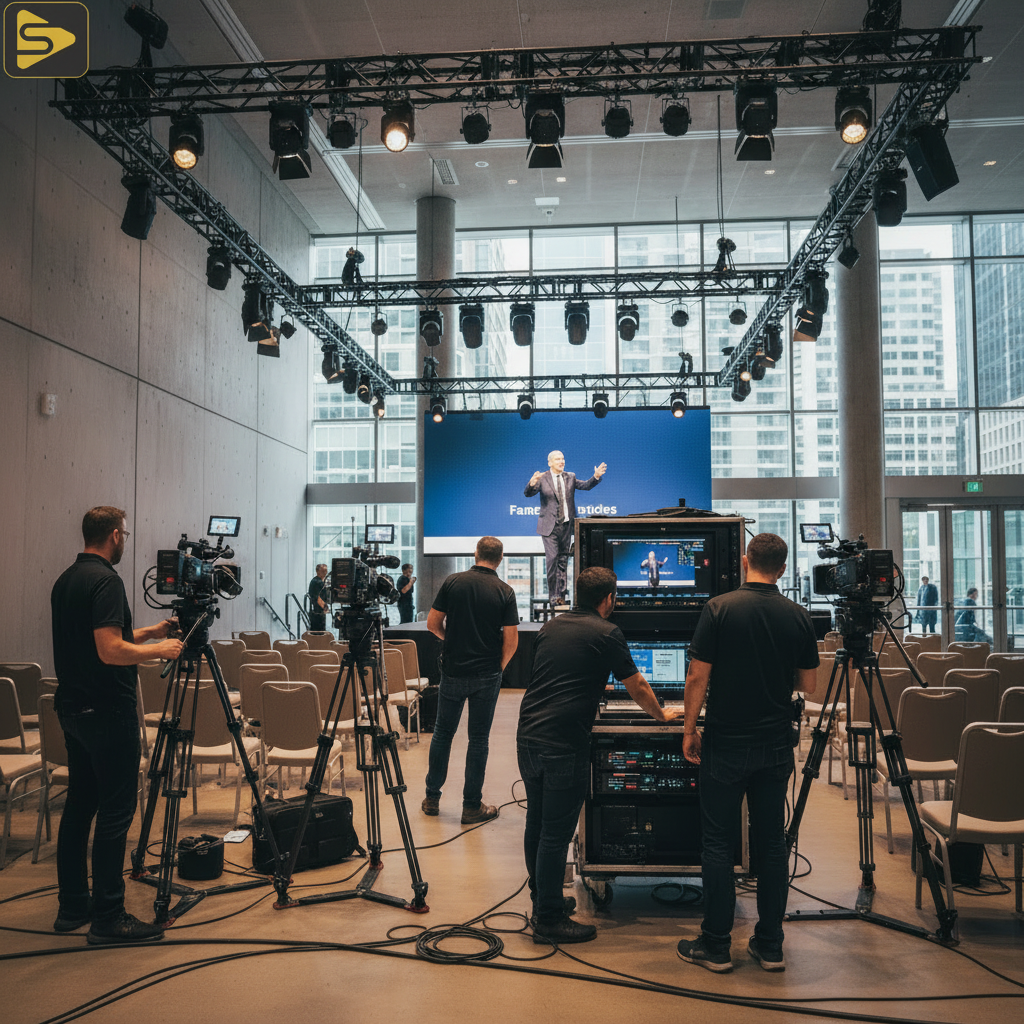
Before the first camera is packed, you must define your technical baseline. For a typical Bay Area mid-market client, this involves creating a master asset library that includes intro/outro graphics, lower thirds, and transition stings that work across all cities. This ensures your event content strategy remains cohesive even if the speakers change.
Stage 2: Technical Scouting and Scalable Personalization
Successful multi-city tours rely on the ‘Efficiency vs. Experience’ paradox: you must automate the boring stuff to spend more time on high-touch local engagement. What most people miss is that a one-off video shoot mentality won’t work for a roadshow; you need a repeatable site survey process.
Here is how we approach the technical audit for our clients:
- Bandwidth Verification: Ensuring 10Mbps+ dedicated upload for reliable event live streaming.
- Acoustic Mapping: Identifying local interference in hotel ballrooms or tech hubs.
- Power Redundancy: Mapping circuits to avoid blown breakers during high-draw keynote sessions.
- Local Influencer Integration: Identifying regional tech leaders to feature in high-impact social clips.
Need a partner who handles the heavy lifting? Schedule a free consultation to discuss your upcoming tour logistics.
Stage 3: The Agile Production Sprint for Rapid Content
In the current market, the half-life of event content is shorter than ever, requiring a pre-production blueprint for multi-city tech conferences that prioritizes speed. In our experience with Series B SaaS founders, the most valuable assets aren’t the full-length keynotes, but the 60-second ‘Golden Nuggets’ delivered to LinkedIn within two hours of the session.
| Content Type | Typical Turnaround | Strategic Value |
|---|---|---|
| Live Stream Clips | Real-time | FOMO & Digital Attendance |
| Social Highlights | 2-4 Hours | Regional Demand Gen |
| Full Session VOD | 24-48 Hours | Lead Nurturing / SEO |
| Brand Sizzle Reel | 7-10 Days | Future Sponsorship Sales |
To achieve this, we utilize Ingest.blog, our internal AI content engine, to assist in transcribing and identifying high-intent snippets for rapid distribution. This allows us to scale content velocity without requiring a massive increase in headcount.
Stage 4: Total Event Value (TEV) and ROI Tracking
The final stage of the blueprint is moving beyond vanity metrics like ‘badge scans’ to measure long-term regional pipeline impact. A sophisticated multi-city roadshow strategy must integrate with your CRM to track how event content influences the sales cycle.
Consider these data-backed valuation metrics:
- Content Attribution: Tracking which regional session videos led to demo requests.
- Regional Demand Generation: Measuring the lift in organic search traffic in each tour city via localized SEO.
- Sponsorship ROI: Providing partners with exact view counts and engagement data for their branded segments.
Here’s the thing: most agencies stop when the cameras turn off. A true growth partner ensures the footage fuels your paid advertising and email nurture sequences for the next six months.
Risk Mitigation in a Post-Pandemic Economy
Managing multi-city vendor volatility is the biggest hidden cost in modern event planning. By utilizing a single production partner for the entire tour, you eliminate the ‘freelance tax’—the time wasted onboarding new crews in every city who don’t understand your brand’s specific aesthetic or technical requirements.
Hyper-localization of Tech Content
Don’t just repeat the same deck in San Jose and Boston. Use your pre-production blueprint for multi-city tech conferences to bake in segments for local case studies. For instance, a biotech-heavy focus in Boston vs. a fintech focus in New York ensures the content resonates deeply with the local ecosystem.
Ready to elevate your event ROI? Connect with our production leads today for a custom quote on your multi-city tour.
FAQs
How much does multi-city tech conference video production cost?
Typical Bay Area pricing for premium tech conference video production ranges from $2,500 to $15,000 per project, while full-day event live streaming usually falls between $1,500 and $8,000 per day. Costs vary based on crew size, camera count, and the speed of post-production required for social media turnarounds.
Why shouldn’t I just hire a freelance videographer in each city?
While hiring a local freelance videographer might seem cheaper upfront, it often leads to inconsistent quality and fragmented branding. A unified production partner ensures a standardized pre-production blueprint for multi-city tech conferences, resulting in cohesive assets that look professional across your entire global marketing presence.
How can we use AI in our event content strategy?
Generative AI can be used for rapid localization of marketing assets, automated transcription, and identifying key themes for social media clips. We leverage these tools to increase content velocity, ensuring that your regional highlights are published while the event is still trending on social platforms.
What is the most important part of a multi-city roadshow strategy?
The most critical element is scalable event infrastructure. This means having a repeatable technical playbook for audio, video, and data capture that can be deployed in any venue, ensuring that logistical hiccups in one city don’t derail the entire tour’s content output.