📋 Table of Contents
According to a 2024 survey by Software Advice, 94% of patients use online reviews to evaluate physicians, yet most medical practices still rely on static text that lacks emotional resonance. In the competitive San Francisco Bay Area healthcare market, patient testimonial videos have become the primary bridge between clinical expertise and human trust.
Here’s the thing: a generic marketing agency might tell you to just point a camera and talk, but in healthcare, a “good” video that violates HIPAA is a liability, not an asset. You don’t need a freelance videographer for a one-off video shoot; you need a strategic framework that balances the psychology of empathy with rigorous privacy standards.
Pillar 1: The Anti-Script Method for Authentic Storytelling
Authenticity is the antidote to the rising tide of AI-generated deepfakes and clinical, over-produced corporate content.
- Focus on the Lifestyle ROI: Instead of asking about the surgery, ask what the patient can do now—like picking up their grandkids—that they couldn’t do six months ago.
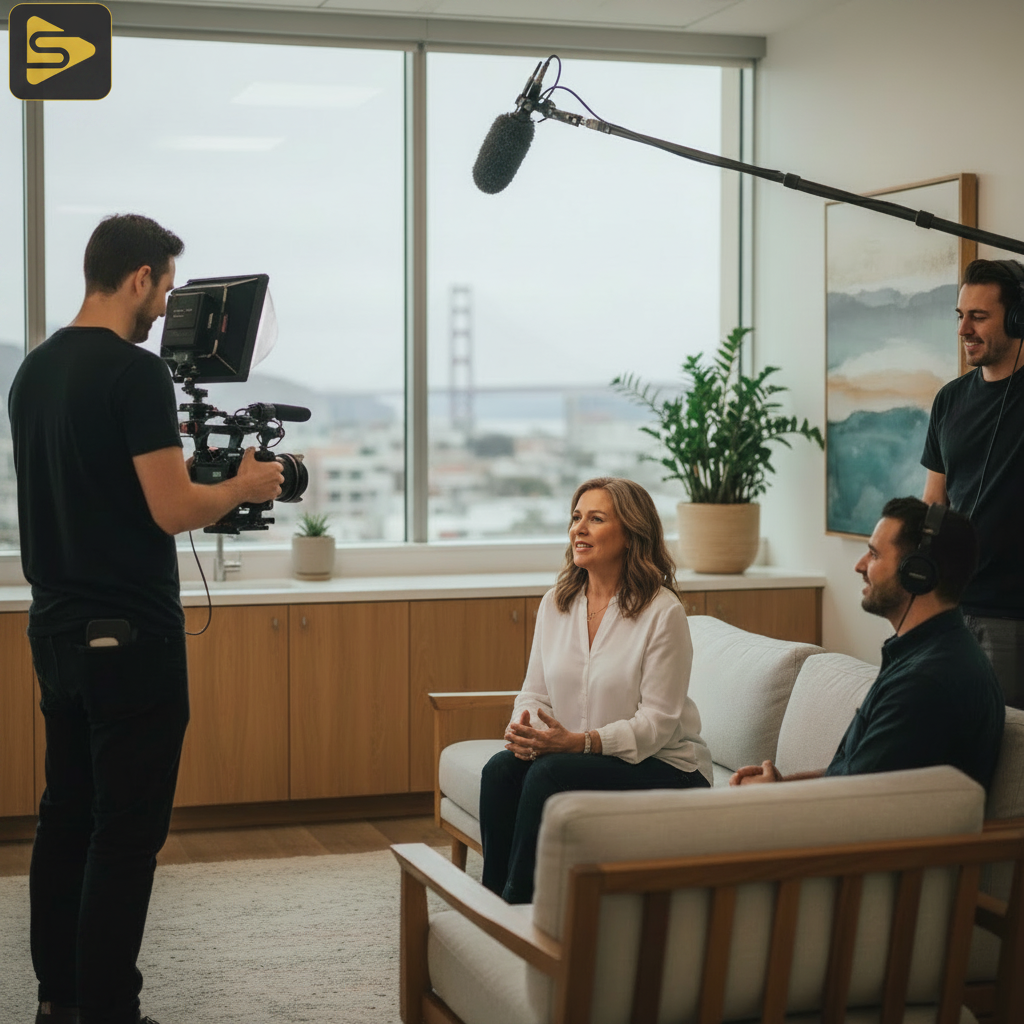
- The “FaceTime” Aesthetic: While we use cinema-grade equipment for corporate video production, the framing should feel intimate and personal, not like a clinical interrogation.
- Guided Prompts, Not Scripts: Never give a patient a teleprompter. Use open-ended prompts like “Tell me about the morning you realized your life had changed.”
What most people miss is that the most powerful patient testimonial videos aren’t about the doctor; they are about the patient’s transition from a state of limitation to a state of liberation. We’ve found that when working with Bay Area medical practice owners, the highest-converting soundbites usually occur in the last five minutes of an interview when the patient finally stops “performing” for the camera.
Pillar 2: The Compliance-Creativity Balance in HIPAA Compliant Video Production
Privacy isn’t a hurdle to creativity; it is the foundation of patient advocacy marketing.
But wait—before you hit record, you must ensure your HIPAA compliant video production workflow is bulletproof. This goes beyond a standard model release. A typical Bay Area mid-market medical group we’ve partnered with requires a specific Authorization for Disclosure of PHI (Protected Health Information) that explicitly covers video marketing and social media distribution.
- Secure Data Handling: Ensure all raw footage is stored on encrypted drives, not public cloud folders.
- The Right to Revoke: Patients must know they can request the removal of their video at any time, a requirement under HHS HIPAA Privacy Rules.
- De-Identifying the Background: Ensure no charts, computer screens, or other patient faces are visible in the background of your shot.
The real kicker? Being transparent about privacy actually increases patient participation. When patients feel protected, they are more willing to share the intimate details that drive healthcare conversion rate optimization (CRO).
Comparison: Professional Production vs. DIY Testimonials
| Feature | DIY Smartphone Video | Professional Agency Production |
|---|---|---|
| Audio Quality | Echoey / Background Noise | Broadcast-grade Wireless Mics | High Risk / No Paper Trail | Full Legal Documentation & Security |
| SEO Value | Low (Usually unoptimized) | High (Metadata & Schema Markup) |
| Cost | $0 – $200 | $2,500 – $15,000 per project |
Need help navigating the legalities of medical storytelling? Schedule a free consultation with our production team to review your practice’s needs.
Pillar 3: The Micro-Moment Framework for Content Distribution
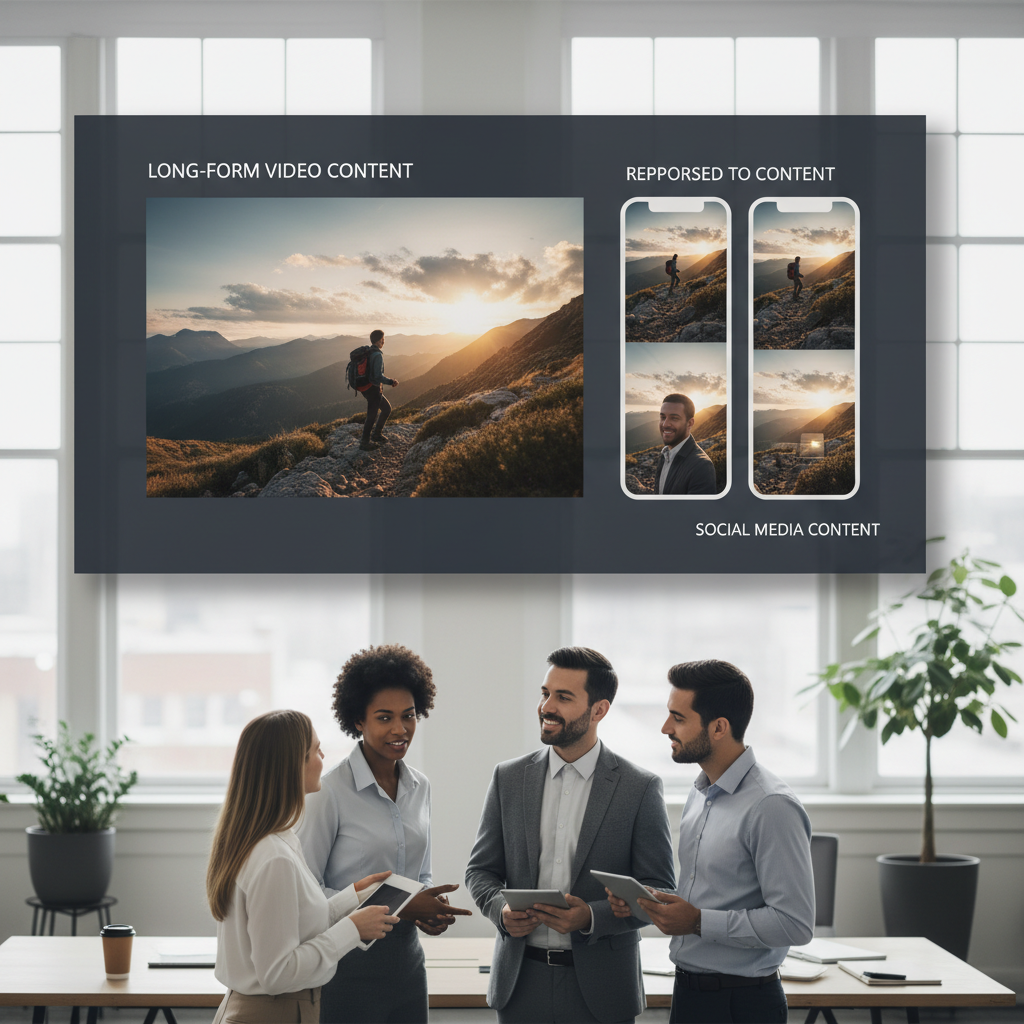
One long-form interview should never be just one video; it is a library of high-intent assets.
In our experience with Series B SaaS founders and medical directors alike, the mistake is treating a testimonial as a “one and done” post. Instead, we use a micro-moment strategy to break a three-minute brand film into 15-second vertical clips for Instagram Reels and TikTok. This taps into the trend of medical social proof through short-form, high-impact content.
- The Hook (0-3 seconds): The most emotional statement the patient made.
- The Problem (3-7 seconds): The specific pain point or diagnosis.
- The Solution (7-12 seconds): The experience at your practice.
- The CTA (12-15 seconds): A clear directive to book a consultation.
To maintain a high volume of these assets without scaling your internal headcount, we leverage Ingest.blog (https://ingest.blog), our internal AI content engine, to help select clients turn video transcripts into SEO-optimized blog posts and social captions instantly. This ensures your patient testimonial strategy reaches patients across every touchpoint.
Pillar 4: Building Local Search Authority Through Video SEO
Google loves video, but only if you provide the context the crawlers need to understand it.
If you embed a video on your site without proper optimization, you’re leaving money on the table. For medical practice video marketing to work, you must marry the creative with technical SEO. According to HubSpot’s State of Marketing report, video is the top media format for generating ROI, but only when it’s discoverable.
- Video Schema Markup: Use VideoObject schema to tell Google the name, description, and thumbnail of your testimonial.
- Transcriptions: Always include a full text transcript below the video to capture long-tail keywords related to specific treatments.
- YouTube Optimization: Since YouTube is the second largest search engine, your title should include the treatment name and your Bay Area location (e.g., “Knee Replacement Recovery in San Jose”).
The real insight? Most practices optimize for the doctor’s name. You should be optimizing for the patient’s symptoms. That is how you capture high-intent searchers at the moment they are looking for a solution.
The Patient-Creator Hybrid: The Future of Trust
We are seeing a massive shift toward User-Generated Content (UGC) for doctors. This involves incentivizing patients to film their own “Day in the Life” recovery journeys on their phones. While this feels “unpolished,” it is incredibly effective at combating the “Trust Gap” created by AI deepfakes. When a real person shows their real scar and their real progress in their own living room, the conversion rate skyrockets.
However, these lo-fi clips still need a professional touch. We often take patient-filmed footage and run it through our post-production suite—adding professional color grading, graphics, and clear calls-to-action—to ensure it fits the brand standards of a high-end Bay Area practice.
Actionable Takeaway: Start Your Testimonial Library This Week
You don’t need a dozen videos to start. Identify three patients who have had life-changing results in the last 90 days. Reach out with a simple message: “Your story could help someone else who is suffering from the same condition. Would you be open to sharing it?”
Ready to scale your patient acquisition with a professional partner? Book a free strategy session today. We provide full-stack support from HIPAA-compliant filming to Google Ads management, ensuring your stories actually reach the people who need to hear them.
FAQs About Patient Testimonial Videos
How do I ensure a patient testimonial video is HIPAA compliant?
Compliance requires a signed HIPAA Authorization for Disclosure of PHI, which is separate from a standard media release. The video must not show other patients or sensitive data. You must also have a secure workflow for storing raw footage and a process for honoring a patient’s request to remove the video at any time.
What is the typical cost for professional patient testimonial videos in the Bay Area?
Typical Bay Area pricing for high-quality corporate video production ranges from $2,500 to $15,000 per project. This varies based on the number of interviews, filming locations, and whether you need additional assets like social media cut-downs, motion graphics, or professional photography sessions for your website.
Can I use patient testimonials in Google Ads?
Yes, but with caution. Google has strict policies regarding personalized advertising and healthcare. While you can use testimonials on landing pages, your ad copy cannot imply knowledge of a user’s specific medical condition. Using video testimonials in YouTube Ads is one of the most effective ways to build top-of-funnel awareness.
How long should a patient testimonial video be?
For your website’s homepage or service pages, aim for 90 to 120 seconds. However, for social media platforms like Instagram or TikTok, you should create “micro-moments”—15 to 30-second clips that focus on a single emotional hook or specific result. Always prioritize the first 5 seconds to capture attention.