📋 Table of Contents
According to research from the Association of National Advertisers (ANA), 78% of brands have some form of in-house agency, yet 92% still rely on external partners to handle specialized execution and high-concept creative. For Bay Area decision-makers, the debate over in-house production vs. full-stack agency partnerships isn’t about choosing one; it’s about identifying where your capital generates the highest velocity of return.
The Efficiency Mandate: Why In-House Production vs. Full-Stack Agency Models are Shifting
The most expensive creative team is the one that sits idle between major campaigns while their benefits and software seats continue to accrue costs. In the current economic climate, the “Efficiency Mandate” has forced CMOs to move away from bloated internal departments toward a plug-and-play partnership model. This shift allows companies to access elite talent without the long-term liability of headcount.
- Speed-to-Market: Agencies often deliver short-form content 40% faster because they maintain dedicated post-production pipelines.
- Tech Stack Ownership: External partners absorb the R&D costs of AI-powered marketing and high-end cinema gear.
- Strategic Agility: Scaling a team up for a Series C launch takes days with an agency, compared to months of recruiting for an in-house pod.
What most people miss is that a full-stack agency acts as a fractional creative department, providing the infrastructure of a $1M/year internal team for a fraction of the cost. For instance, a corporate video production project that requires a $50,000 camera package is a standard Tuesday for an agency, but a massive capital expenditure for a startup.
The Hidden Total Cost of Ownership (TCO) for Internal Teams
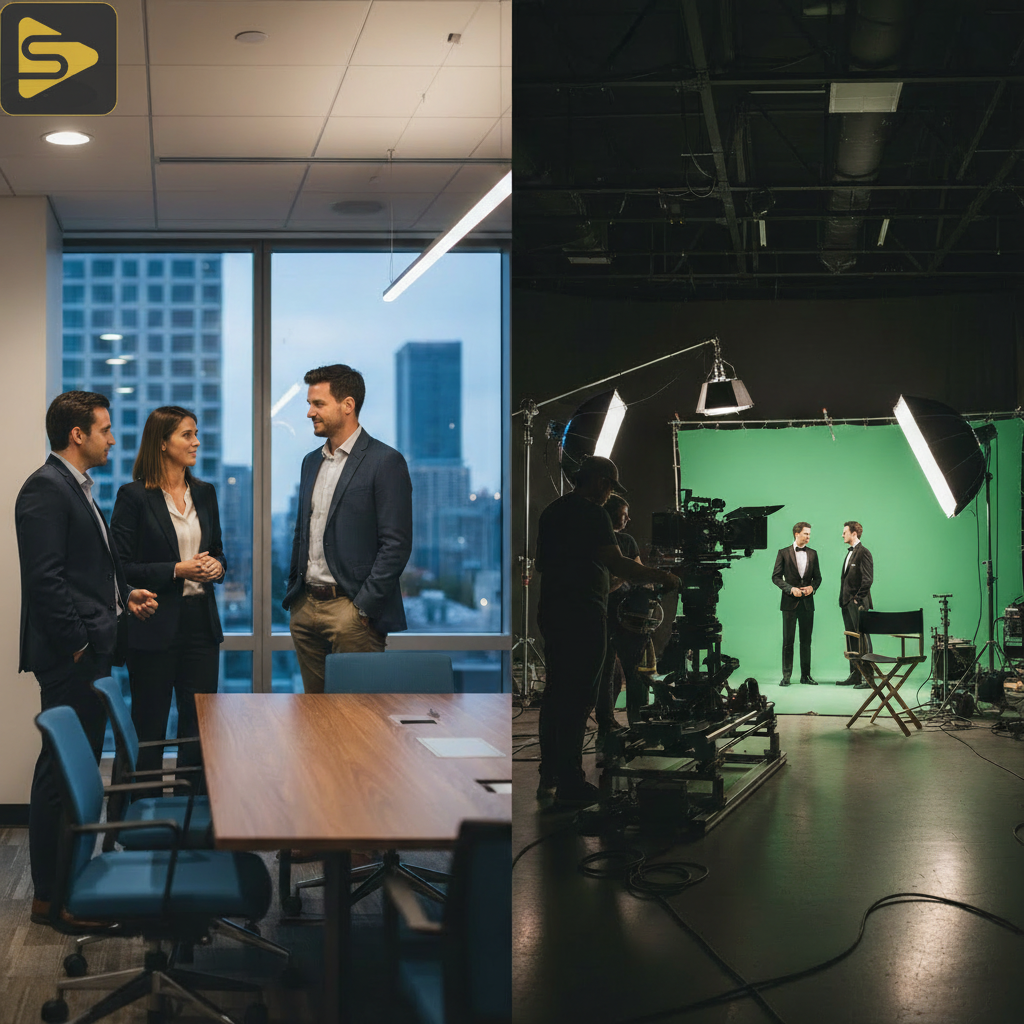
Maintaining an internal creative studio involves far more than just salaries; it’s the “shadow costs” of recruitment, retention, and technological obsolescence that often break the budget. When you hire a freelance videographer, you’re paying for a person; when you build a team, you’re paying for an ecosystem.
Breaking Down the Investment
- Human Capital: Salaries, benefits, and the 20-30% overhead for payroll taxes and HR management.
- Hardware & Software: High-end editing bays, 6K+ camera bodies, and recurring licenses for tools like Adobe Creative Cloud or Frame.io.
- Creative Exhaustion: Internal teams often suffer from “brand myopia,” where the lack of outside perspective leads to stagnant creative output.
Typical Bay Area pricing for a mid-level creative director starts at $160,000 annually. When you add a videographer and a social lead, your base burn rate exceeds $400,000 before you’ve spent a single dollar on ad spend or specialized gear. In contrast, SEO retainers and production packages allow for a predictable, results-oriented spend.
The real kicker? Most internal teams eventually become “order takers” rather than strategic partners. They spend 80% of their time on internal slide decks and 20% on growth-driving creative. A full-stack agency is incentivized to prioritize the 80% that drives ROI.

Scalability and the Specialized Gear Advantage
Successful in-house production vs. full-stack agency comparisons must account for the massive disparity in production value for high-stakes events and campaigns. While an internal team might handle a weekly vlog, they rarely possess the multi-camera livestreaming capabilities required for a global user conference.
In our work with Series B SaaS founders, we often see the “Hybrid Model” succeed: the internal team manages brand guidelines and daily social engagement, while the agency handles high-conversion paid advertising assets and hero brand films. This prevents creative burnout and ensures that high-impact projects receive the specialized attention they deserve.
Need help determining which model fits your current growth stage? Schedule a free consultation with our strategy team to audit your current creative output.
The AI Factor: Who Wins the Innovation Race?
Agencies are currently better positioned to absorb the R&D costs of AI integration than internal marketing departments. Because agencies work across multiple industries, they can test and refine AI-powered marketing workflows—like our internal AI content engine, Ingest.blog—across diverse datasets, bringing the most efficient prompts and tools to their clients immediately.
- Workflow Automation: Agencies use AI to automate the tedious parts of video logging and SEO keyword clustering.
- Asset Distribution: AI allows for the rapid resizing of a single brand film into 30+ social assets for LinkedIn, Meta, and TikTok.
- Cost Reduction: By leveraging AI for initial drafts or storyboarding, agencies can lower the entry price for premium creative.
| Feature | In-House Team | Full-Stack Agency |
|---|---|---|
| Brand Intimacy | High – Lives the brand daily | Moderate – Requires onboarding | Cost Structure | Fixed – High overhead | Variable – Scalable based on need | Specialized Gear | Limited to budget cycles | Immediate access to 8K/Cinema gear | AI Adoption | Slower (Security/HR hurdles) | Rapid (Performance-driven) |
Navigating the ‘Shadow Agency’ Effect
The friction between internal marketing teams and external partners often stems from a lack of clear ownership over data and tools. To solve this, sophisticated Bay Area marketers are moving toward a “Fractional Agency” model where the agency plugs directly into the client’s marketing automation platform.
This transparency ensures that the CMO owns the data, while the agency provides the execution power. It eliminates the “black box” agency experience and replaces it with a collaborative environment where performance is tracked in real-time via platforms like Looker Studio or HubSpot.
Choosing Your Path: A Decision Matrix for Marketers
If you are a medical practice owner looking for patient acquisition, a one-off video shoot might seem tempting, but a full-stack partner who understands HIPAA-compliant Google Ads management is the only way to ensure long-term growth. Conversely, if you are an enterprise CMO scaling content without scaling headcount, a recurring event live streaming and content package is the most efficient route.
When to Choose In-House:
- You need 24/7 access to a creator for high-volume, low-production-value social content.
- Your brand requires extreme security clearances for every piece of content.
- You have the budget to sustain a $500k+ annual talent burn regardless of market conditions.
When to Choose a Full-Stack Agency:
- You need high-concept creative that drives measurable ROI on paid media.
- You require specialized services like podcast production or multi-camera event coverage.
- You want to leverage the latest AI and automation tech without the R&D risk.
The real winner in the in-house production vs. full-stack agency debate is the brand that builds a hybrid ecosystem. By outsourcing the high-concept, high-tech, and high-risk elements to a partner like iStudios Media, you free your internal team to focus on what they do best: deep brand strategy and community engagement.
Ready to upgrade your production and performance? Contact us today for a strategic audit of your marketing stack and creative workflow. Let’s build a system that scales with your ambition, not your headcount.
Frequently Asked Questions
Is it cheaper to hire a freelance videographer or an agency?
While a freelance videographer has a lower day rate, they often lack the post-production infrastructure, insurance, and strategic marketing knowledge required to drive ROI. Agencies provide a full-stack team—including editors, colorists, and ad strategists—ensuring your video actually converts leads rather than just looking pretty.
How does the hybrid marketing model work in practice?
In a hybrid model, your internal team handles daily social media and brand management, while the full-stack agency handles specialized tasks like high-end video production, complex SEO, and paid ad management. This allows for maximum agility and ensures specialized talent is only paid for when needed.
What are the typical marketing production costs in the Bay Area?
Industry-reported ranges for corporate video production typically fall between $2,500 and $15,000 per project. For full-service SEO and digital marketing retainers, mid-market companies should expect to invest between $2,000 and $10,000 per month depending on the competitive landscape and goals.
Who owns the creative assets in an agency partnership?
At iStudios Media, we believe the client should own their data and final creative assets. While the agency provides the tools and expertise, ensuring your brand has full access to its content and marketing automation platform is critical for long-term scalability and business valuation.