📋 Table of Contents
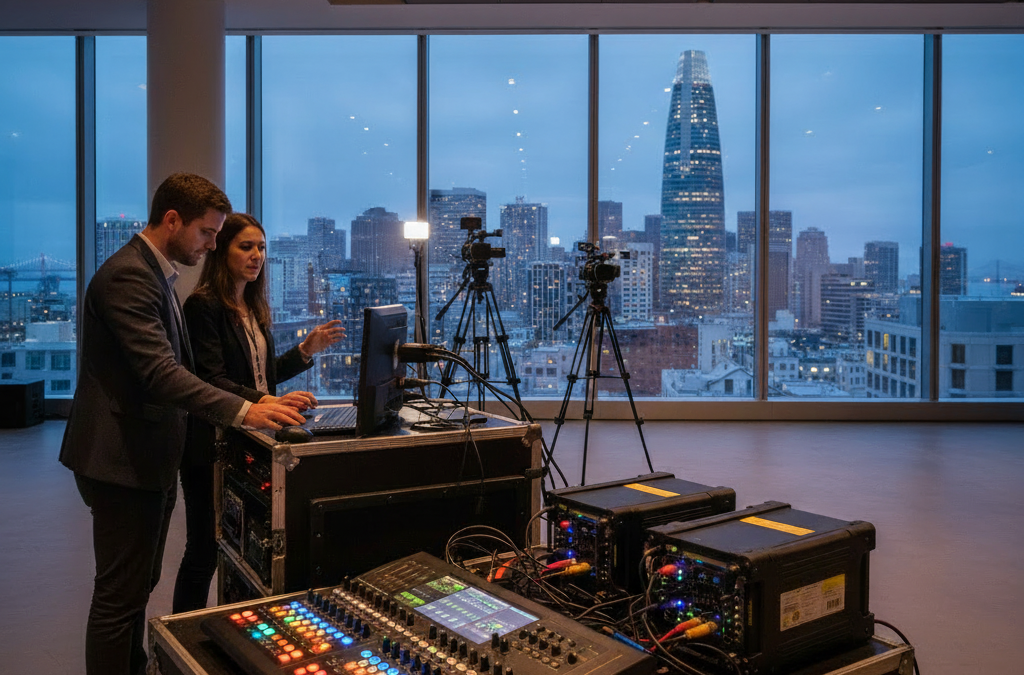
Most San Francisco field marketers are currently paying a $14,000 ‘mediocrity tax’ for hybrid events that essentially amount to a glorified Zoom call on a ballroom projector. If your last Union Square activation cost six figures but felt like a technical glitch waiting to happen, you aren’t just unlucky—you’re being exploited by an outdated AV model that prioritizes equipment rentals over actual hybrid event ROI.
The Hidden 35% Markup in Your SF Event Video Production
The real kicker? Most venue-preferred AV providers are hiding massive markups inside ‘equipment bundles’ that contain technology older than your Series A funding round.
- Ghost Labor Fees: You are often billed for four technicians when a single production architect could run the entire stack via software-defined workflows.
- The Wi-Fi Ransom: SOMA venues often charge $2,500 for a dedicated VLAN that costs them pennies to toggle on.
- Proprietary Lock-in: Preferred vendors bake in high ‘patch fees’ if you dare to bring in a sophisticated full-service marketing agency to handle the stream.
One of our clients, a Series C fintech firm in the East Bay, was quoted $22,000 for a single-day hybrid summit at a major downtown hotel. After we audited the line items, we found $8,500 in redundant ‘signal processing’ fees for hardware that hadn’t been serviced since 2018. By replacing their ‘boxed’ solution with a structured production plan, we reclaimed 40% of their budget before the first camera even turned on.
Why a Production Architect Beats a ‘Video Guy’ Every Time
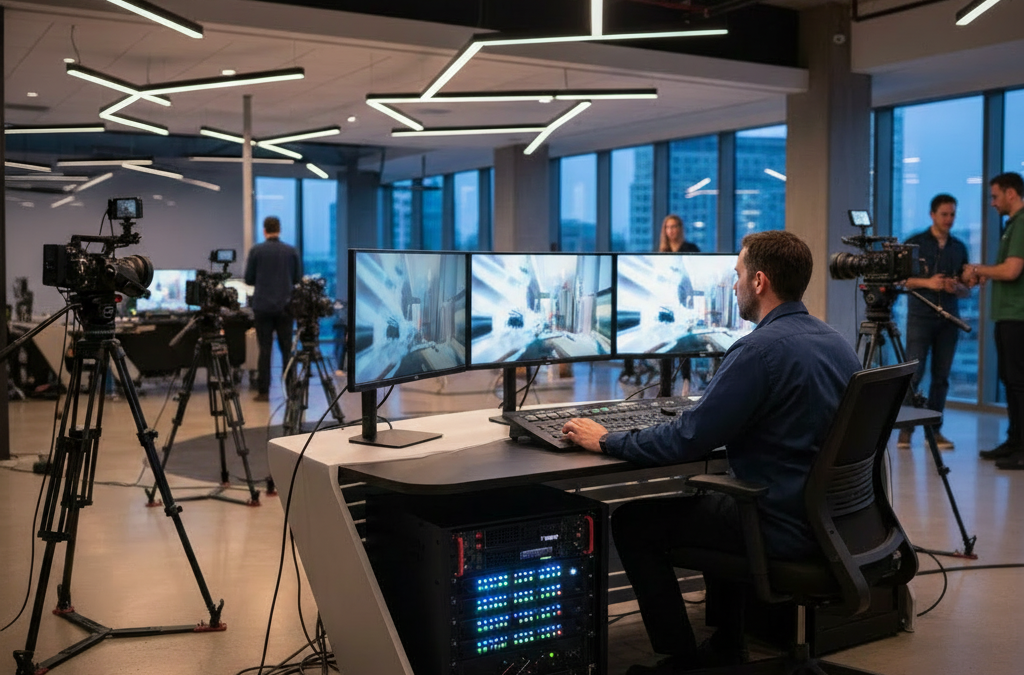
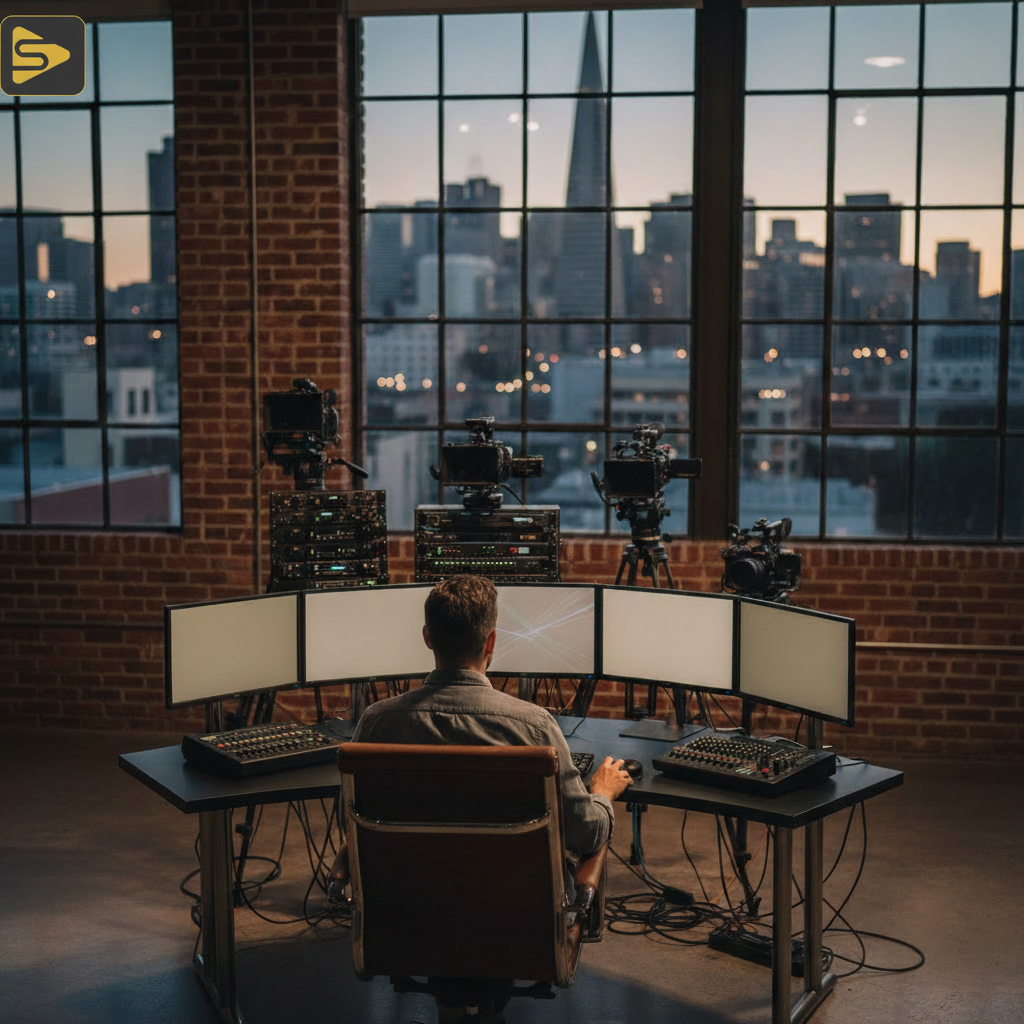
A production architect doesn’t just show up with cameras; they engineer a system where the physical and digital audiences share a singular, high-fidelity experience. Most ‘award-winning’ agencies focus on the pretty lights, but they ignore the technical debt of the venue’s infrastructure.
- System Audits: We verify the venue’s upload speeds and SDI termination points 30 days out, not 30 minutes before doors open.
- Asynchronous Scalability: We record ISO feeds of every speaker, allowing you to slice content for LinkedIn and YouTube for months, drastically increasing your hybrid event ROI.
- Redundancy Planning: We utilize bonded internet solutions (combining 5G and hardlines) so your $14k stream doesn’t die when the hotel guest next door starts streaming Netflix.
According to research by Forbes, 67% of virtual attendees leave a stream within 20 minutes due to poor audio quality. In the Bay Area, where every attendee is a tech-savvy critic, ‘good enough’ audio is a brand-killer. You need a partner who views production as an engineering challenge, not just a creative one.
Need to see where your budget is leaking? Schedule a production audit with iStudios Media and let’s fix your line items.
The Death of ‘Zoom on a Big Screen’ in Silicon Valley
The most expensive mistake you can make is treating your remote audience as second-class citizens by simply pointing a camera at a stage. That isn’t a hybrid event; it’s a webinar with an expensive background.
| Feature | Legacy AV Vendor | iStudios Production Architecture |
|---|---|---|
| Audio Strategy | Single house mix (echoey) | Dual-bus mix for in-room and stream |
| Engagement | Passive chat box | Real-time Q&A integration & polls |
| Post-Event | Raw file dump in 2 weeks | Social-ready clips within 48 hours |
| Cost Transparency | Hidden 30%+ markups | Flat-fee execution & direct rentals |
But wait—there is a contrarian move that most ‘marketing gurus’ won’t tell you: sometimes, the best hybrid strategy is not to go live at all. For many high-intent meetups in Oakland or San Jose, recording high-quality ‘asynchronous’ content and shipping it as a ‘Premiere’ event 24 hours later provides 10x the production value at 50% of the cost. This eliminates the ‘live-fail’ risk while maintaining the prestige of a polished broadcast.
Negotiating Out of Mandatory Venue AV Contracts
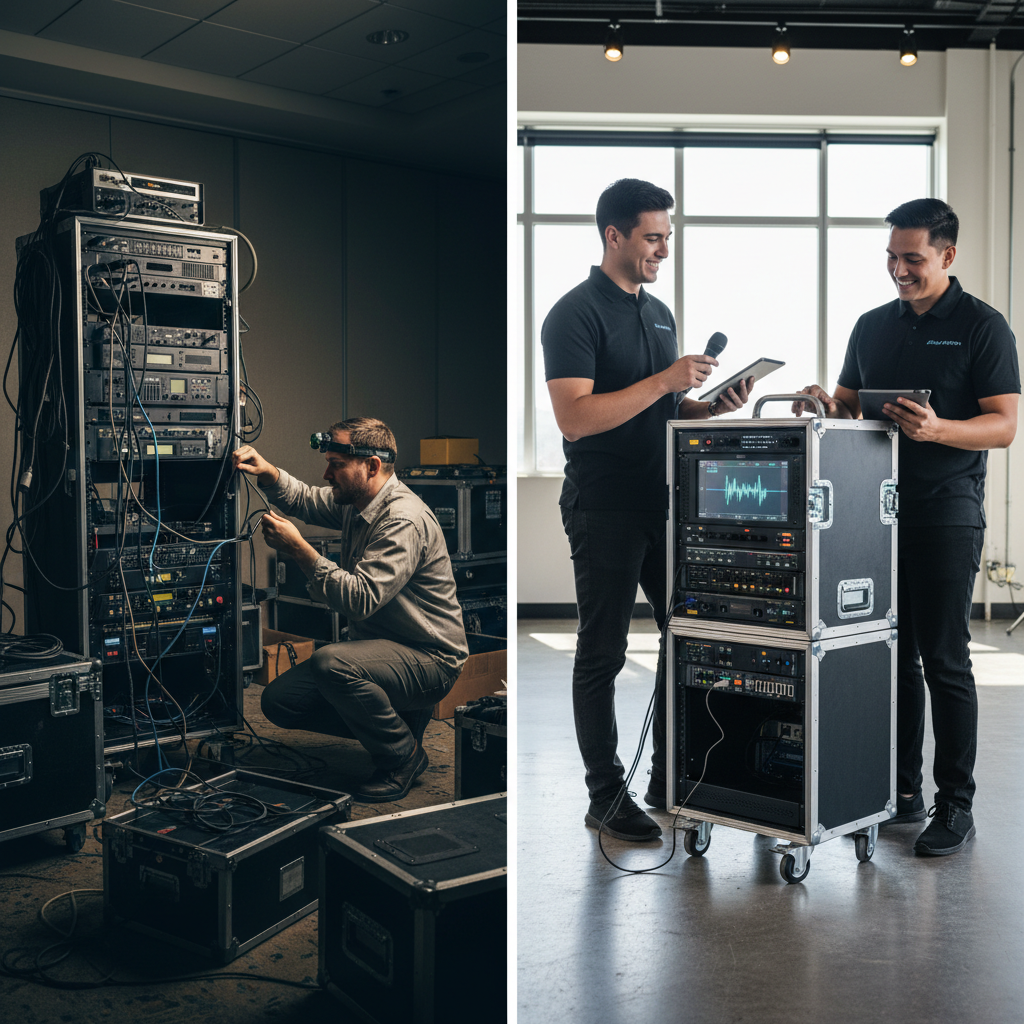
Here is the truth that Union Square hotels hate: those ‘exclusive’ AV contracts are often bridgeable if you know the right language to use during the RFP phase. Many Field Marketing Managers feel trapped by the ‘in-house’ vendor, but these vendors are often just performance partners for the venue’s bottom line, not your event’s success.
- The ‘Outside Vendor’ Clause: Always insist on the right to bring your own production lead to supervise the house crew.
- Direct Internet Sourcing: Don’t pay the $2k Wi-Fi fee. Use a dedicated cellular bonding rig for your stream to bypass the venue’s throttled network.
We recently assisted a Palo Alto biotech firm that was being pressured into a $19k AV package. By stepping in as their production architect, we negotiated the venue’s ‘patch fees’ down by 60% and brought in our own precision gear, saving them enough to fund their entire post-event Google Ads management for the next quarter.
Stop overpaying for mediocrity. Connect with iStudios Media to build an event that actually converts.
Frequently Asked Questions
How do I calculate true hybrid event ROI?
True ROI isn’t just about ticket sales; it’s the sum of live engagement, post-event lead generation from recorded clips, and the ‘technical debt’ saved by avoiding onsite failures. We measure success by the cost-per-minute of high-quality video assets produced during the event that can be reused for 6-12 months in paid media campaigns.
What is a production architect vs. a standard videographer?
A videographer captures what is happening; a production architect designs the environment to ensure what happens is broadcast-ready. This includes managing signal flow, network redundancy, lighting for both sensors and human eyes, and ensuring the CRM automation captures every virtual attendee’s data points for follow-up.
Why are SF venue rates for AV so high?
San Francisco venues often use AV as a primary profit center to offset lower room rates. They bake in ‘union shadow fees’ and massive equipment markups because they assume corporate clients won’t audit the line items. A specialized award-winning agency like iStudios knows how to spot these inflations and negotiate them out.
Can I run a hybrid event on a standard hotel Wi-Fi?
Absolutely not. Standard hotel Wi-Fi is shared and unpredictable. For a professional stream, you need a dedicated hardline with a minimum synchronous 20Mbps upload speed, supplemented by a 5G bonded backup. Relying on ‘standard’ connections is the fastest way to kill your hybrid event ROI.
The era of the $14k mediocre livestream is over. In a city built on innovation, your event production should be the benchmark, not the bottleneck. Whether you are a Series B founder or an enterprise CMO, your hybrid event ROI depends on moving away from ‘vendors’ and toward execution-focused growth partners. Don’t let a hotel ballroom line item dictate your brand’s digital legacy. Scale your content, protect your budget, and demand transparency.