📋 Table of Contents
- The Trust Tax: Why Direct-to-Camera vs. Voiceover-Led Demos Matter
- Psychology of Eye Contact in Product Demo Styles
- When to Choose Voiceover-Led Demos for Technical Depth
- Cost-Benefit Analysis: Bay Area Production Realities
- The Impact of AI and Asynchronous Video Selling
- Implementation: How to Execute This Monday Morning
- FAQs
According to Wyzowl’s 2024 Video Marketing Report, 87% of marketers say video has directly increased sales, yet the debate over direct-to-camera vs. voiceover-led demos remains a primary friction point for Series A-C founders. In an era of ‘polished-ad fatigue,’ the choice between a human face and a sleek motion-graphics sequence isn’t just about aesthetics; it’s a high-stakes decision about trust and retention.
The Trust Tax: Why Direct-to-Camera vs. Voiceover-Led Demos Matter
The ‘Trust Tax’ is the invisible cost you pay in conversion rates when your audience can’t see the person behind the product. Here’s a reality check: a founder-led video often outperforms a high-budget animation because it builds a parasocial relationship that faceless voiceovers simply cannot replicate.
- Human Connection: Eye contact triggers a physiological trust response in B2B buyers.
- Authenticity: Small imperfections in a direct-to-camera delivery often signal honesty to sophisticated Bay Area tech audiences.
- Speed to Trust: Seeing a real human reduces the perceived risk of a new software or service.
But wait—this doesn’t mean voiceovers are dead. In our experience with mid-market clients, voiceover-led demos excel at explaining complex technical architectures where a talking head would actually be a distraction. The real kicker? Most companies choose the wrong format because they are trying to hide behind a script rather than leading with a face.
Psychology of Eye Contact in Product Demo Styles
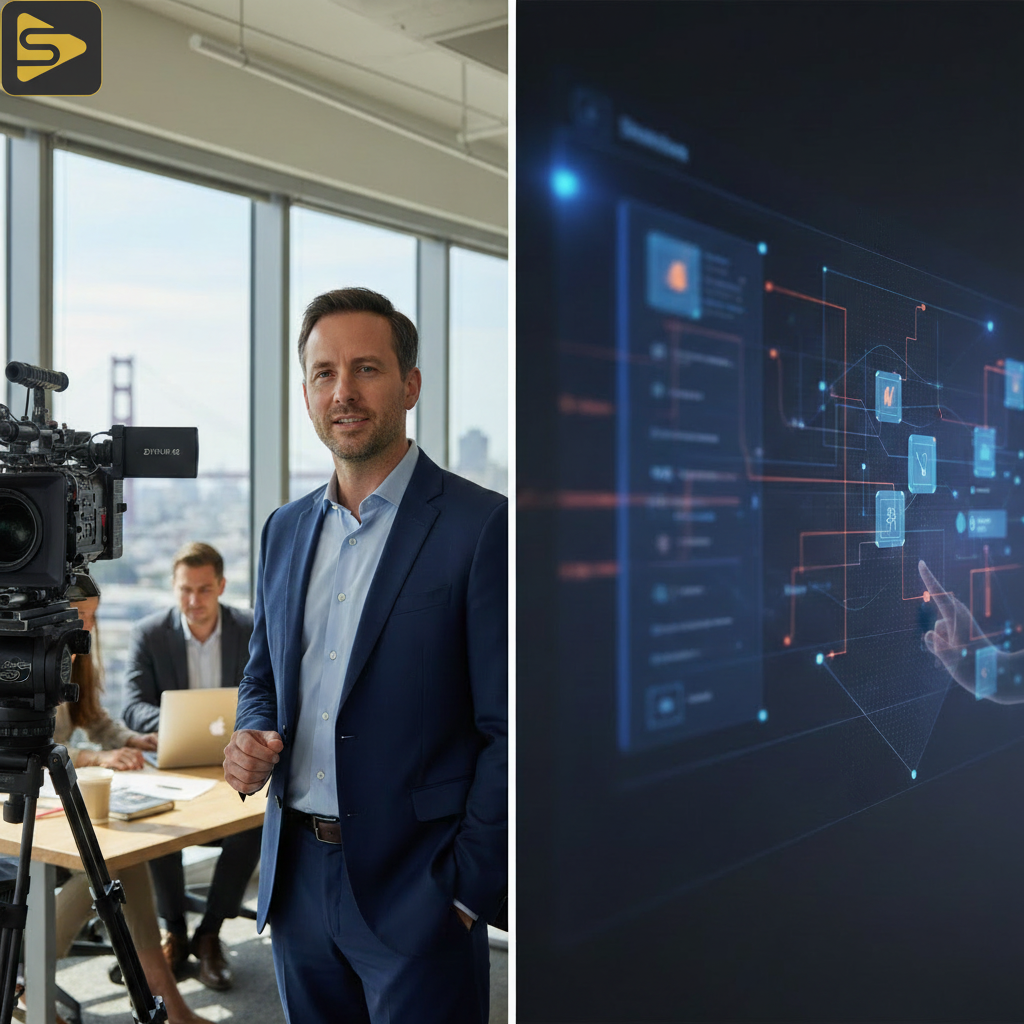
Direct-to-camera demos leverage the ‘Loom Effect,’ where buyers have been conditioned to value rapid, personal communication over corporate polish. When a product lead looks into the lens, they aren’t just presenting; they are performing a human-centric video sales letter (VSL) that speaks to the viewer’s specific pain points.
- Engagement Hooks: A face-to-camera intro captures attention in the first 3 seconds better than a logo animation.
- Retention Rate Optimization: Data from Wistia suggests that videos with a human presence have higher average engagement than purely graphical content.
- Consultative Selling: For high-ticket Bay Area services, the video acts as the first ‘meeting’ before the actual sales call.
Here’s something most people miss: The ‘unpolished’ aesthetic is currently outperforming high-production VO in many B2B SaaS sectors. Why? Because it feels like a recommendation from a peer rather than a pitch from a vendor. If you’re working with a freelance videographer, they might push for the most ‘cinematic’ look, but a growth partner will push for the most ‘trustworthy’ look.
When to Choose Voiceover-Led Demos for Technical Depth
Voiceover-led demos are the heavy lifters of bottom-of-funnel technical product walkthroughs where the interface is the star. While founder-led marketing builds the hook, the VO-led demo handles the granular documentation that engineering leads need to see before a purchase.
- Visual Clarity: High-end motion graphics can highlight UI elements far more effectively than a person pointing at a screen.
- Global Scalability: It is significantly easier to localize a voiceover-led demo for international markets than to re-shoot a founder.
- Information Density: You can pack more technical data into a 60-second VO script because you aren’t constrained by a human’s natural speaking pace.
The real trade-off is the ‘Death of the Corporate Voice.’ If your VO sounds like a generic 1990s training video, you’ll lose your audience instantly. We often recommend using professional voice talent that sounds like a ‘smart colleague’ rather than a ‘broadcast announcer’ to maintain that human-centric feel.
Need help deciding which style fits your brand? Schedule a free consultation with our production team to map out your video strategy.
Cost-Benefit Analysis: Bay Area Production Realities
In the San Francisco Bay Area, pricing for these two formats can vary wildly depending on the level of motion graphics required versus the time spent on location. A one-off video shoot might seem cheaper upfront, but the lack of integrated strategy often leads to lower ROI.
| Feature | Direct-to-Camera (DTC) | Voiceover-Led (VO) |
|---|---|---|
| Typical Price Range | $2,500 – $10,000 | $3,500 – $15,000+ |
| Production Time | 1-2 Weeks | 3-6 Weeks |
| Conversion Strength | High (Top of Funnel) | High (Technical/Closing) |
| Scalability | Harder (Requires Talent) | Easier (Script-based) |
What most founders miss is the ‘Hybrid Demo Model.’ In our work with Series B SaaS teams, we often see the highest conversion when the video starts with 15 seconds of direct-to-camera ‘Hook,’ transitions into a voiceover-led technical walkthrough, and closes with the founder back on camera for the CTA. This utilizes the strengths of both formats without the weaknesses of either.

The Impact of AI and Asynchronous Video Selling
The rise of AI voice cloning and tools like ElevenLabs has made VO-led demos cheaper, but the conversion gap is widening. Sophisticated buyers can sense ‘AI uncanny valley’ faster than ever. For a SaaS video conversion strategy to work, the human element must be authentic.
- AI Voice vs. Human: Use AI for internal training, but stick to human voices for client-facing demos to avoid the ‘automated’ stigma.
- Silent Viewing: 80% of LinkedIn users watch video without sound. Both formats MUST have high-quality captions to survive.
- Content Velocity: For teams looking to scale content without scaling headcount, using Ingest.blog as our internal AI content engine allows us to distribute these video insights across SEO-optimized blog posts rapidly.
Ultimately, the goal is to reduce the friction between the buyer and the solution. If your product is highly personal (like a medical practice) or highly visionary (like a Series A startup), go direct-to-camera. If your product is a complex infrastructure tool, lead with the UI and a professional VO.
Implementation: How to Execute This Monday Morning
Don’t get stuck in analysis paralysis between direct-to-camera vs. voiceover-led demos. Start by auditing your current sales deck. Which slides require a human explanation, and which require a visual diagram? This is your roadmap for a hybrid video approach.
- Step 1: Record a raw DTC intro using your phone to test the script’s resonance.
- Step 2: Use Google Ads or Meta to A/B test a DTC thumbnail vs. a graphic thumbnail.
- Step 3: Partner with a full-stack agency that understands both production and paid media to ensure your video actually reaches your target audience.
The real secret to video engagement analytics isn’t the camera you use; it’s the strategy behind the lens. Whether you need a polished brand film or a series of technical vlogs, focus on the format that best serves your buyer’s journey.
Ready to scale your content production? Contact iStudios Media today for a strategic production plan that delivers measurable ROI.
Frequently Asked Questions
Is direct-to-camera better than voiceover for B2B SaaS?
For top-of-funnel awareness, direct-to-camera usually wins because it builds trust and authority faster. However, for deep technical walkthroughs, a voiceover-led demo with clear UI highlights is often more effective at showing exactly how the software works without distractions.
How much does a professional product demo video cost in the Bay Area?
Industry-reported ranges for professional corporate video production in the Bay Area typically fall between $2,500 and $15,000 per project. Premium brand films with heavy motion graphics or multi-day shoots can range from $8,000 to $50,000 per finished minute.
Can I use AI voices for my product demo?
While AI voices have improved, we recommend them primarily for internal training or low-stakes content. For high-intent sales demos, the ‘Trust Tax’ of an AI voice—which can feel impersonal or robotic—often results in lower conversion compared to a real human voiceover.
How long should a SaaS product demo be?
For social media and top-of-funnel ads, keep it under 60 seconds. For a full technical walkthrough on a landing page, 2 to 5 minutes is typical, provided you use chapters or a hybrid direct-to-camera intro to maintain engagement throughout the video.