📋 Table of Contents
According to recent data from Crunchbase, venture capital deployment has shifted drastically from ‘growth-at-all-costs’ to a rigorous focus on unit economics and technical defensibility. In this climate, investor video production is no longer about flashy transitions; it is about providing visual proof of your moat and architectural scalability to skeptical partners.
For Series A-C founders, the challenge isn’t just telling a story—it’s translating a complex technical roadmap into a narrative that survives the scrutiny of a GP (General Partner). While a freelance videographer might capture great lighting, they often lack the strategic depth to bridge the gap between your engineering team and your pitch deck. This is where a structured briefing framework becomes your most valuable asset during the fundraising cycle.
1. The Narrative Economics Pillar: Defining the Moat
Successful investor videos must address ‘Narrative Economics’—the intersection of a compelling story and the hard data that makes that story profitable. The real kicker? Most founders lead with the ‘what’ instead of the ‘how it scales,’ leaving VCs to hunt for technical debt in the fine print.
- Identify the Core Moat: Is it proprietary data, network effects, or high switching costs?
- Visualizing Unit Economics: Use motion graphics to show how LTV (Lifetime Value) outpaces CAC (Customer Acquisition Cost) over time.
- Evidence Over Hype: Replace vague adjectives with specific scalability proof-points.
In our work with Series B SaaS founders, we have found that showing a 30-second screen capture of a functional, high-load dashboard is 10x more effective than a three-minute interview about ‘disruption.’ It provides immediate technical due diligence that builds radical transparency.
2. Technical Due Diligence: Visualizing the Infrastructure
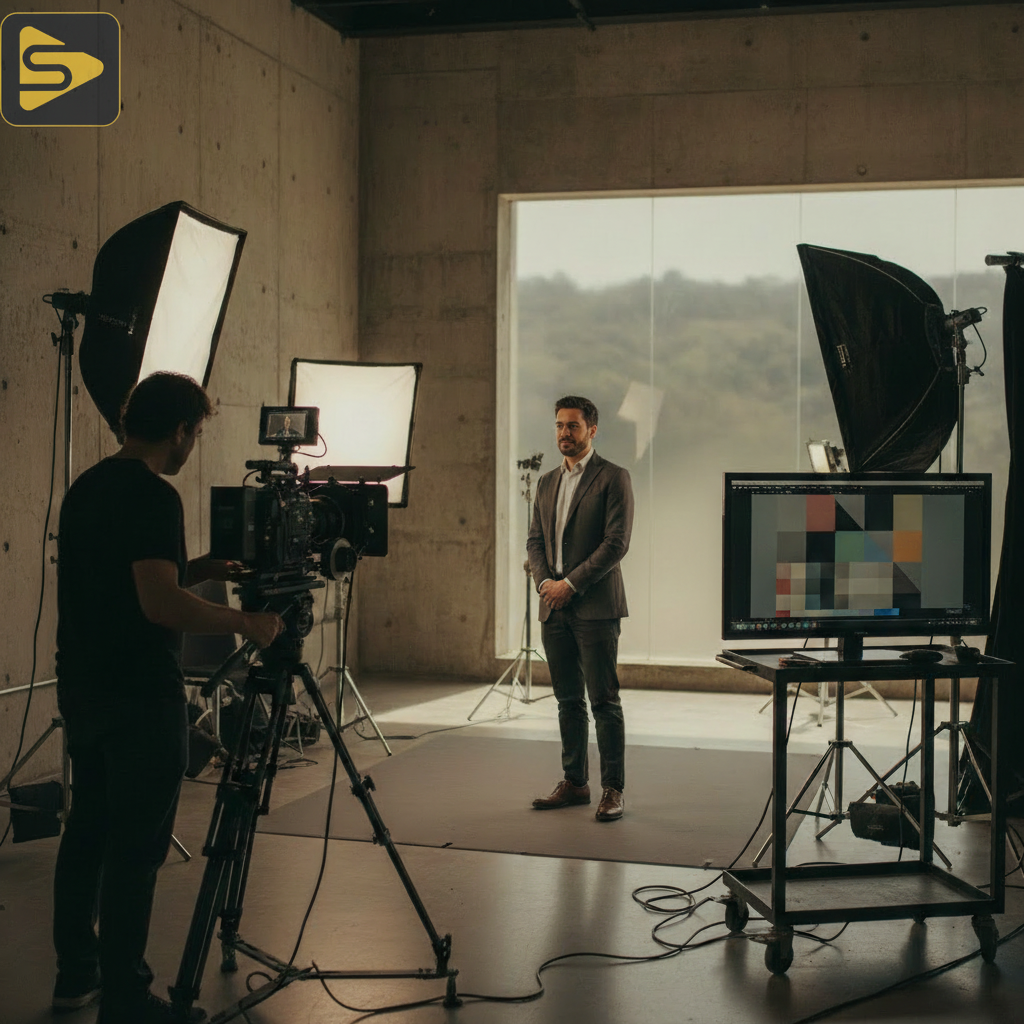
The best way to de-risk a deal is to answer the technical objections before the partner even asks them. As of 2025, VCs are increasingly using AI-driven due diligence tools to scan for architectural weaknesses, so your video needs to reflect a robust, secure foundation.
- Architecture Overviews: Use clean 2D animations to explain how your API integrates with enterprise ecosystems.
- Security & Compliance: Explicitly mention HIPAA, SOC2, or GDPR compliance through visual badges and B-roll of secure operations.
- Development Velocity: Show, don’t just tell, the speed of your product iterations using time-lapsed code deployments or sprint reviews.
A one-off video shoot usually misses these nuances because the crew doesn’t understand the difference between a monolithic architecture and microservices. A professional investor video production partner acts as a translator between your CTO and your audience.
The Transparency Table: Hype vs. Evidence
| Feature | Standard ‘Hype’ Video | Technical Briefing Framework |
|---|---|---|
| Product Demo | Stock footage of people smiling at tablets. | Live-demo snippets of the actual UI/UX. |
| Market Size | Generic ‘Trillion Dollar Market’ claims. | Bottom-up TAM analysis with visual data. |
| Team | Founders walking in slow motion. | Engineers explaining a specific solved problem. |
3. The 60-Second Hook: Adapting to the ‘TikTok-fication’ of VC
Venture capitalists are humans with dwindling attention spans; you have exactly one minute to prove you aren’t a ‘zombie startup.’ What most people miss is that the hook shouldn’t be a problem statement—it should be a ‘Proof of Traction’ statement.
- The ‘Anti-Hype’ Opening: Start with a hard truth about your industry that only you have solved.
- Asynchronous Updates: Use short-form ‘teaser’ briefings to keep investors engaged between formal rounds.
- Direct-to-Camera Authority: The founder must project ‘Investor Readiness’ through clear, concise delivery of capital allocation strategies.
Need help refining your technical narrative? Schedule a free consultation with our production leads to audit your current pitch content.
4. Scalability Proof-points: Mapping the Roadmap
Investors aren’t just buying your current product; they are buying your future execution. Here’s the thing: if your video doesn’t align with the milestones in your pitch deck, you create ‘narrative friction’ that kills deals.
- Milestone Alignment: Ensure every visual cue in the video corresponds to a line item in your Series A funding content.
- Resource Allocation: Graphically represent how the new capital will be deployed (e.g., 40% R&D, 30% GTM).
- Future-Proofing: Discuss how your AI-powered marketing automation or internal systems like Ingest.blog (our internal AI content engine) allow you to scale content velocity without bloating headcount.
In our experience with mid-market clients, those who map their visual roadmap to their financial projections close rounds significantly faster. It signals that the management team is structured and scalable.
5. The Hybrid Pitch: Integrating Live Demos
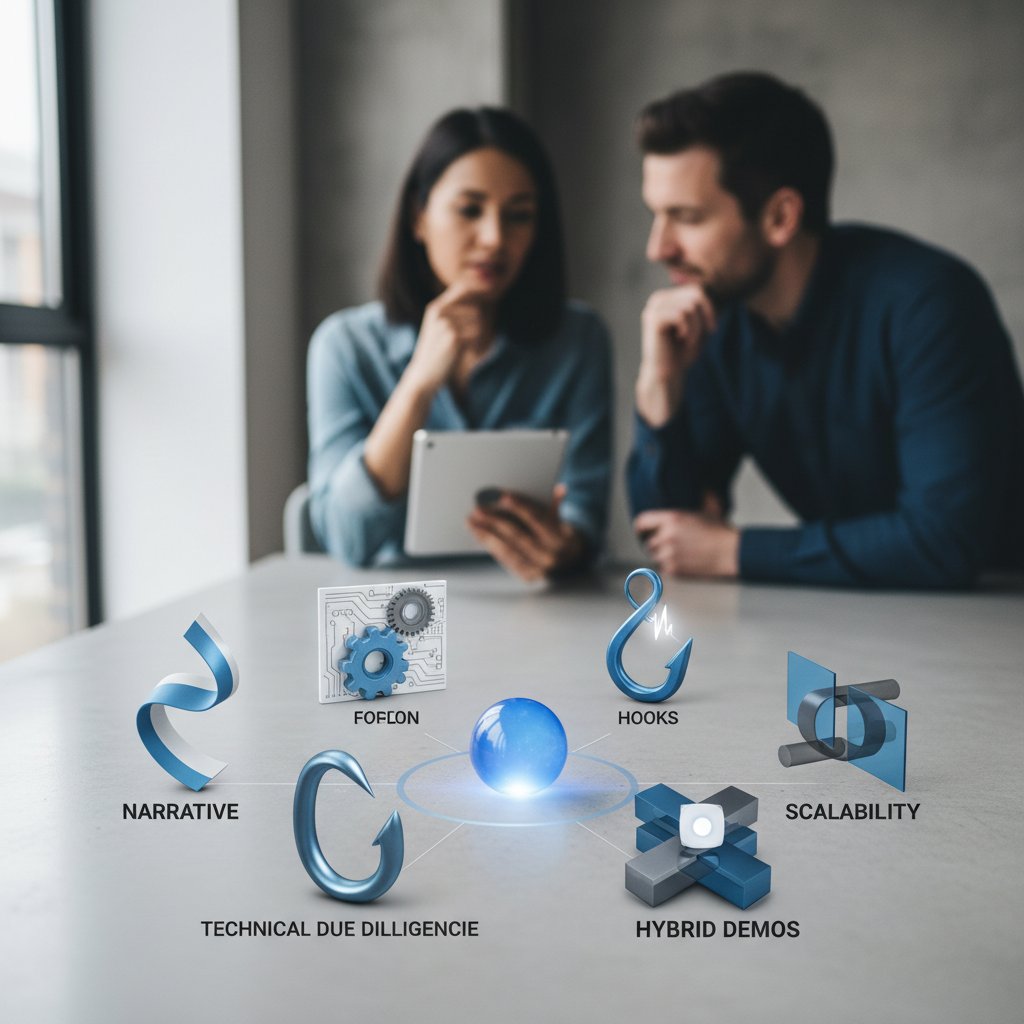
The most effective startup brand video strategy utilizes a hybrid approach: high-end cinematography for the vision, and raw, authentic screencasts for the reality. But wait—authenticity doesn’t mean low quality. Poor audio or shaky screen recordings can make even the best software look like ‘vaporware.’
- Professional Audio: High-stakes videos require broadcast-quality sound to maintain authority.
- Seamless Transitions: Use ‘match cuts’ to move from a founder’s interview directly into a product feature demo.
- Call to Action: Every briefing should end with a clear next step, whether it’s a link to the data room or a calendar invite.
For founders in the SF Bay Area, having access to a studio session in San Leandro ensures that your ‘Hybrid Pitch’ looks like a Series C production, even if you’re just closing your Seed round.
Strategic Takeaway: Apply This Monday Morning
Stop thinking of your video as a commercial. Start thinking of it as a pre-recorded due diligence meeting. Review your current pitch deck and identify the three most common technical objections you receive. By incorporating the answers to those objections into your investor video production, you effectively reduce the due diligence cycle by 30%.
Ready to build a data-backed brand film that actually moves the needle? Connect with iStudios Media today to start your technical briefing process.
Frequently Asked Questions
How much does professional investor video production cost in the Bay Area?
Typical Bay Area pricing for corporate video production ranges from $2,500 to $15,000 per project. For high-stakes brand films or premium commercials that require extensive motion graphics and technical animations, budgets can range from $8,000 to $50,000 per finished minute, depending on the complexity of the assets.
Can we use a freelance videographer for investor updates?
While a freelance videographer is suitable for one-off video shoots or simple vlogs, high-stakes investor videos require a partner who understands Series A-C funding dynamics. A full-stack agency provides the strategic alignment, CRM automation for distribution, and technical storytelling that a solo operator typically cannot offer.
How long should a technical investor briefing video be?
For an initial ‘teaser’ or hook, aim for 60 to 90 seconds. For a deep-dive technical briefing intended for the due diligence phase, 3 to 5 minutes is acceptable, provided the content is structured around hard proof-points and architectural scalability rather than generic marketing fluff.
How do we handle HIPAA or security constraints in a video?
For medical practice owners or biotech startups, we implement strict production protocols. This includes blurring sensitive patient data, using ‘clean’ demo environments, and ensuring all on-site filming complies with enterprise security and privacy standards to protect your intellectual property and regulatory standing.